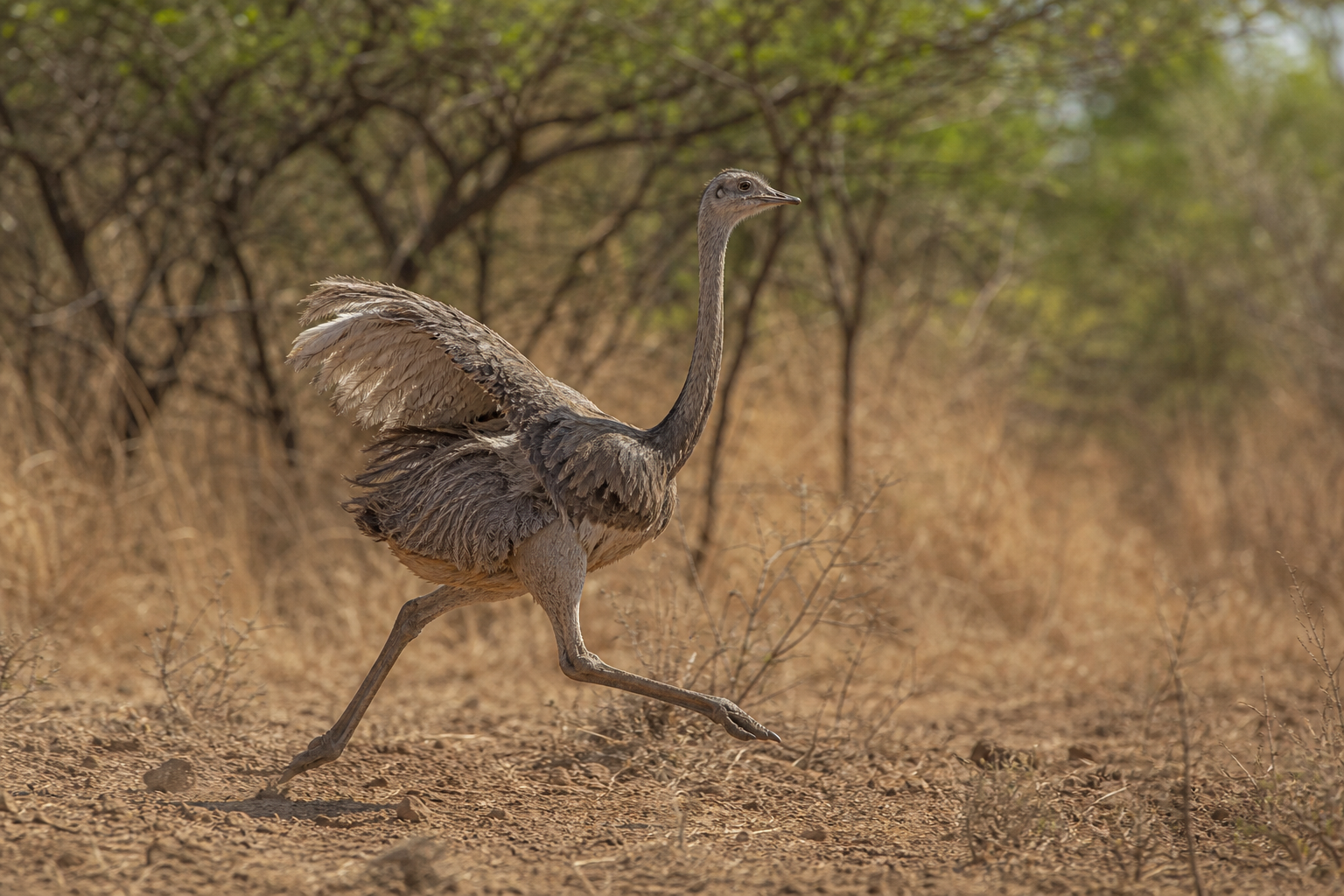
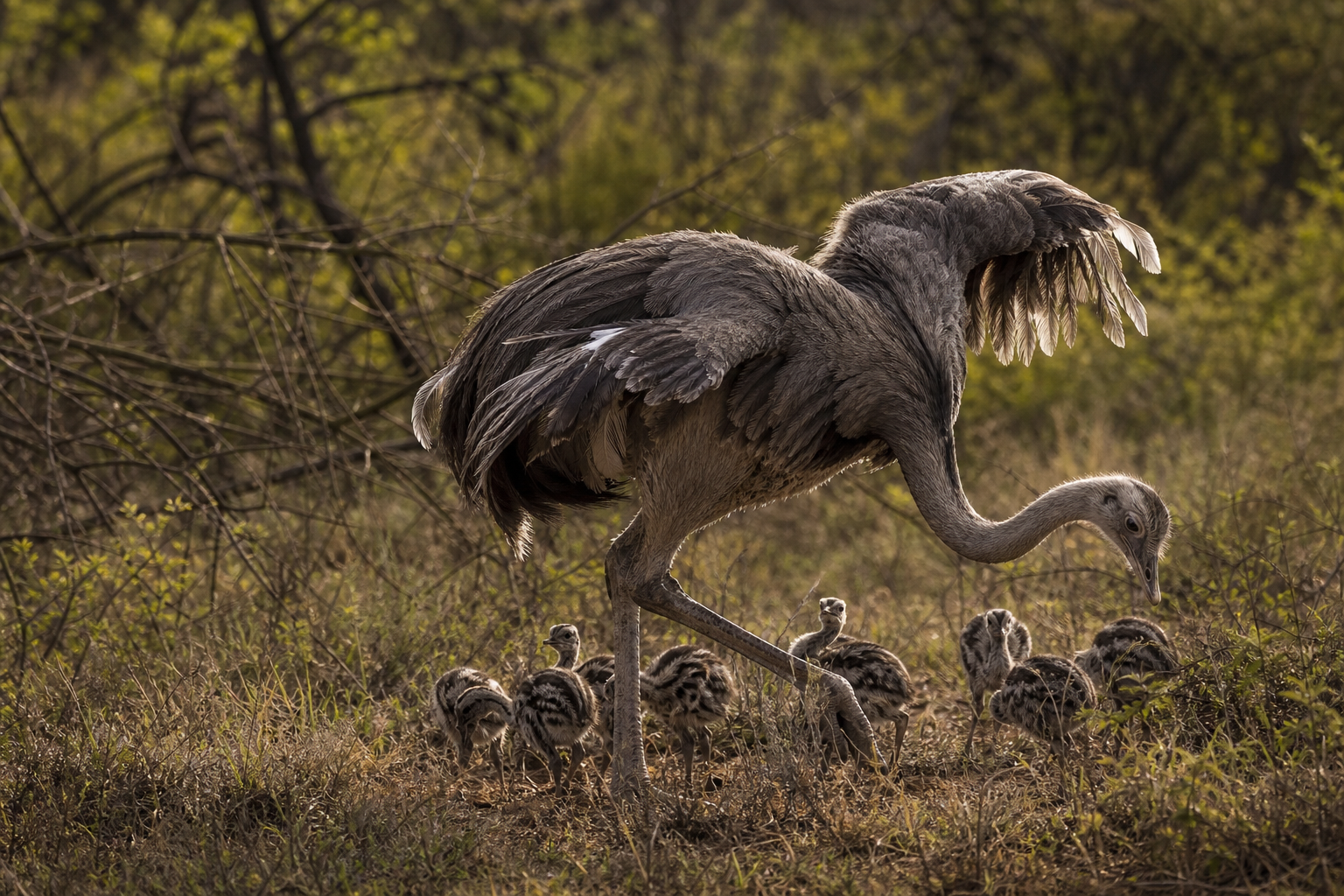
On the dry edge of the Gran Chaco, dust lifts around a moving line of gray-brown bodies. The birds run with necks stretched forward and wings half-open, not flying, never flying, but using the air all the same. A male slows near a patch of scrub, and small striped chicks spill around his legs like windblown leaves.
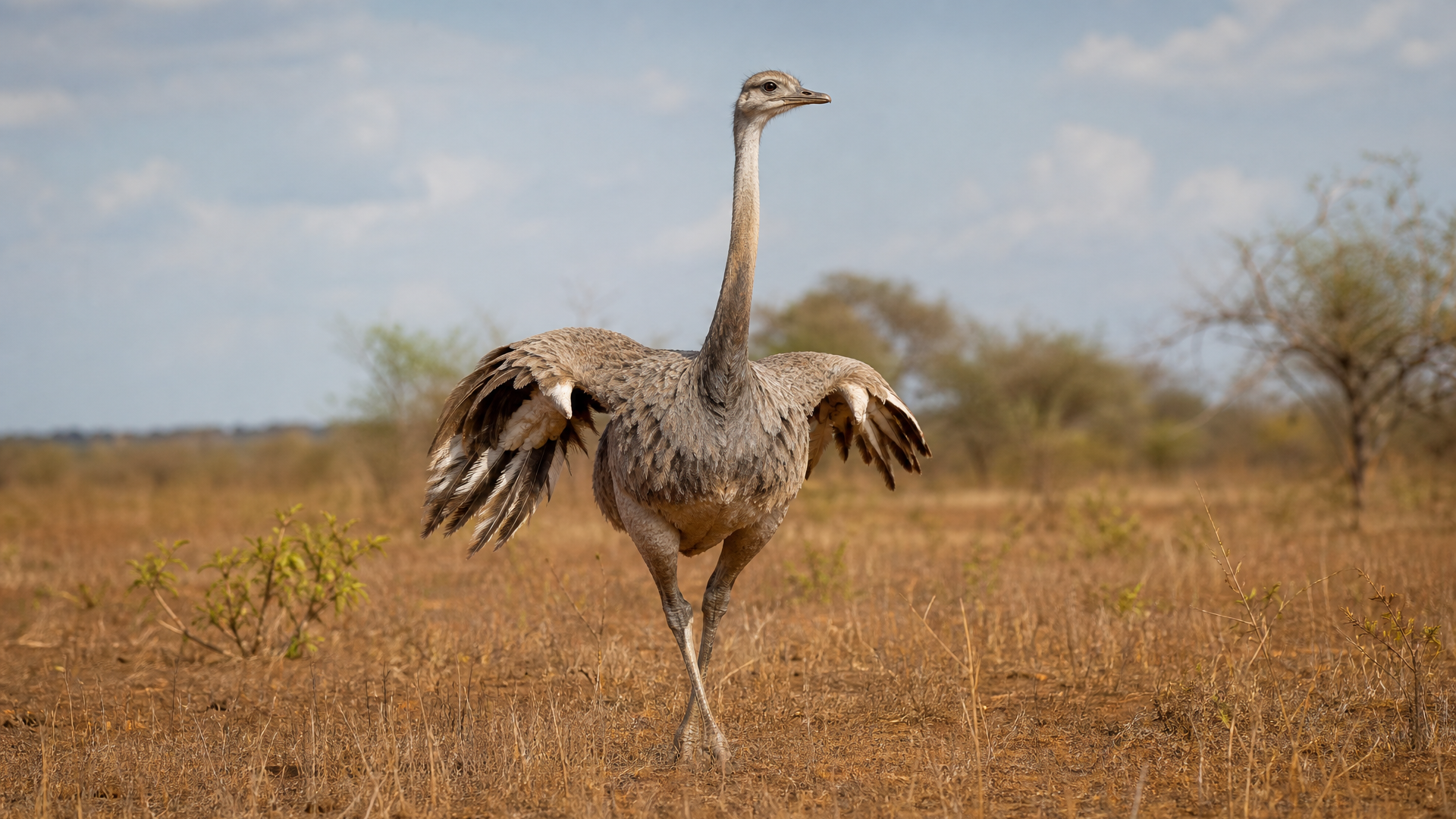
The greater rhea gives open country a different kind of bird life. It is grounded, swift, and alert, made for distances that can be crossed on foot. The long legs carry it through grass, thorn, and bare soil; the soft feathers loosen its outline in heat shimmer. During breeding season, the male becomes the center of a restless nursery, incubating eggs and guarding chicks with sudden intensity. He lowers his head, spreads his wings, and turns his body into a warning. The young learn the plain by following his legs, vanishing and reappearing among stems.
In the Chaco and Cerrado, the rhea links grass seeds, insects, predators, and the long view of open land. Fences, dogs, hunting, and the conversion of native vegetation make running country smaller and more broken. Still, when alarm passes through the group, they surge forward together, dust rising behind them, the plain moving on legs.