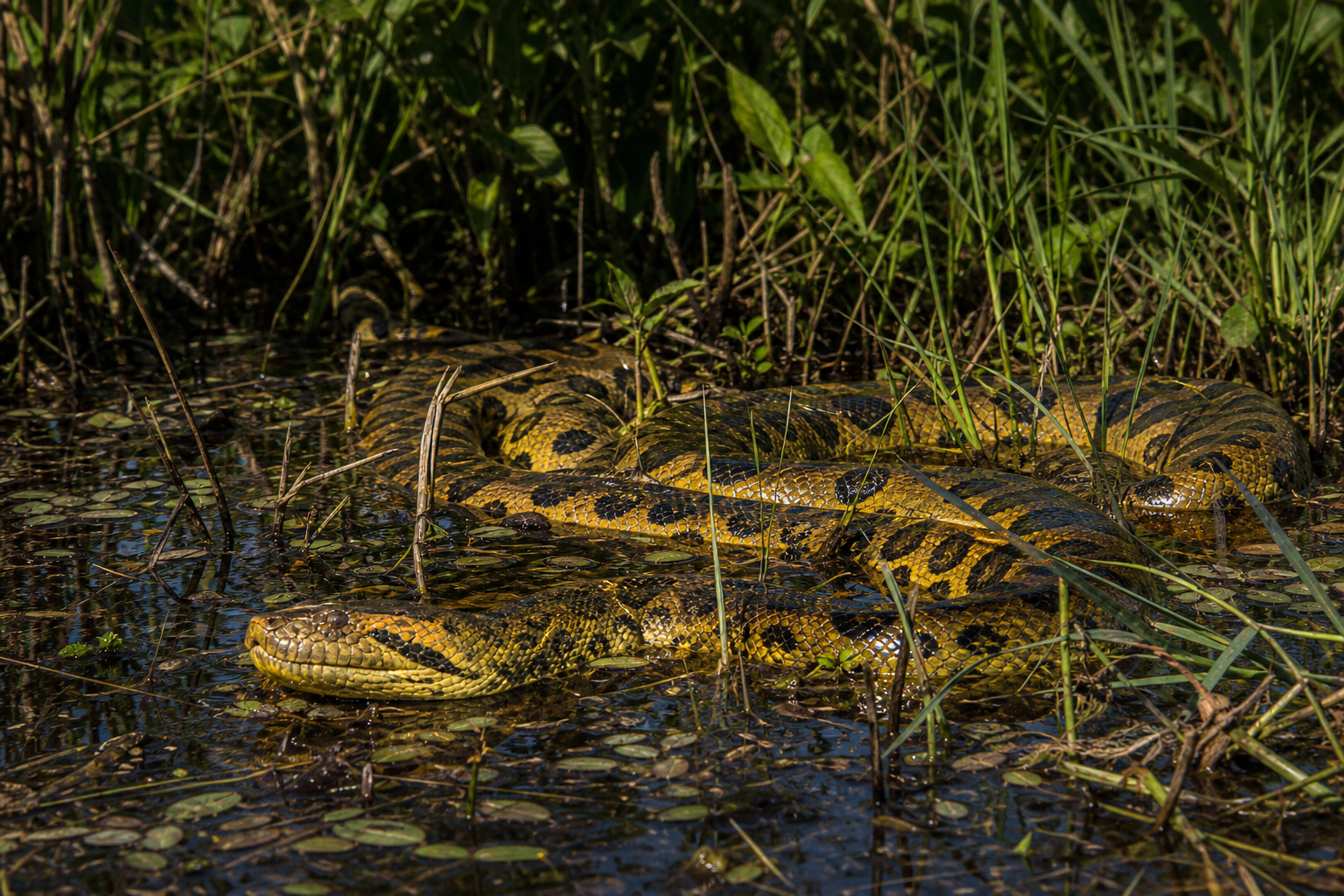
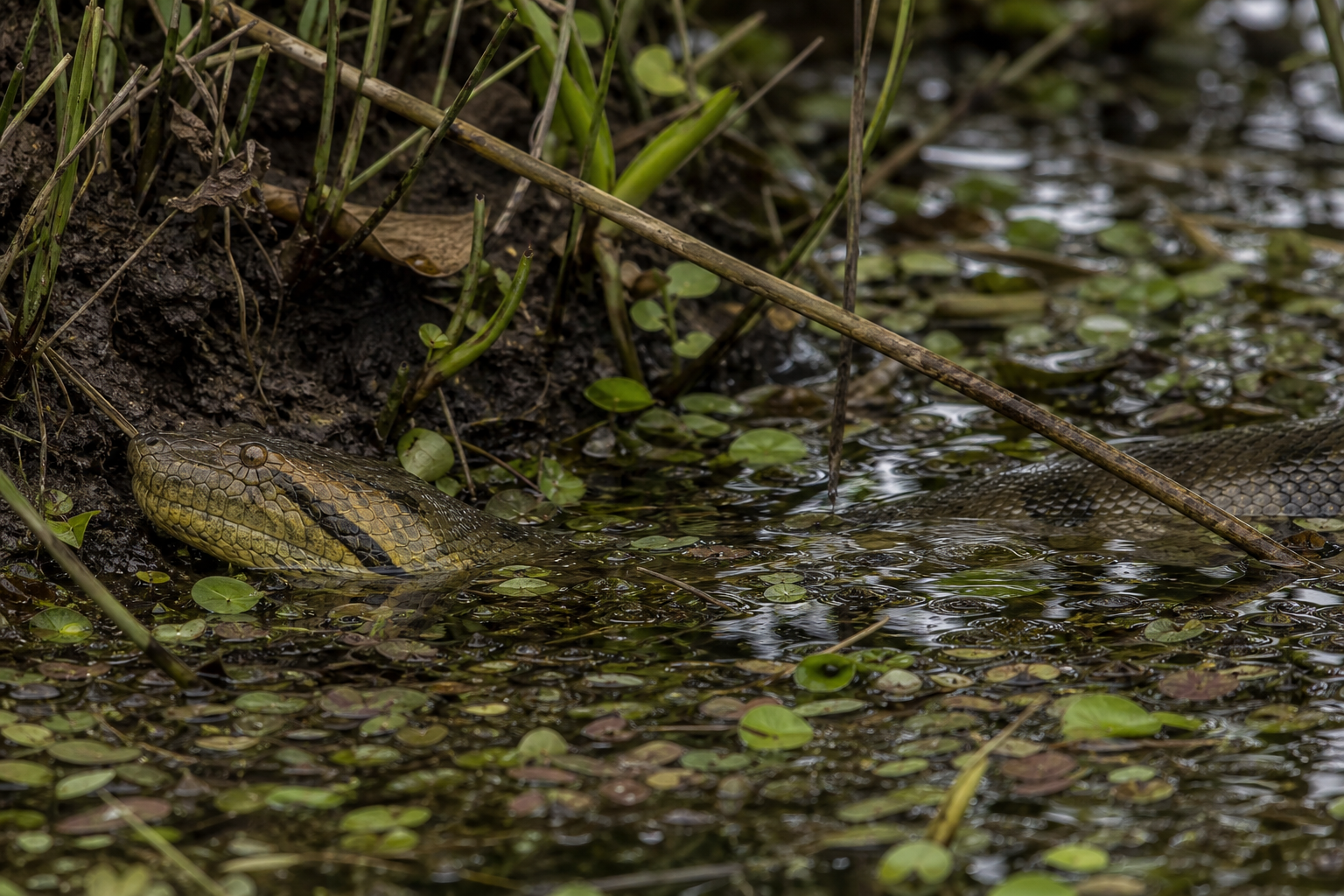
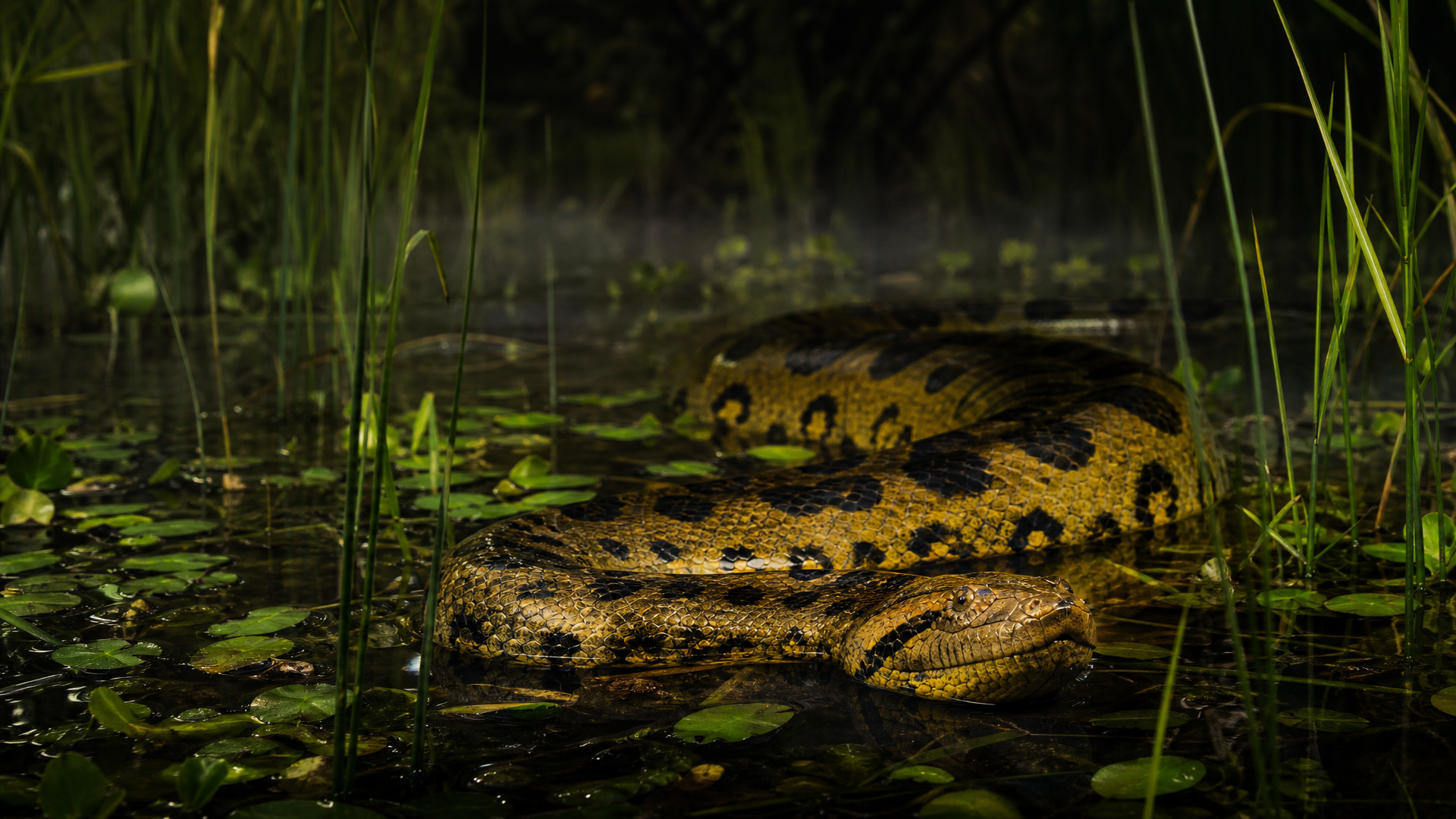
In a Paraguayan marsh at the edge of the Pantanal, the water is shallow enough to show every stem and dark enough to hide the body between them. A jacana steps across floating leaves. Mosquitoes thicken in the heat. Near the bank, a yellow-brown coil tightens by a fraction, and the pattern of the reeds stops being only reeds.
The yellow anaconda is a snake of margins and patience. It does not need open display. It needs water, cover, and the moment when another animal comes too near without understanding the shape beside it. The head lifts low, eyes and nostrils set for a life at the surface. The body is heavy with muscle, but in water it becomes fluid, turning through channels and grass with a slow assurance that makes size almost irrelevant. On cooler mornings it may lie partly exposed, patterned skin warming in the sun, then slip away before the bank has seemed to change.
This snake is part of the wetland's hidden discipline. It takes the unwary at the edge and is itself watched by caimans, birds, and people. Drainage, persecution, and altered floods press on the quiet places it uses. In the reeds, the coil relaxes. The marsh looks ordinary again, which is exactly how the snake survives.