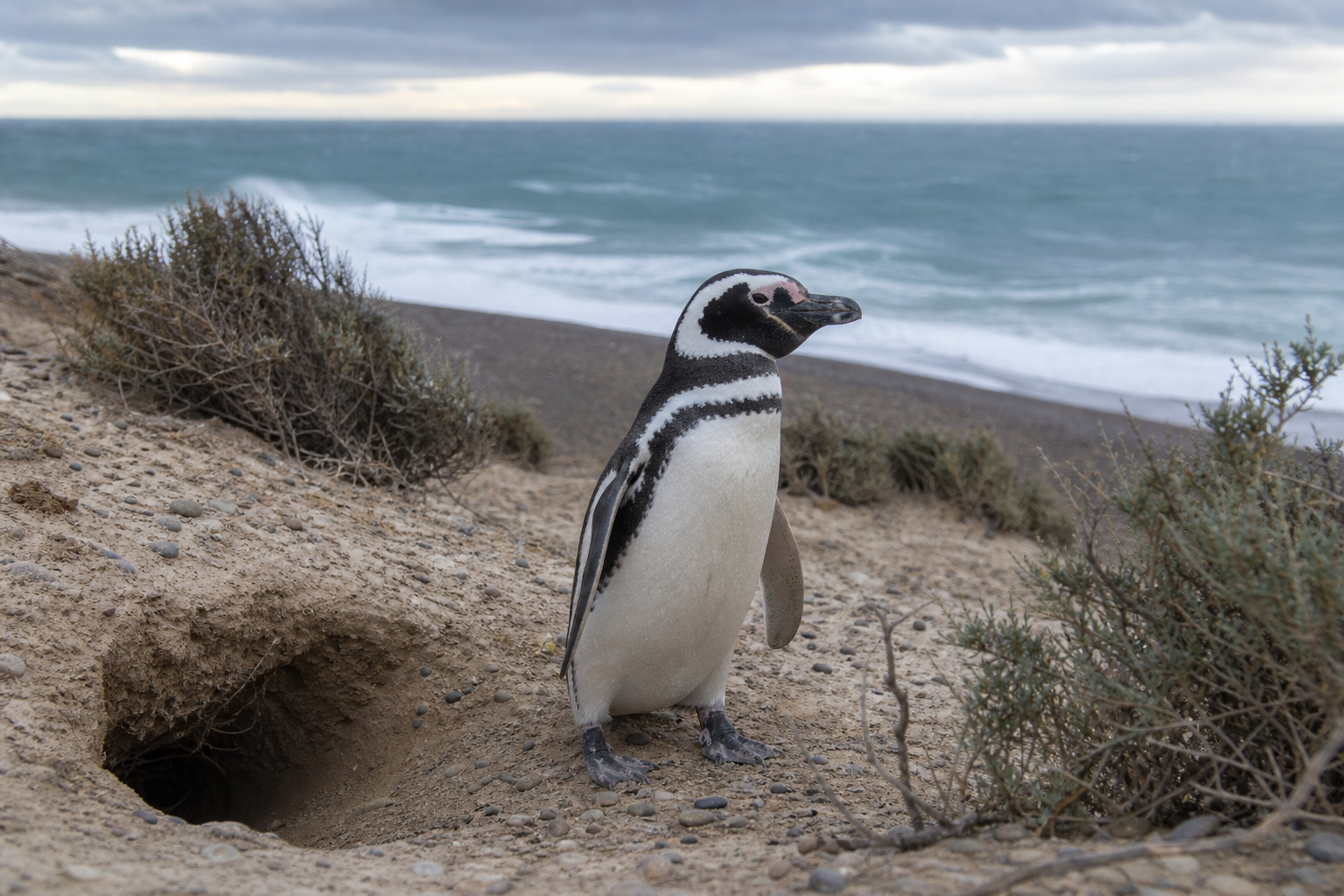
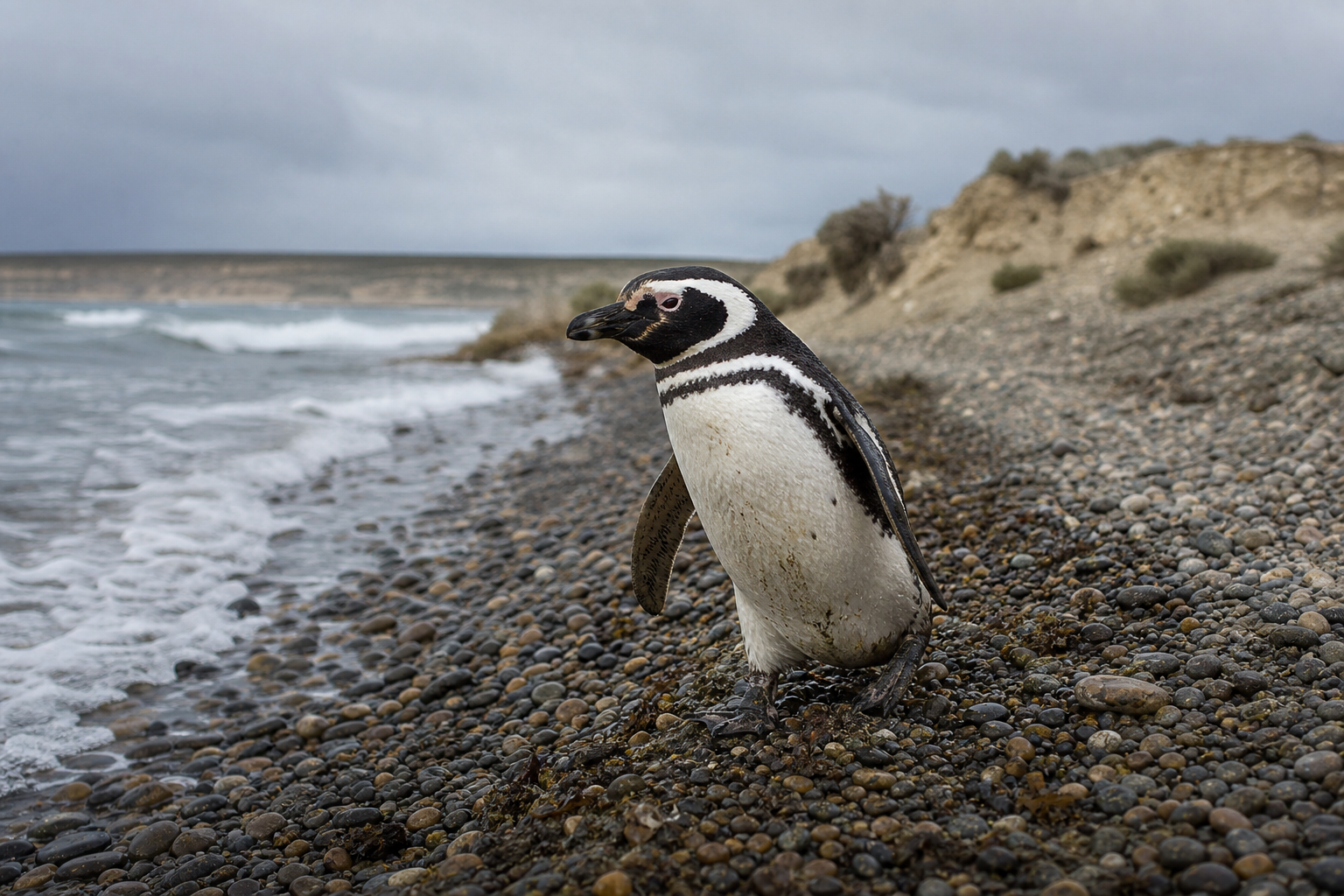
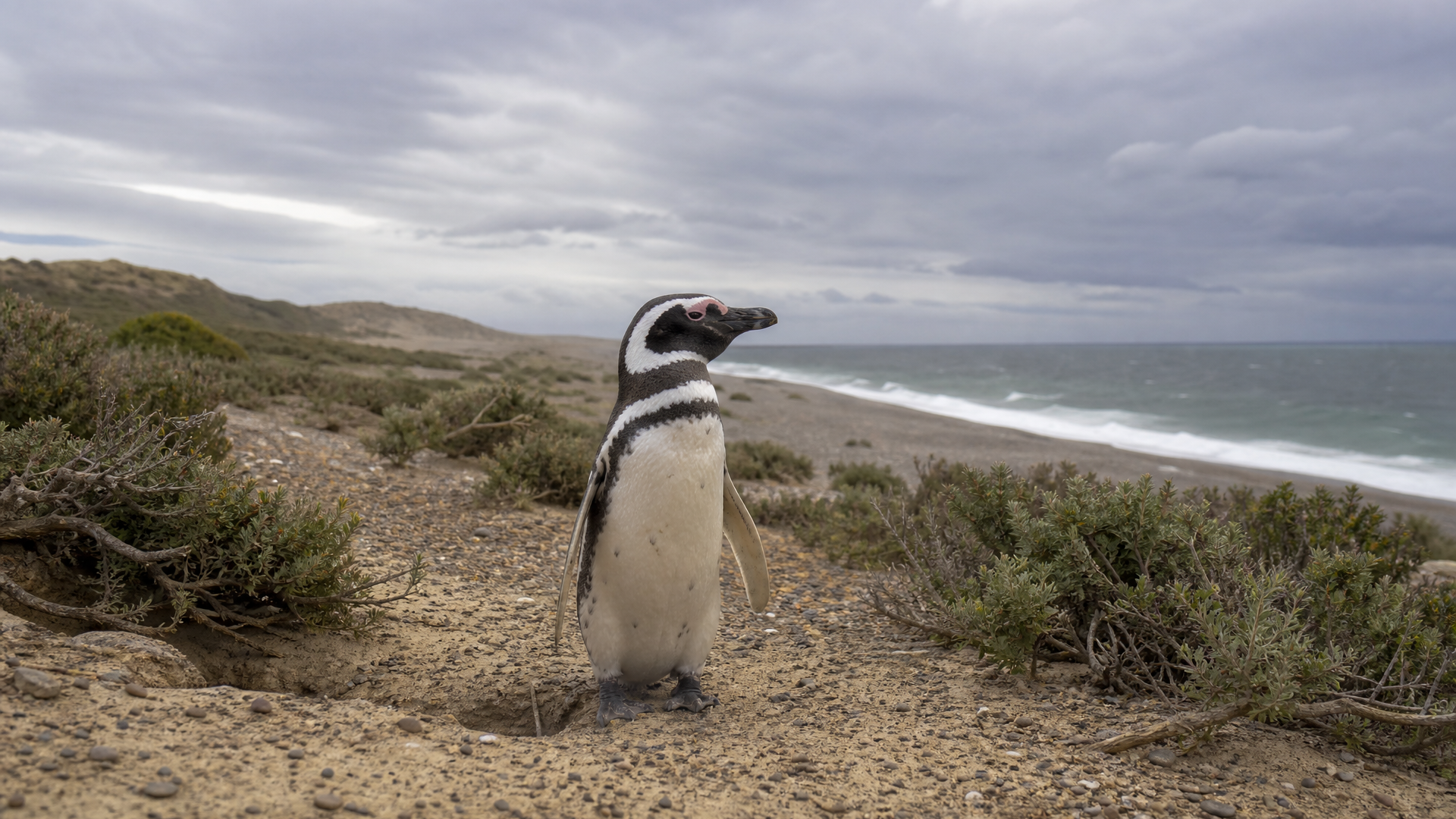
At Punta Tombo, the land smells of dust, salt, guano, and warm burrows. Penguins come up from the Atlantic in small processions, black backs shining, white bellies marked with sand. They cross the open ground with grave little steps, passing scrub, stones, and waiting gulls as if the sea has sent messengers inland.
The Magellanic penguin lives between two elements that ask different things of the body. In water it is quick and exact, wings turned to flippers, body cutting after fish through cold green light. On land it becomes more vulnerable and more stubborn. It calls from burrow entrances, brays to a mate, guards an egg or chick against heat, hunger, and the sharp attention of predators. A colony is never quiet for long. Feet scrape. Bills snap. Adults return from the ocean with salt drying on their feathers and a route in their heads that leads through thousands of similar bodies to one particular nest.
This penguin gives Patagonia a seabird story with earth under it. It ties ocean currents to scrubland, fish to burrows, and private pair bonds to the noise of a colony. Oil, shifting prey, heat, and fishing pressure reach even this dry coast. Still, at evening, a line of penguins climbs from the surf and the land receives them one by one.