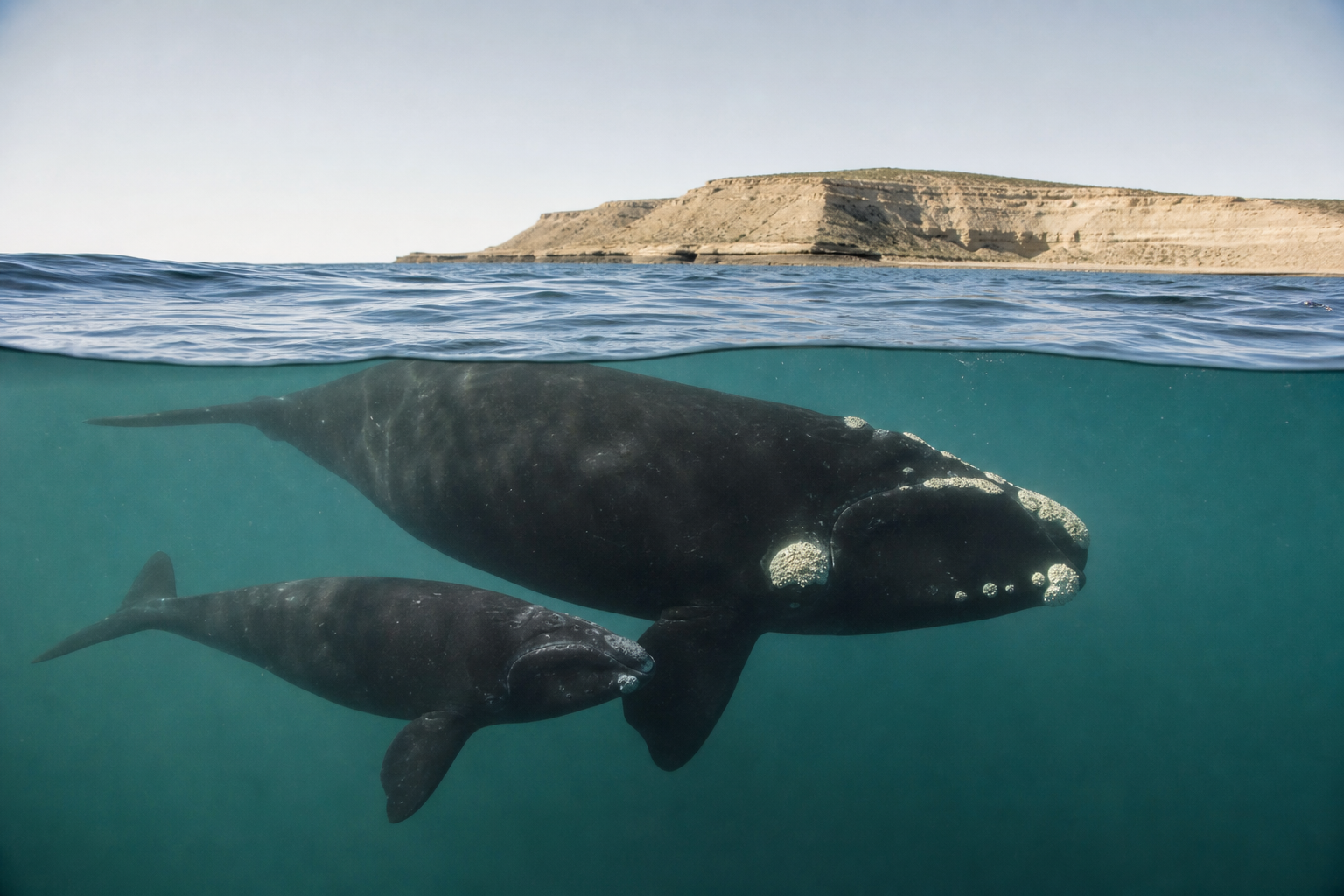
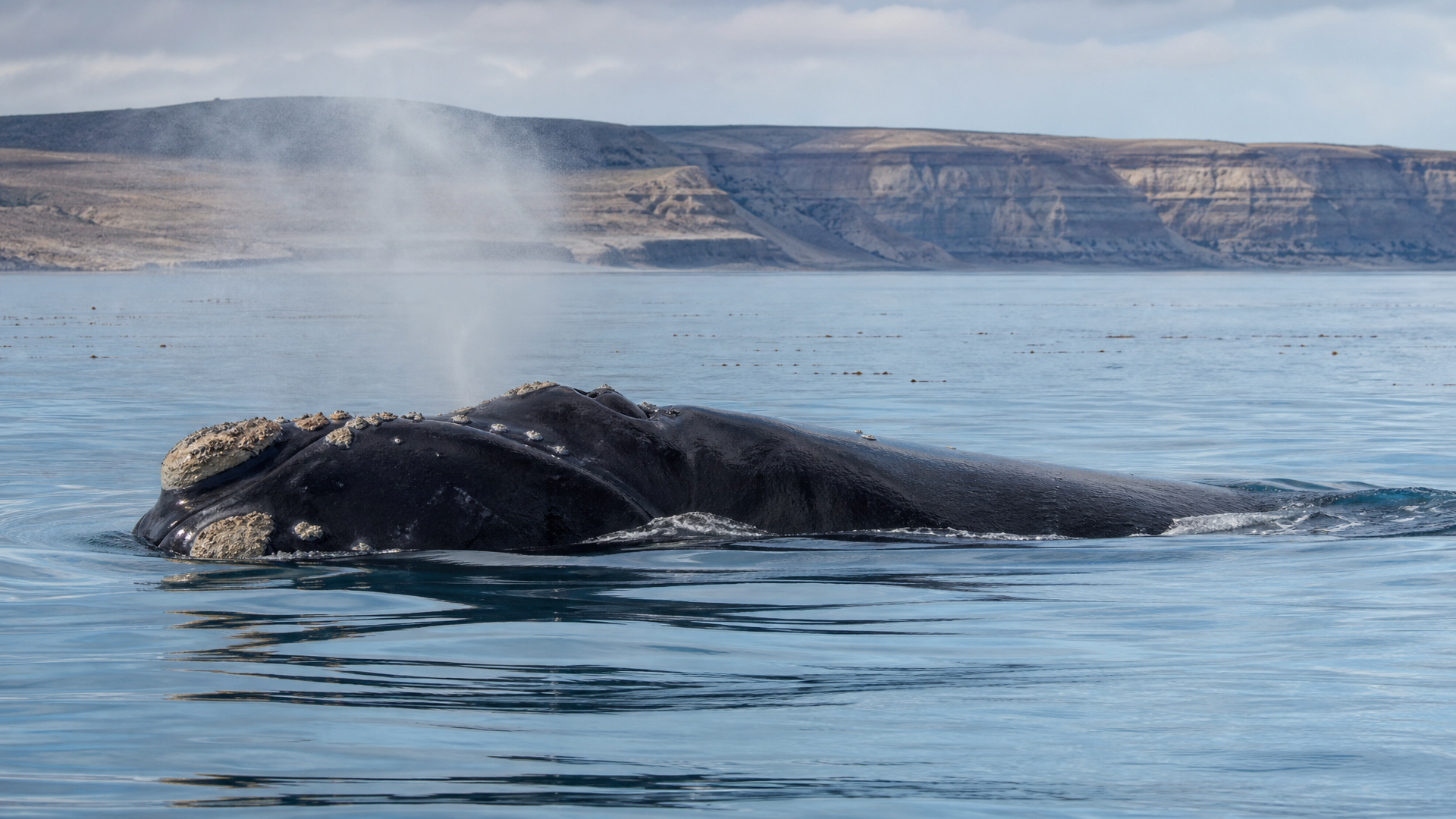
In the quiet waters off Peninsula Valdes, the sea can look almost domestic, held between pale cliffs and a low sky. Then a broad back rises without hurry. The whale breathes, and the sound rolls across the surface like wind entering a cave. A calf turns beside her, small only because the mother is so vast.
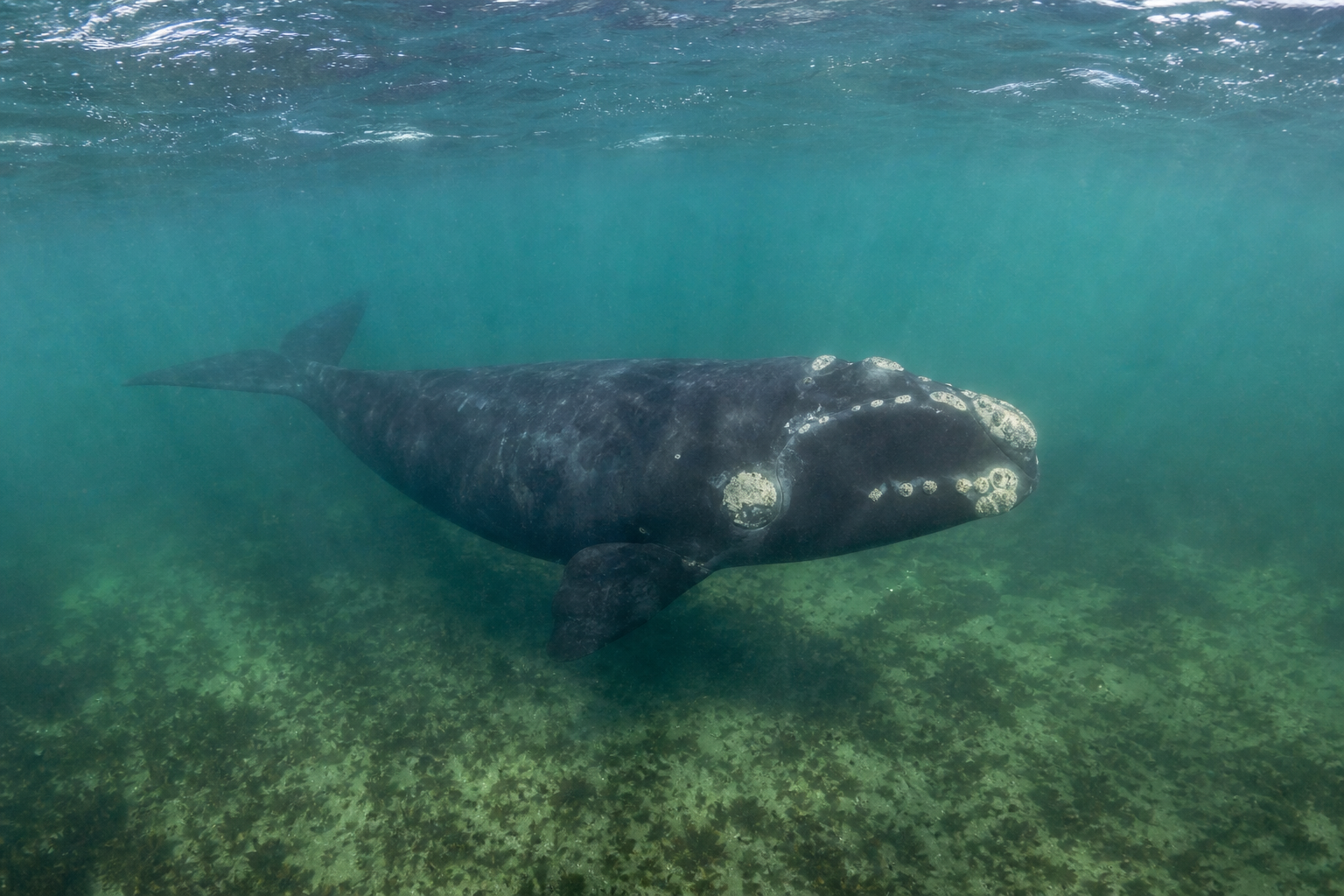
The southern right whale brings softness to size. Its head is heavy with callosities, its mouth long and bowed, its movements slow enough for the eye to follow and still full of hidden force. In the sheltered bays, mothers and calves rest, nurse, roll, and touch. A tail lifts and hangs dripping before it sinks. A pectoral fin rises like a dark sail. Sometimes the whole body breaches, and the quiet water breaks apart around the fall. Yet the deepest impression is not spectacle. It is intimacy on a scale that unsettles human measure: breath, milk, skin, patience, a calf learning the surface beside a body older than its fear.
These whales carry a history of being hunted so heavily that their name came from human convenience. Their return to Patagonian nurseries is real, but not complete, and ship strikes, entanglement, noise, and changing seas still press around them. When a mother rests in shallow water with her calf tucked close, the bay holds both survival and memory.