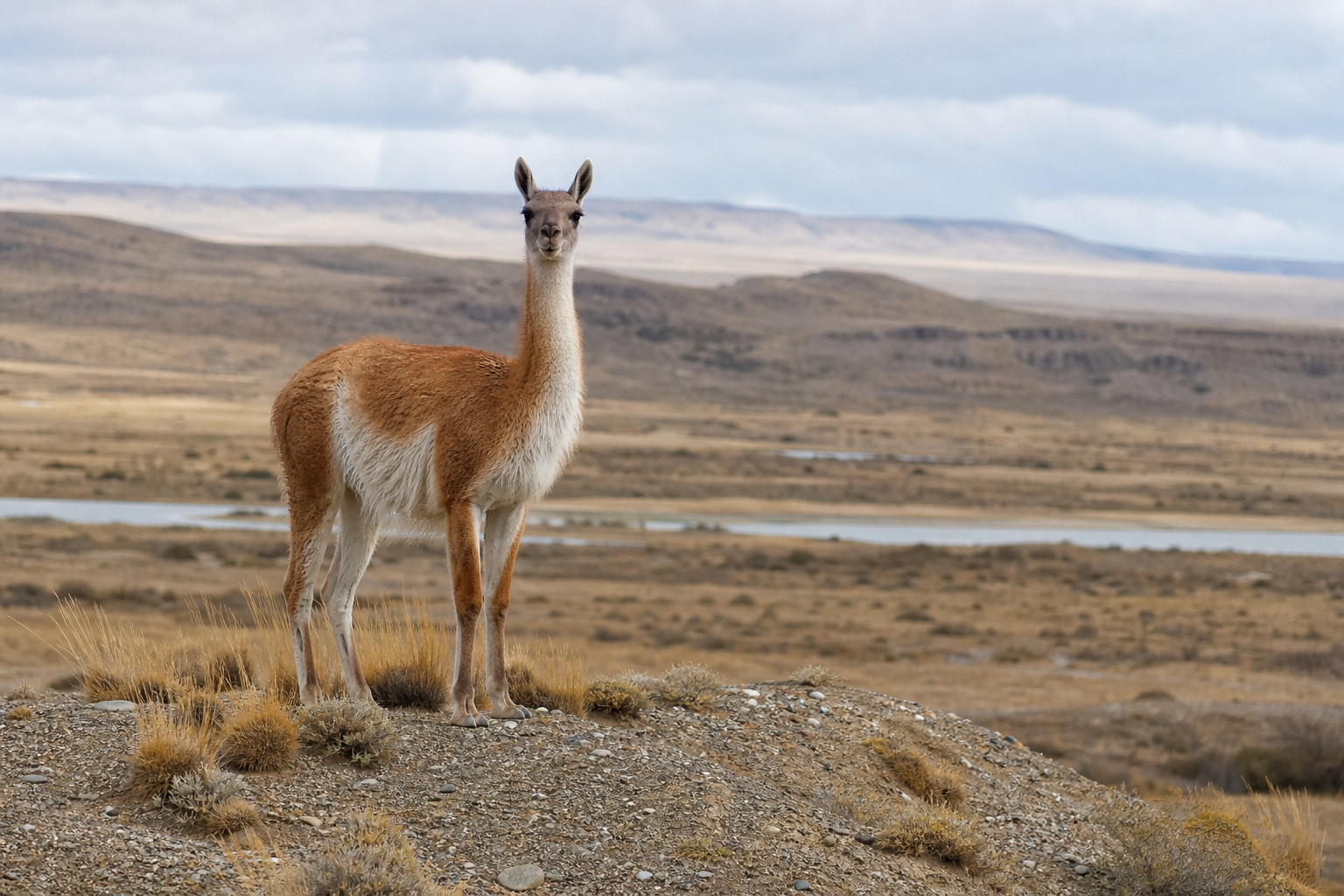
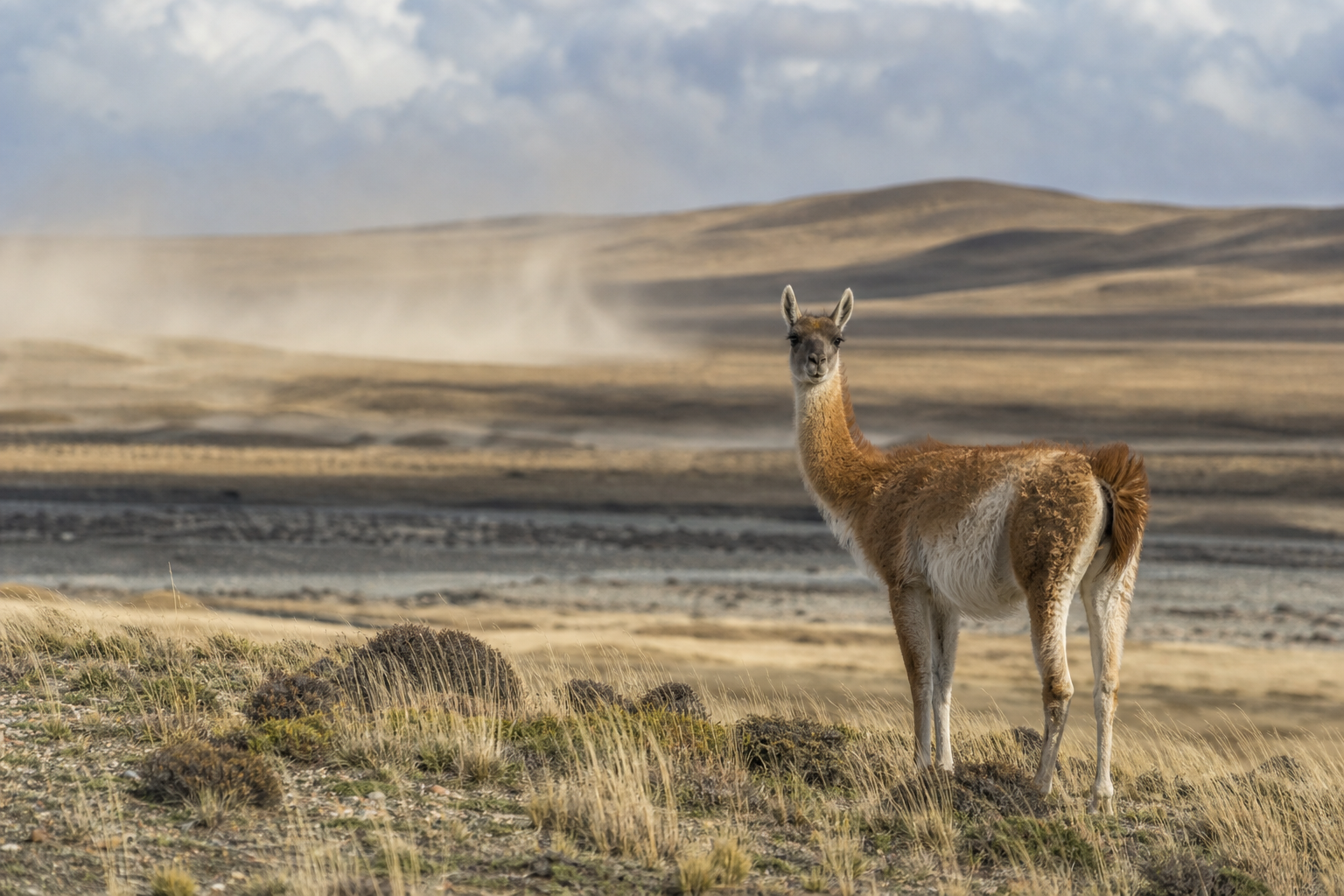
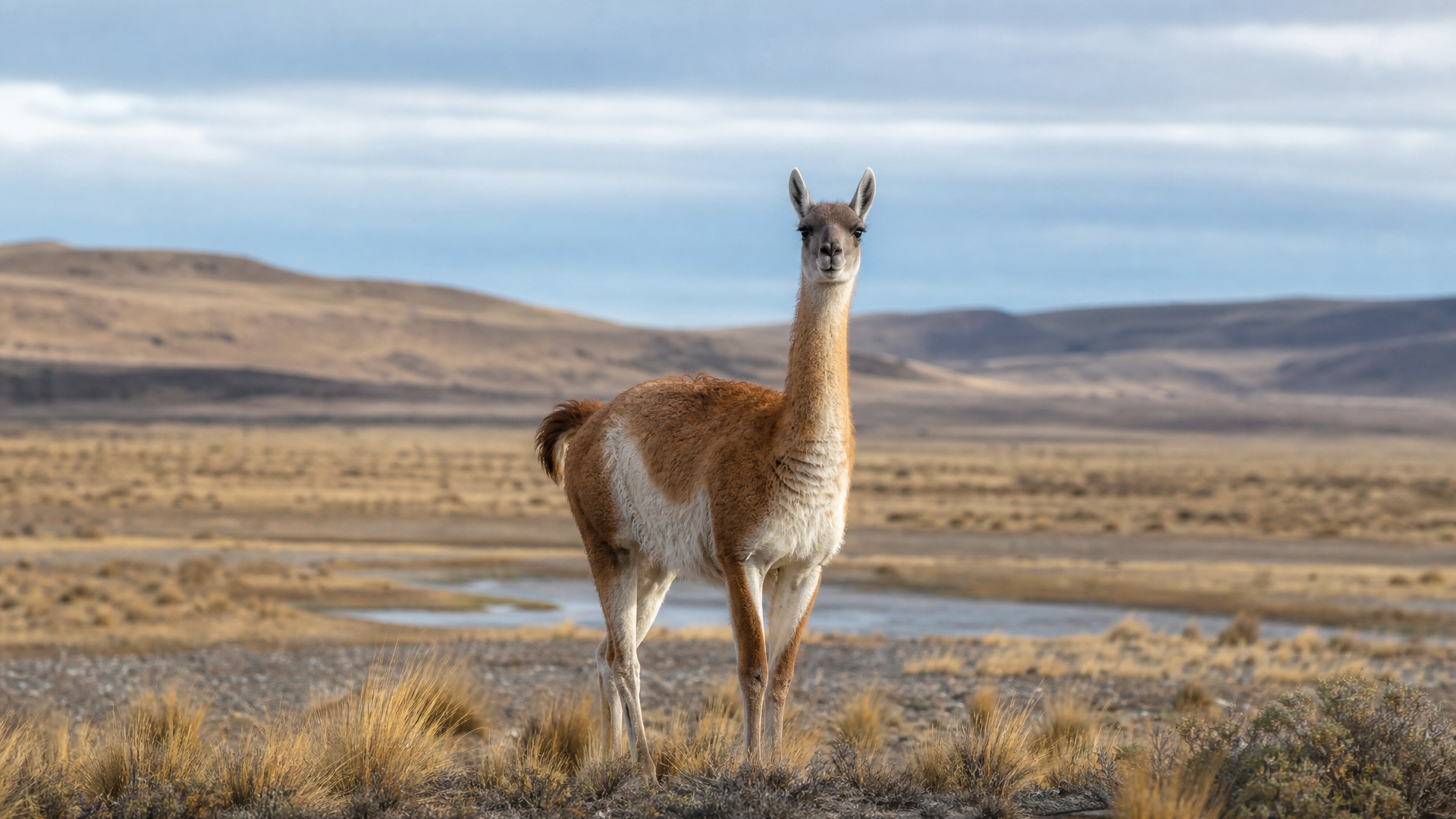
On the Patagonian steppe, the first light arrives low and hard, sliding over grass, gravel, and thorn. A sentry stands on a rise with its neck lifted into the wind. Below it, the herd feeds in loose company, pale bodies spaced across the open ground like pieces of the same weather.
The guanaco is made for exposure. There is little room here for animals that depend on deep cover, so it survives by seeing early and moving well. Its long legs carry it over stony ground with springing ease, and its call, sharp and nasal, can turn a scattered herd into motion in a breath. Young animals test their legs in sudden bursts, while adults keep feeding with one eye on the ridges. They are social, watchful, and quarrelsome in the breeding season, when males chase and bite and spit with a rough urgency that makes the empty plain feel crowded with rules. Their calm is never quite calm. It is vigilance stretched thin across distance.
For Patagonia, the guanaco is more than prey. It is grazer, pathmaker, seed mover, and the living center around which many other stories turn. Where fencing, hunting, disease, or competition with livestock break the old movements, the steppe loses one of its most readable signs. A herd lifts its heads together, and for a moment the wind itself seems to listen.