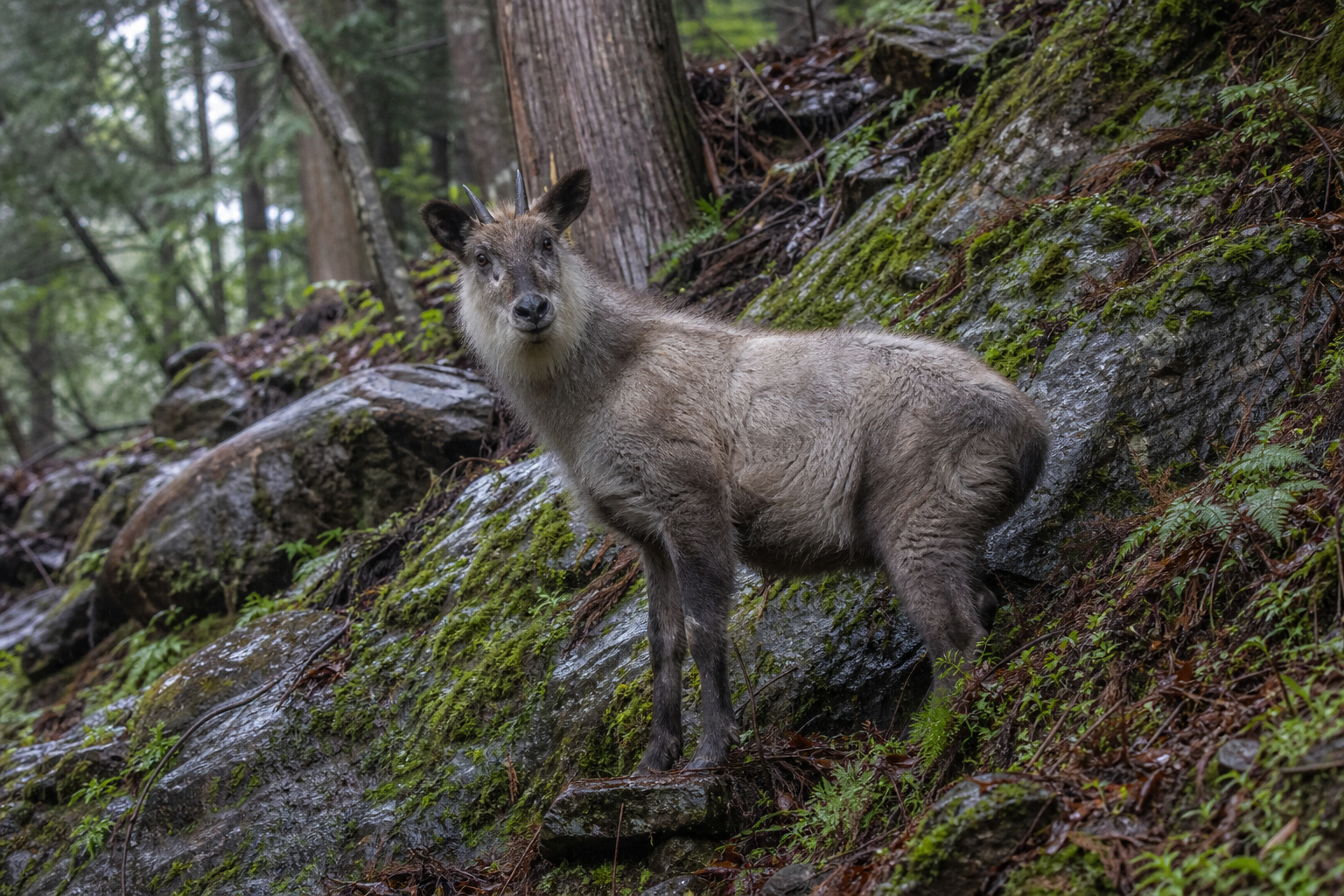
Rain darkens the beech trunks on a Honshu slope, and the path seems empty until a gray body resolves among the rocks. The serow stands still with ears forward, short horns black against wet leaves, legs braced on ground that would make a careless foot slide.
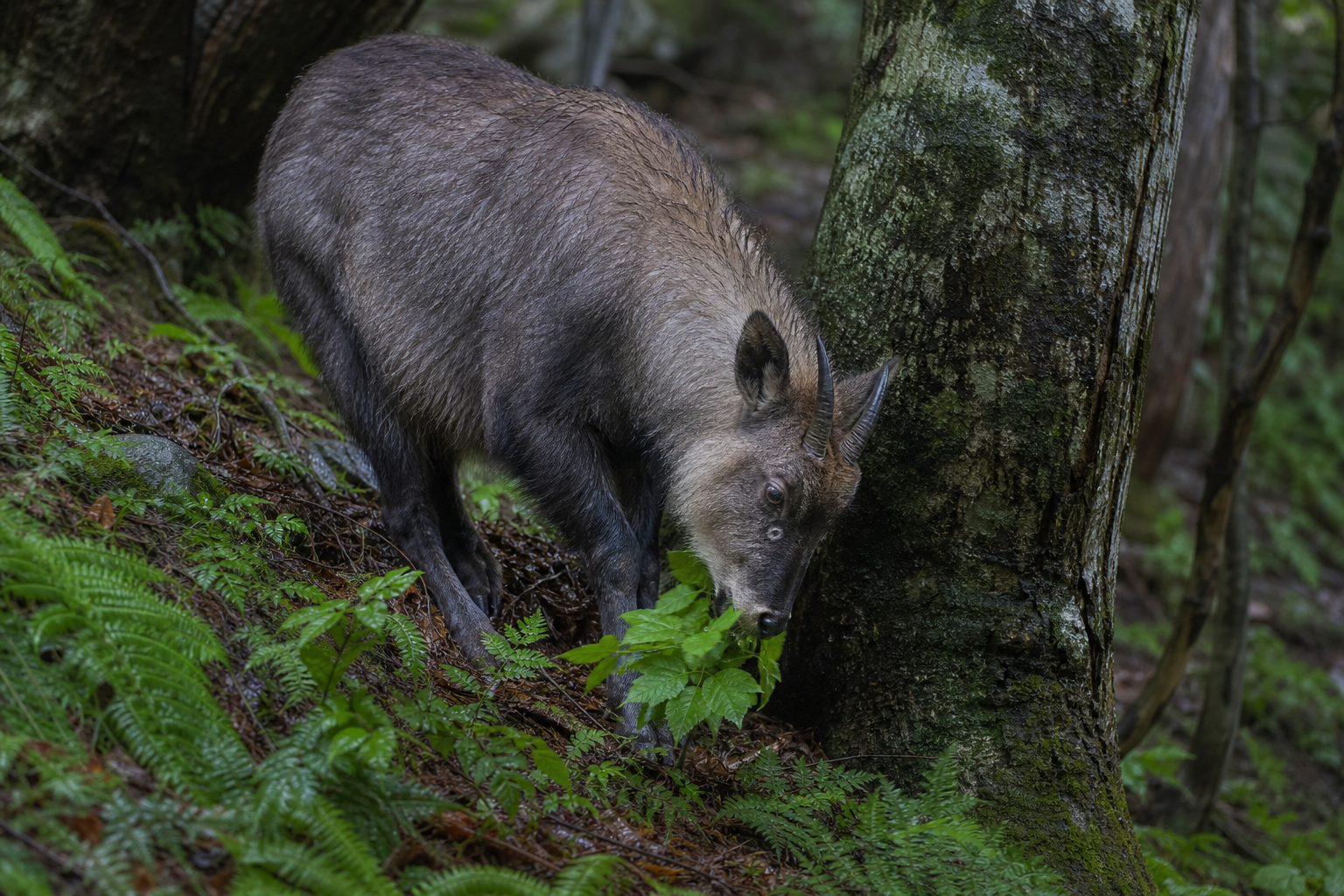
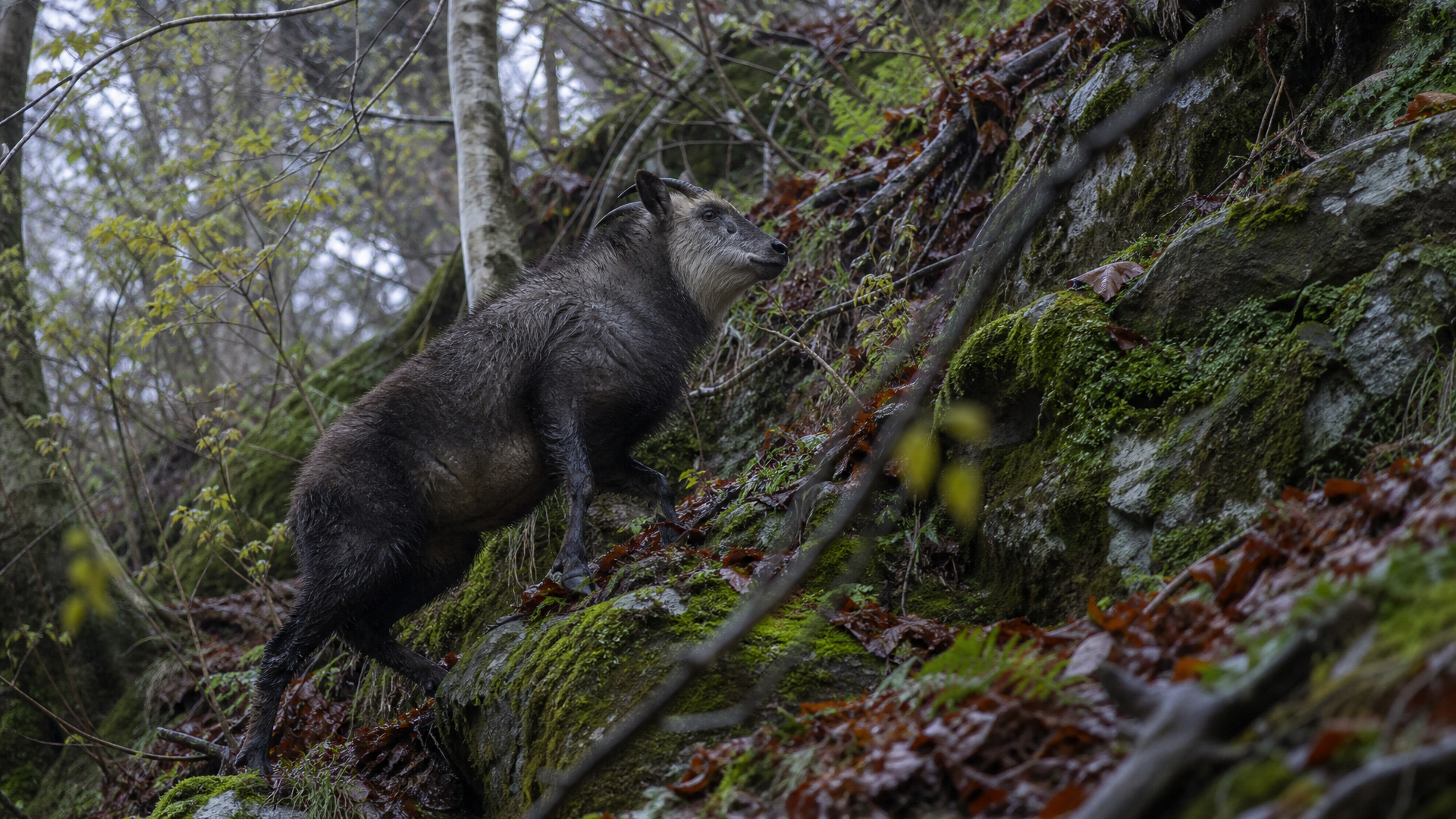
The Japanese serow is neither goat nor deer in the simple way the eye wants it to be. It is a mountain ungulate of compact strength, rough coat, and slow certainty. It moves through steep forest with the confidence of an animal that trusts edges: a ledge, a root, a gap between stones. Scent glands mark its claim. A twig bends. The upper lip gathers leaves. Then the body freezes again, becoming part of the slope.
There is a private quality to the animal. It does not turn the mountain into theater. It asks the watcher to notice restraint: the angle of a hoof, the depth of the coat, the black eye measuring distance through rain.
Japan made the serow a symbol of wild mountain country, but symbols still need living forest. Plantations, roads, heavy snow, and changing relationships with people alter the slopes it reads so well. The serow steps upward, and the wet leaves close behind it without a sound.