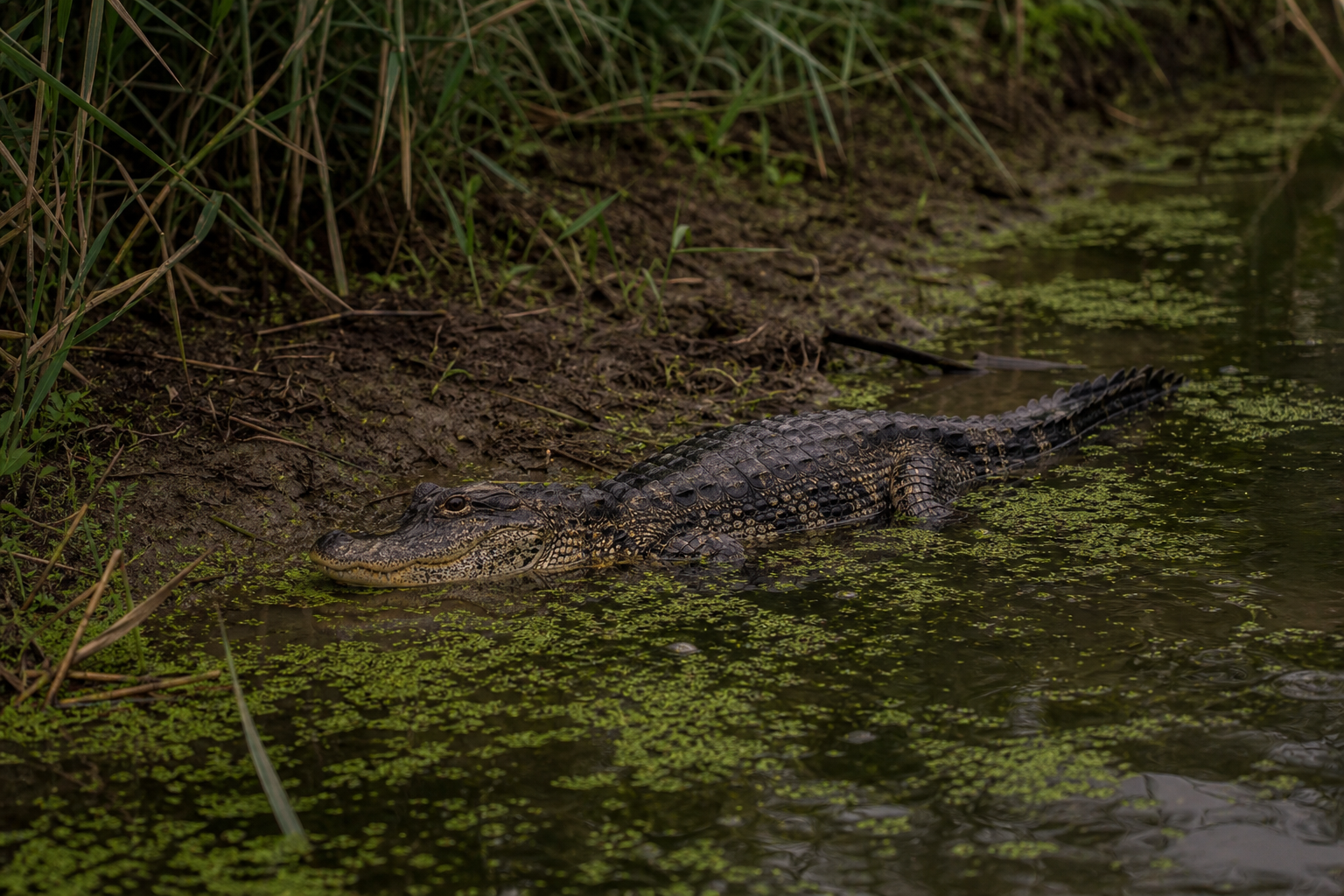
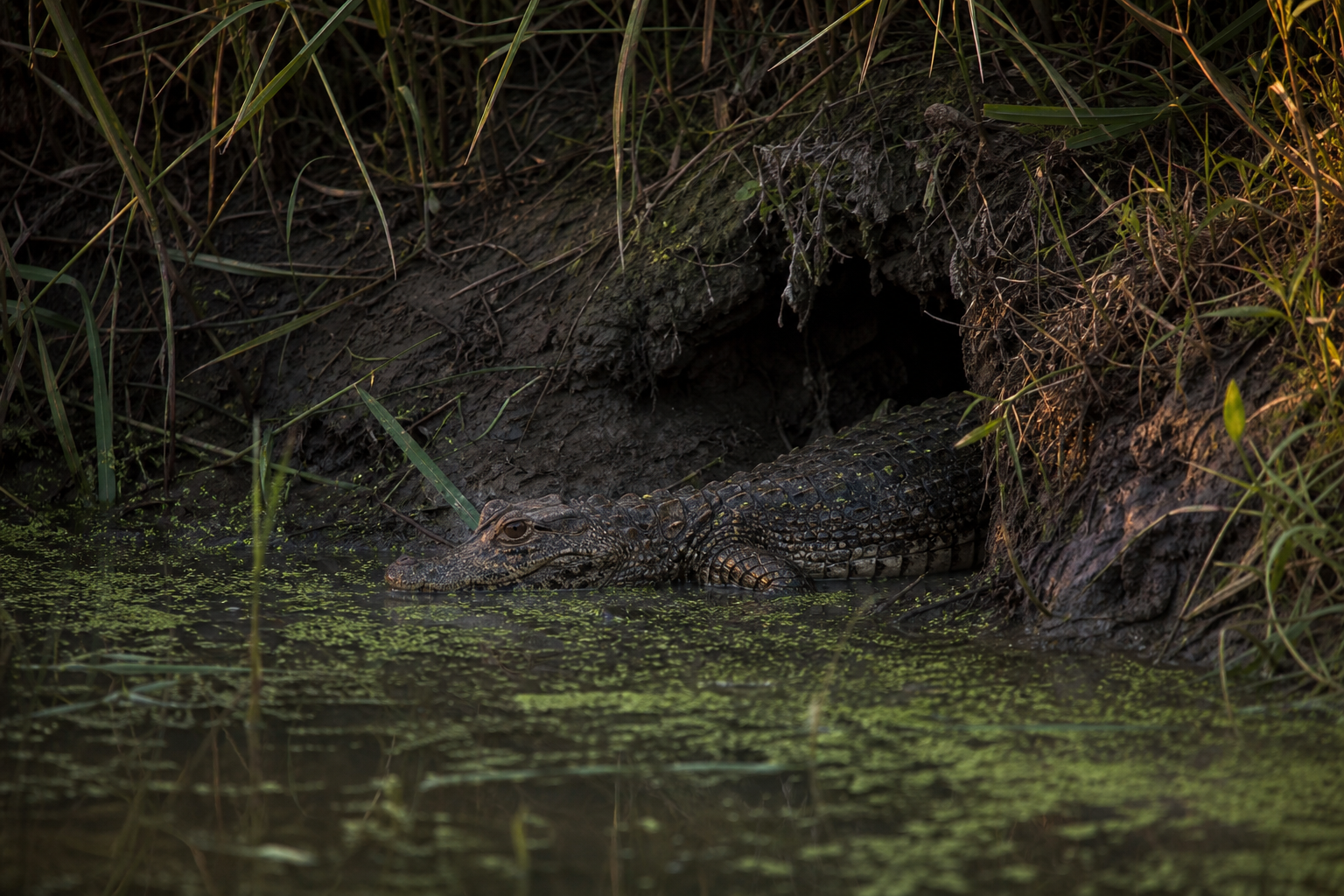
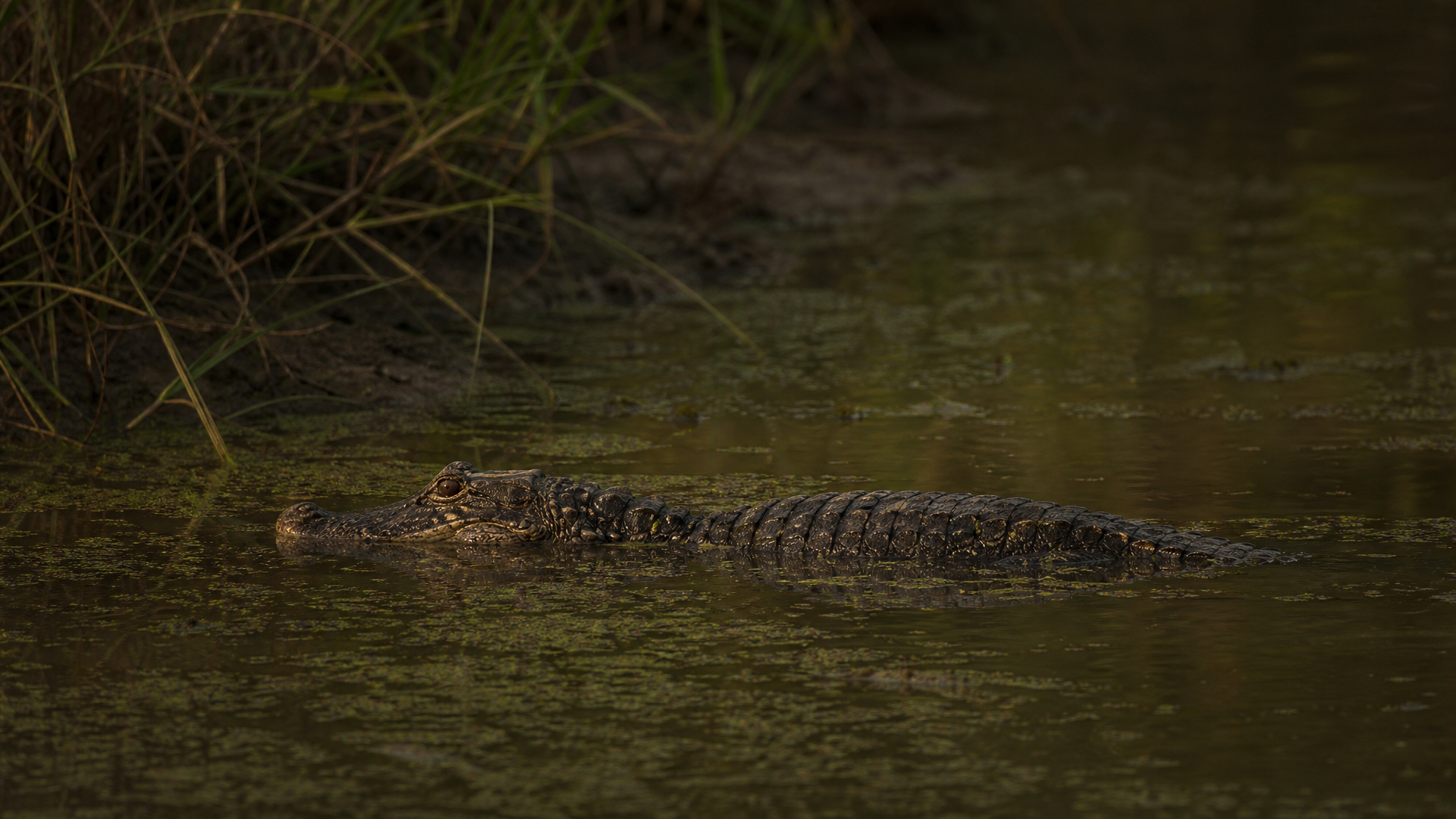
At dusk in the lower Yangtze country, the pond edge becomes difficult to read. Duckweed, mud, and shadow gather into one dark surface. Then a low head rises, eyes and nostrils just above the water, and the past looks out without making a ripple.
The Chinese alligator is modest beside its American relative, but nothing about it feels slight when it is near. The body is armored, the tail muscular, the snout blunt and watchful. It slips between water and bank with the secrecy of an animal that knows the value of being overlooked. Burrows cut into the mud hold cooler air, shelter, and the slow pulse of seasons. In summer, a low bellow can travel across ponds and paddies like a sound from under the earth.
It belongs to a wetland world that has been remade again and again by fields, channels, houses, and flood control. The animal now persists in fragments of what once stretched more freely through the Yangtze basin.
Even so, the alligator's presence changes the scale of a pond. Frogs call, insects skim, reeds lean over brown water, and beneath them an ancient line remains unbroken. The head sinks. The surface closes. The mud remembers.