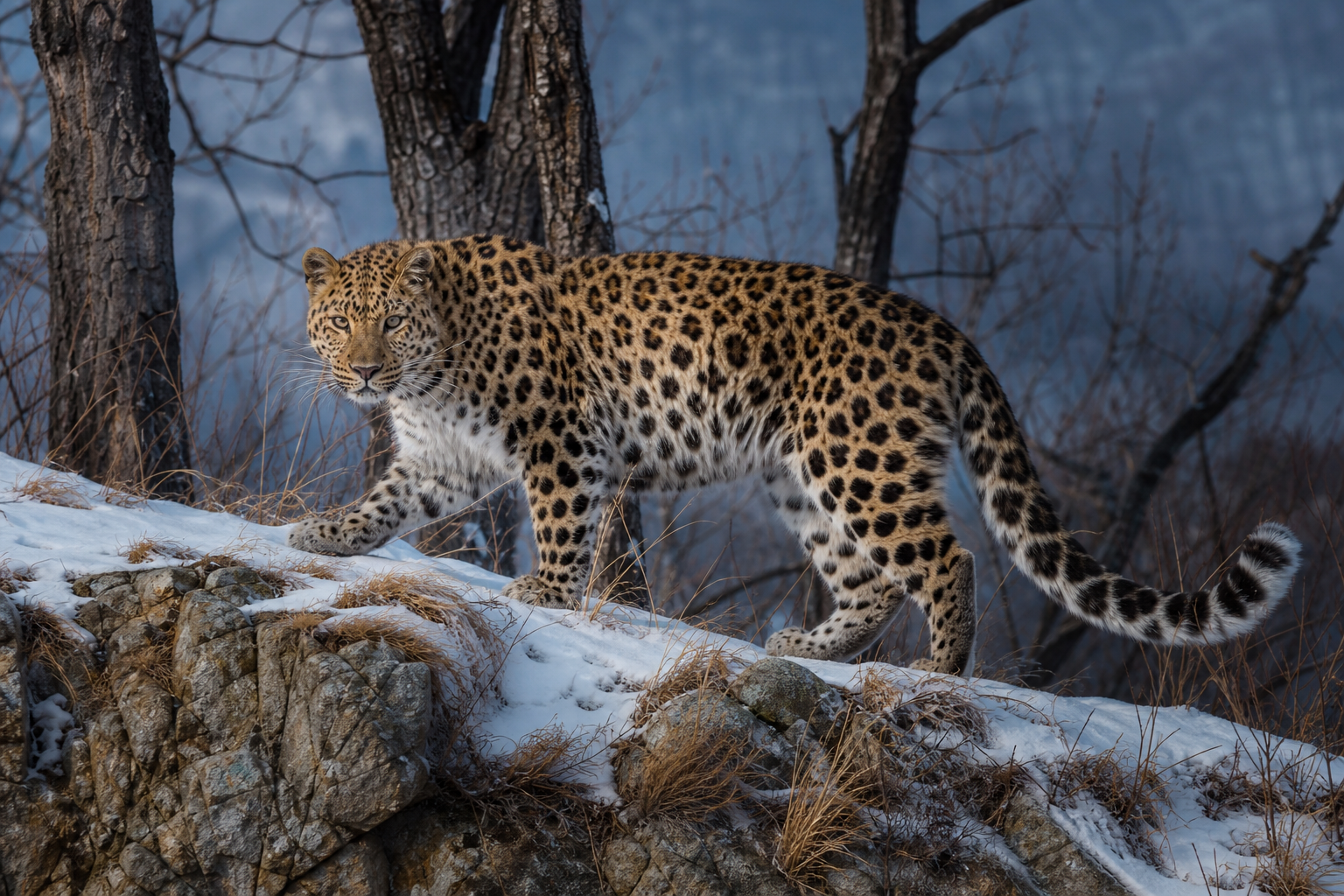
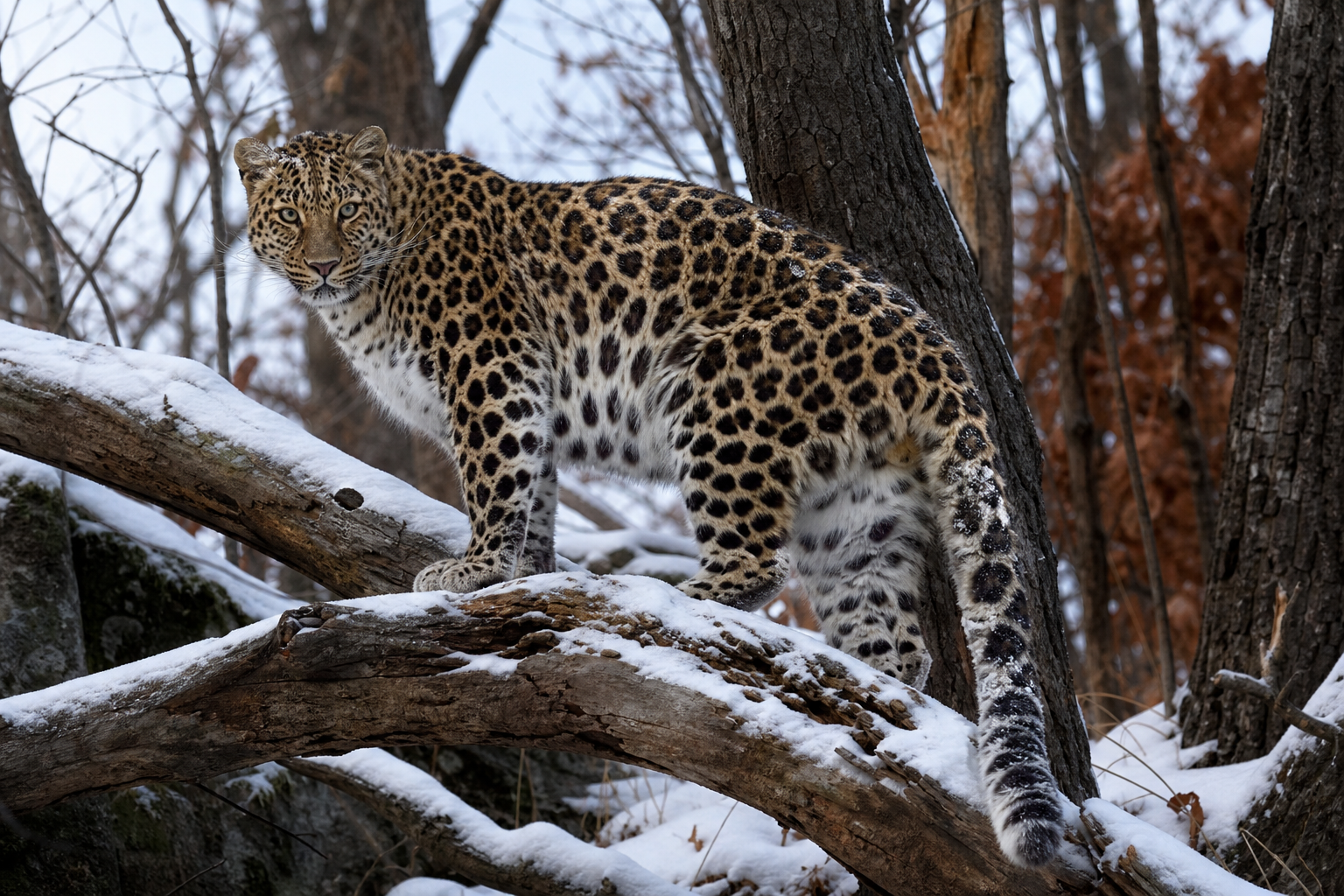
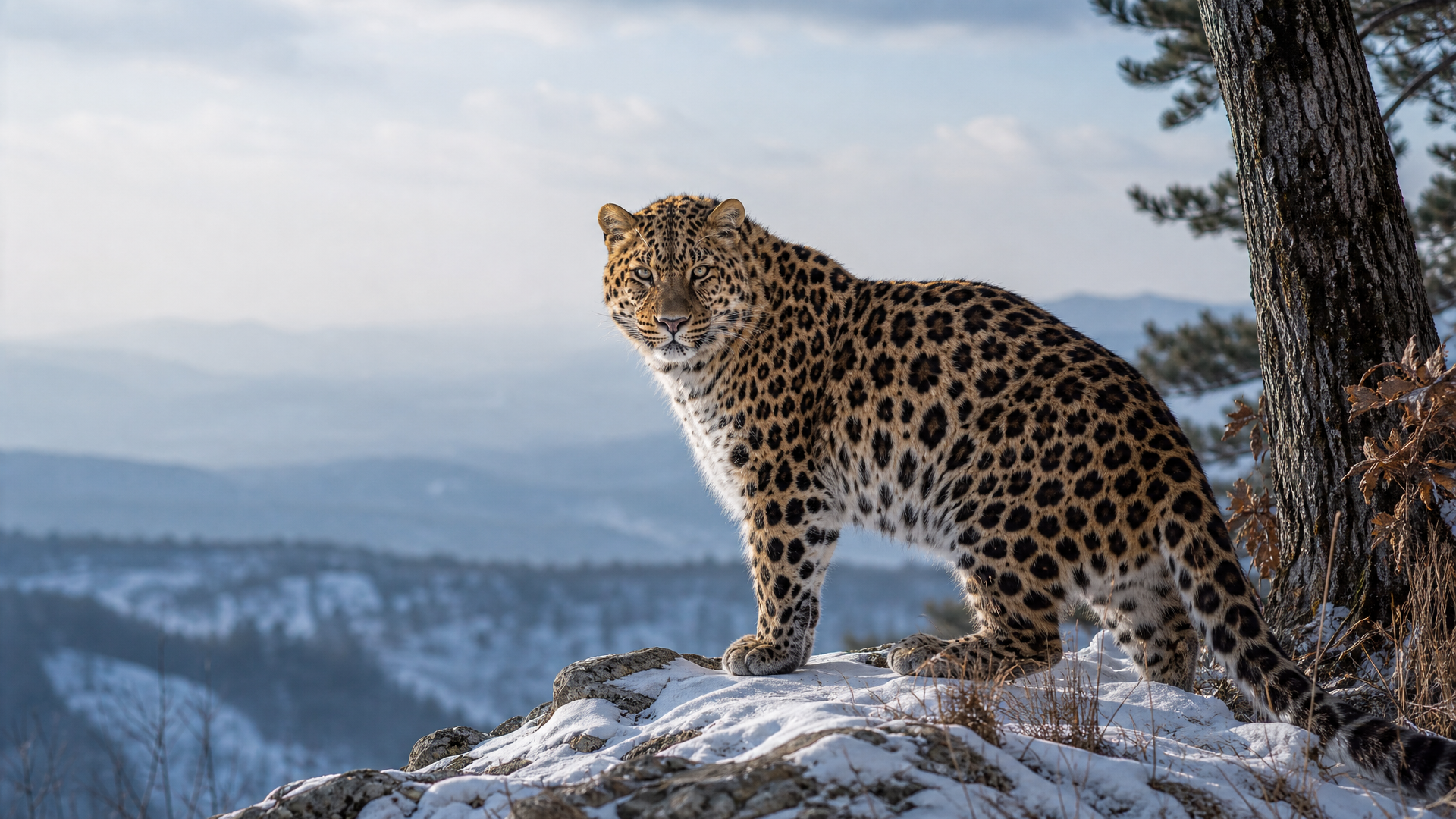
Morning light reaches the border hills slowly, touching oak, pine, and the hard crust of old snow. A spotted cat moves along a ridge where stone shows through the white. For a few seconds the rosettes break the trees into pattern, and then the leopard is gone.
The Amur leopard lives by exactness. Its winter coat grows thick and pale, softening the body against frost and bark. The tail balances each step along rock and fallen timber. It does not have the tiger's mass, so it survives through placement: where to climb, where to wait, where a deer trail narrows between trunks. Even its beauty is functional, a broken pattern that makes the animal difficult to hold in sight.
Solitude gives it room and cost. A single leopard must know enough country to feed, hide, and find another of its kind across forests now cut by roads, settlements, and old loss. Camera traps catch what the eye almost never receives: a shoulder passing, a face turned once toward infrared light, a life continuing by inches.
Where the Amur leopard remains, the forest has kept a rare thread of wildness. Each track in snow is both evidence and warning. The ridge empties, but the pattern stays in the mind.