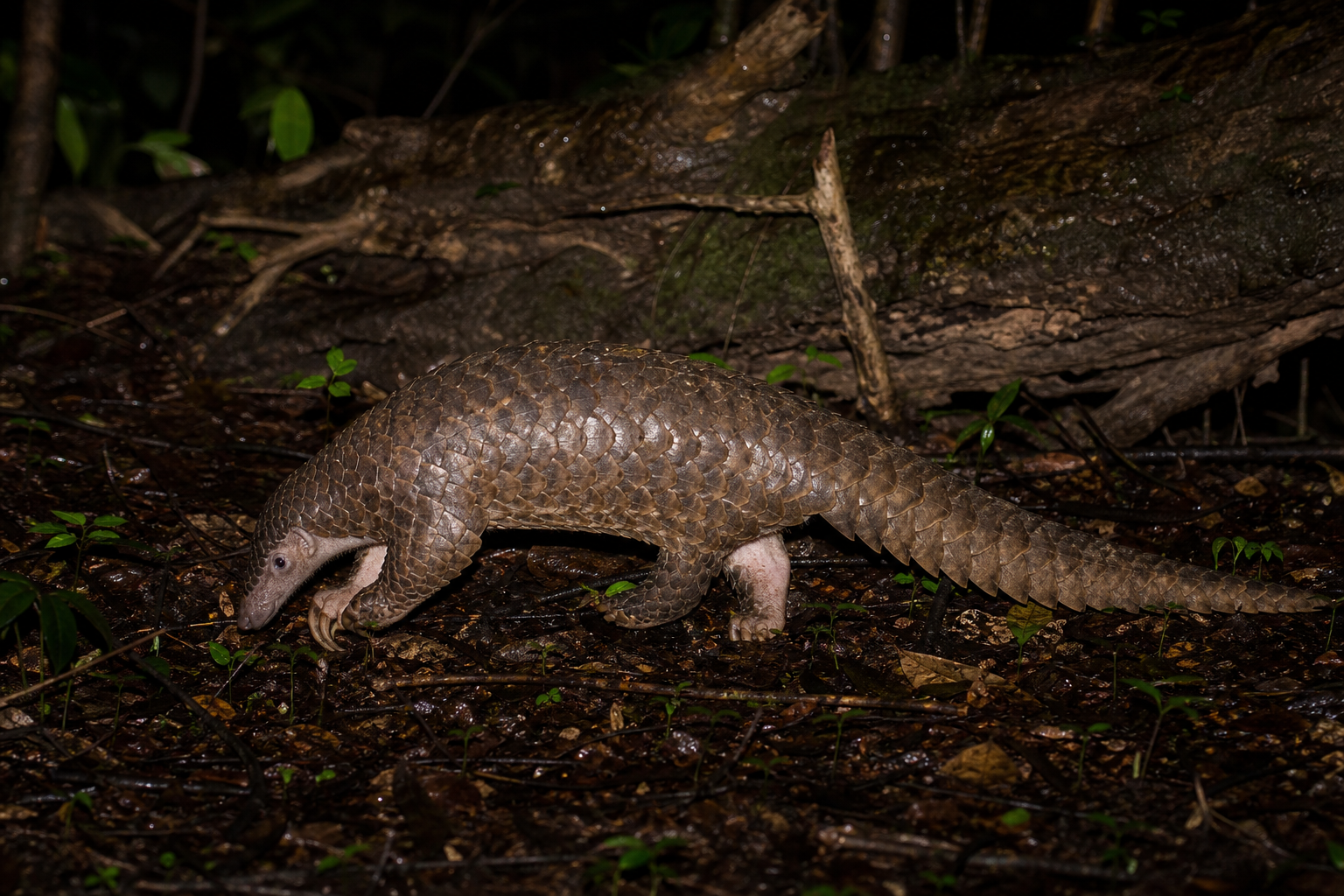
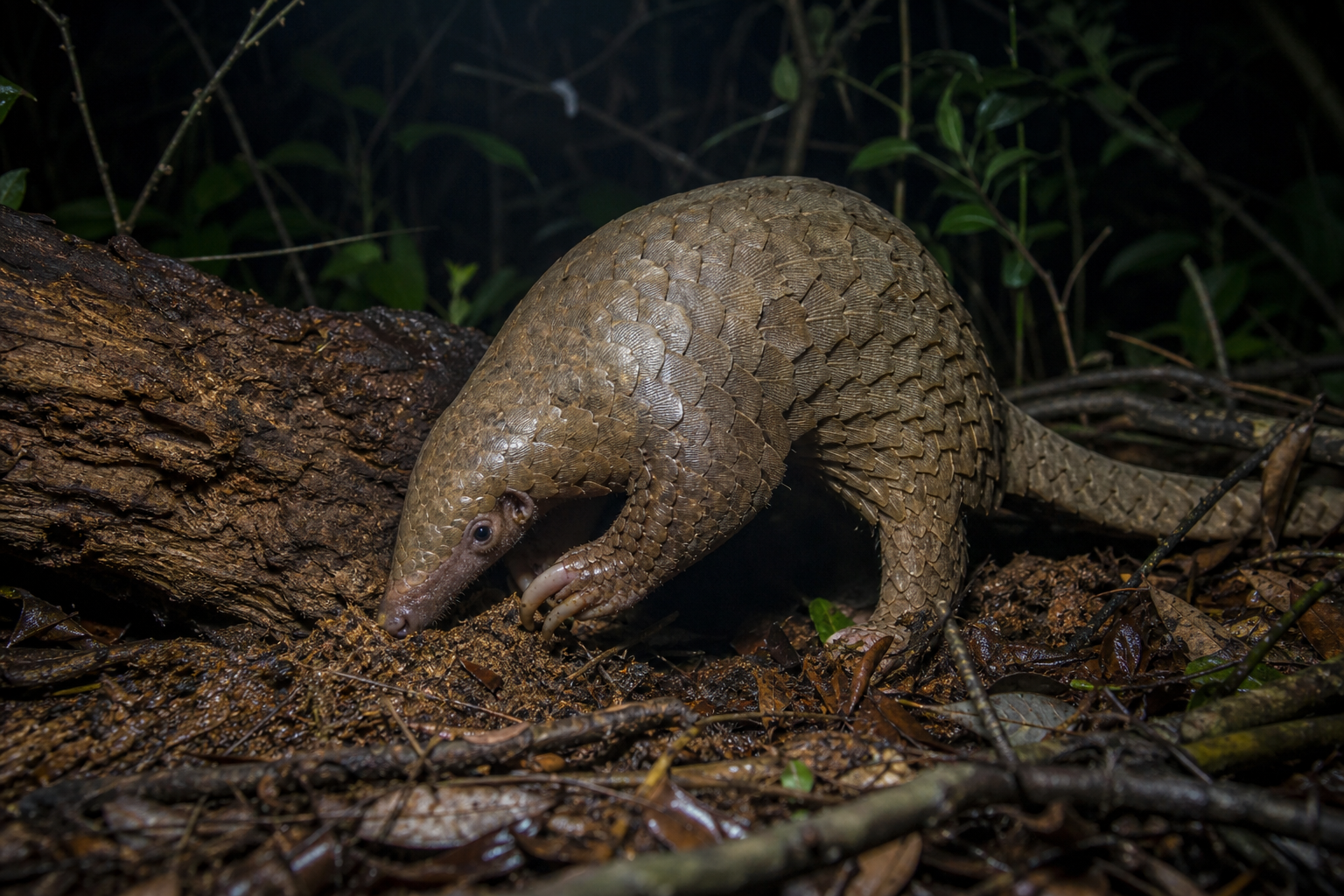
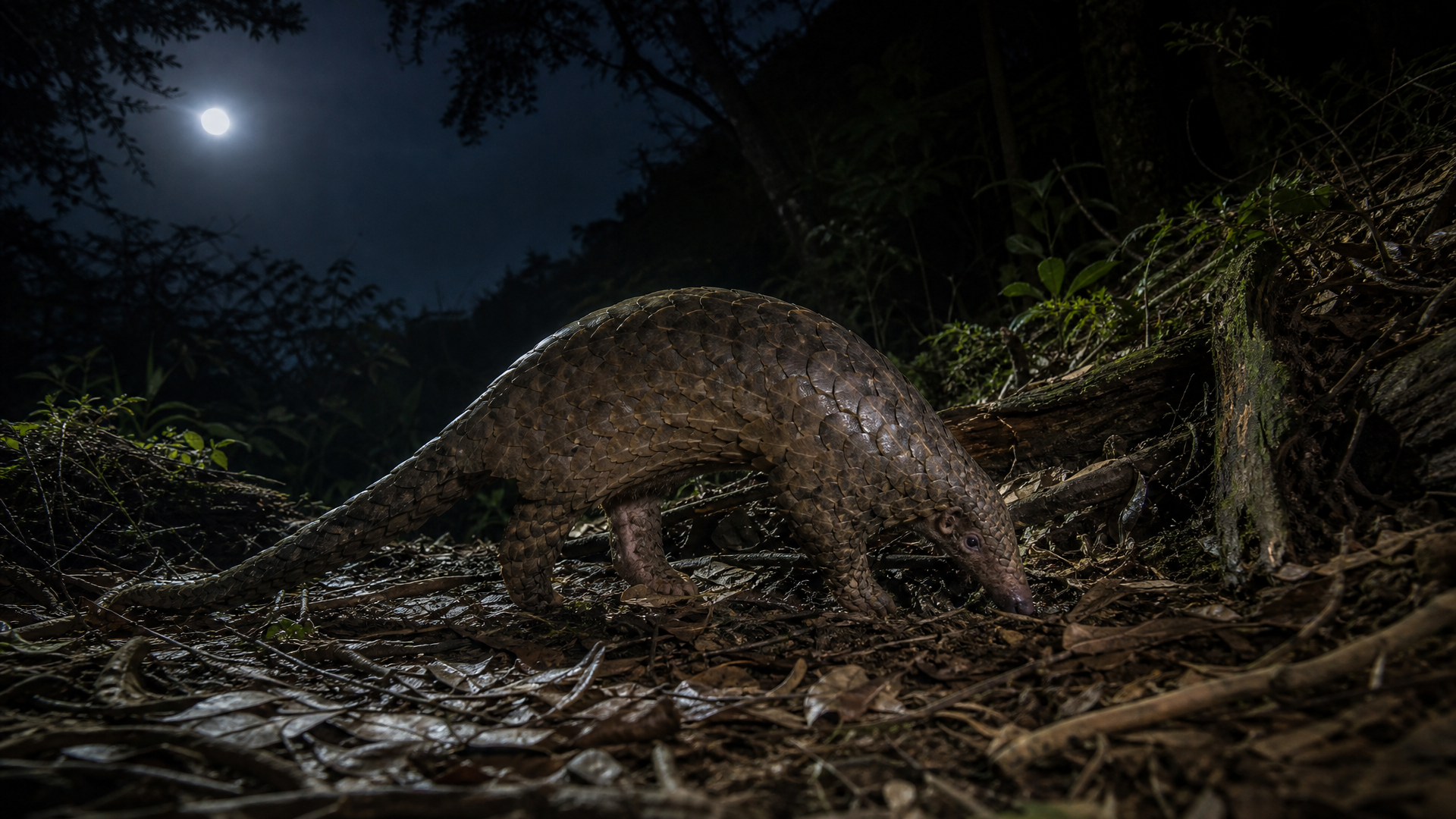
Night settles over a wooded hillside, and the leaf litter begins to move. A narrow head noses beneath damp leaves. Scales overlap down the back like small shields, catching a little moonlight before the animal folds again into shadow.
The Chinese pangolin is almost entirely built around a hidden meal. Its claws open earth and rotten wood. Its long tongue reaches where teeth would be of no use. The eyes are small, the ears modest, the body low and intent. It walks with an odd, careful motion, sometimes lifting the front claws clear of the ground as if carrying tools too valuable to dull.
When danger comes from the forest, the answer is ancient and simple. The pangolin curls tight, tail wrapped over head, scales turned outward. Against teeth, that can be enough. Against hands, it has become a terrible vulnerability.
Across southern China and neighboring hills, the animal's quiet work stirs soil, opens insect colonies, and moves energy through the dark. Illegal trade has followed it into the places where secrecy once served it well. A pangolin leaves little behind: a disturbed mound, a faint track, a place where leaves have been turned. By morning, even those signs begin to disappear.