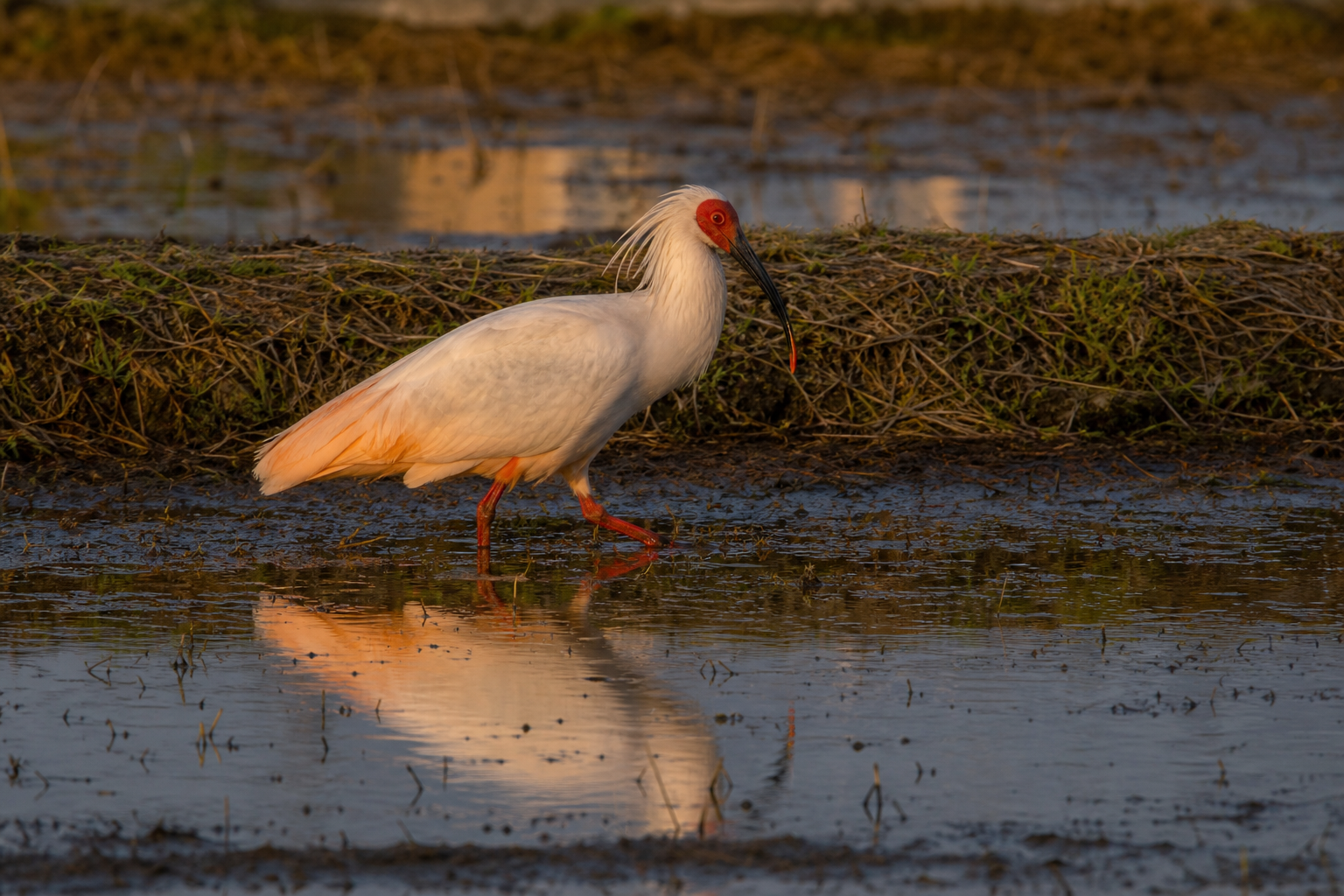
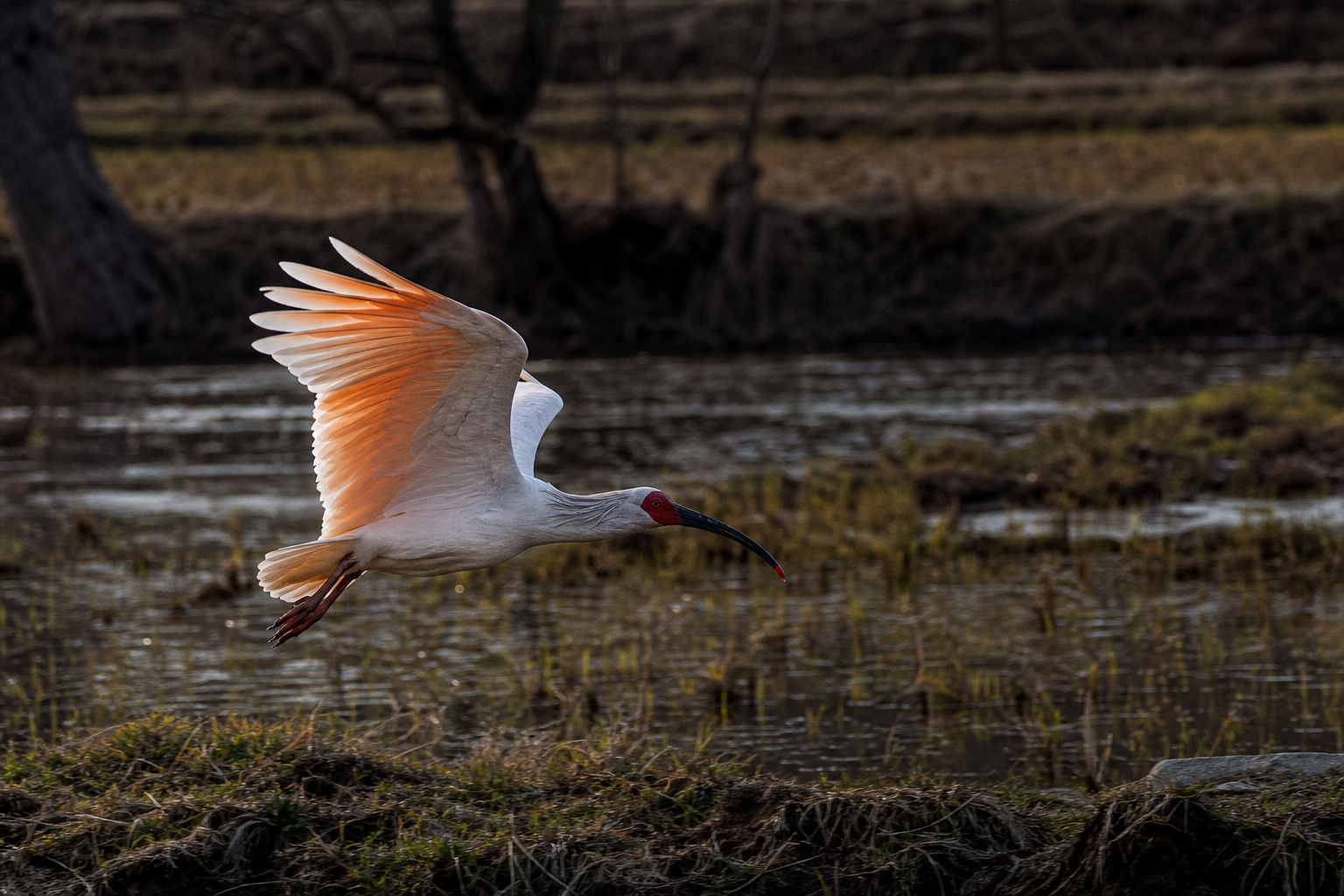
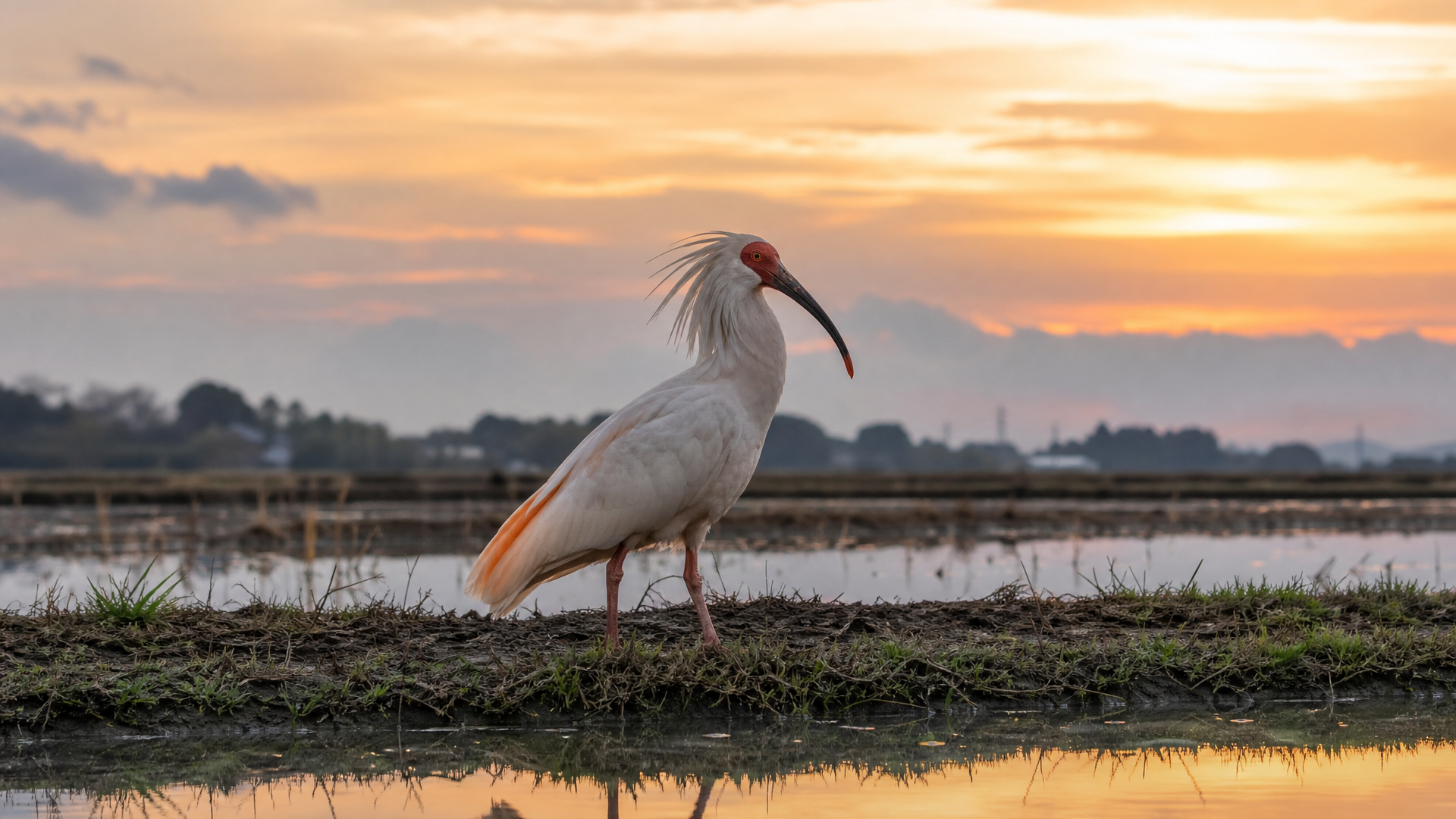
The rice fields of Sado Island hold the last color of evening in shallow water. An ibis steps through the reflection, bill curved down, crest feathers lifting in the breeze. When it opens its wings, a wash of soft peach shows beneath the white, like sunset caught in feathers.
The crested ibis moves with a tender deliberateness. Each step tests mud and water. The long bill searches by touch, finding what sight would miss. In breeding dress, the head and crest darken with a powdery tone the bird applies from its own skin, making its pale body seem dusted by weather. Pairs call from trees and return to fields where human work and wild feeding have long overlapped.
Few birds carry the feeling of return so strongly. In Japan, the last native birds vanished from the wild, and the living population now descends through careful reintroduction and birds from China. That history does not make the ibis less wild when it flies. It makes every wingbeat more exposed.
Wet paddies, clean water, old nesting trees, and patient farming all matter to its future. The ibis lifts from the field, legs trailing, and the reflection below it trembles after the bird has already entered the sky.