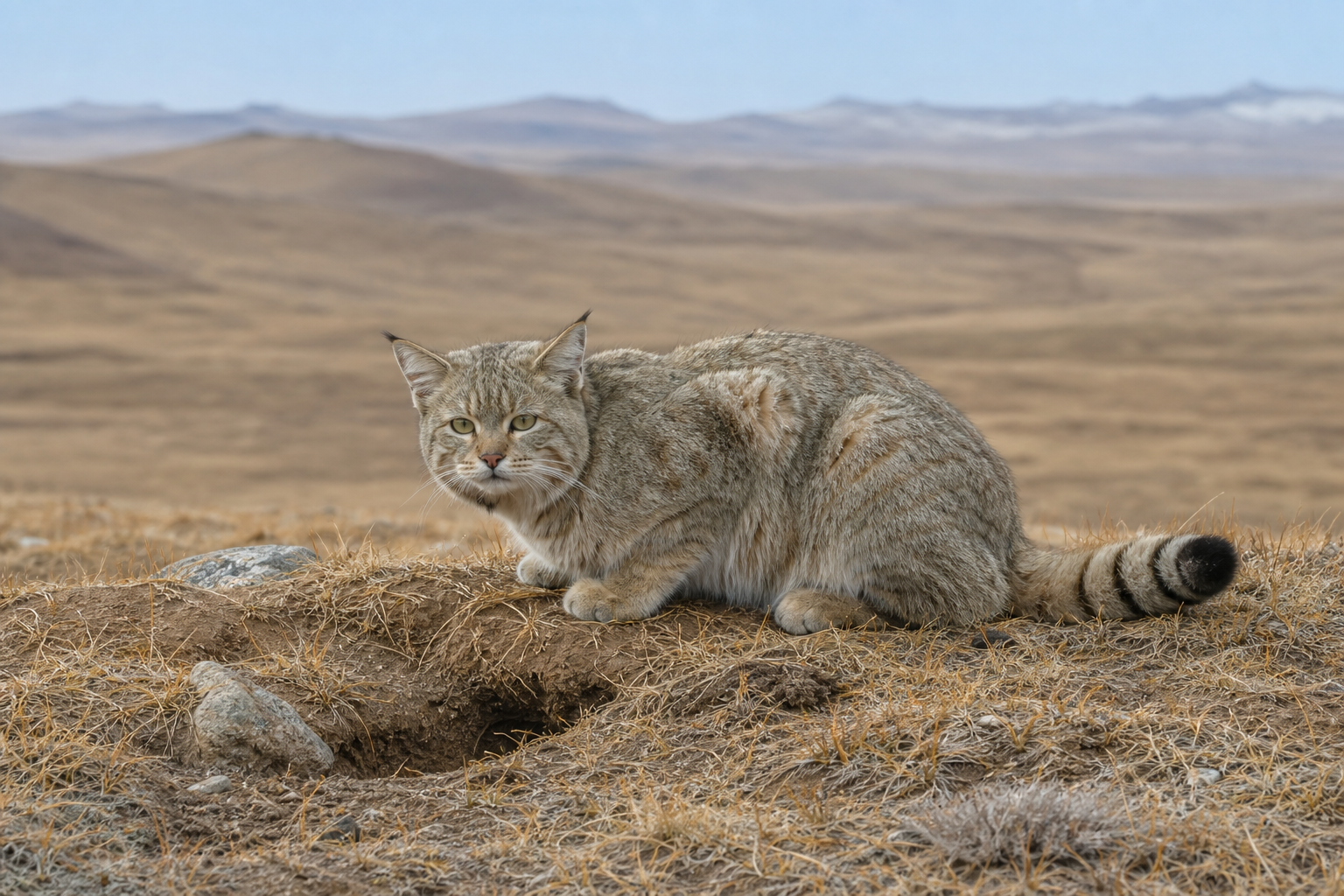
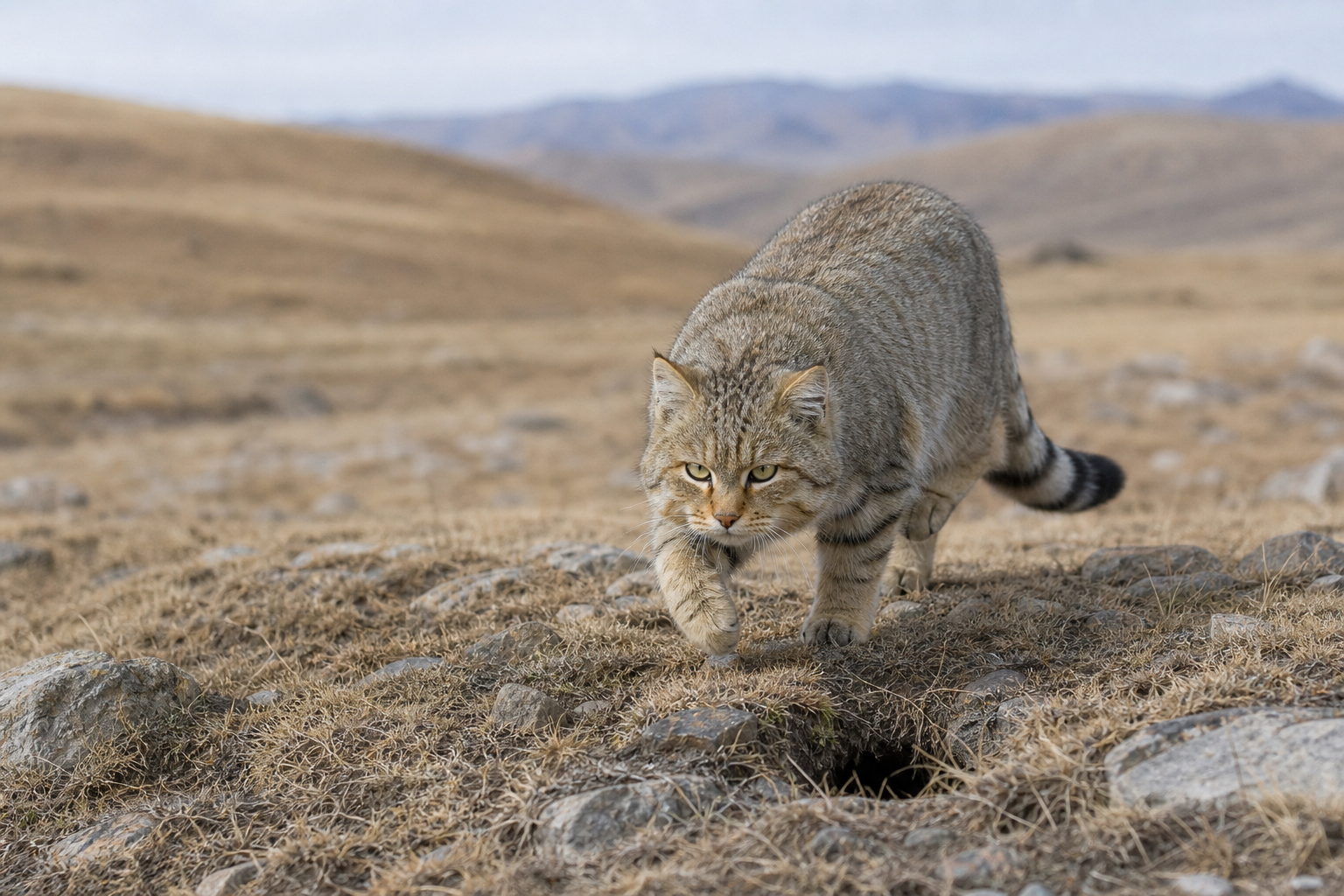
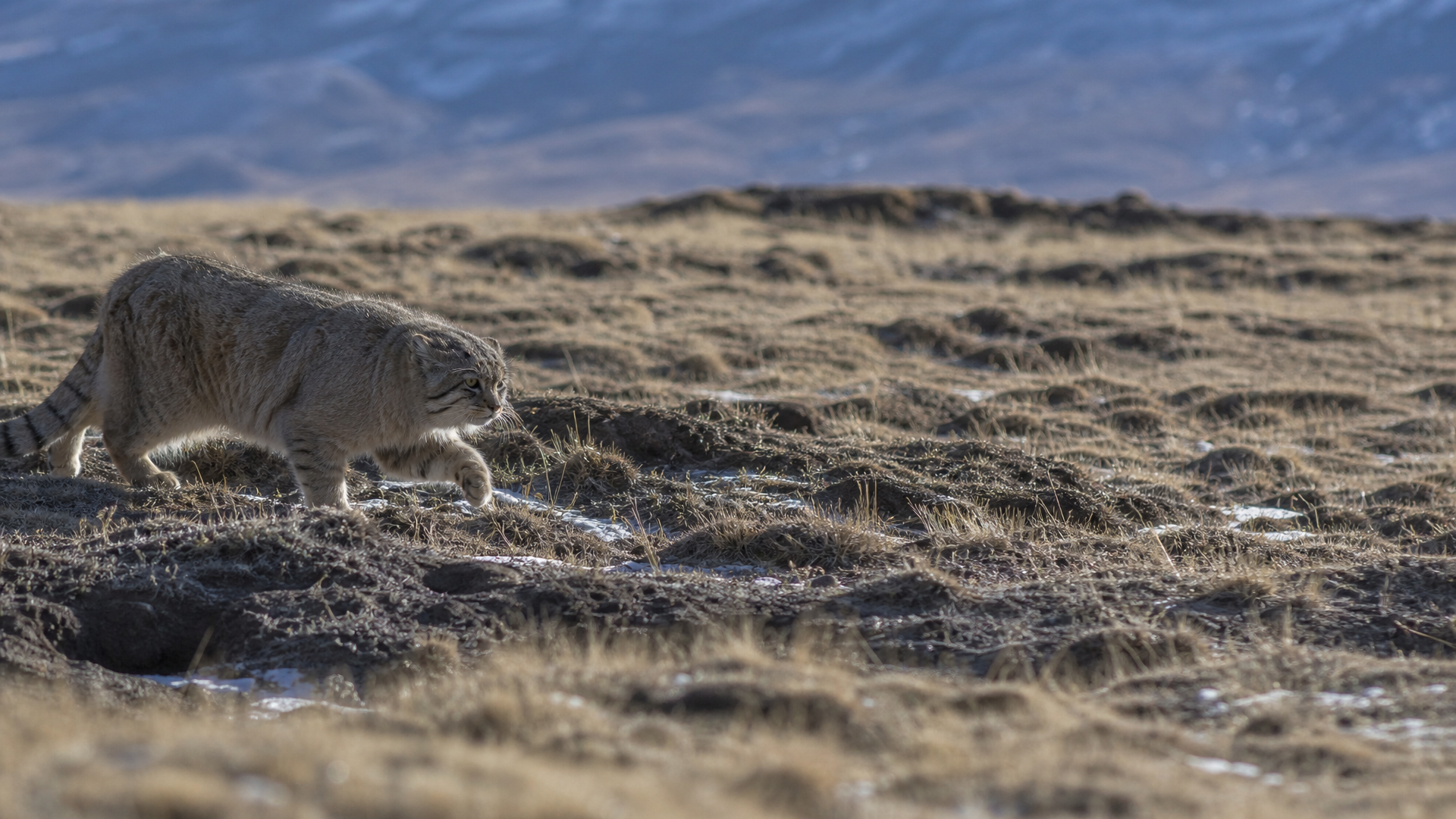
Wind moves over the Qinghai-Tibet Plateau in long, dry strokes, bending grass around burrow mouths and stones. A pale cat crouches near one opening, ears low and broad, tail ringed and still. Nothing shows itself. The cat waits as if the earth has spoken too softly for anyone else to hear.
The Chinese mountain cat is a specialist in patience. Its sandy coat and faint markings take on the color of steppe, scree, and winter grass. The face is broad, the eyes intent, the ear tufts small but distinct. It hunts close to the ground, reading the hidden lives of pikas and rodents by movement, scent, and tiny failures of silence. A paw lifts. The body compresses. The strike, when it comes, is short and exact.
There is little drama in the open plateau until one learns how much is concealed there. Burrows lace the soil. Raptors quarter the sky. Foxes test the same slopes. The mountain cat belongs to that low, listening world, a predator shaped by space that gives almost nothing away.
Its future is tied to grasslands often treated as empty or expendable. Poisoning campaigns, grazing pressure, and changing plateau weather can remove prey before the cat itself is seen. The wind passes over the burrow. The cat remains, still as a stone with breath.