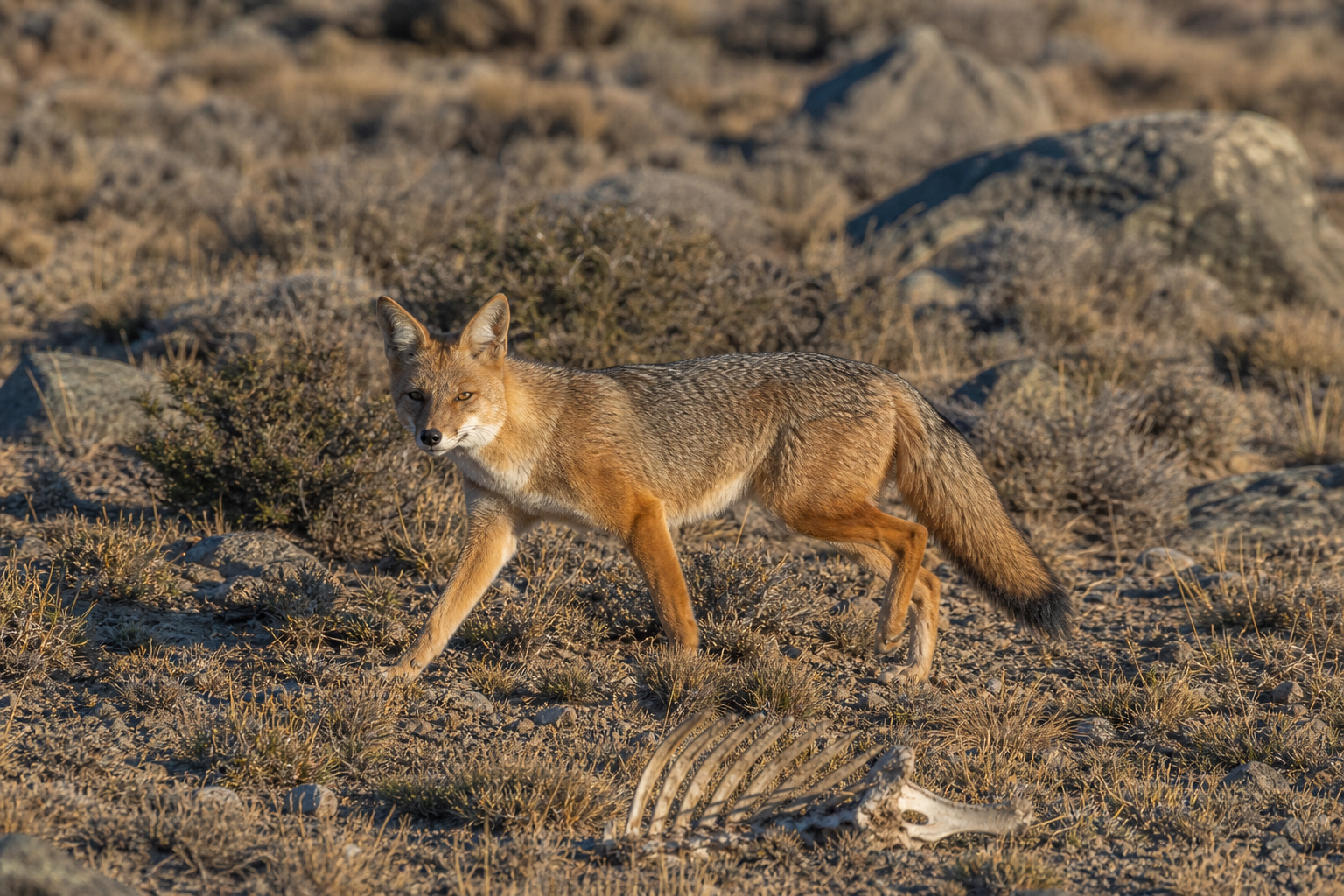
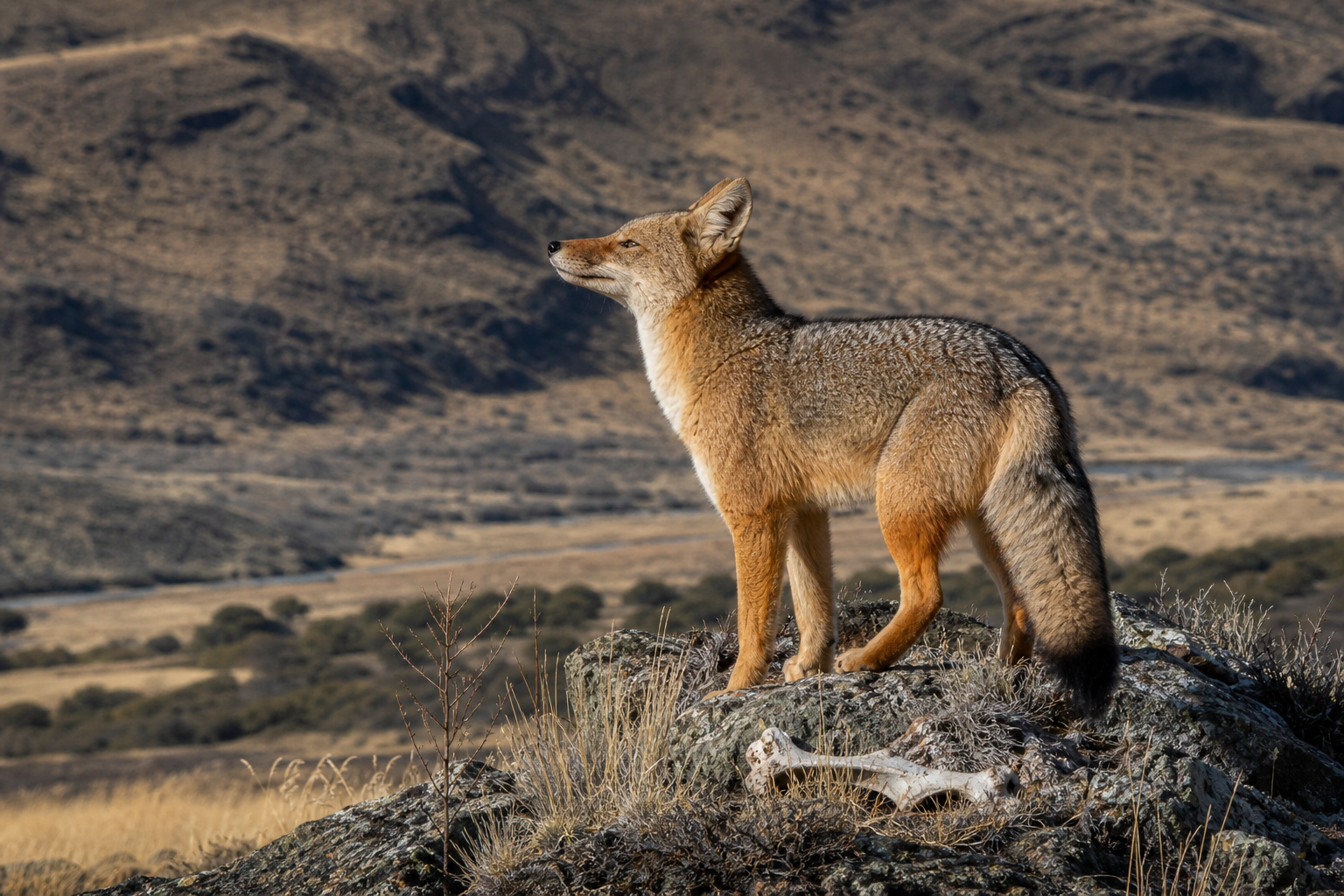
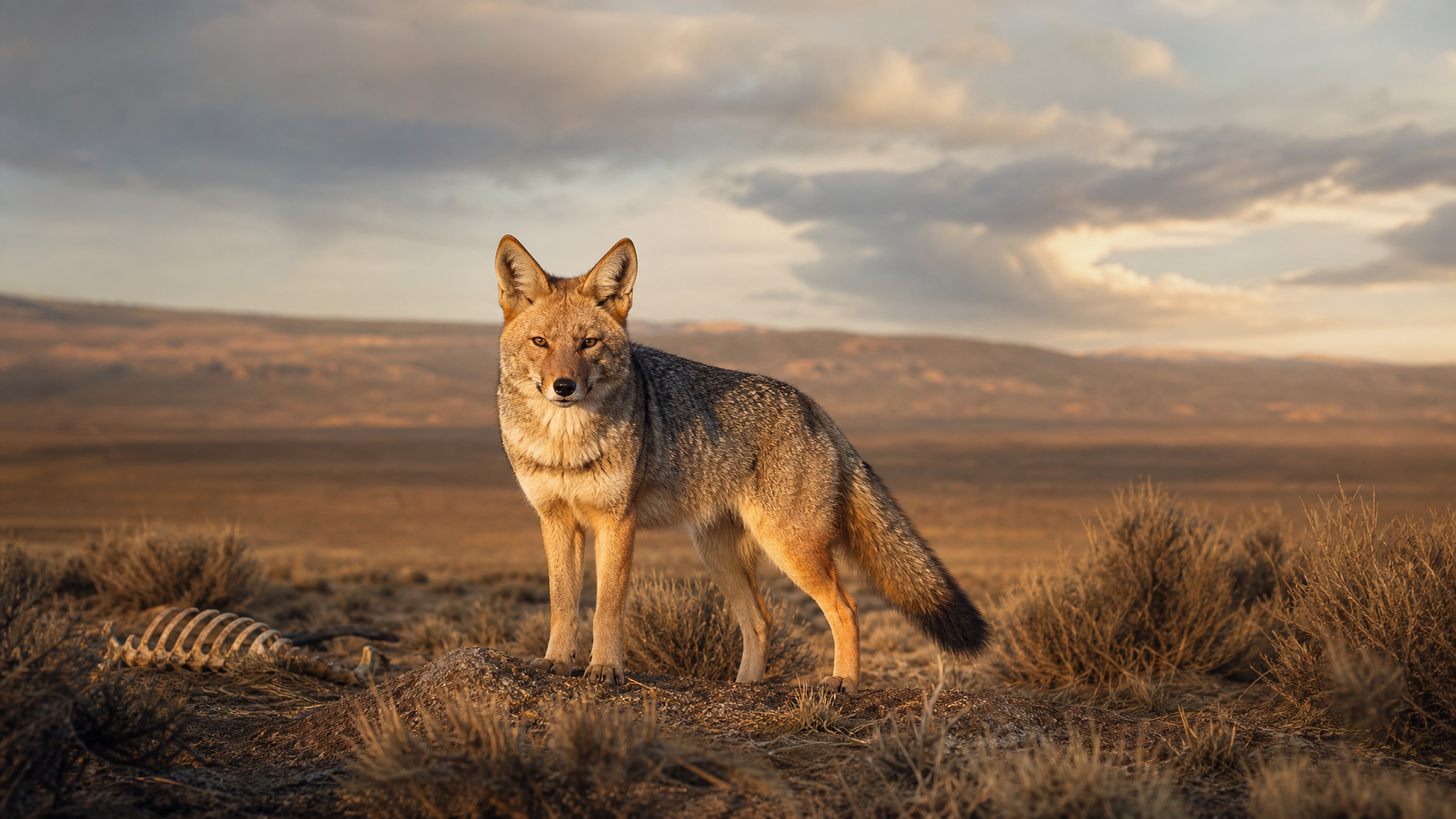
Evening gathers in the lenga woods and spills out over the steppe in blue shadow. A foxlike shape appears on the edge of a track, ears high, tail low, nose working through the cold. It pauses beside a clump of grass, listens to something beneath the surface, and then pounces with all four feet leaving the ground.
The culpeo is an opportunist in the best field sense of the word. It reads what the day has left behind. A scent on a stone, a rodent under snowgrass, a bird's alarm call, the remains of a puma kill, fruit ripening in a sheltered patch: each becomes part of the route. Larger than many of the foxes it resembles, it carries a composed confidence through country that changes quickly from forest edge to open slope. Its movements are light but not timid. It trots, stops, turns its head into the wind, and seems always to be asking the land one more question.
In Patagonia, the culpeo gives the predator story a smaller, sharper register. It cleans, hunts, scatters seeds, and lives close enough to people to be misunderstood as often as it is seen. Persecution, roads, disease, and shifting prey still shape its margins. At last light, it slips over a rise, and the steppe keeps the answer.