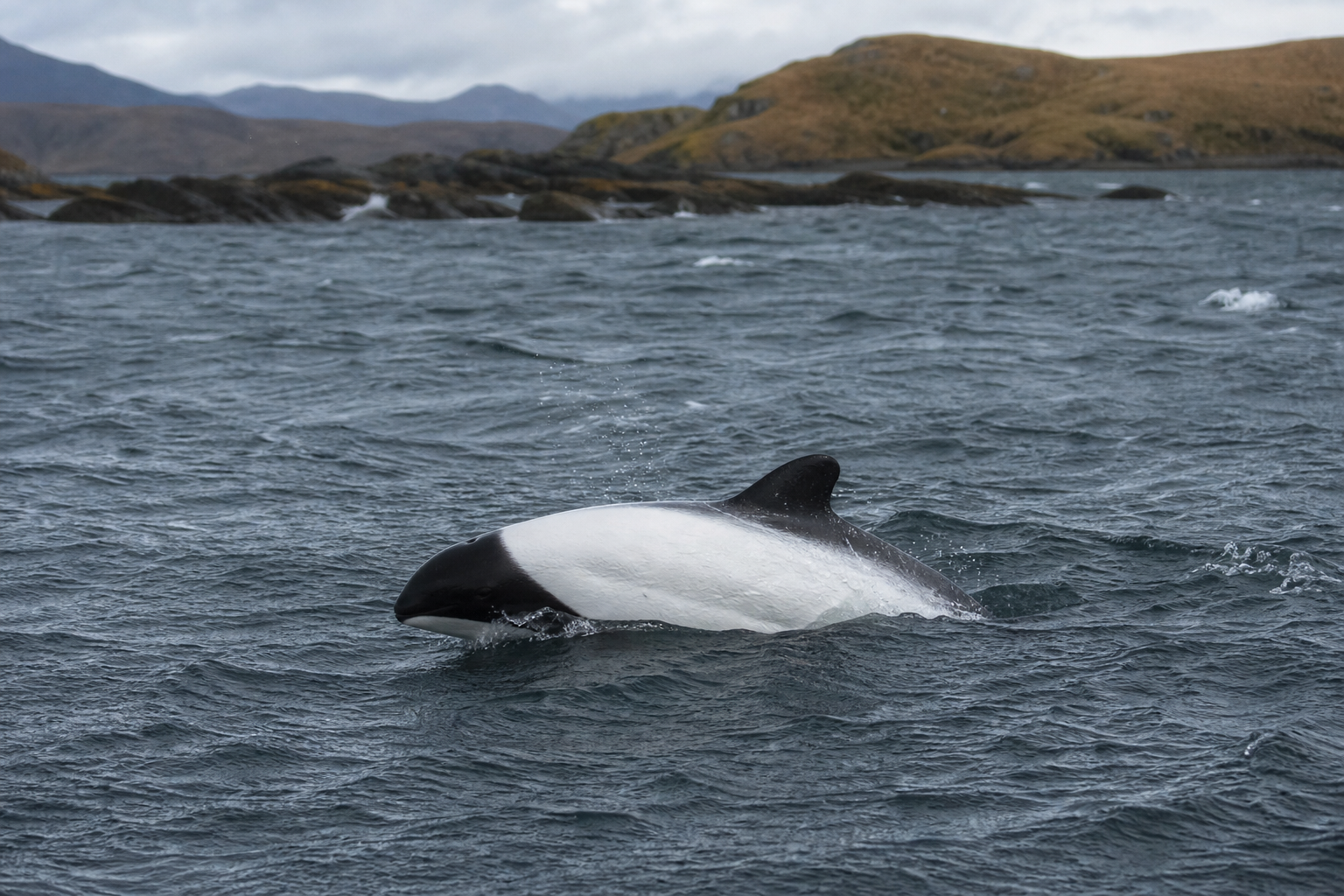
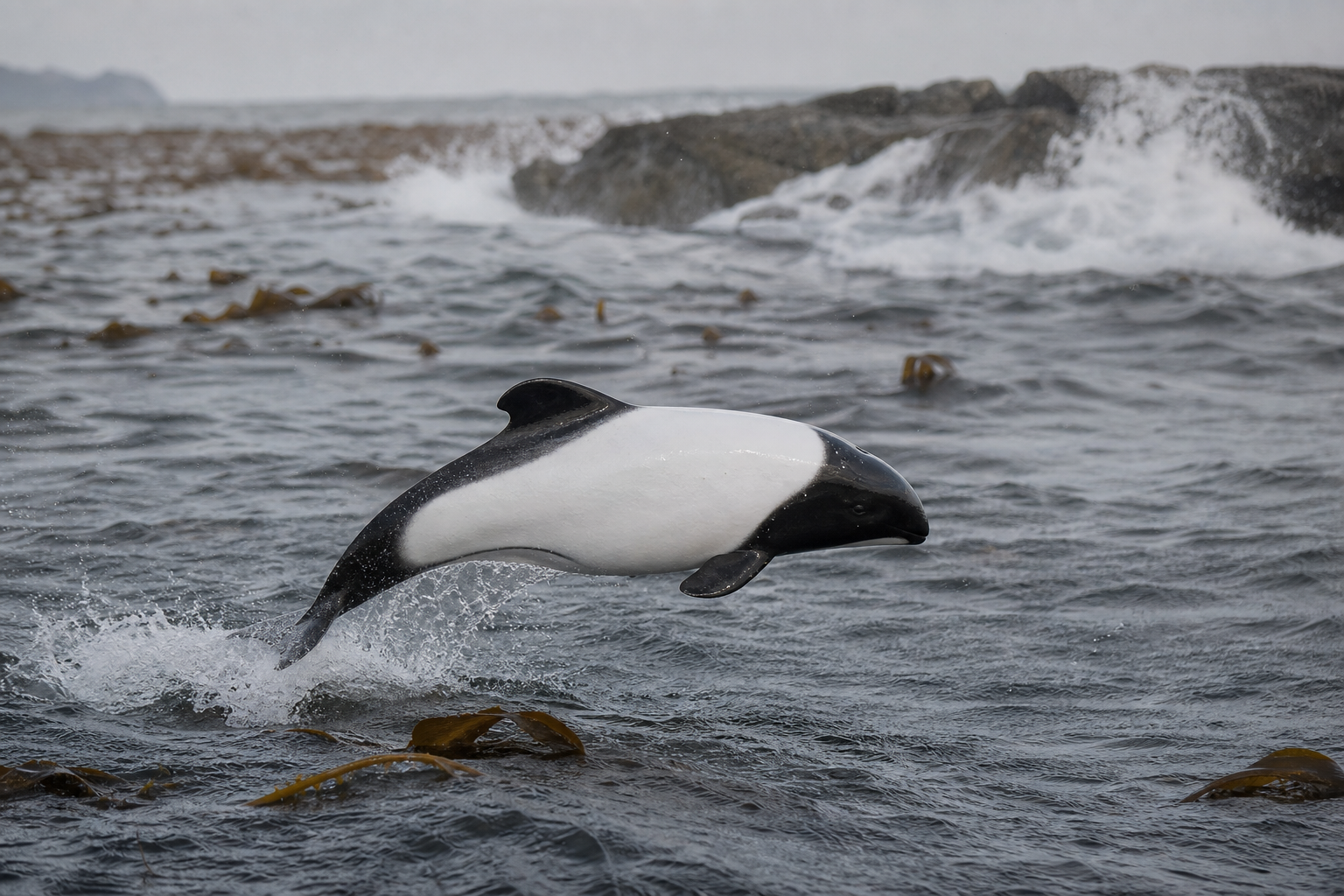
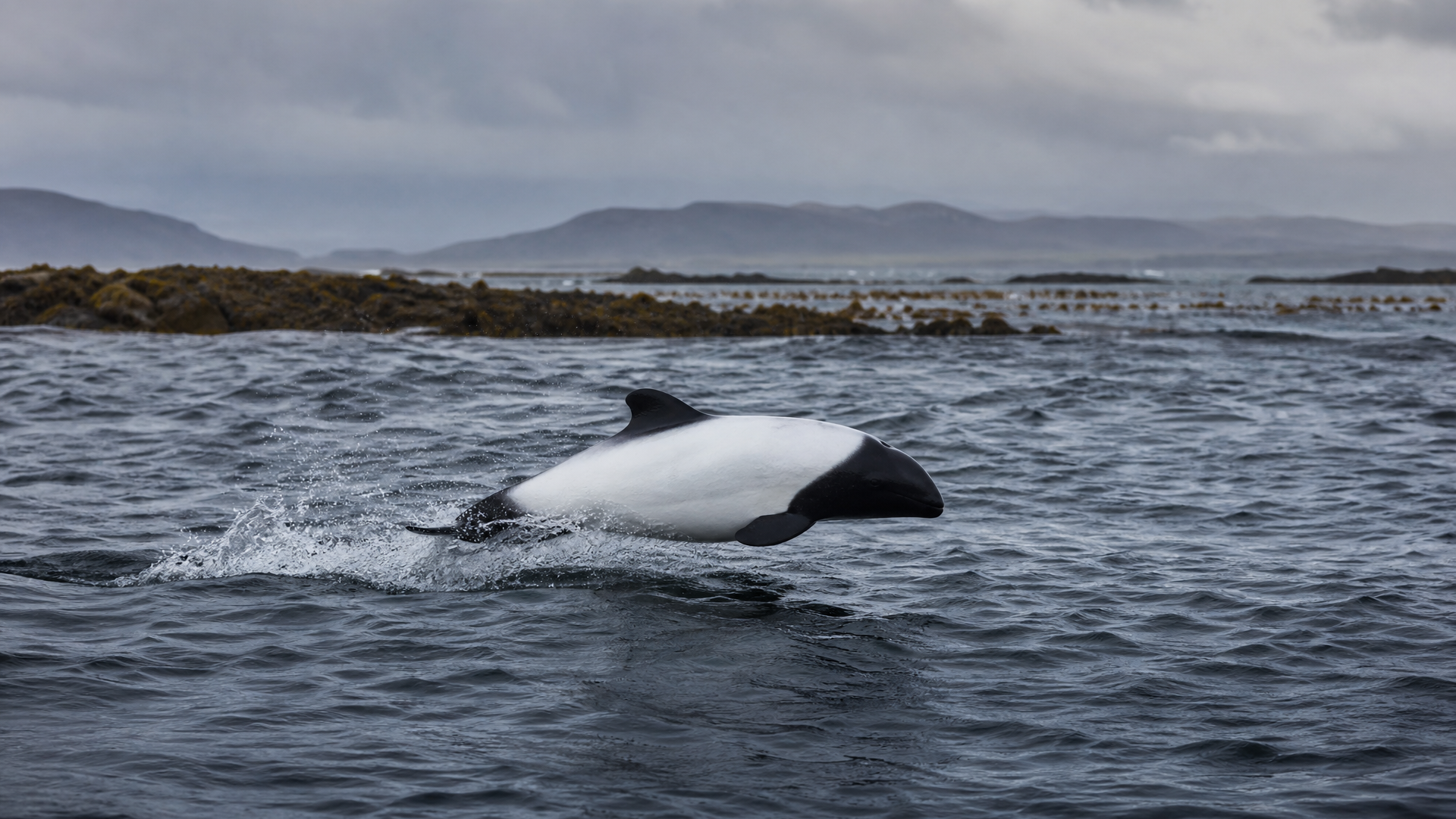
In the cold water of the Magellan Strait, the sea is gray until it suddenly breaks into black and white. A small dolphin arcs beside the boat, bright as a moving signal against the chop, then rolls under the surface and reappears on the other side, quick enough to make the eye late.
Commerson's dolphin brings play to hard water without making the water gentle. Its body is compact, sharply patterned, and restless, built for turning through tide races, kelp edges, and the confused seams where current meets wind. A group may appear without warning, riding pressure waves, crossing wakes, vanishing below foam, then surfacing together in brief breaths. The pattern is so clear in air that it seems almost designed for human recognition, but below the surface it breaks and reforms with every angle of light. What feels playful from above is also precision: contact, hunting, orientation, and speed in water that gives little away.
This dolphin gives the southern coast a flash of life at human scale, small enough to feel near and wild enough to remain unreadable. Bycatch, boat traffic, pollution, and coastal change press on its narrow waters. For a moment it keeps pace with the vessel, then turns back into the gray, leaving only rings where brightness had been.