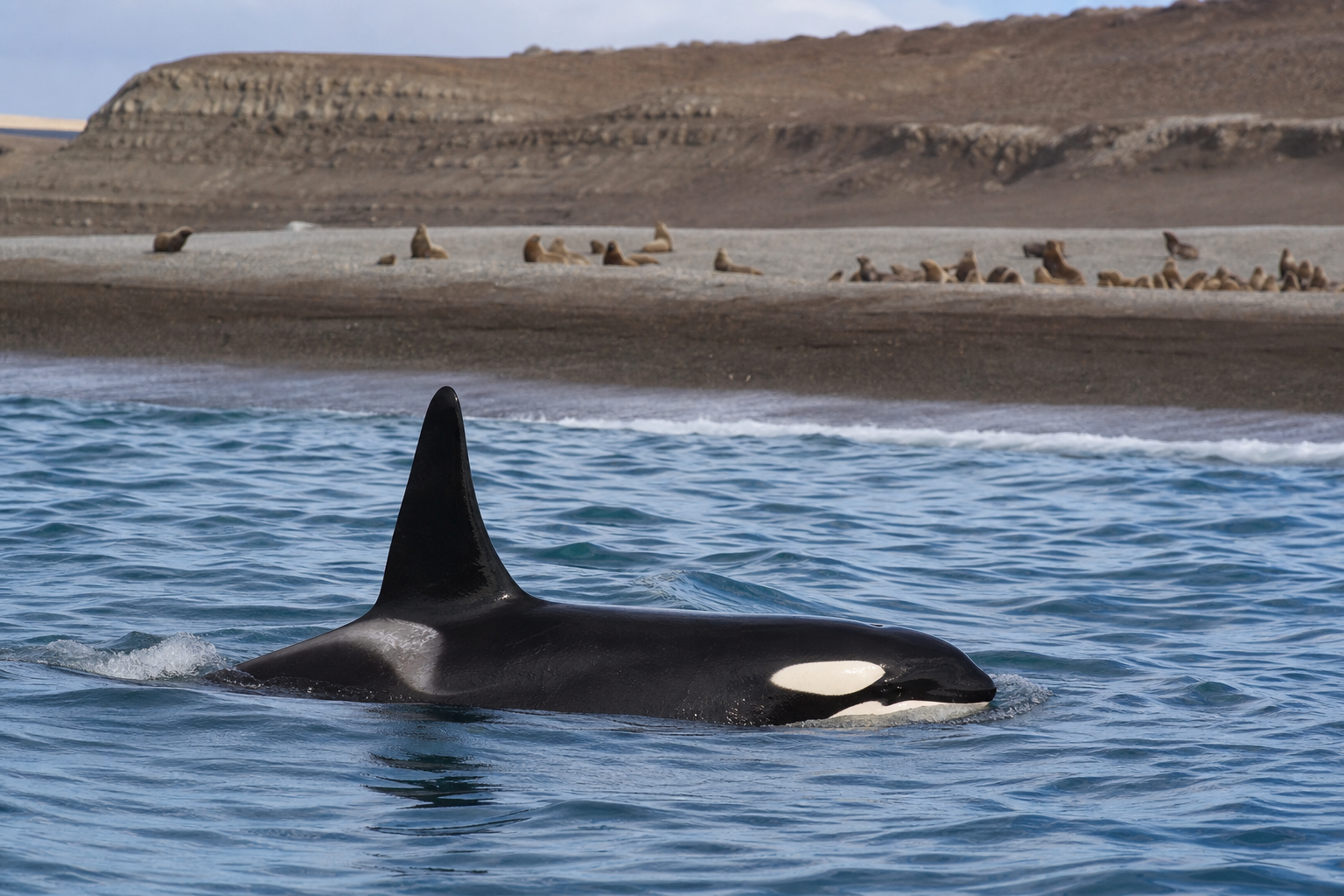
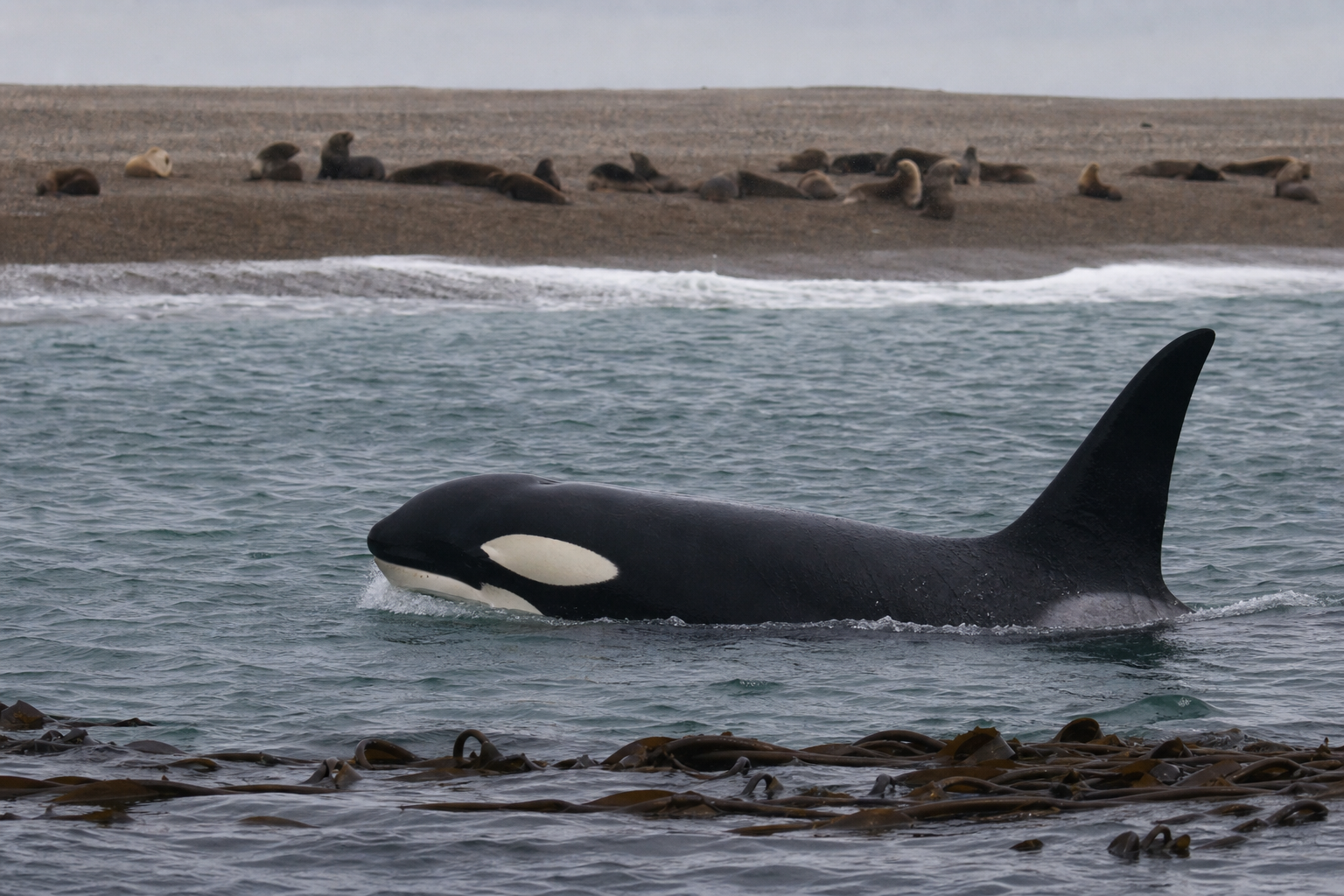
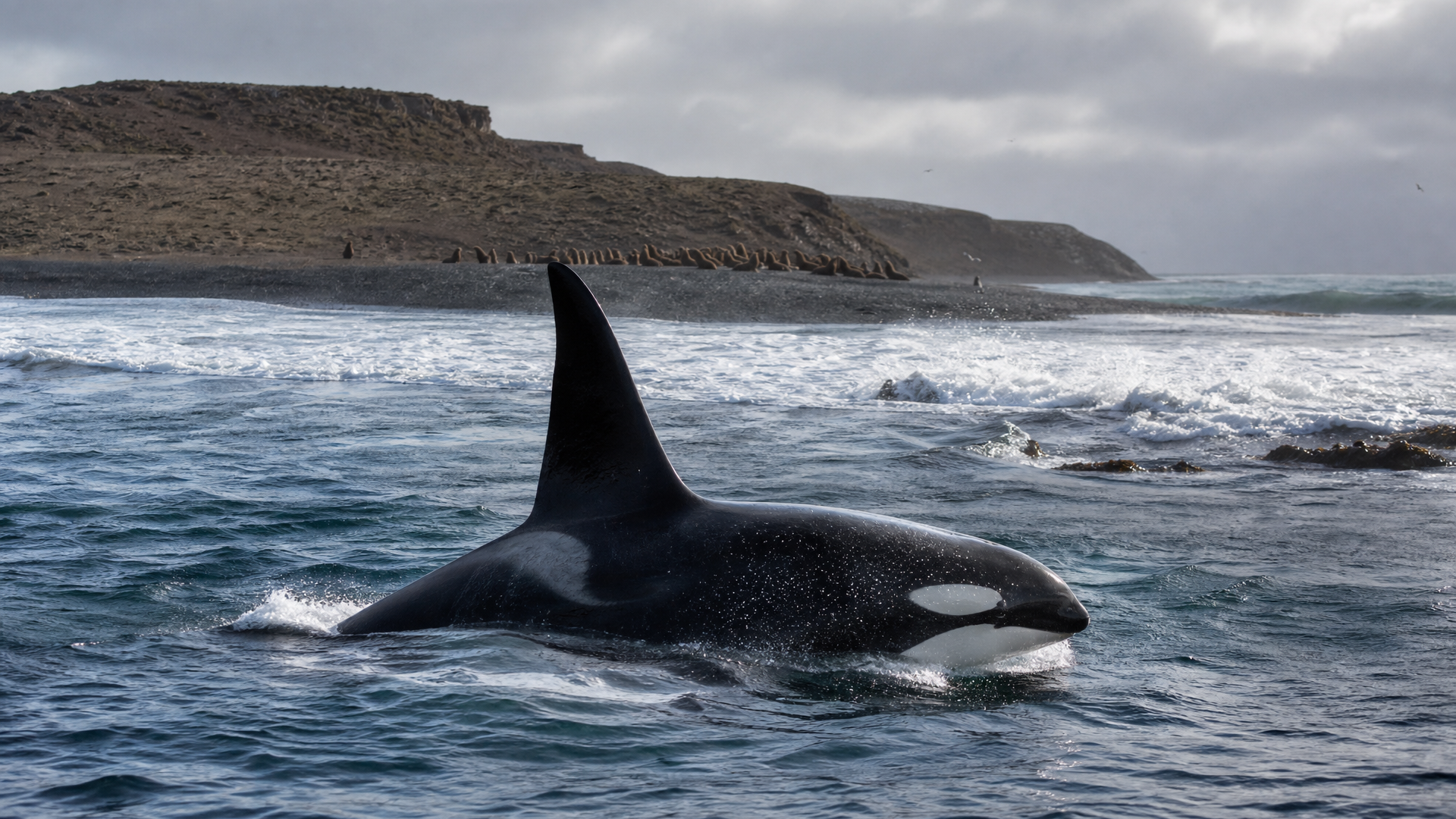
At Punta Norte, the tide pulls hard across the gravel and sea lions gather just above the wash. Offshore, a black fin cuts the surface, then another. The water lifts. For a few seconds everything waits: the pups, the gulls, the wind, the watchers on the cliff, and the hunters measuring the beach.
The orcas of this coast carry knowledge that belongs to families, not just bodies. Some have learned the dangerous art of intentional stranding, riding a wave onto the shore to seize a sea lion and then twisting back before the land can keep them. It is hunting at the edge of two worlds, and it depends on timing, tide, nerve, and instruction passed from experienced animals to younger ones. Away from the beach, they move as a coordinated intelligence, surfacing together, listening through water, reading each other by sound and motion. The black and white pattern looks bold in air, but in broken sea it becomes a signal that appears, vanishes, and appears again with purpose.
Here the orca is not a symbol of cruelty. It is culture in motion, a predator whose methods are local, learned, and exact. Disturbance, noise, entanglement, depleted prey, and changing seas touch that knowledge. A fin passes beyond the point, and the coast exhales only after it is gone.