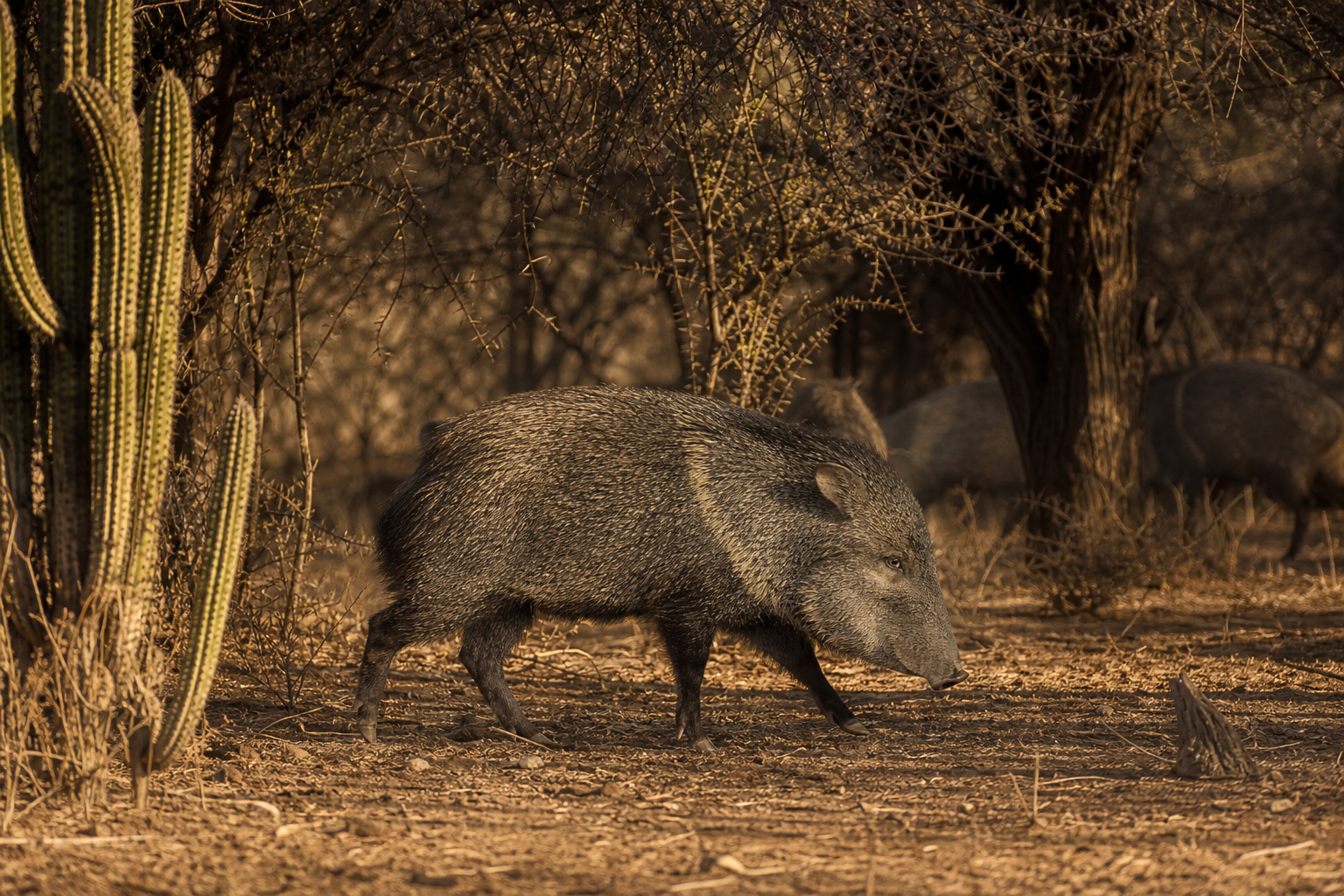
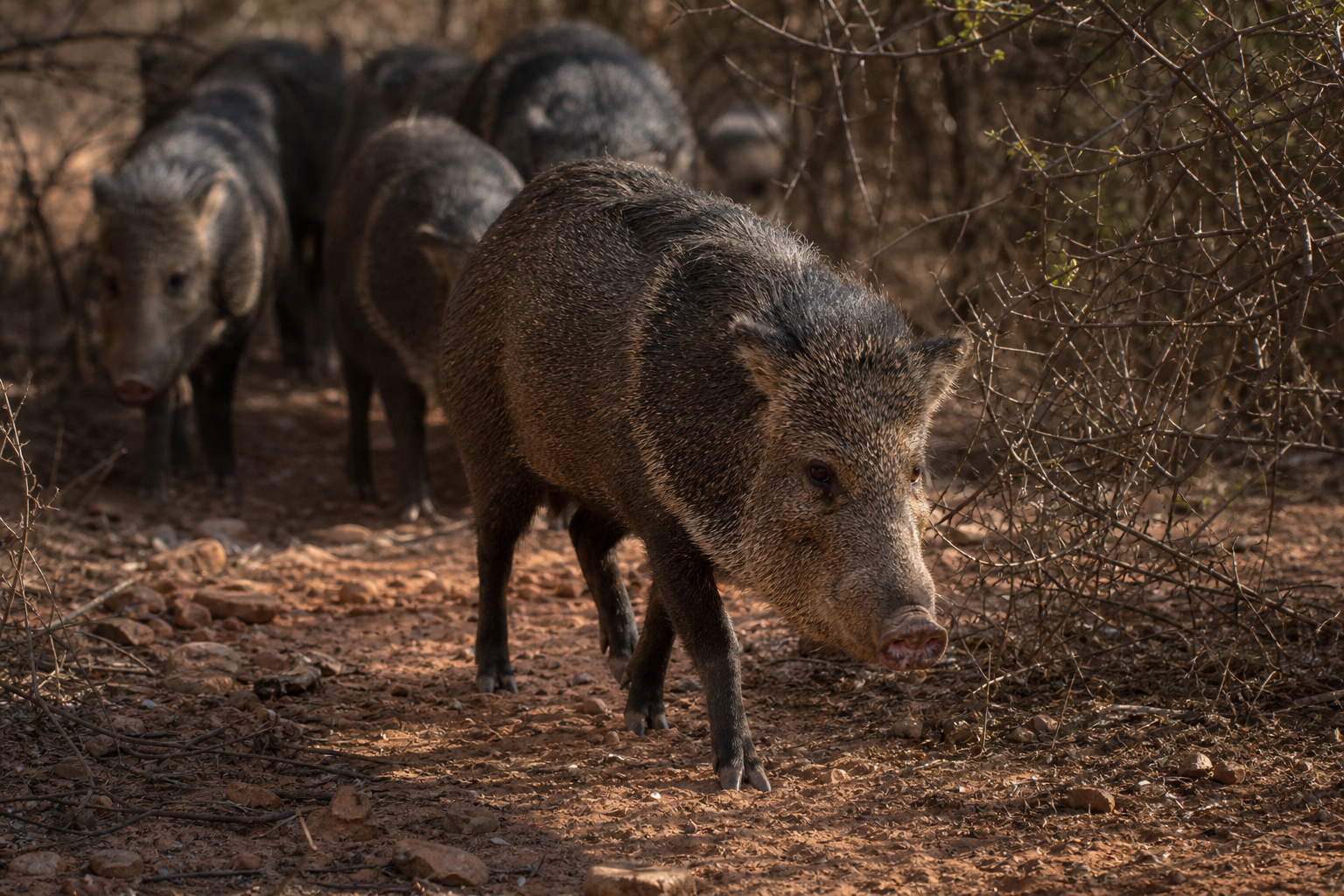
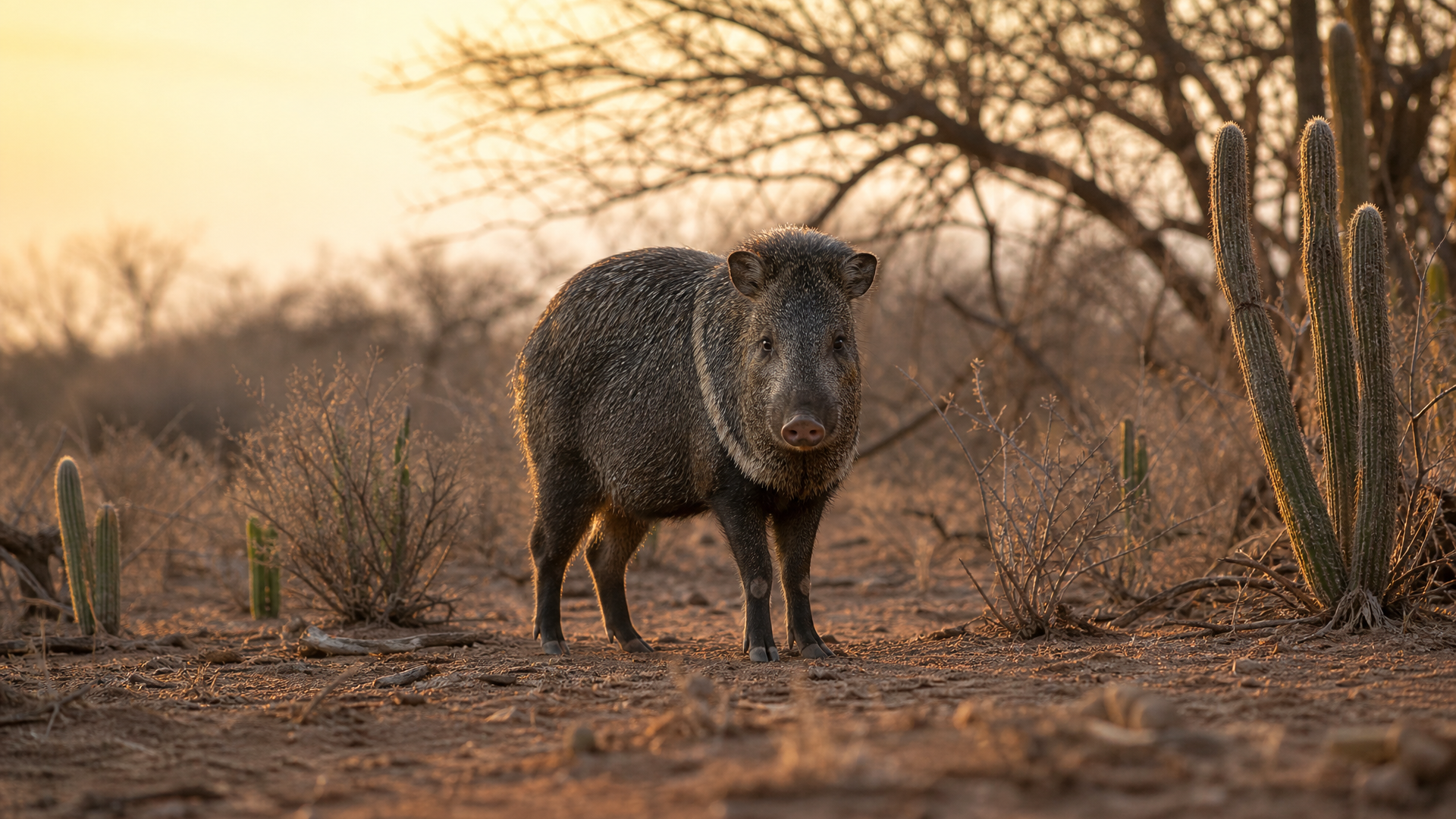
In the dry Chaco of Paraguay, the thorn forest holds its heat long after sunset. Dust hangs between quebracho trunks. Cacti stand like pale green columns. From somewhere inside the scrub comes the sound of hooves on hard ground, then the low, nasal breath of a herd pushing through a country that does not forgive softness.
The Chacoan peccary looks as if it has been shaped by dryness and thorns. The head is large, the legs sturdy, the bristled coat the color of dust and bark. A group moves together through dense scrub, shouldering past spines, pausing to scent the air, then feeding with the practical focus of animals that know where moisture and food hide in a harsh season. Their social life is carried in grunts, glands, contact, and shared movement. They are difficult to see until they are close, and then they seem to have arrived from an older version of the land.
This peccary gives the Chaco its own signature, not borrowed from forest or floodplain. It belongs to dry woodland, cactus, salt, heat, and patience. As ranching, roads, and clearing open the thorn forest, the herd's cover thins. In the dust, their tracks continue between spines, a narrow script written through hard country.