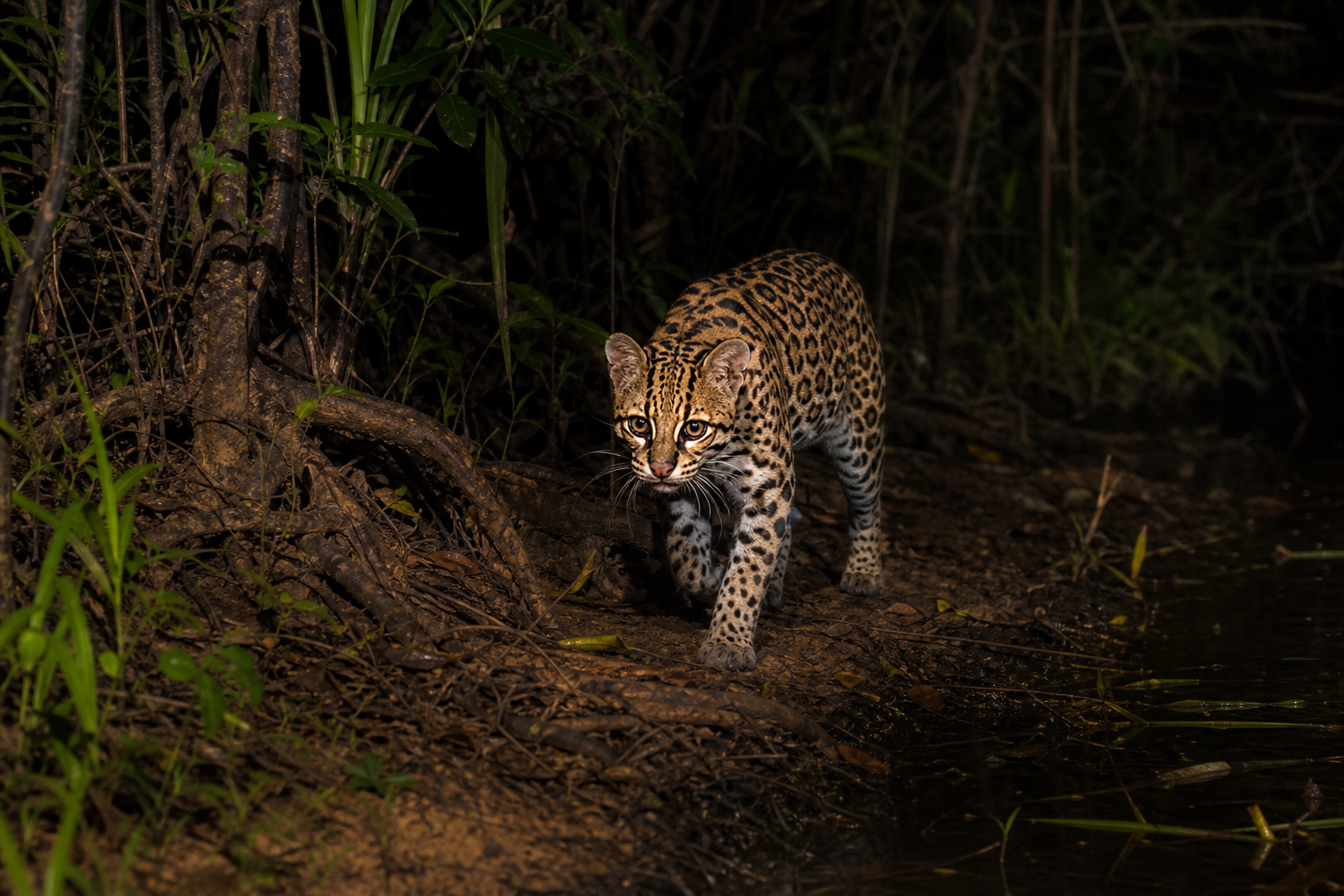
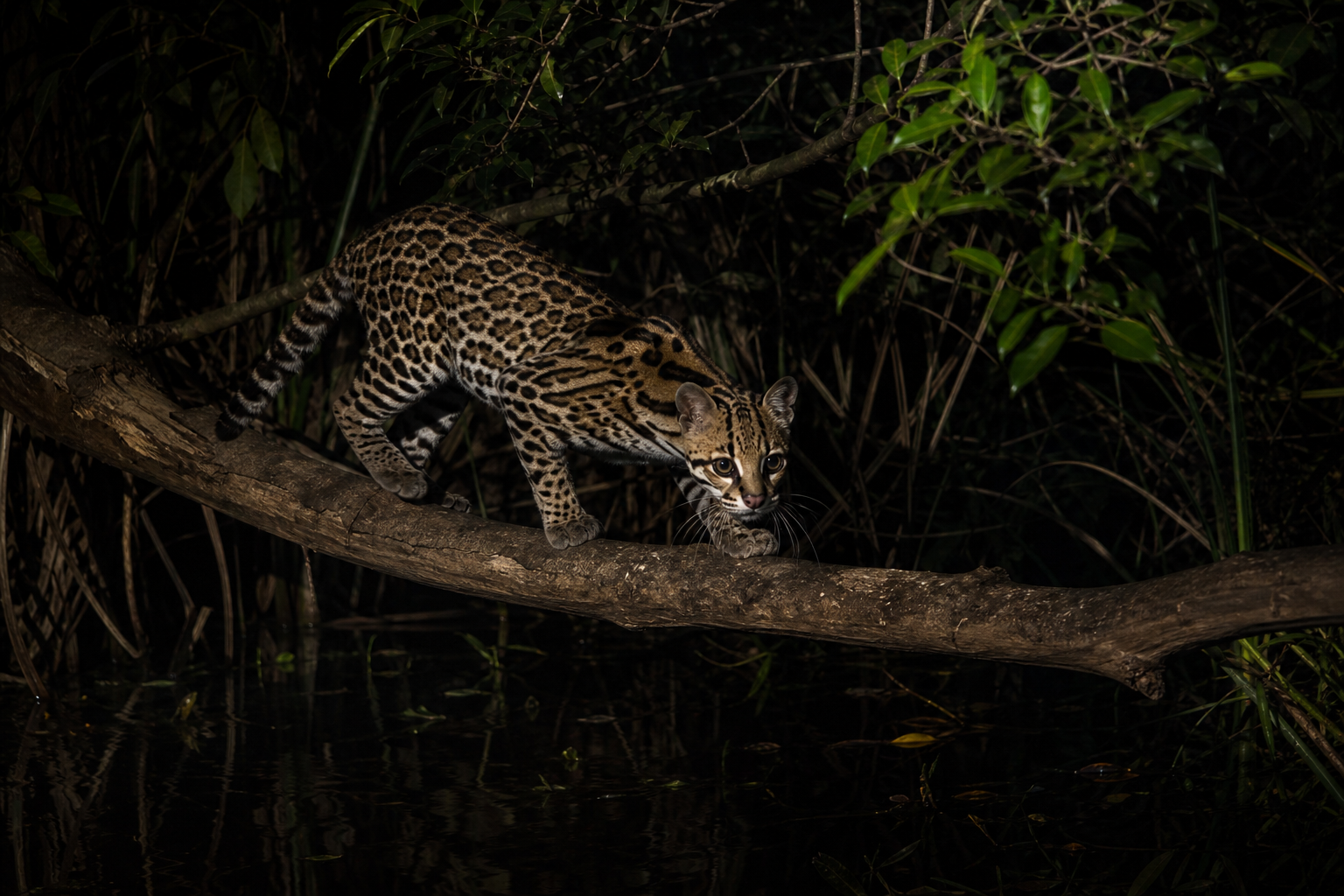
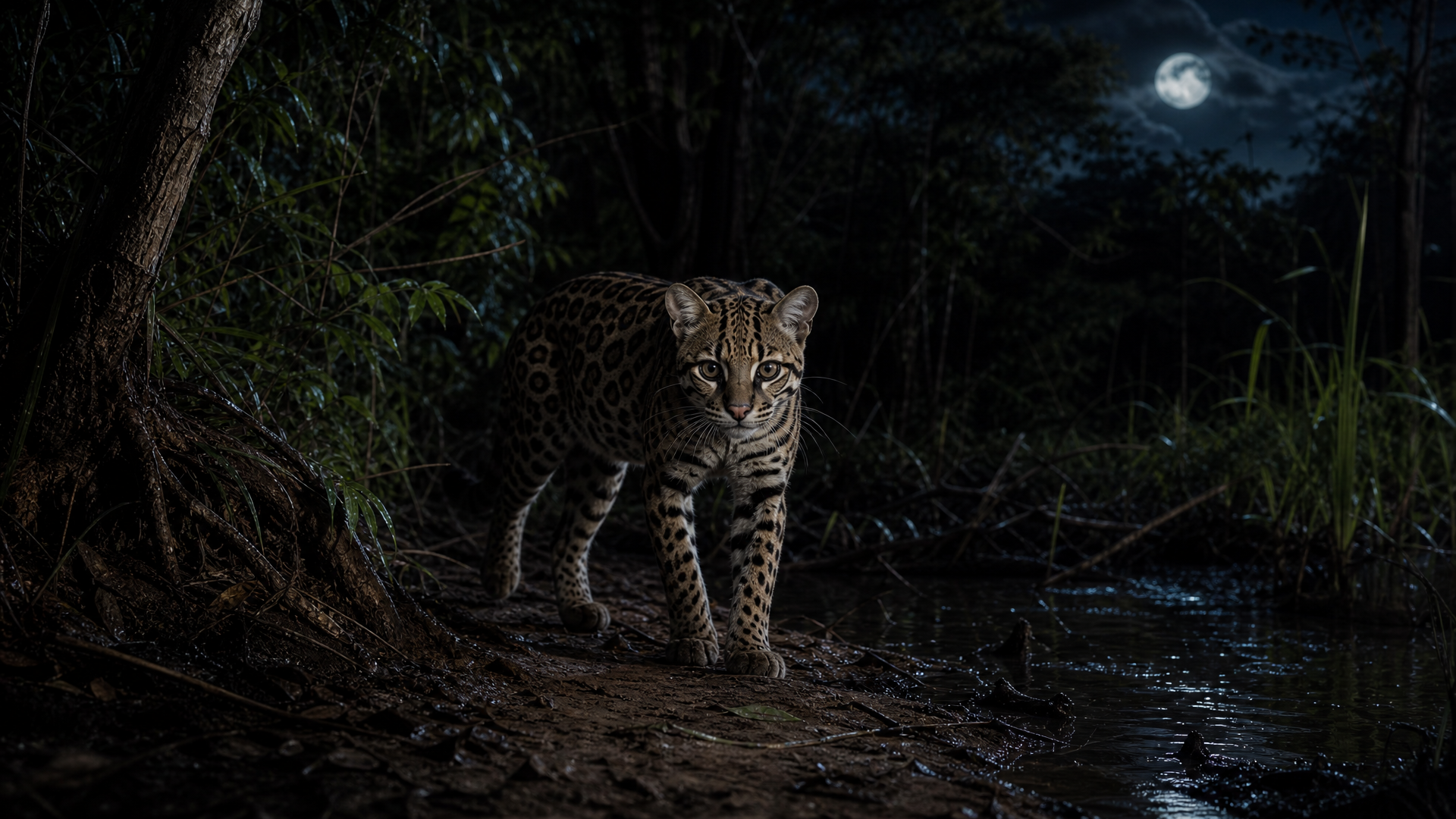
Night gathers under the gallery forest near the Miranda River, and the path that was plain at noon becomes a tunnel of scent. A leaf turns over without wind. A small paw settles on the damp earth, then another, and the ocelot moves through the understory with its shoulders low and its spotted coat broken into fragments by moonlight.
The ocelot is a master of near distances. It hunts in the space between root and branch, reed and shadow, listening for the tiny betrayals of movement that larger predators may ignore. The face is broad-eyed and intent, the body supple, the tail balancing each pause and turn. It can climb when the trail demands it, slip along water edges, or vanish into scrub so completely that a person standing nearby may feel only the afterthought of its presence. Unlike the jaguar, it does not dominate the riverbank. It threads it.
In the Pantanal and Chaco margins, the ocelot belongs to the smaller night, where rodents, birds, reptiles, and insects make a constant hidden traffic. Its future depends on cover that remains connected enough for secrecy. When headlights, fires, and cleared strips break the dark into pieces, a cat made for shadow must cross too much light.