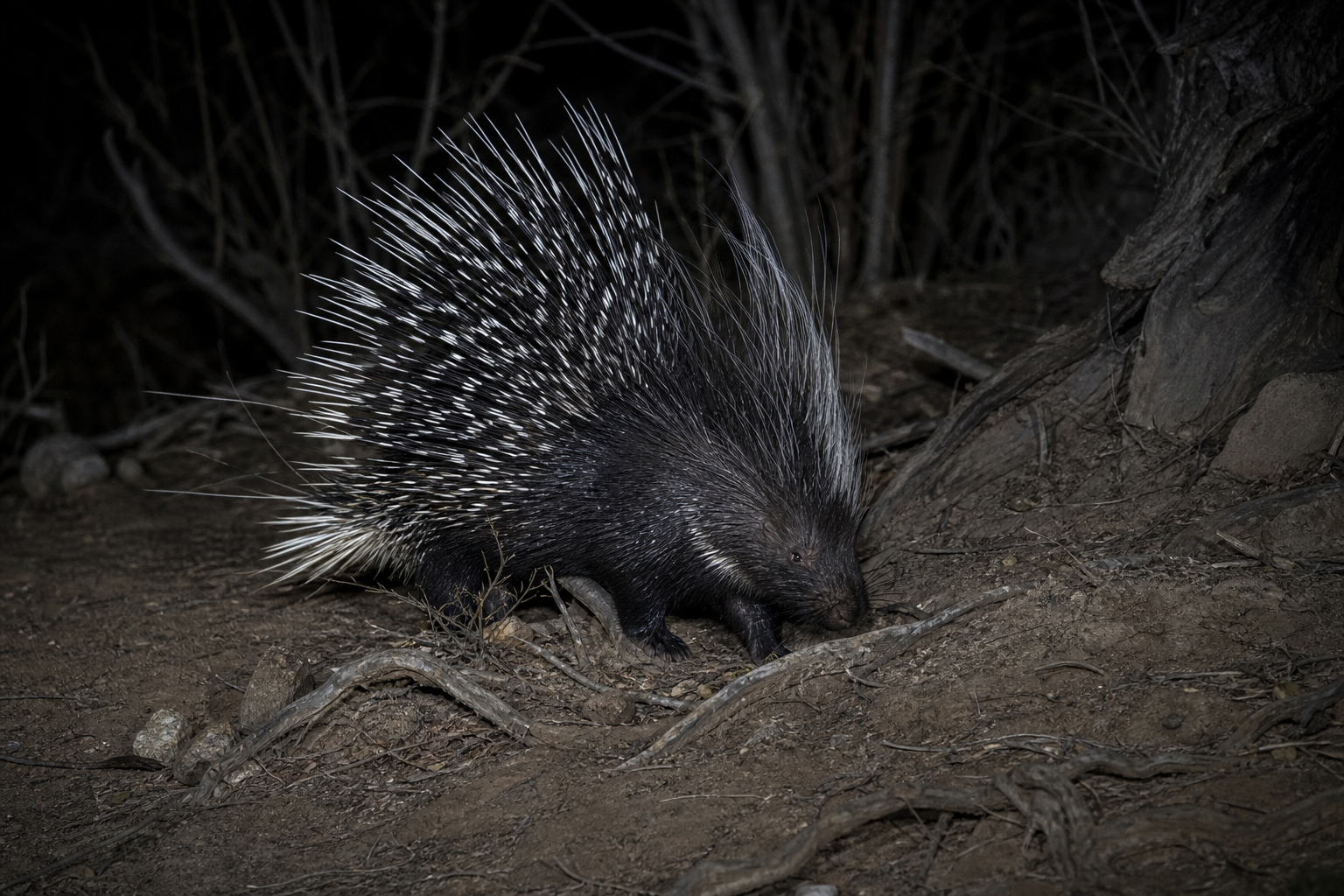
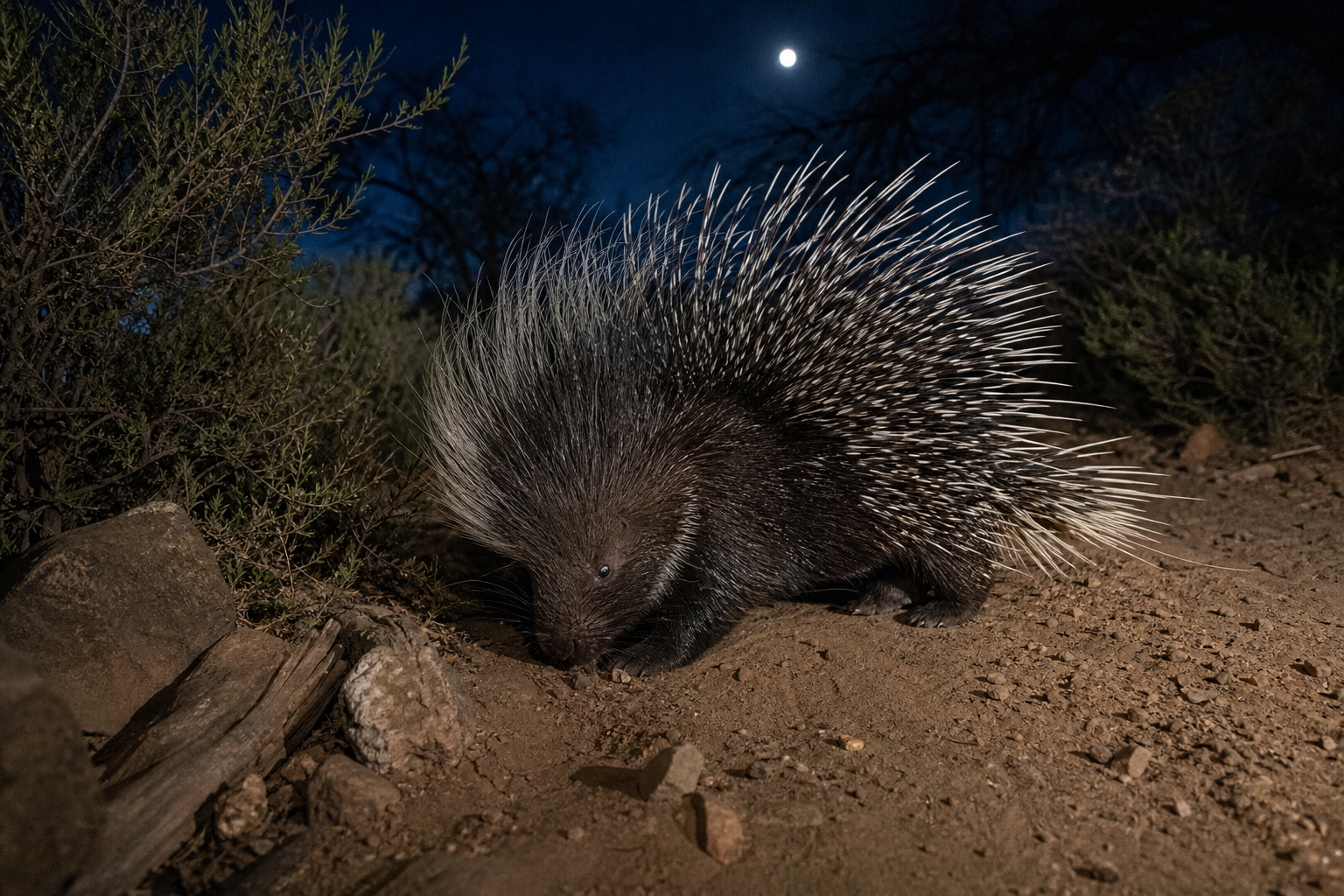
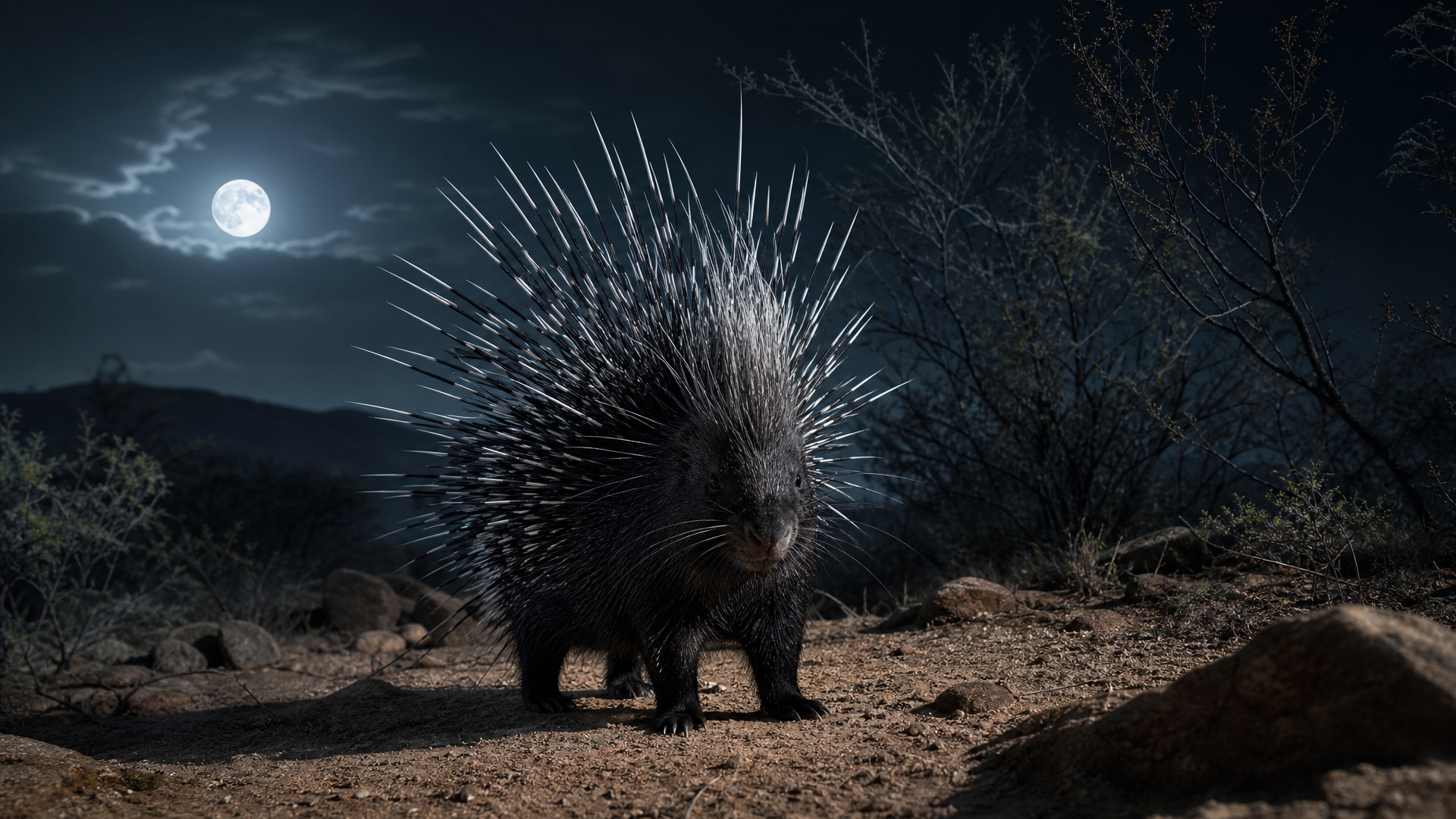
The first sign is not the animal but the sound: a dry rattle in the dark, a scrape of claws, the small collapse of soil near a root. Then the Cape porcupine comes into view, black and white quills lifted slightly, body low, nose busy with the ground.
It is a rodent built beyond any small idea of rodents. Heavy, nocturnal, and armed with modified hairs hardened into spears, it feeds on roots, bulbs, bark, fruit, and the stubborn underground stores of dry country. Its incisors keep growing. Its claws open soil. Its paths can be found in the morning where the night's work has loosened the earth.
The quills are warning before weapon. When threatened, the porcupine raises them, rattles, stamps, and may rush backward with surprising force. Predators learn the lesson carefully, if they survive the first lesson at all.
There is domesticity here too: long pair bonds, shared burrows, young born into a defended darkness. In Southern Africa's night country, the porcupine is not comic or clumsy. It is patient appetite under armor, and the sound of roots being found after sunset.