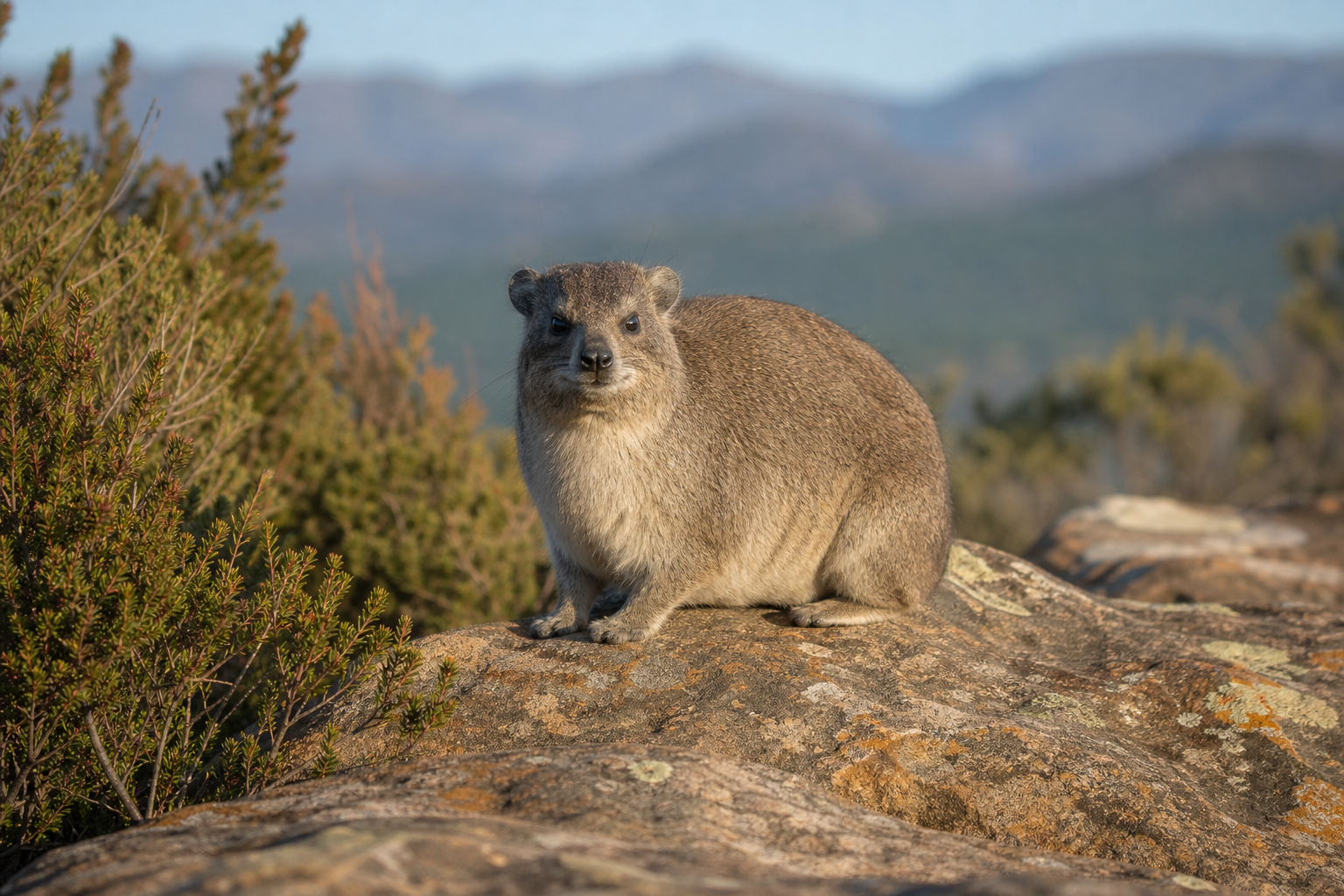
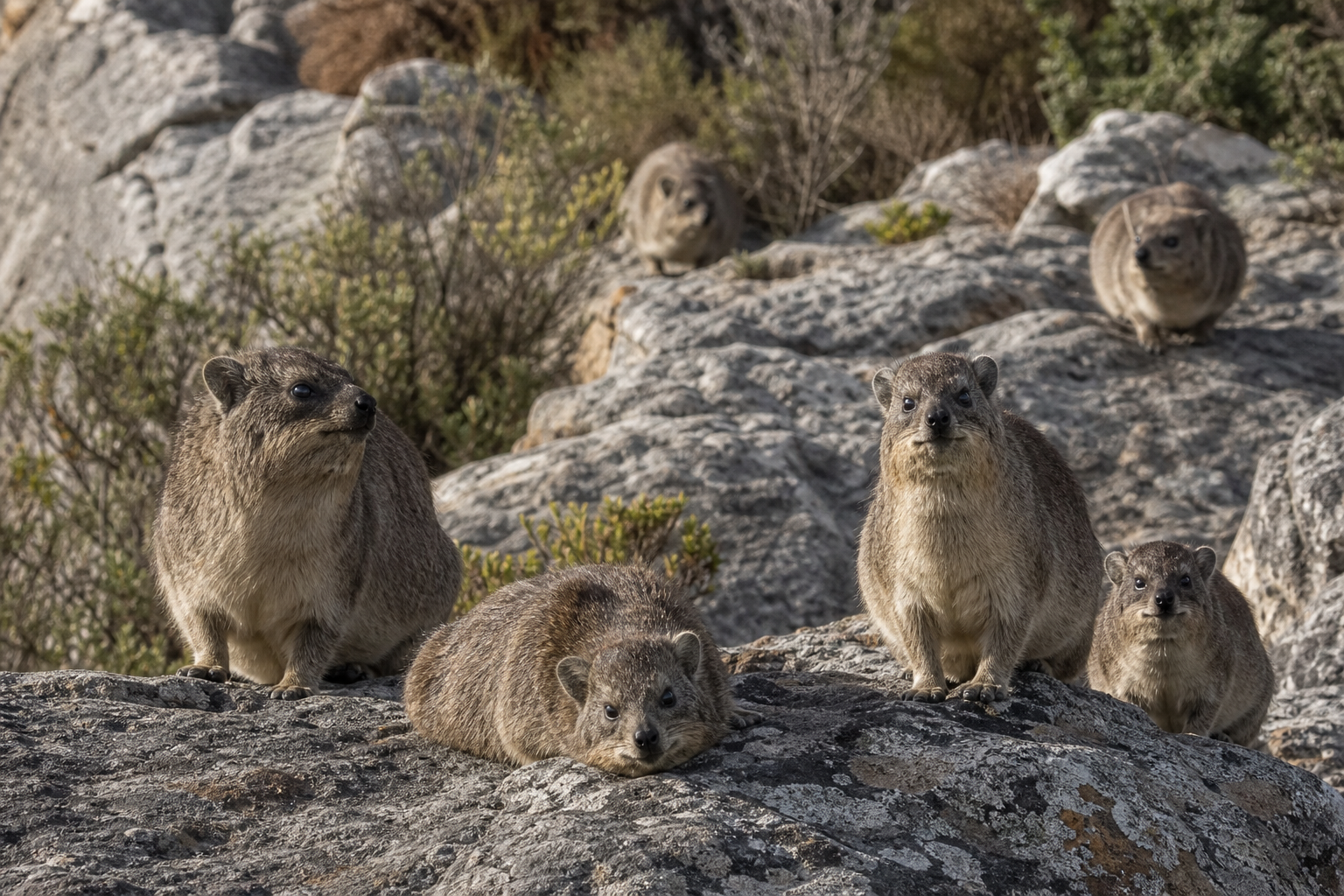
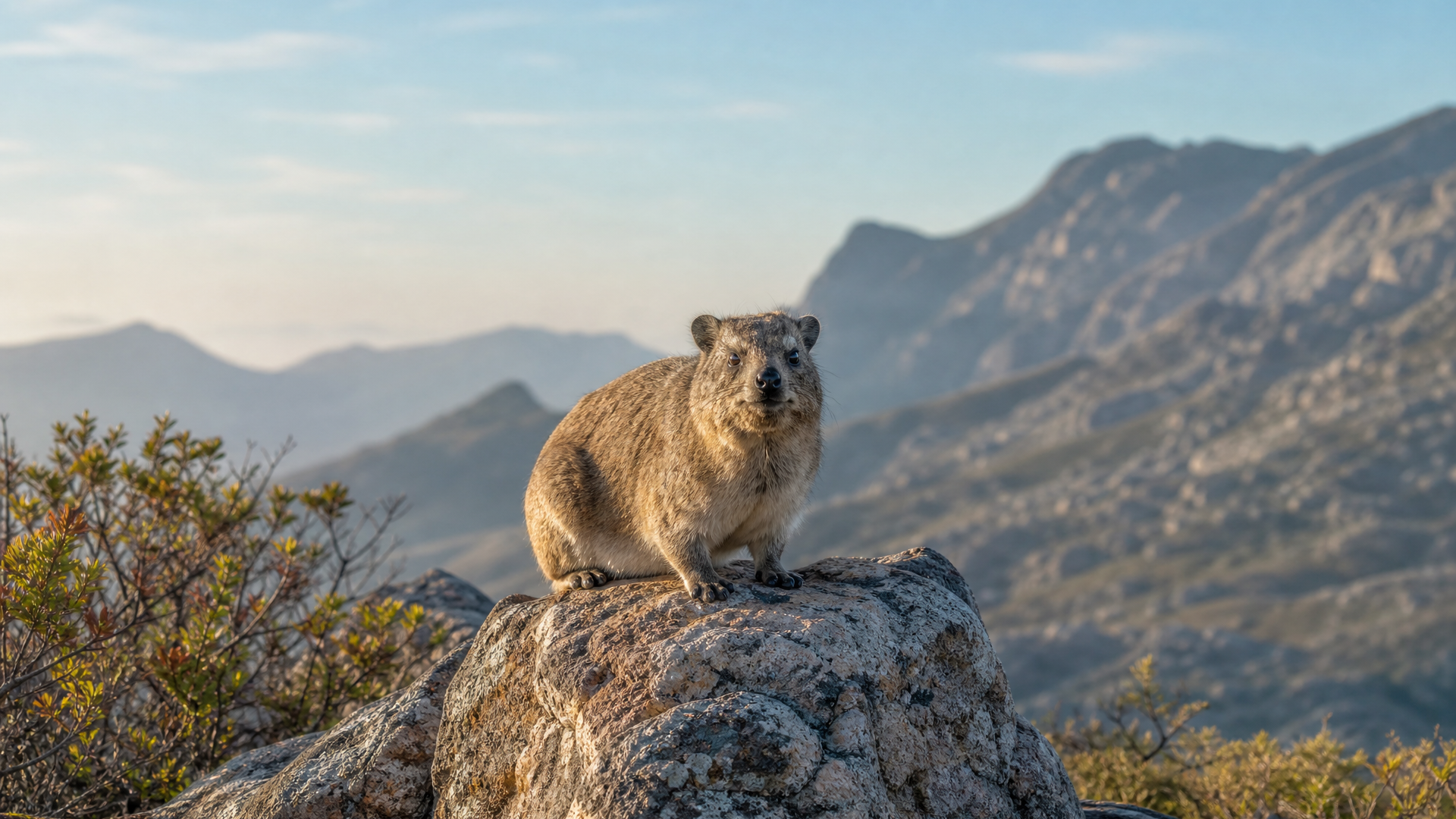
The rocks begin to click and whistle after sunrise. A hyrax appears on a warm ledge, squat and watchful, fur lifting in the morning air. Soon others emerge, arranging themselves across the stone as if the whole colony has been poured into light.
At first glance, the animal seems simple: round body, small ears, short legs, no visible tail. Then the details unsettle the easy answer. Its feet grip rock with soft pads. Its teeth and ancestry point toward a deeper kinship with elephants and manatees. Its calls can carry across cliffs with a force that seems too large for the body making them.
Hyraxes live by stone. Crevices are refuge, nursery, and weather shelter. One animal feeds, another watches. Youngsters climb over backs. Adults bask because warmth is part of survival, not leisure. In fynbos mountains, kopjes, and dry rocky places, they turn bare rock into community.
They are prey for eagles, cats, snakes, and anything patient enough to wait near an exit. The colony knows this. A call snaps the ledge awake, and in a heartbeat the warm stones are empty.