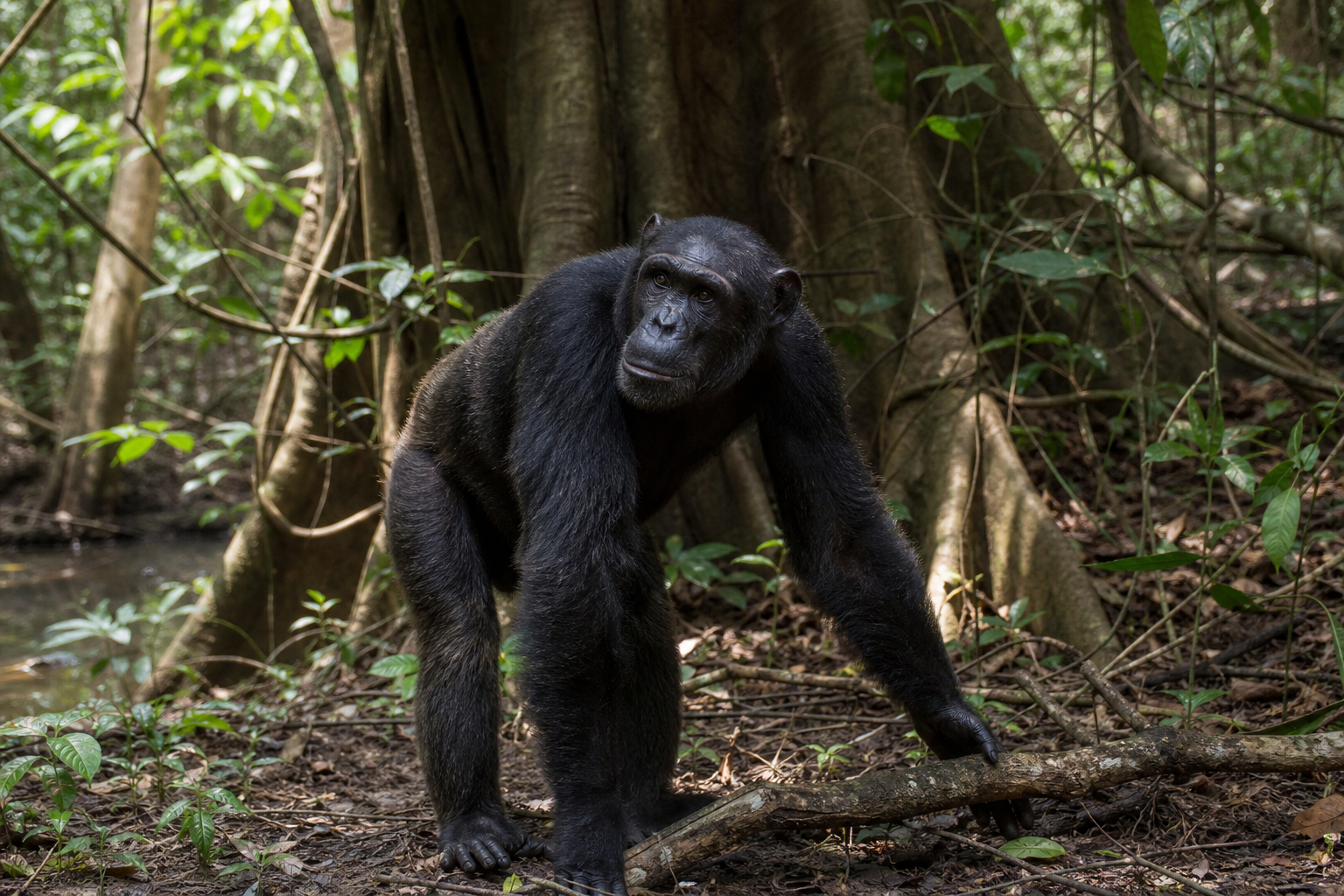
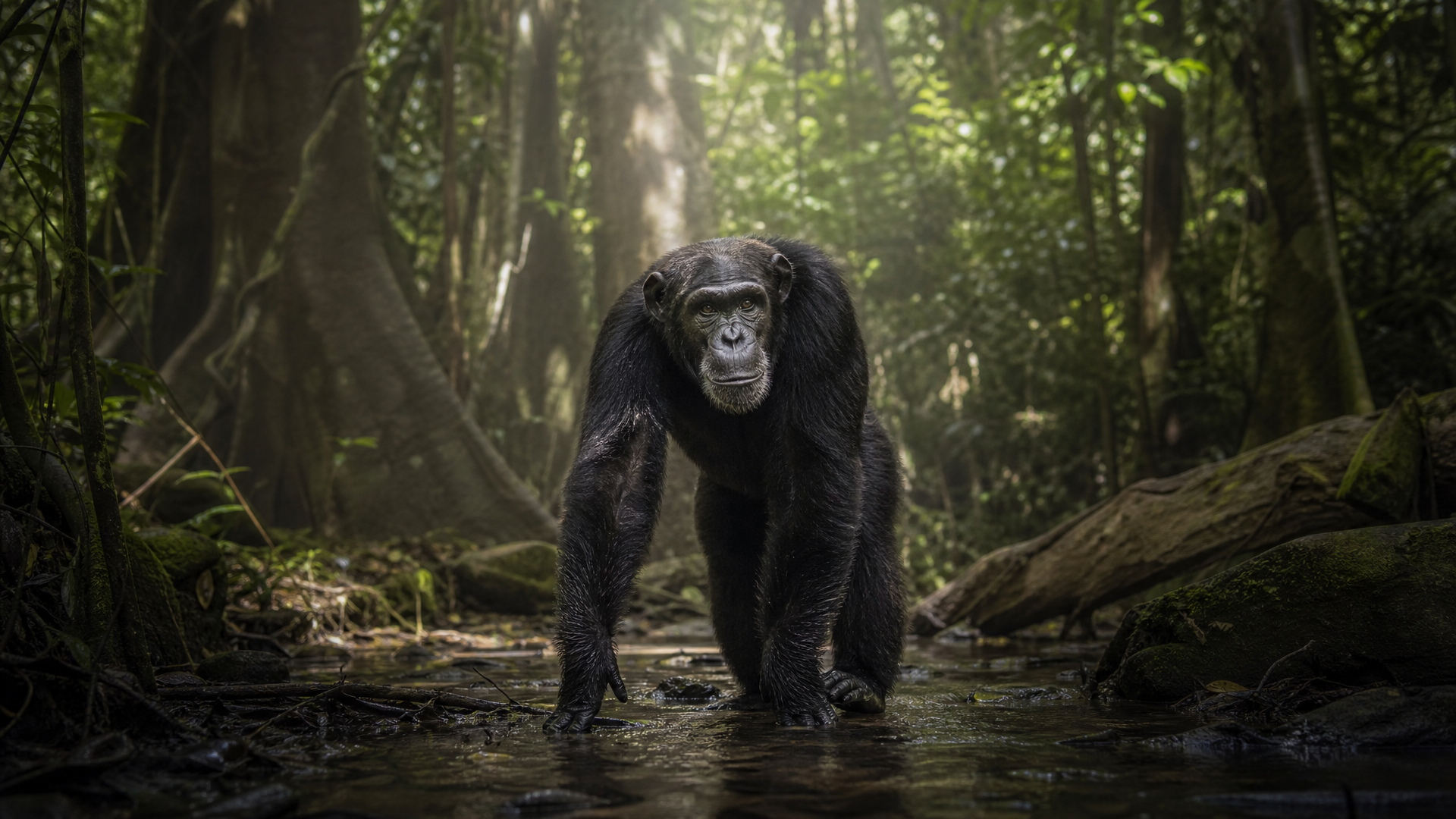
Morning gathers slowly in the gallery forest, bead by bead, until the leaves above the stream begin to tremble with voices. A branch bends. A hand reaches out of the green and tests the air before the body follows, dark against the pale trunks, pausing as though the whole forest has just spoken and must be answered carefully.
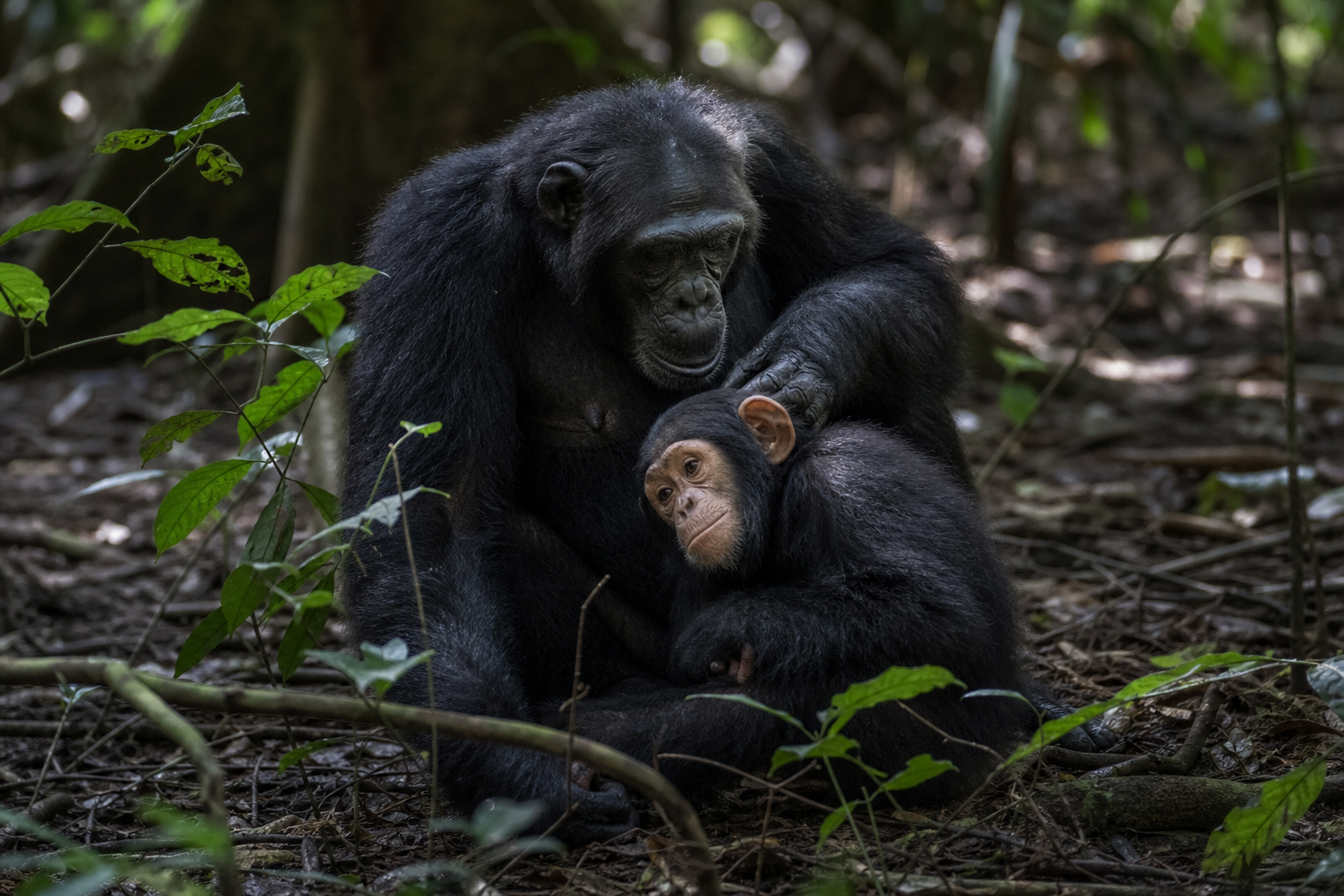
The western chimpanzee lives by attention. It listens for ripe fruit falling beyond sight, for the alarm notes of monkeys, for the soft shift of another chimpanzee climbing nearby. A youngster clings to its mother and watches everything: which stone cracks a nut, which stem will hold weight, which elder may be approached and which should be left alone. There is tenderness here, and politics, and sudden thunder. A quiet grooming session can hold a family together; a drumming display against a buttress root can send sound rolling through the trees like weather.
In the forests and savanna edges of Guinea, Sierra Leone, Liberia, Côte d'Ivoire, Senegal, and beyond, these apes carry old knowledge in living bodies. Their trails open the undergrowth, their choices move seeds from crown to clearing, their calls map a country that is shrinking around them. When the forest falls silent after they pass, it feels less empty than watchful, as if thought itself has slipped deeper into the leaves.