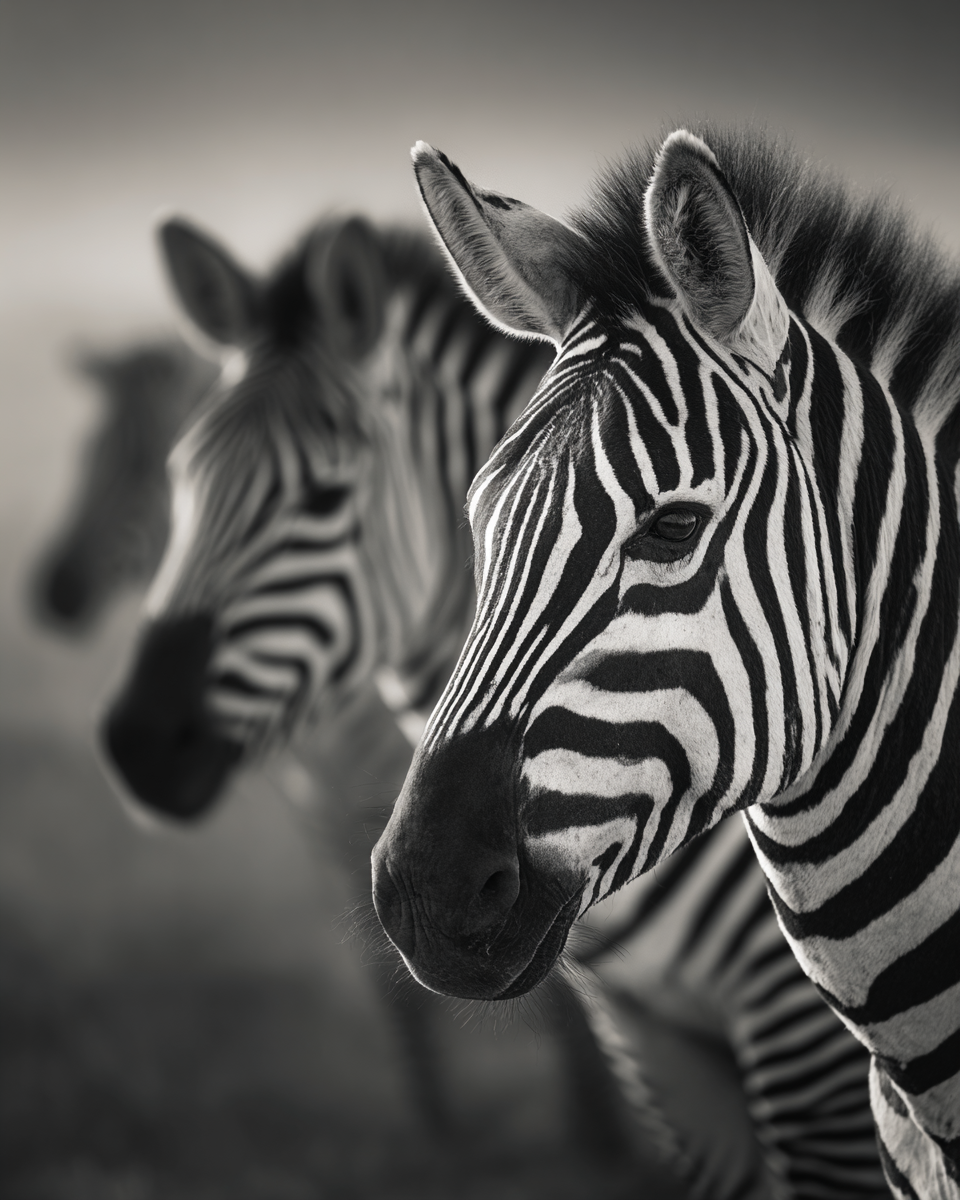
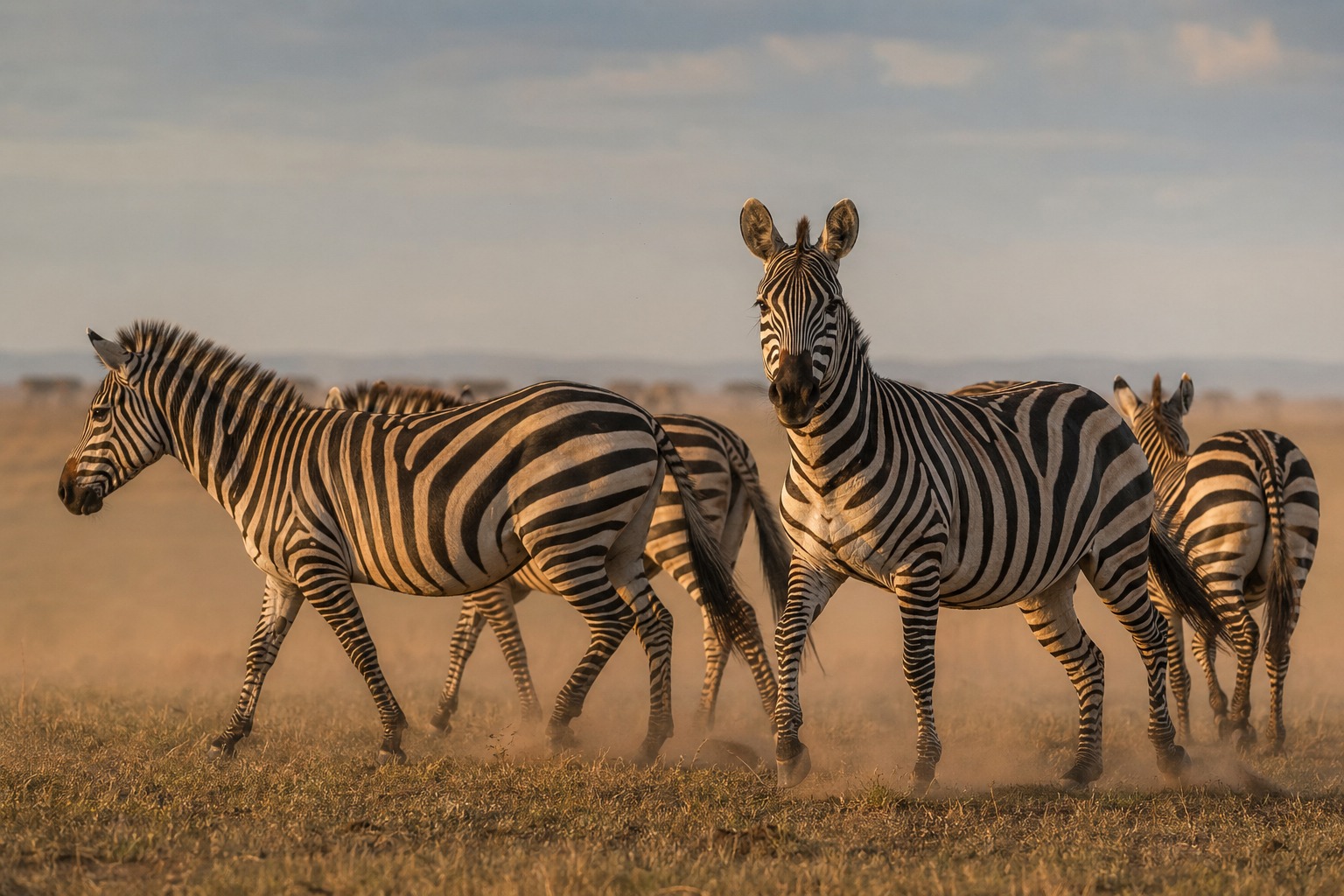
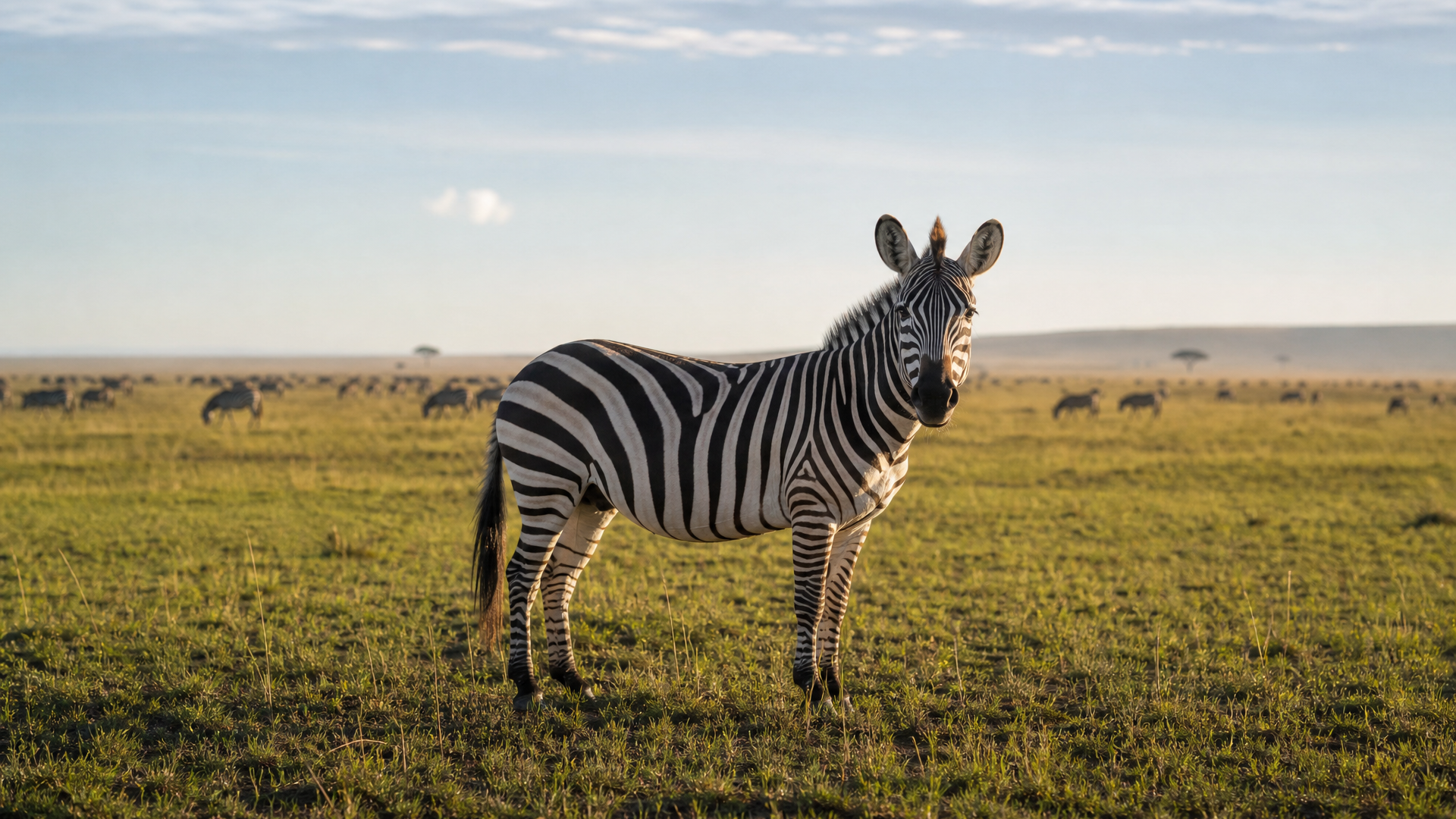
In the flat light of morning, the stripes look almost impossible. Black and white cut across dust and grass, bending around ribs, shoulders, necks, and restless legs until the herd becomes a shifting pattern the eye cannot settle. Grant's zebra gives the plains their sharpest visual language.
The pattern is not ornament. In a moving group, outlines break and bodies confuse one another. Foals learn the stripe and scent of their mothers. Stallions hold family bands together. Ears turn, tails flick, heads lift, and small signals pass through the herd before any human watcher has seen what caused them.
Zebras make the Serengeti-Mara migration legible at ground level. They graze, travel, pause at water, and lend their nervous intelligence to the larger movement of wildebeest and gazelles. Their caution is social. One animal's alarm becomes many animals' decision.
The familiar can be easy to overlook, but a zebra herd before flight is full of tension. Several heads rise at once. Dust hangs around the legs. Somewhere in the grass, a shape has shifted. For one breath, the stripes stand still. Then the pattern breaks open and runs.