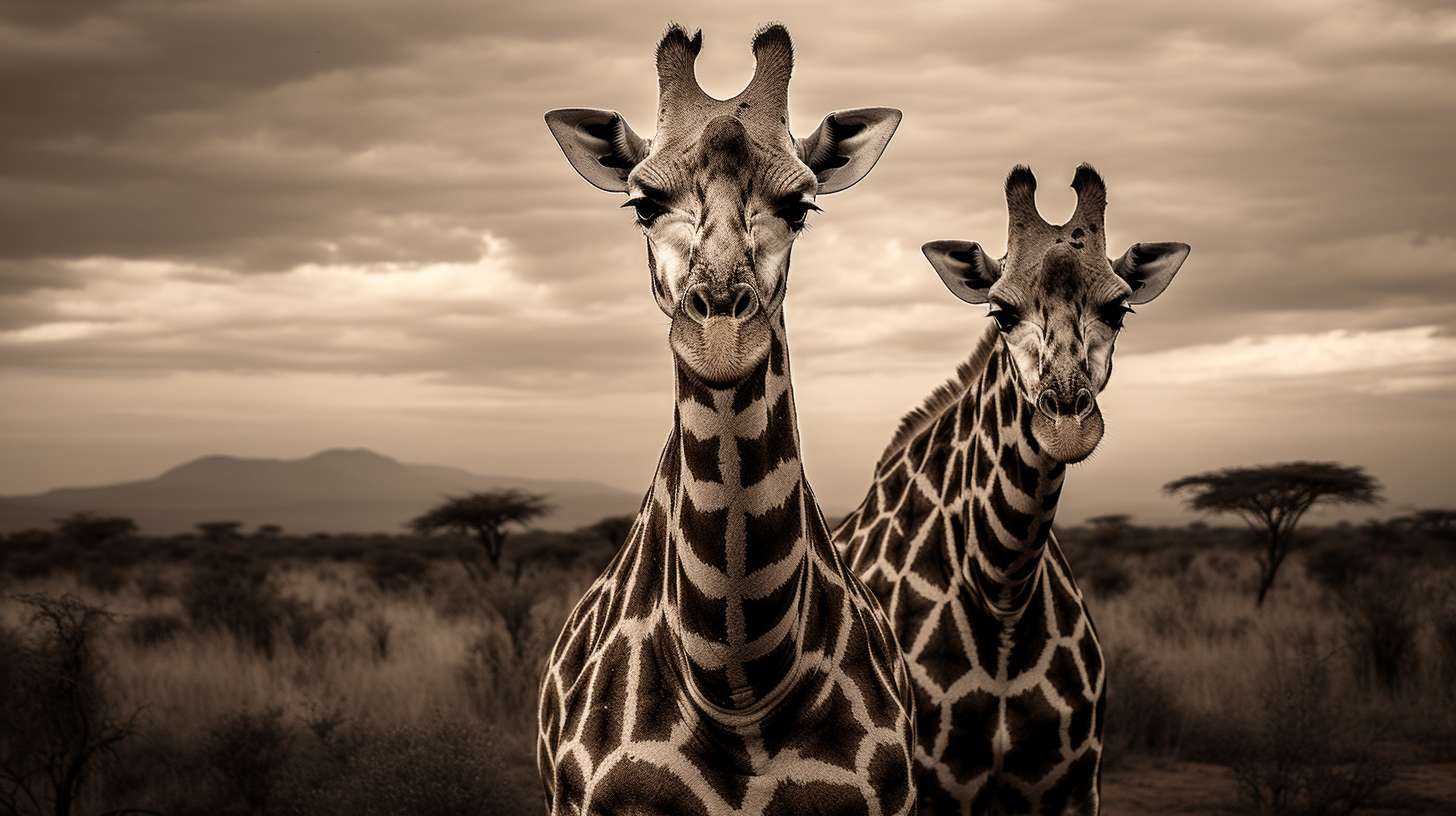
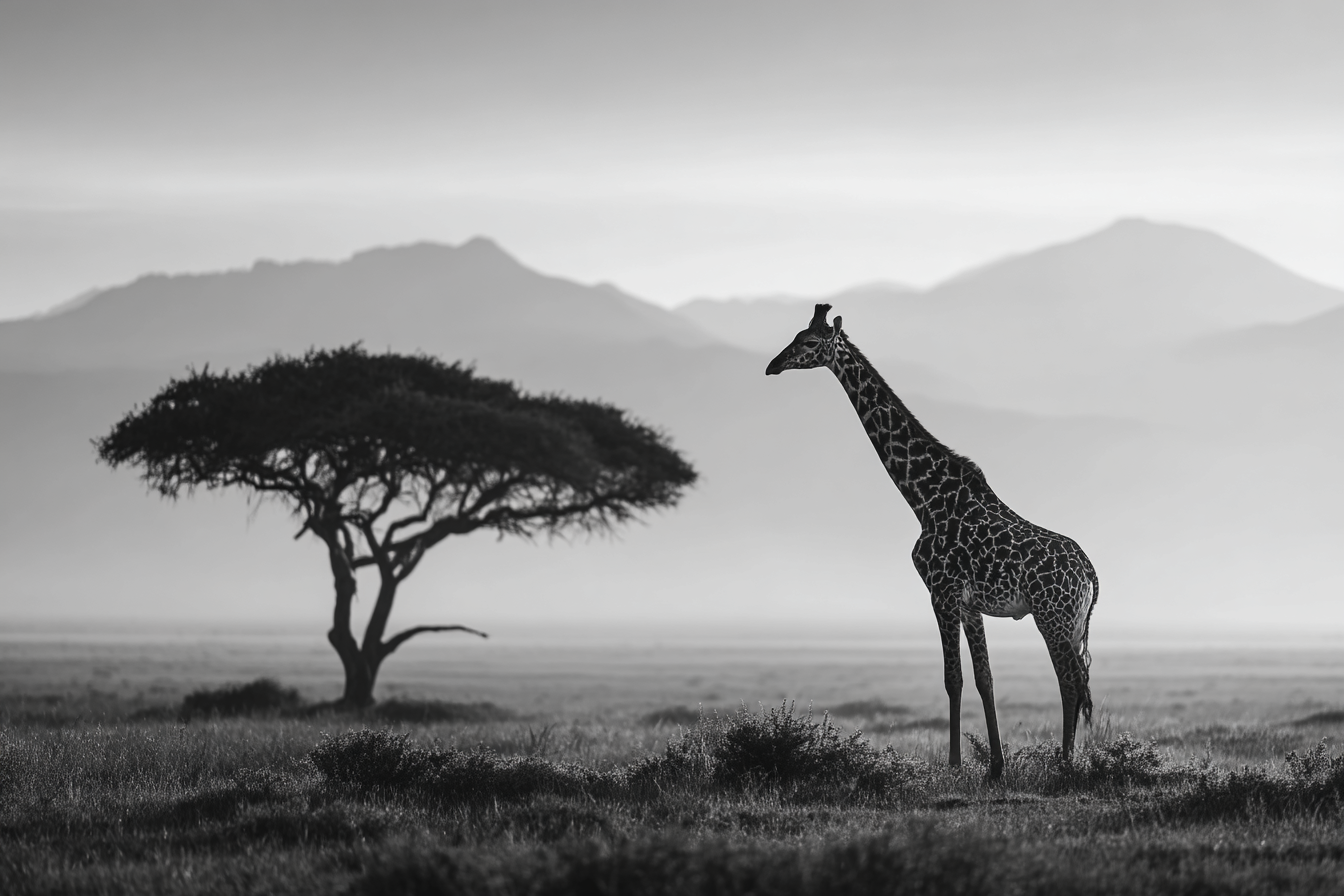
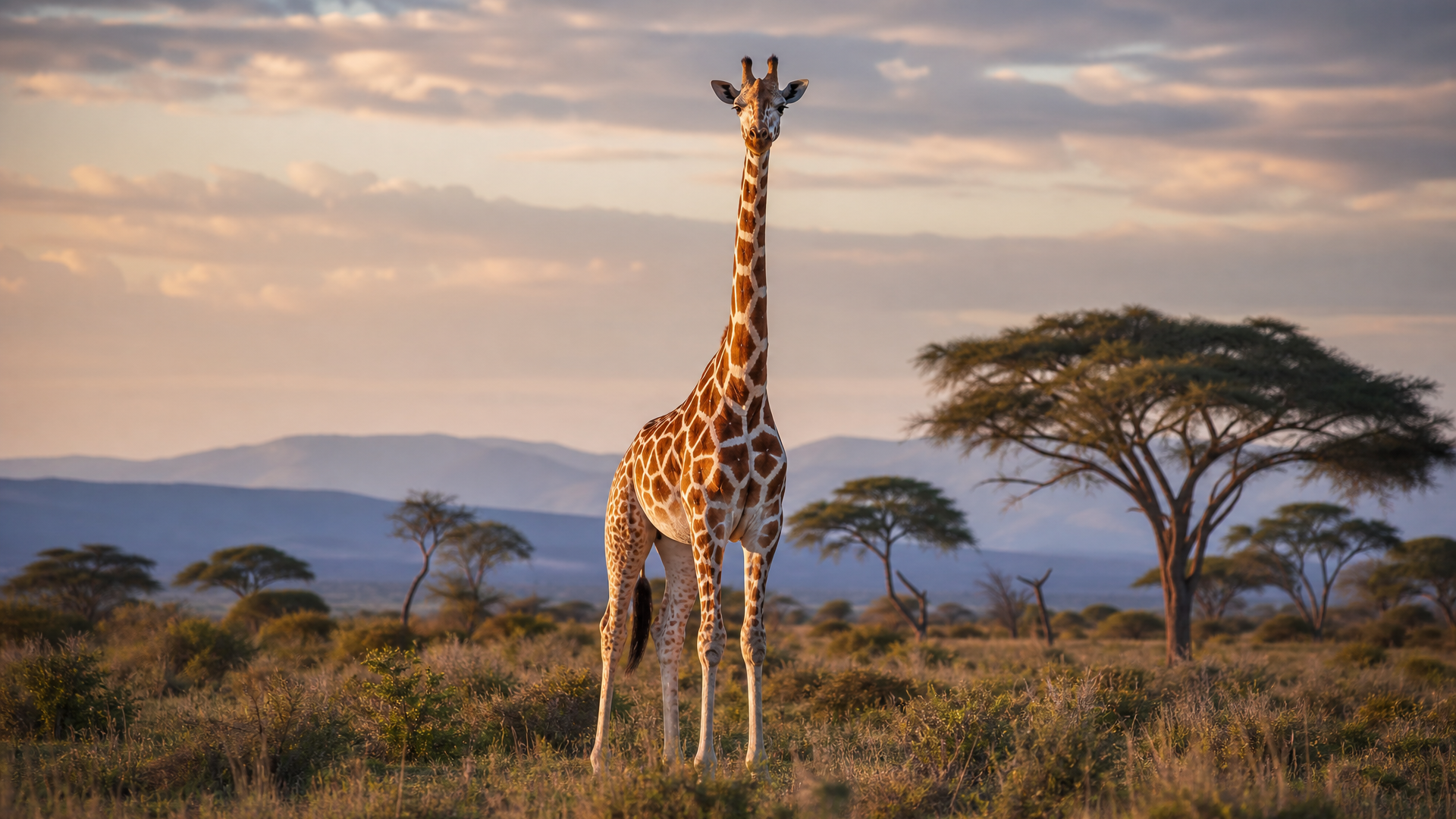
Before the giraffe appears, the eye stays low: grass, thorn, dust, the backs of grazing animals. Then a patterned neck rises above the acacias, and the scene gains another level. A Maasai giraffe does not enter quietly because height itself is an announcement.
Its movement is slower than danger but never careless. Long legs carry the body in a rolling gait, and the head works among thorns with surprising delicacy. The dark tongue gathers leaves between spines. Oxpeckers shift along the neck. From that height, the giraffe sees the plain differently: cats resting in shade, calves moving near their mothers, trouble forming long before it reaches the grass below.
The animal's grace is not softness. Drinking makes that clear. To reach water, it must fold itself into risk, legs splayed, neck lowered, body briefly surrendered to gravity. Then it rises again, immense and alert, returning to the height that keeps it alive.
In Kenya and Tanzania, the Maasai giraffe makes woodland and open plain speak to each other. It trims the crowns of trees, carries seed, and gives warning by the simple act of looking. A lion may own the grass for a moment, but the giraffe owns distance. Above the thorns, it watches the savanna thinking.