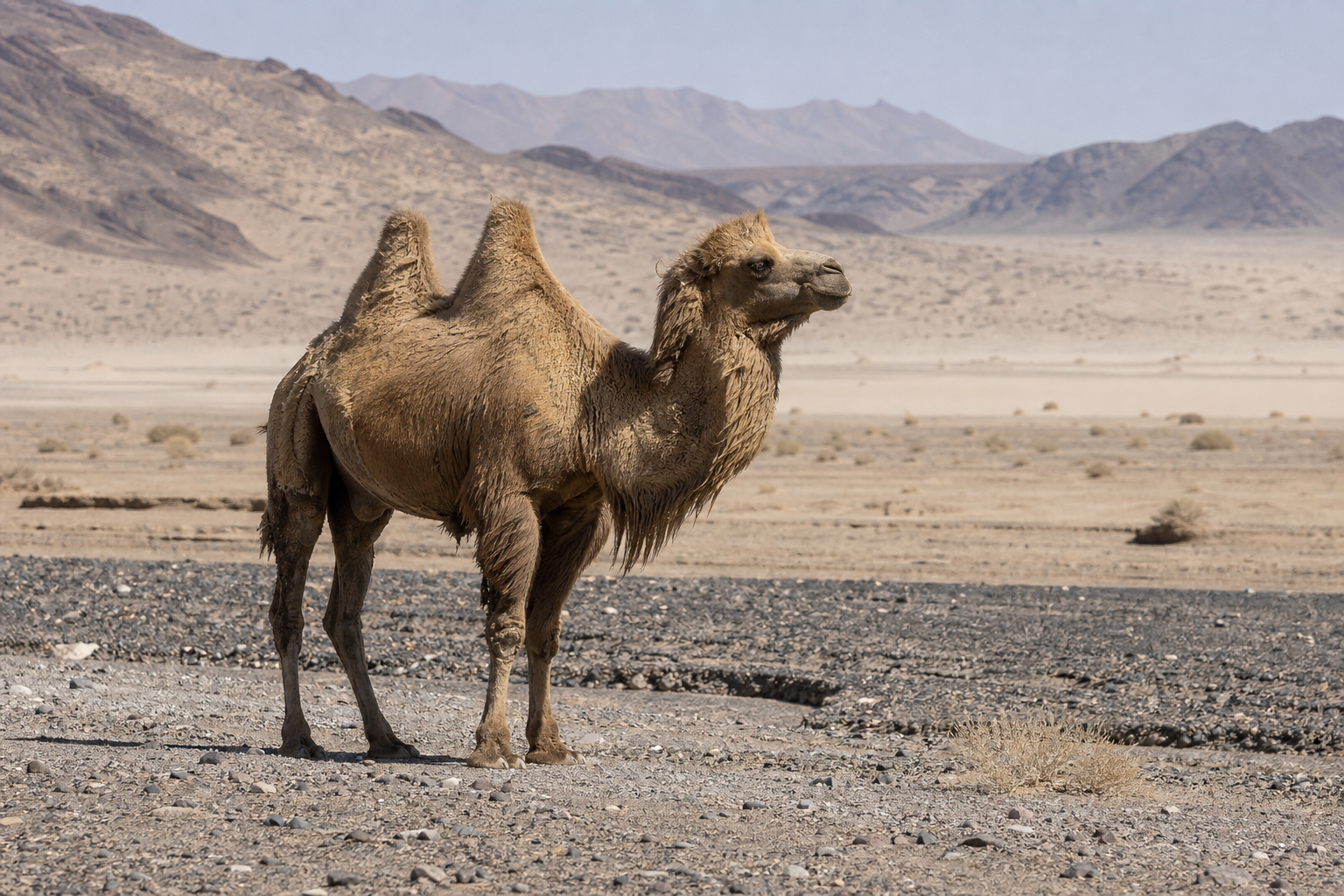
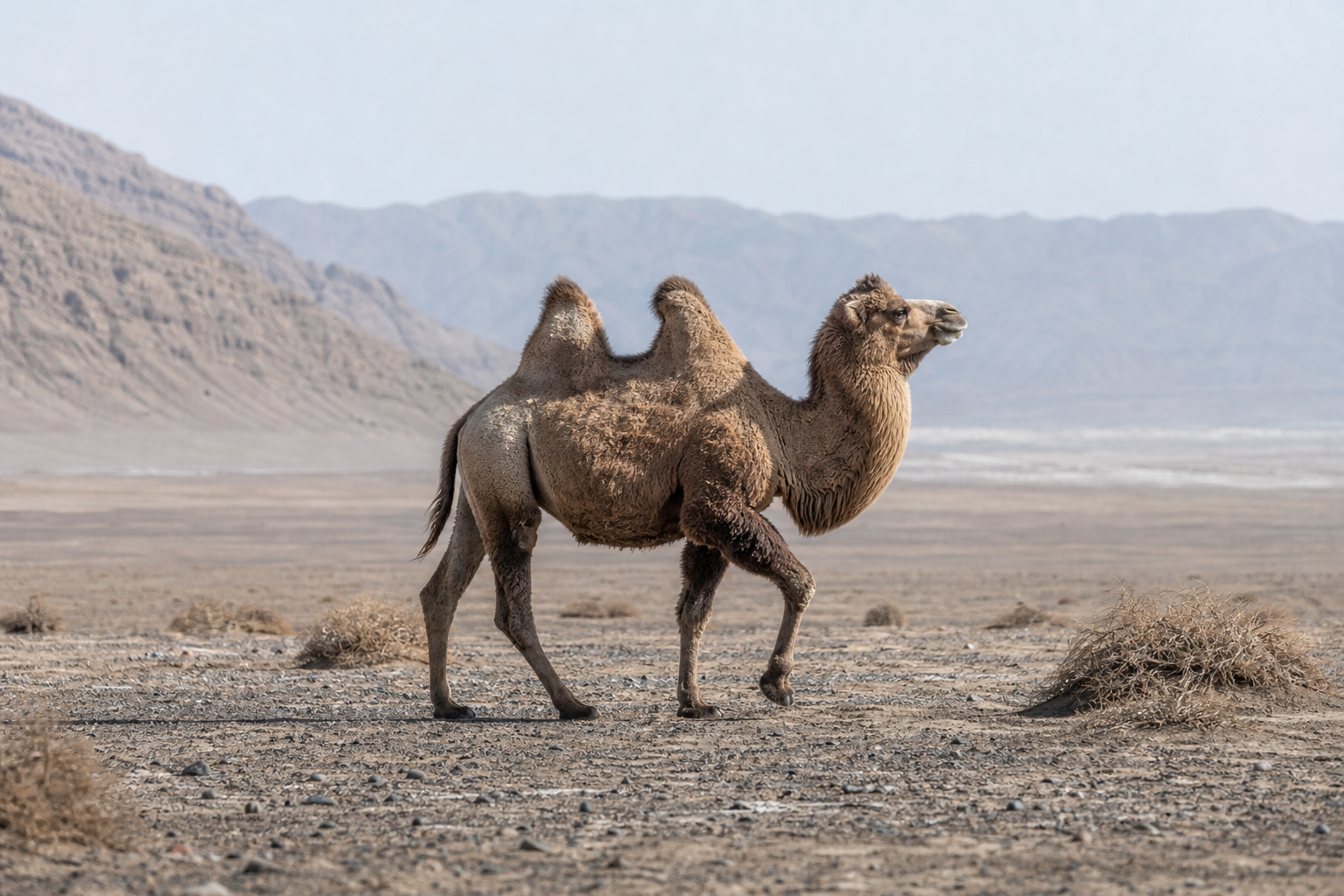
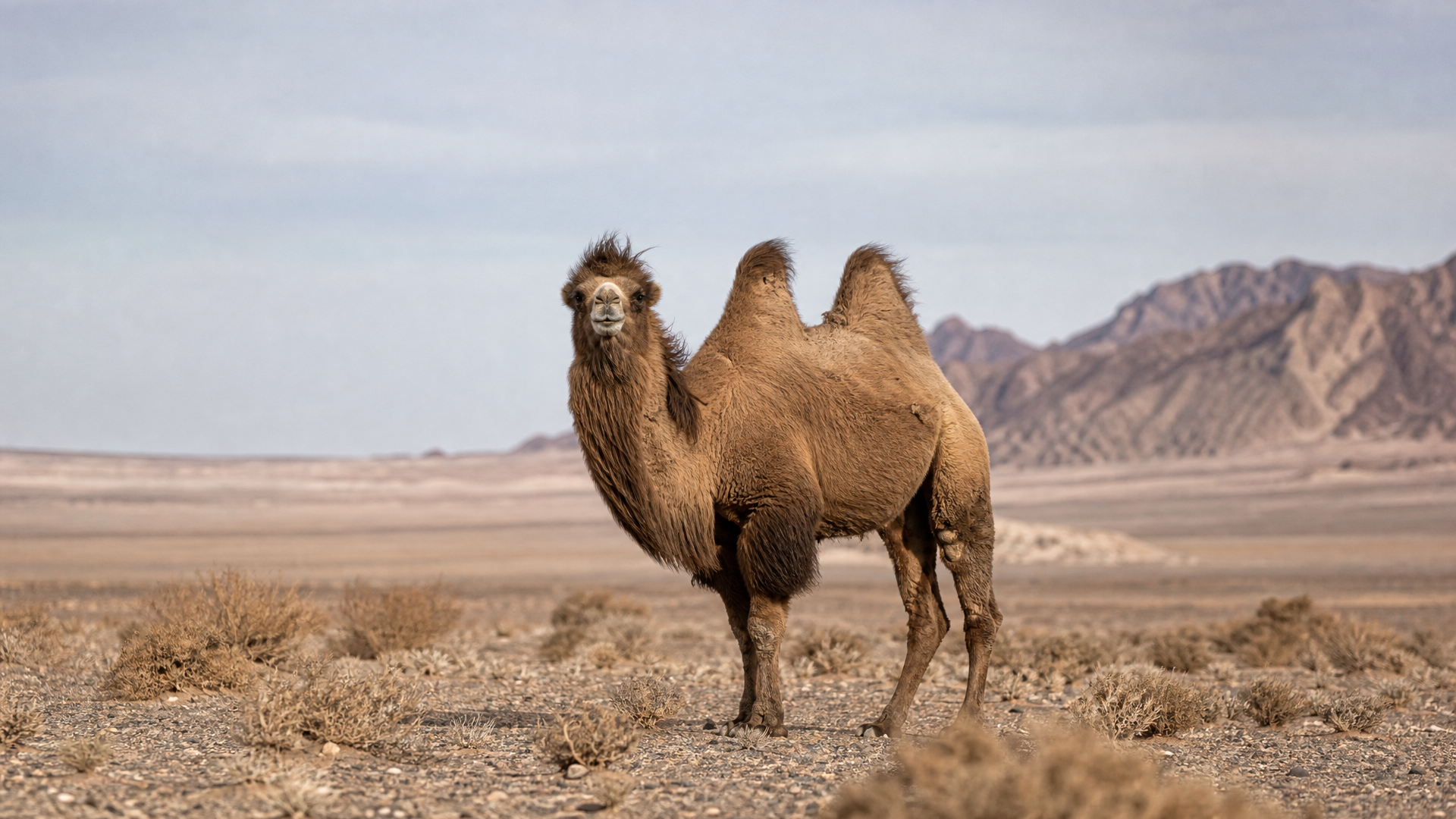
In the Gobi, distance blurs before noon. Gravel plains run toward low mountains, the air tastes of salt, and old tracks fade almost as soon as wind touches them. A camel stands beside a dry wash, thin-legged and wary, its two humps smaller and sharper than the domestic shape people think they know.
The wild Bactrian camel has the look of an animal pared down by hard country. Its coat hangs unevenly after winter, its feet spread over sand and stone, and its mouth works through plants few others would choose. It travels with restraint, saving effort for water, weather, and danger. A small group moves in single file, pausing to lift heads into the wind. There is no softness in the landscape, and none wasted in the animal. Even standing still, it seems to be enduring forward.
This camel gives Central Asia's deserts a deep time signature. It belongs to ancient routes across salt basins, gravel flats, and dry mountains, where survival depends on decisions made over many miles. Hybridization, mining, hunting, and scarce water have left the wild form perilously thin on the ground. In the heat shimmer, two humps pass behind stone, and the desert keeps one of its oldest travelers.