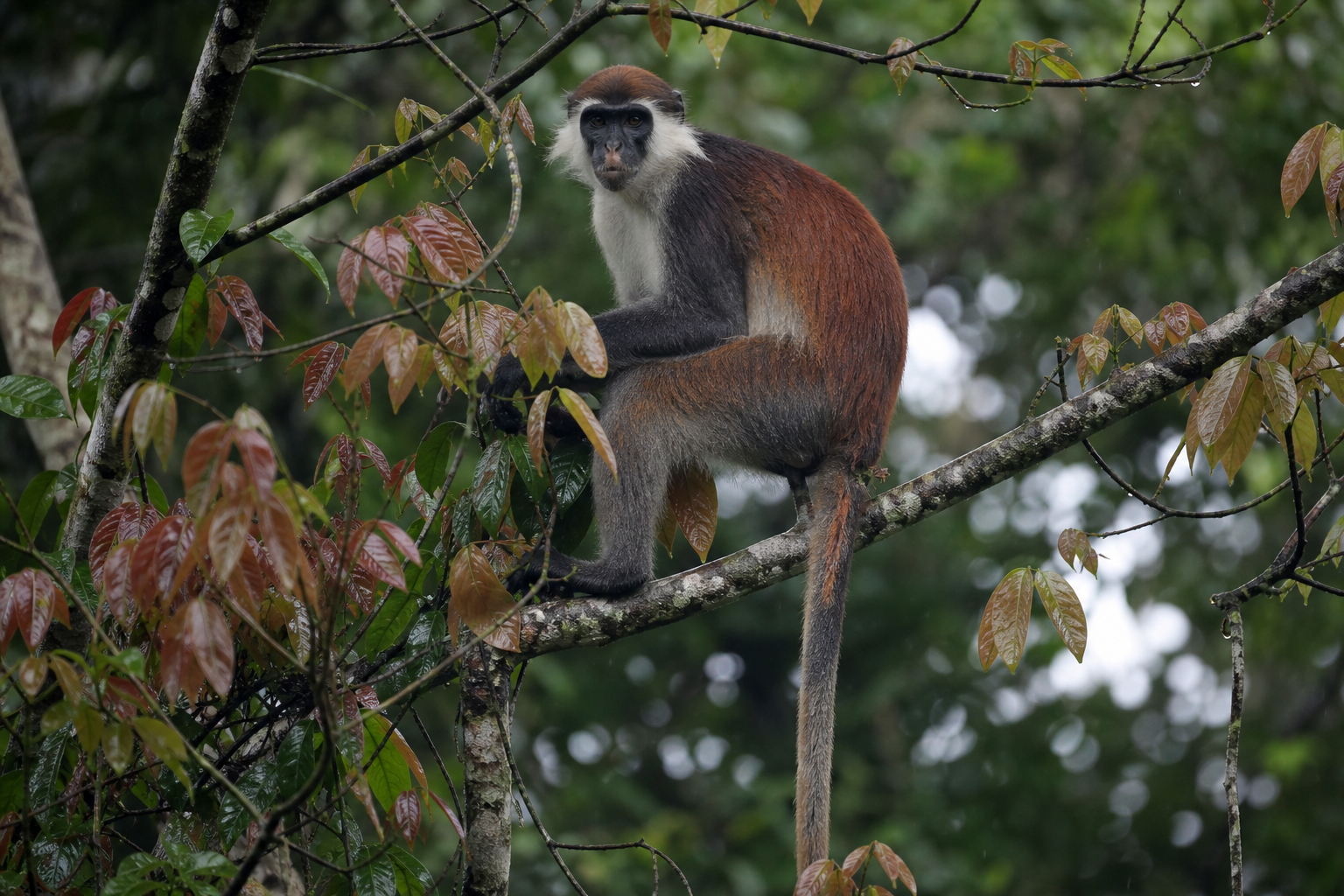
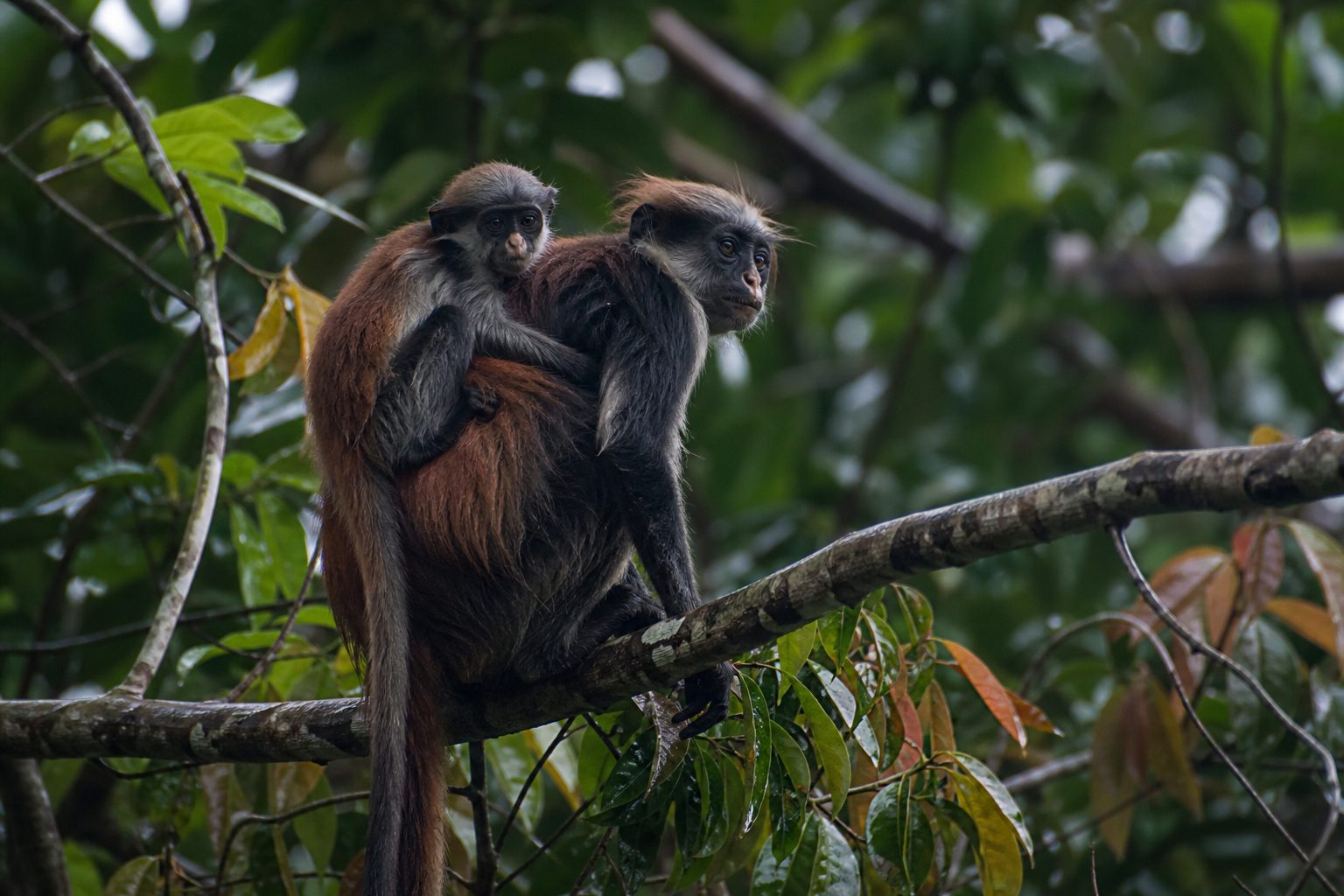
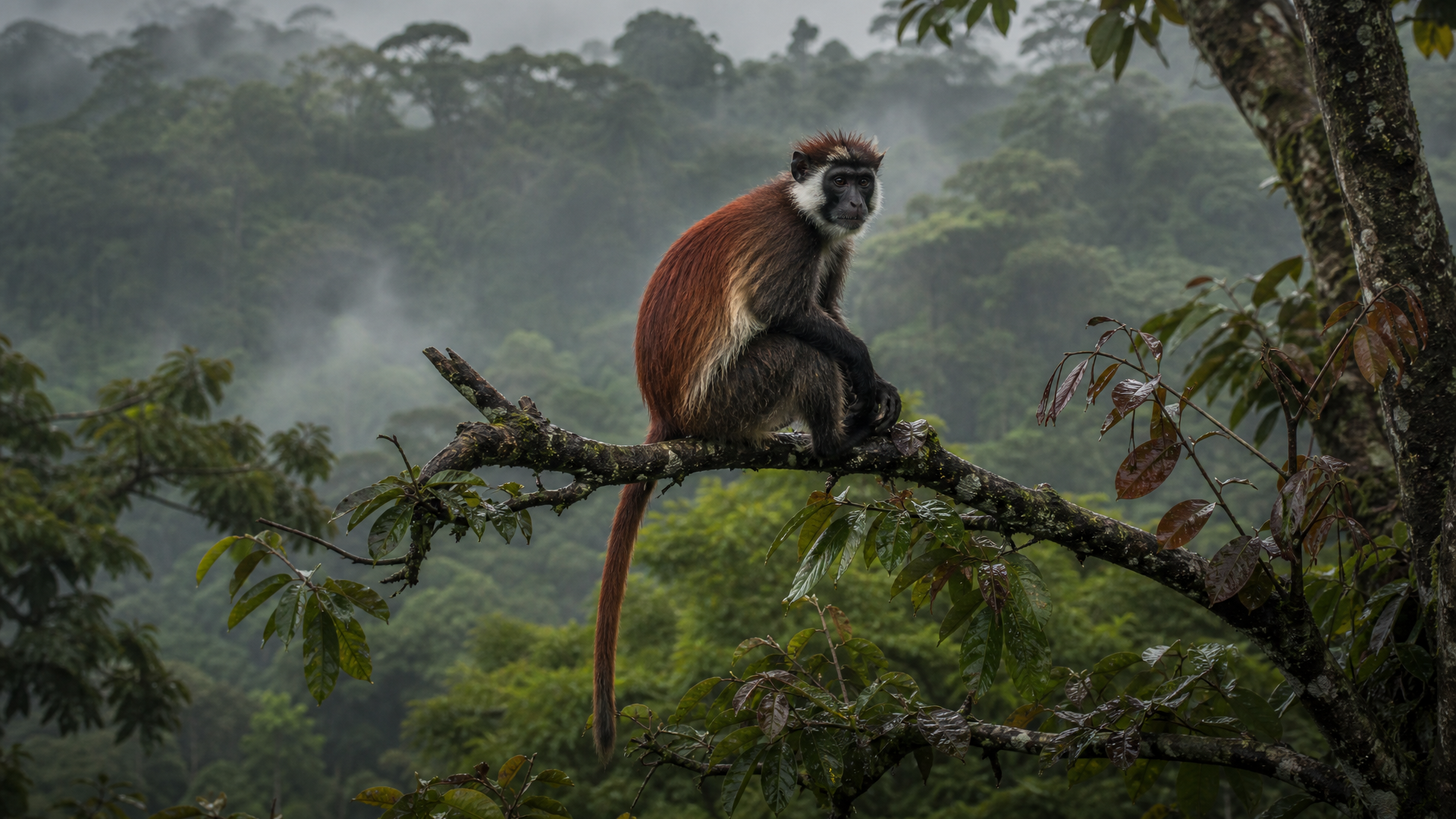
Rain taps softly on the leaves, and the canopy begins to move in patches of red-brown and dark limb. No single animal gives the troop away at first. The whole crown seems to loosen, then gather itself, as western red colobus monkeys shift through the high branches with a rustle like cloth.
They live close together, because in the forest a lone monkey is a brief thing. Youngsters tumble and cling; adults stretch for new leaves; sentinels freeze when a shadow passes above. Their faces carry a solemn, almost inward look, but their society is all contact and signal. A tail curves around a branch. Fingers test a gap. A mother adjusts her infant against her belly and follows the others through green space. They do not have the muscular swagger of some monkeys or the noisy confidence of others. Their strength is collective: many eyes, many ears, many bodies moving as one nervous weather system through the trees.
The western red colobus is woven tightly into the Upper Guinea forest. Its feeding helps prune and renew the canopy, and its presence feeds larger predators in a cycle older than any road. But its need for connected forest makes it vulnerable to every opening cut through the green. When the troop moves on, the leaves settle again, and the silence feels provisional, as though the forest is waiting to see who remains.