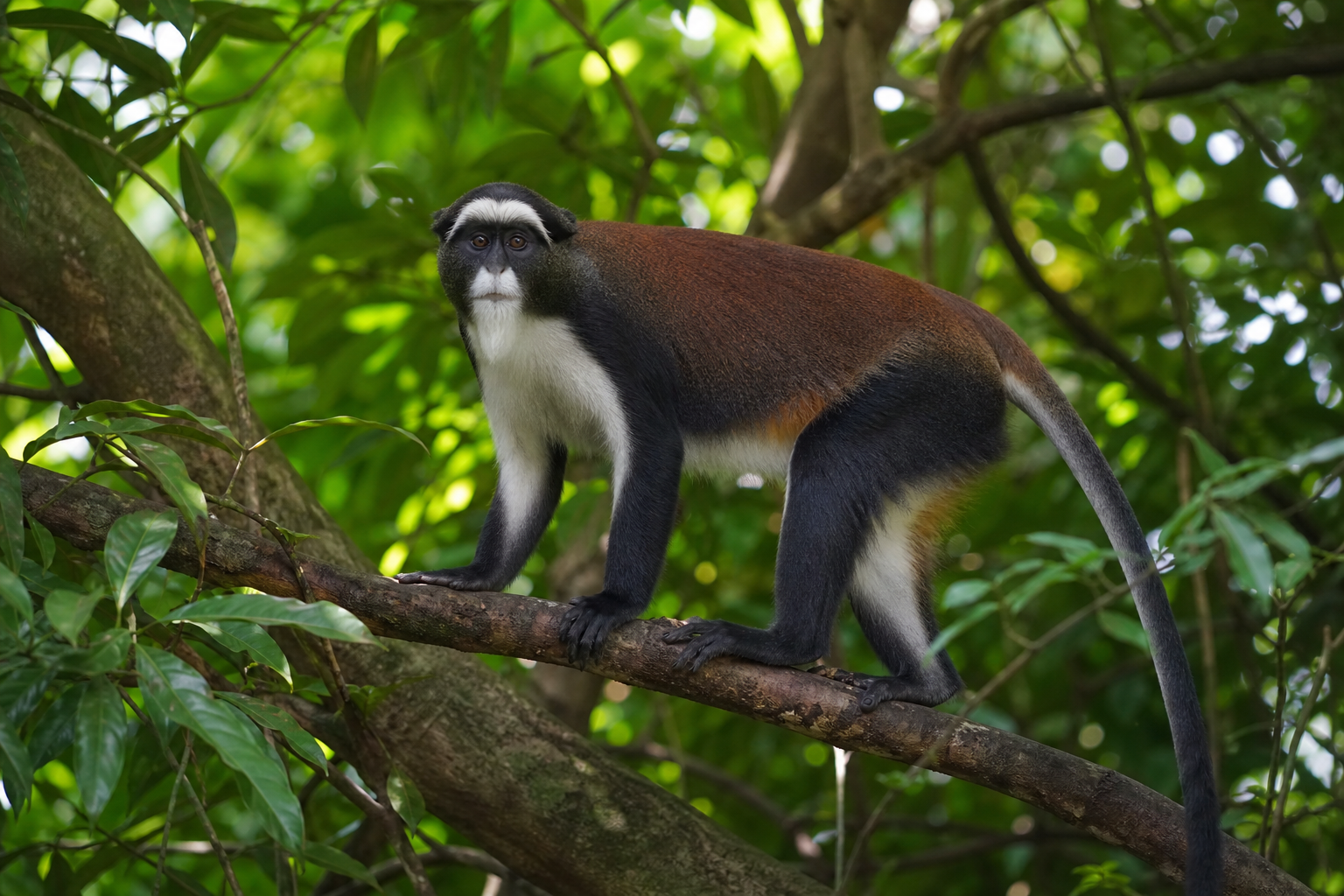
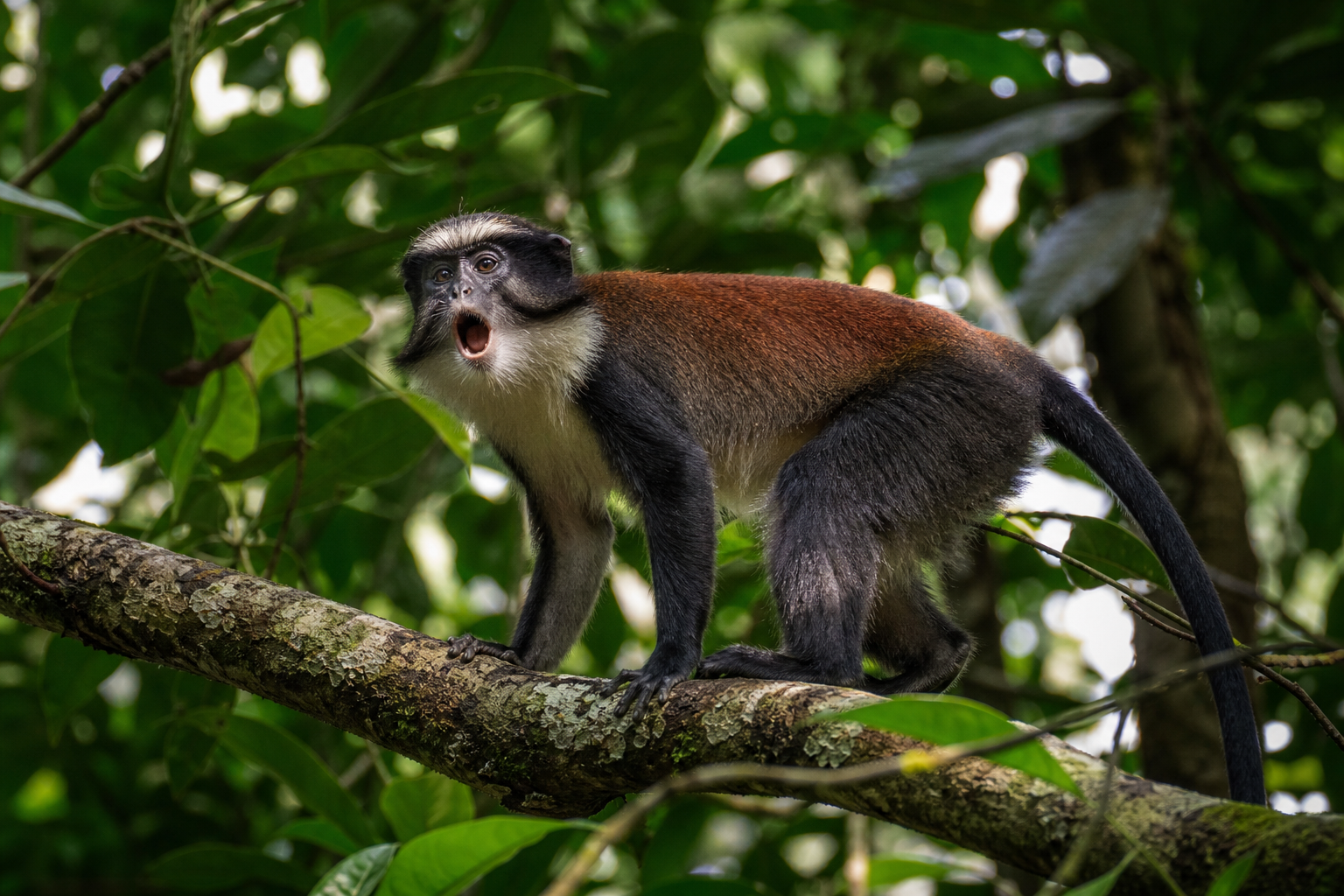
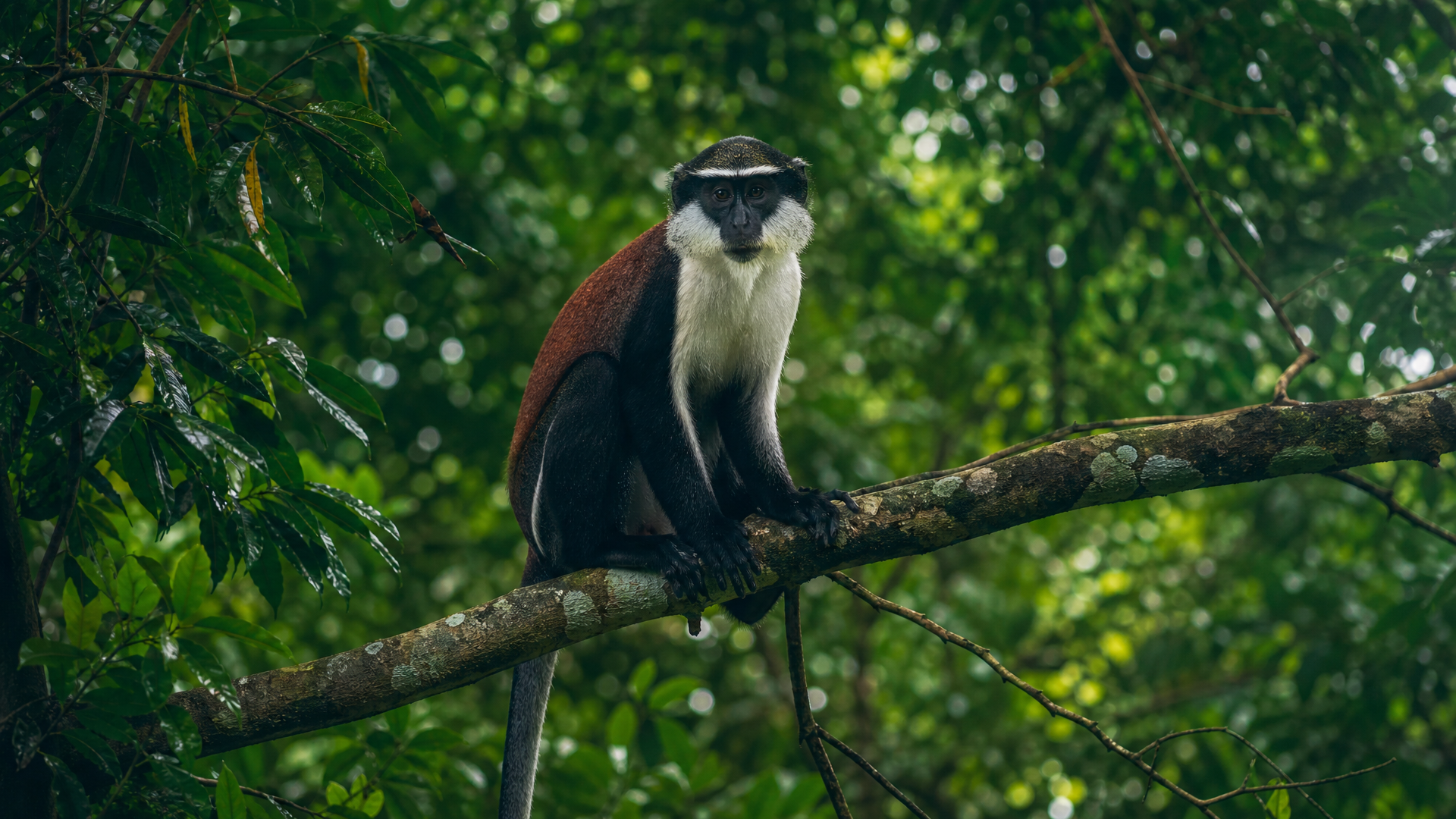
High in the Upper Guinea forest, leaves shiver before anything is visible. A branch springs back. Then a black face edged in white appears for a heartbeat, bright as a mark made by moonlight, and the Diana monkey is already elsewhere, carrying the canopy's alarm from tree to tree.
It is an animal of quick decisions and sharper signals. The body is lean, the beard and brow striking, the long tail balancing each leap across spaces that would stop most creatures cold. A troop moves like scattered sparks through the crowns, feeding, watching, calling, vanishing, reappearing. Their alarm calls are not vague panic. They can tell the forest something of what danger is coming, whether from the ground or the air, and other animals listen. Hornbills, squirrels, and smaller monkeys take meaning from the urgency overhead.
To stand below them is to feel the forest as a layered city. The trunks are streets, the crowns are rooms, and the Diana monkey passes through both with the confidence of a resident who knows every hidden passage.
Its life depends on mature forest with connected crowns and old trees. Where logging opens gaps and hunting follows new roads, the canopy becomes a broken language. Yet when a troop crosses above a shaded path, white throats flashing in green light, the forest seems to speak in full sentences again.