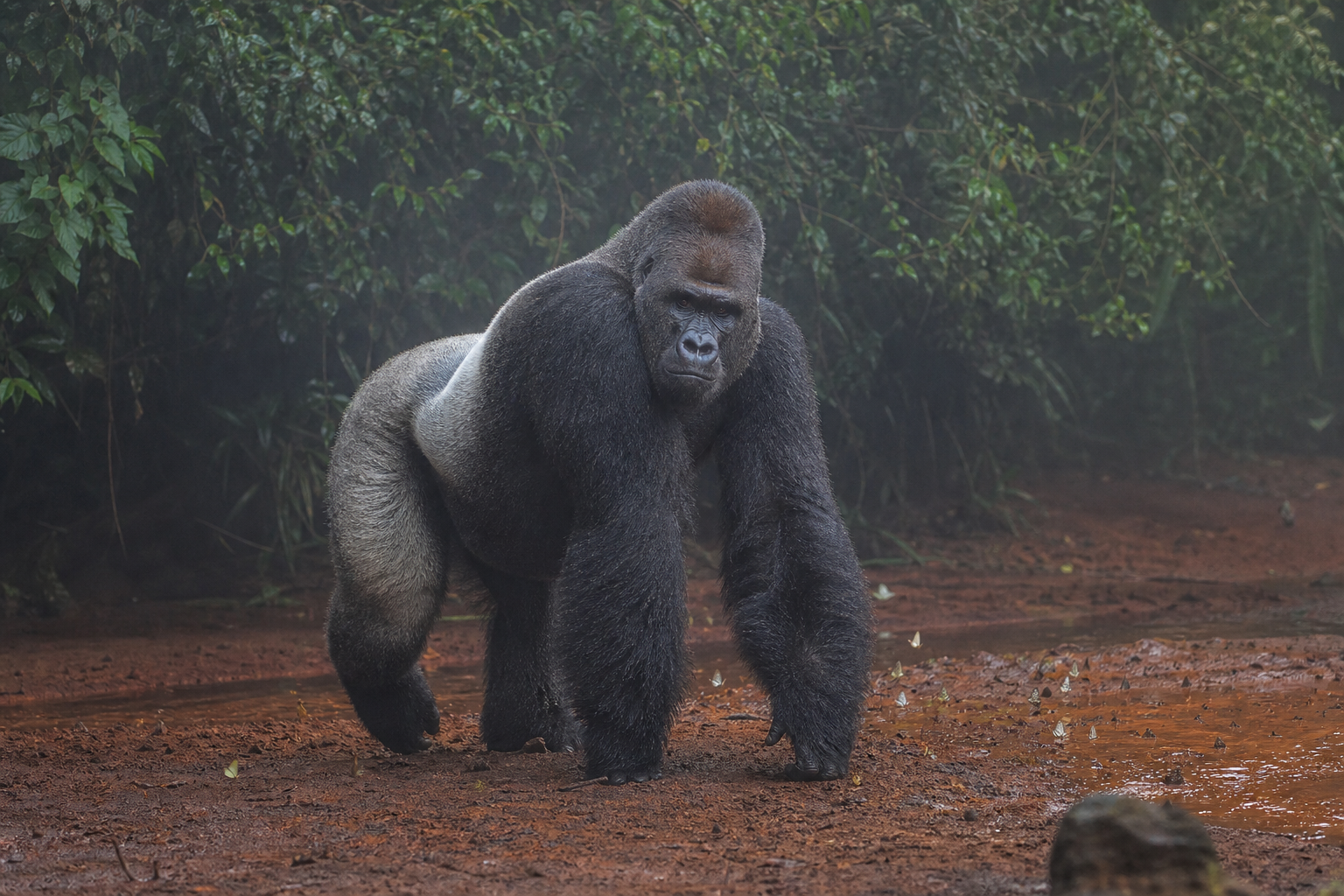
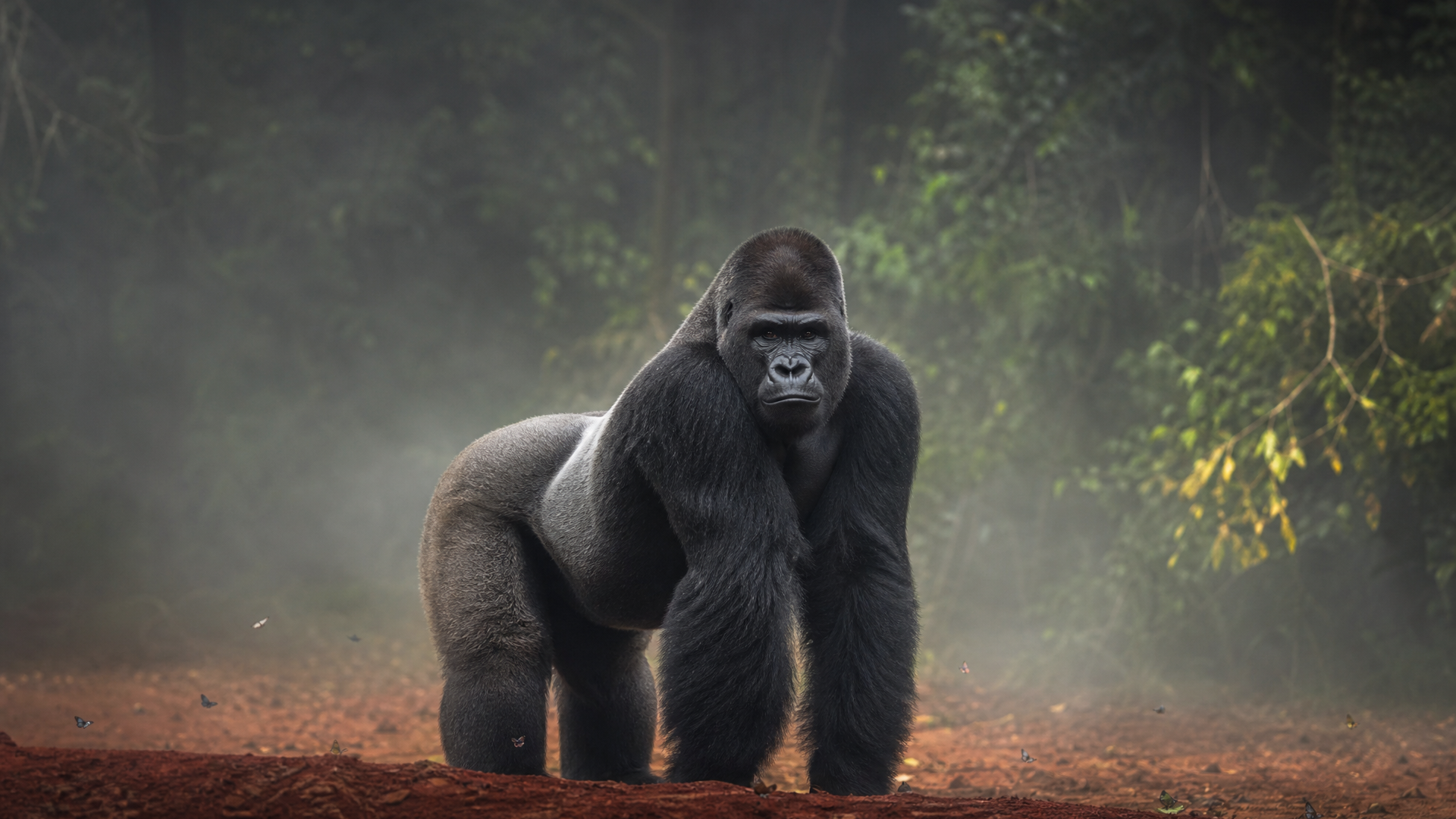
At a forest clearing in Gabon, mist lifts slowly from the red earth. Butterflies rise in small bursts, and the wall of green around the bai seems sealed until a black shape appears at its edge. Then another. A silverback steps into the open, not with haste, but with the weight of an animal that changes the space simply by entering it.
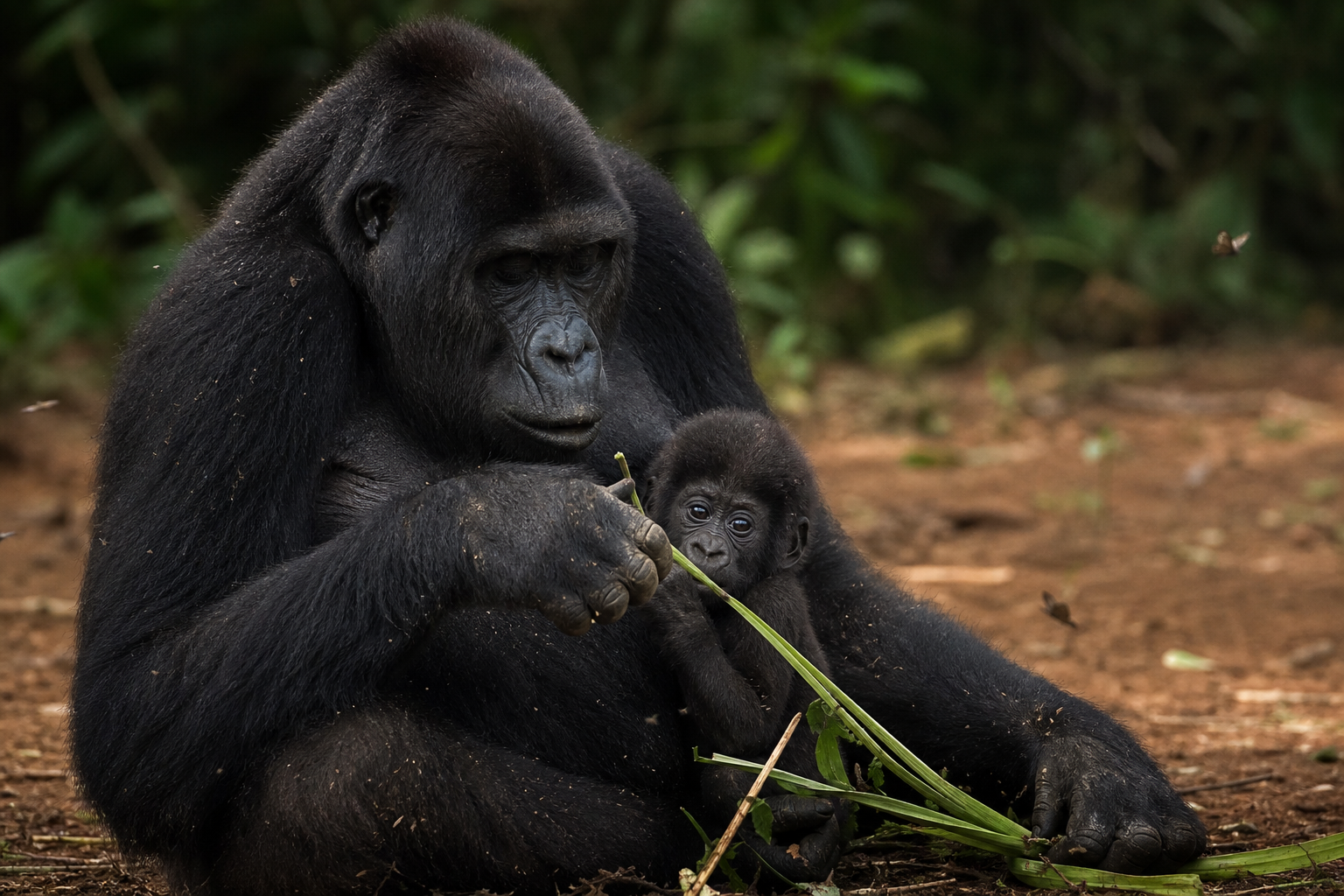
The western lowland gorilla is powerful in ways that are easy to misunderstand. Its size is obvious; its restraint takes longer to see. A family feeds in patches of light and shadow, fingers sorting stems, infants tumbling against broad arms, adults listening between mouthfuls. The silverback watches, decides, settles again. His authority is not constant violence. It is presence, memory, and the ability to hold a group together in a forest dense enough to hide danger at every side.
This is the gorilla of western equatorial Africa: Cameroon, Gabon, Congo, Equatorial Guinea, and the Central African Republic, where rainforest and swamp forest make room for one of the continent's great quiet powers. It carries seeds, opens paths, and gives the understory a humanly unsettling sense of kinship. When the clearing empties, the forest feels larger for having held them.