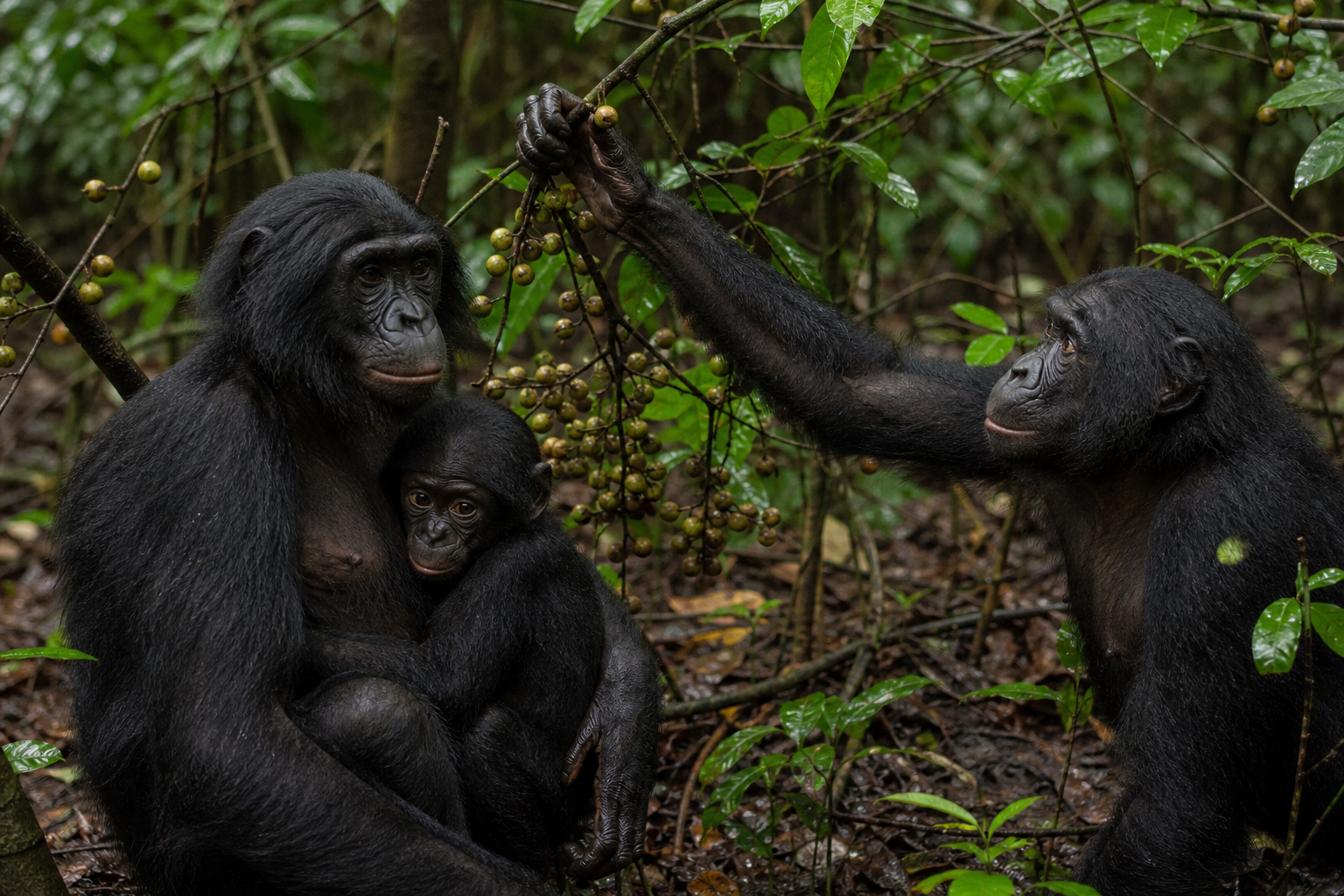
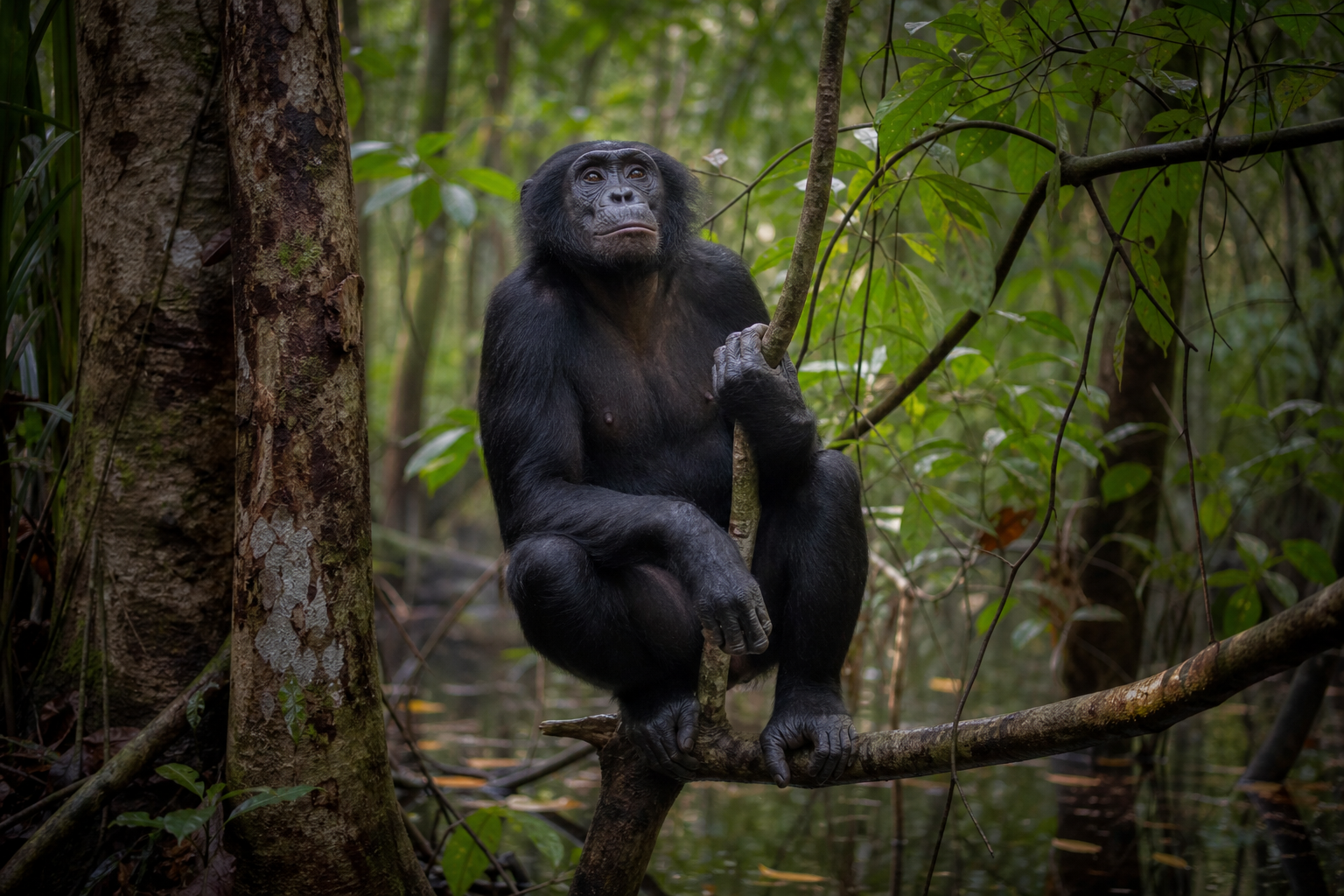
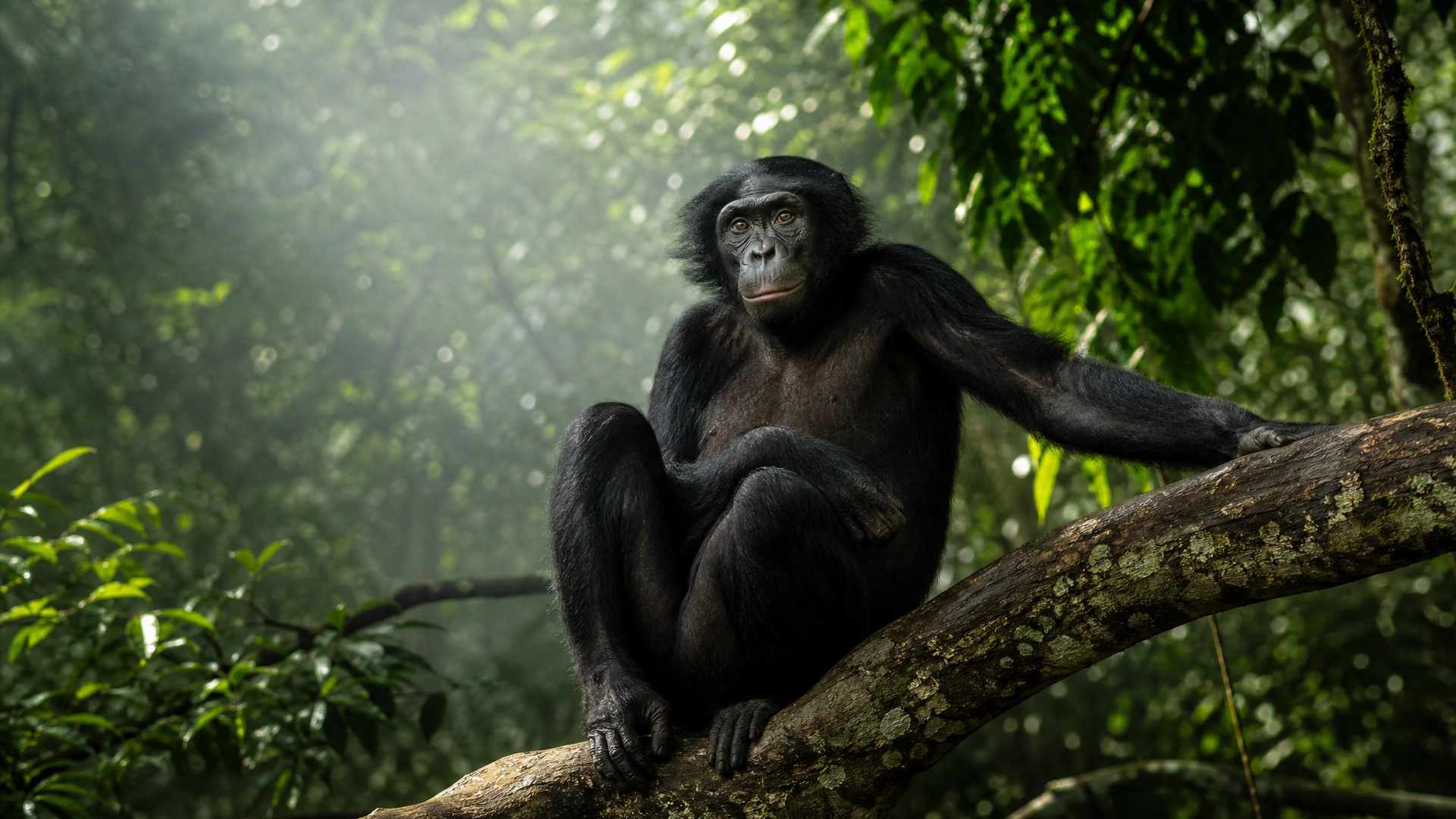
South of the Congo River, morning comes softly through swamp forest and lowland trees. A branch dips under weight. Fruit falls somewhere beyond sight. Then a dark hand folds around a stem, and a bonobo looks down through the leaves with an expression that feels less like surprise than recognition.
Bonobos carry intelligence in contact. A group feeds, pauses, touches, listens, and shifts again through the green with a social awareness as delicate as it is constant. Youngsters climb over patient adults. Mothers keep infants close against the body. Tension rises and is answered not only by threat, but by reassurance, alliance, and touch. Their world is political, sensual, alert, and deeply relational.
They represent Central Africa because their story is held almost entirely inside one great river boundary. North of the Congo, another ape story begins; south of it, bonobos have made a country of forest, water, memory, and social invention. As roads, hunting, and broken canopy press inward, each remaining community is more than a group of apes. It is a living argument for the forest as a place of thought.