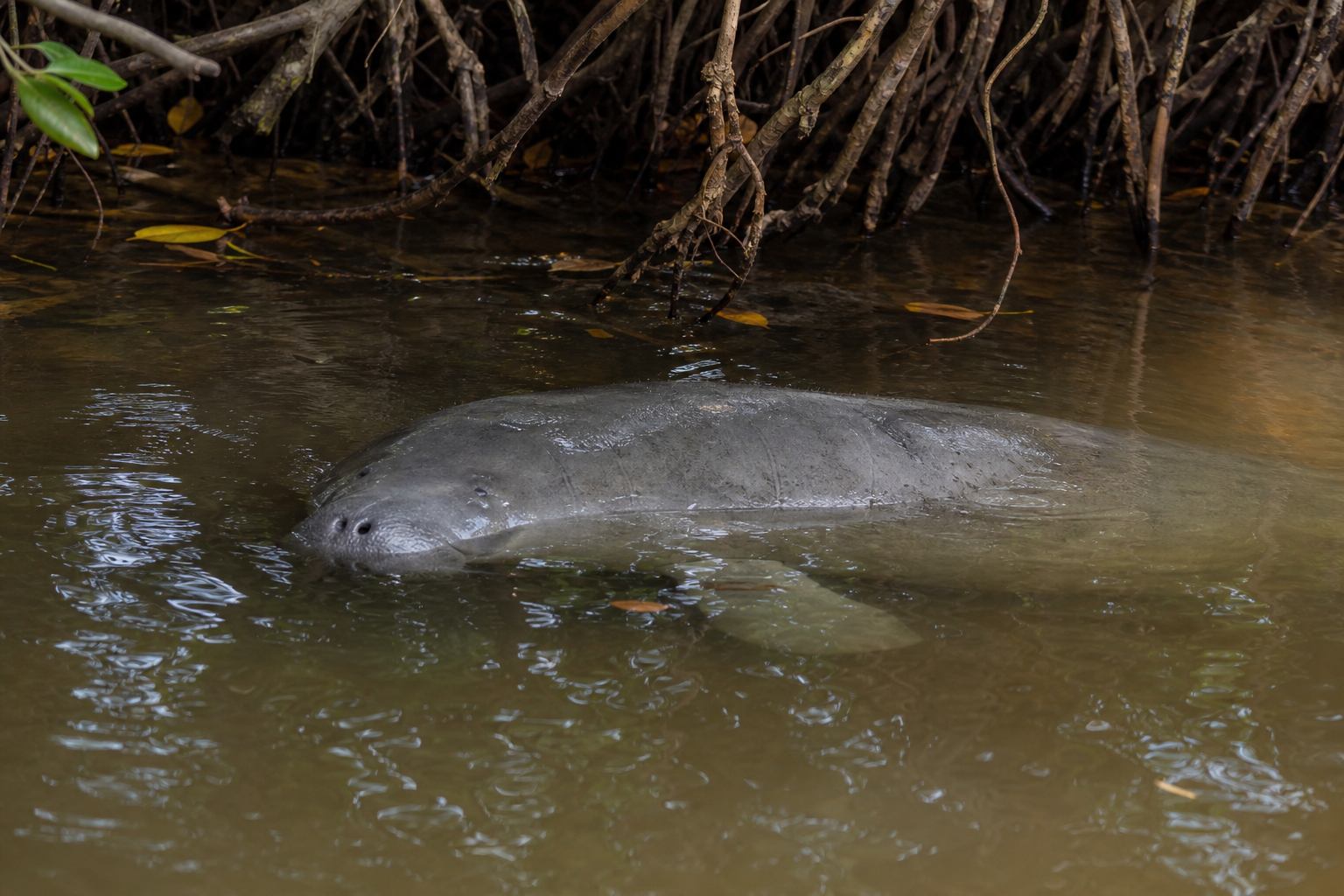
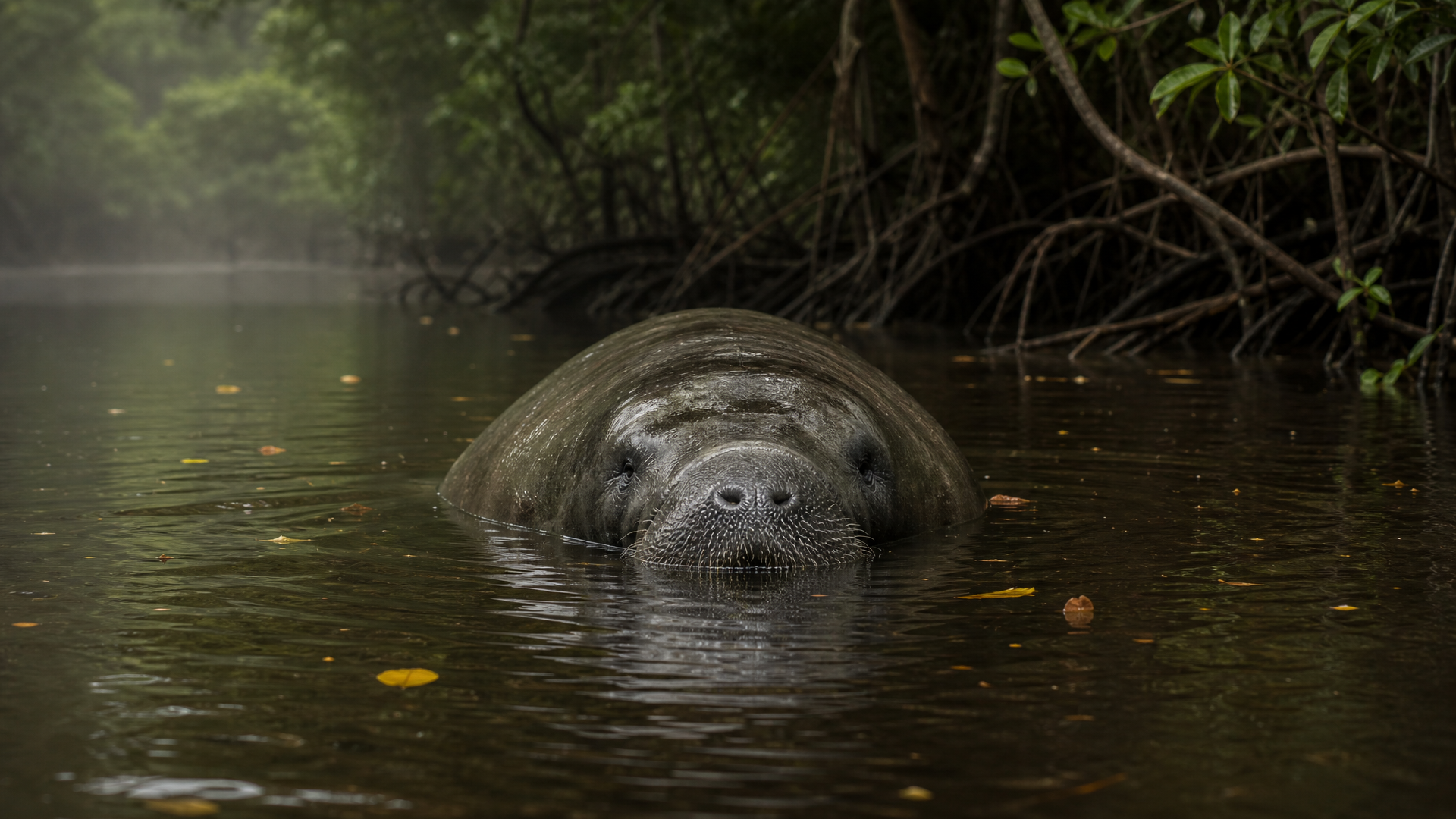
In the mangrove channels near the Saloum or the lower Niger, the water keeps its secrets well. A ripple widens beneath overhanging roots. Then a blunt muzzle breaks the surface, takes one soft breath, and sinks again, leaving only rings that drift into the glare.
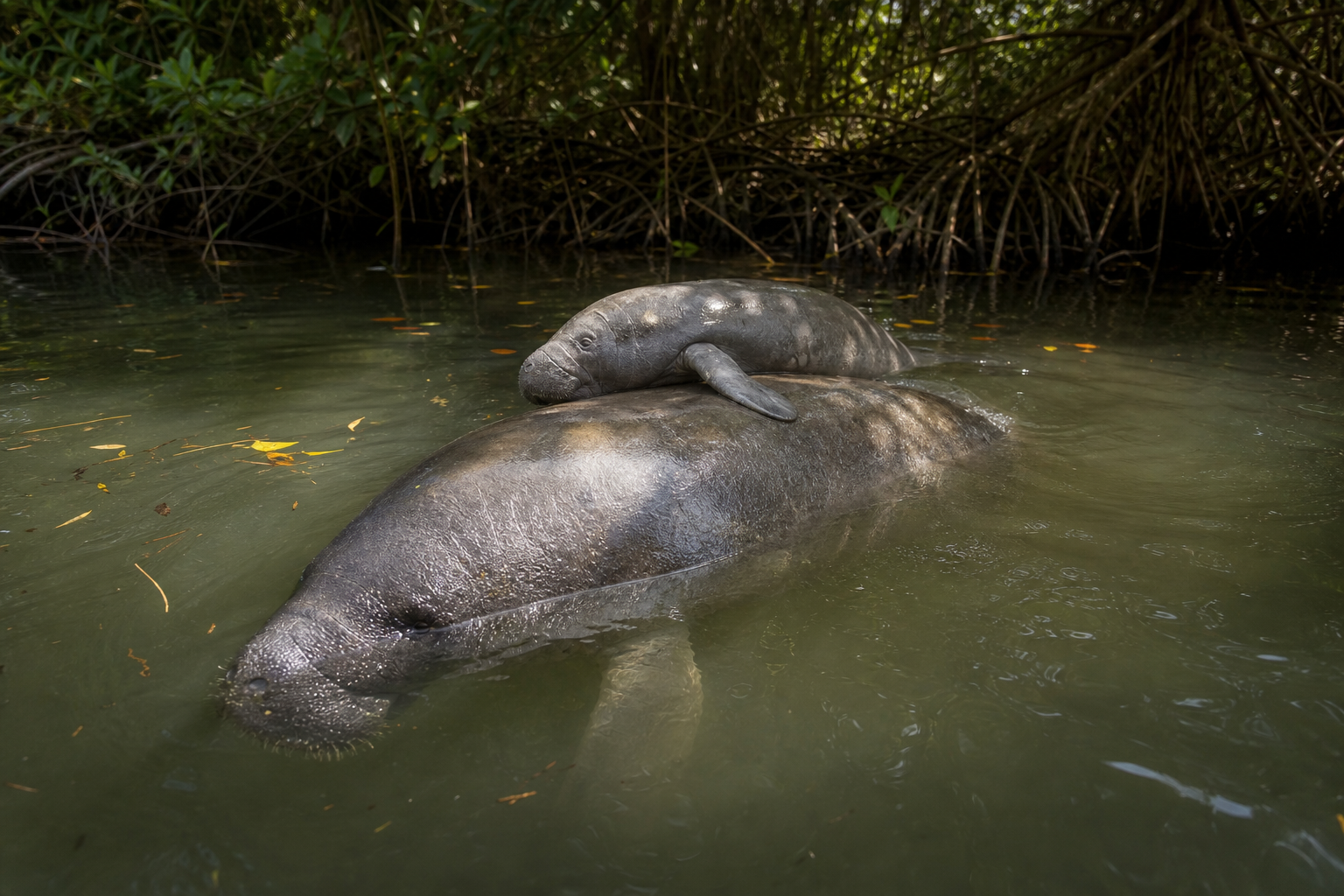
The West African manatee moves as if haste belonged to another world. It follows the moods of rivers: floodwater spreading into grasses, dry-season channels tightening into deep bends, estuaries breathing salt and silt with the tide. Seen from close by, it is not clumsy but deliberate. A flexible upper lip tests stems and leaves. Flippers stir the mud with surprising grace. A mother and calf may travel so near together that their surfaces meet in the brown water, two shadows touching beneath floating flowers.
For people who live beside these rivers, the manatee is often known more by sign than sight: a torn plant bed, a rounded wake, a breath at dusk. It feeds the stories of water as much as the water feeds it.
Its life ties inland floodplains to lagoons and mangrove mouths, moving plant matter through systems that are never still. Nets, boats, dams, and hunting make the old routes more difficult to follow. Yet somewhere below the reflected sky, a body rises, breathes, and goes under again, carrying the river's hidden pulse downstream.