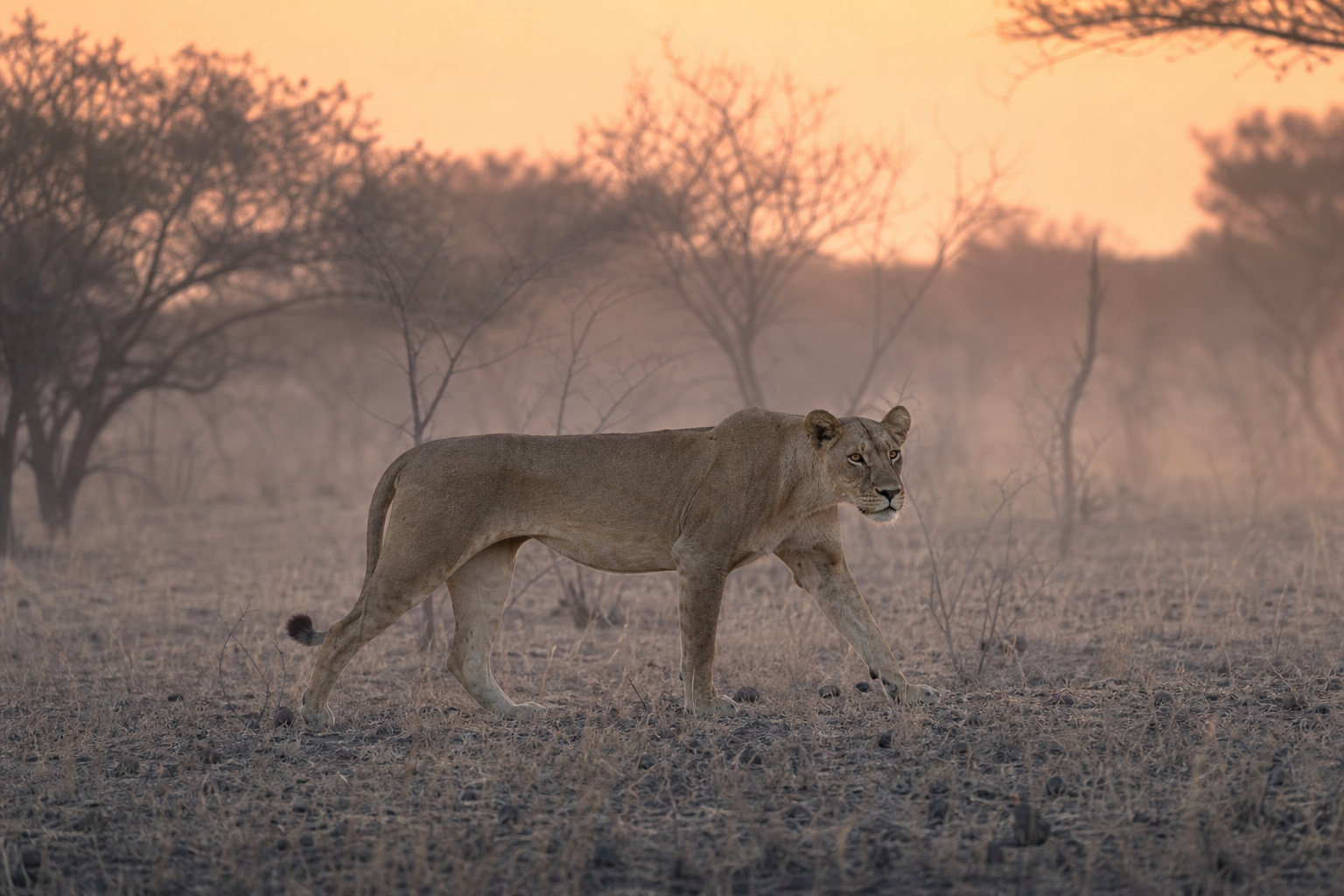
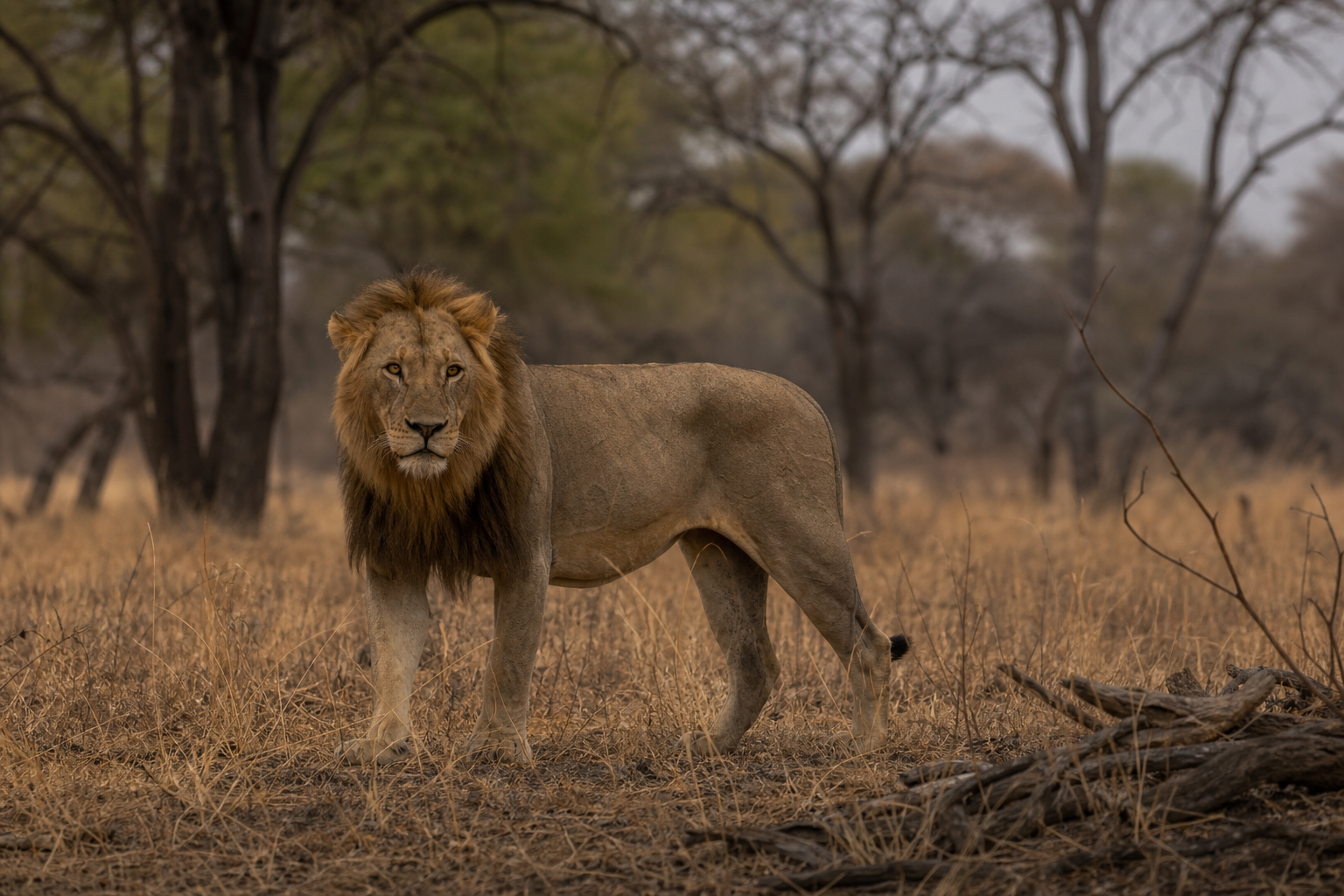
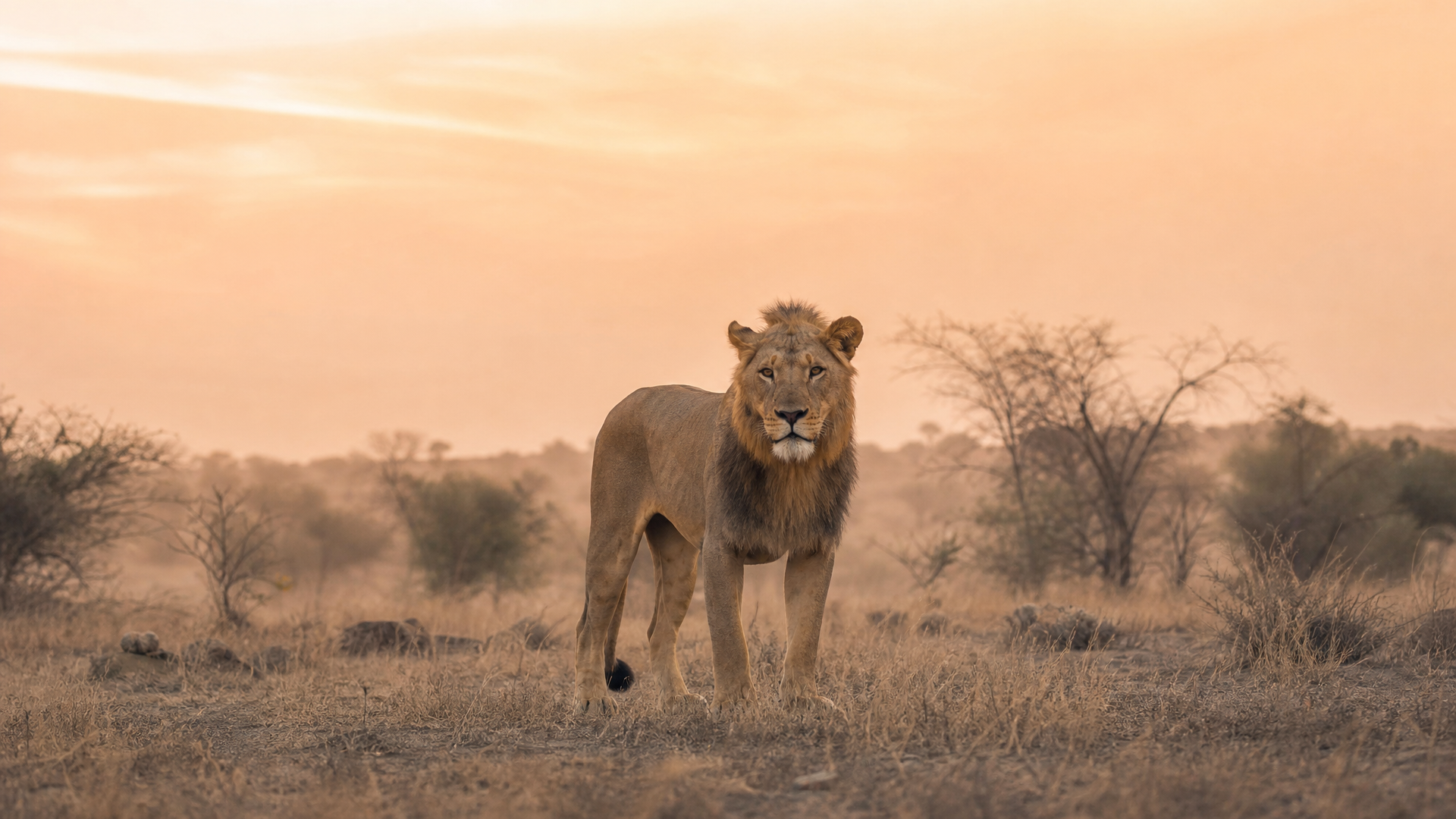
At dusk in Pendjari, the grass holds the day's heat and the air tastes faintly of dust. Francolins call from cover. Then, far beyond the acacias, a lion answers the falling light with a sound that seems too large for the thin blue distance, a low force moving through the chest before the ear fully understands it.
This is not the lion of endless tourist plains. West Africa's lions live in fragments now, in places where savanna gives way to dry forest and the old range has collapsed into guarded strongholds. Their manes are often modest, their prides smaller, their territories hard-won. A lioness passes through tiger bush at first light, shoulders lifting beneath tawny skin, reading the night in tracks and scent. Cubs learn silence before strength. Males patrol not as symbols, but as animals constantly negotiating hunger, rivals, heat, and the nearness of people.
To include the West African lion is to tell the story of a predator almost erased from its own map. It still changes the behavior of everything around it. Hooves turn, antelope lift their heads, scavengers wait at a distance, and the savanna remembers the shape of fear. The roar no longer fills the west; it gathers in fragments, held by dusk, dust, and guarded grass.