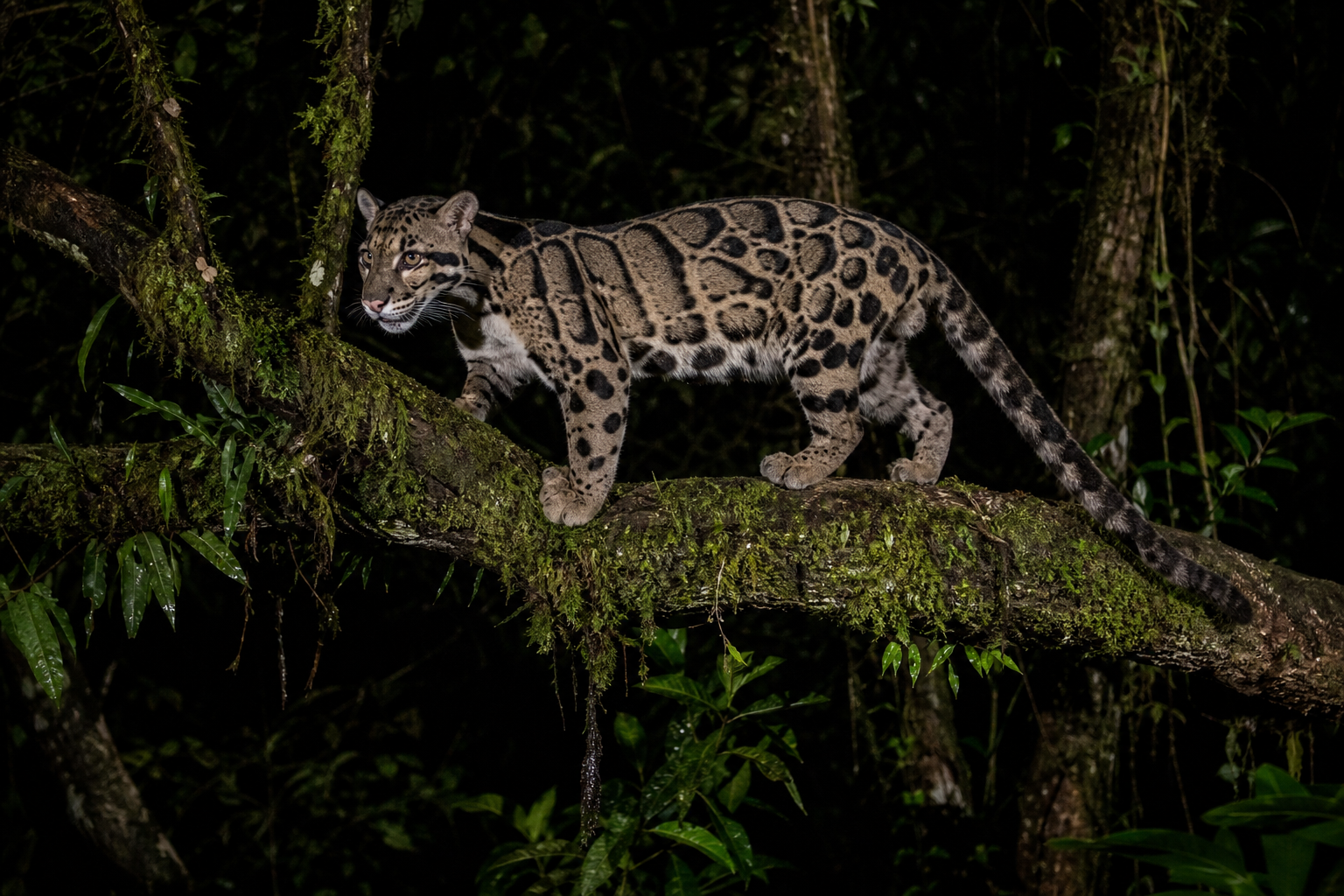
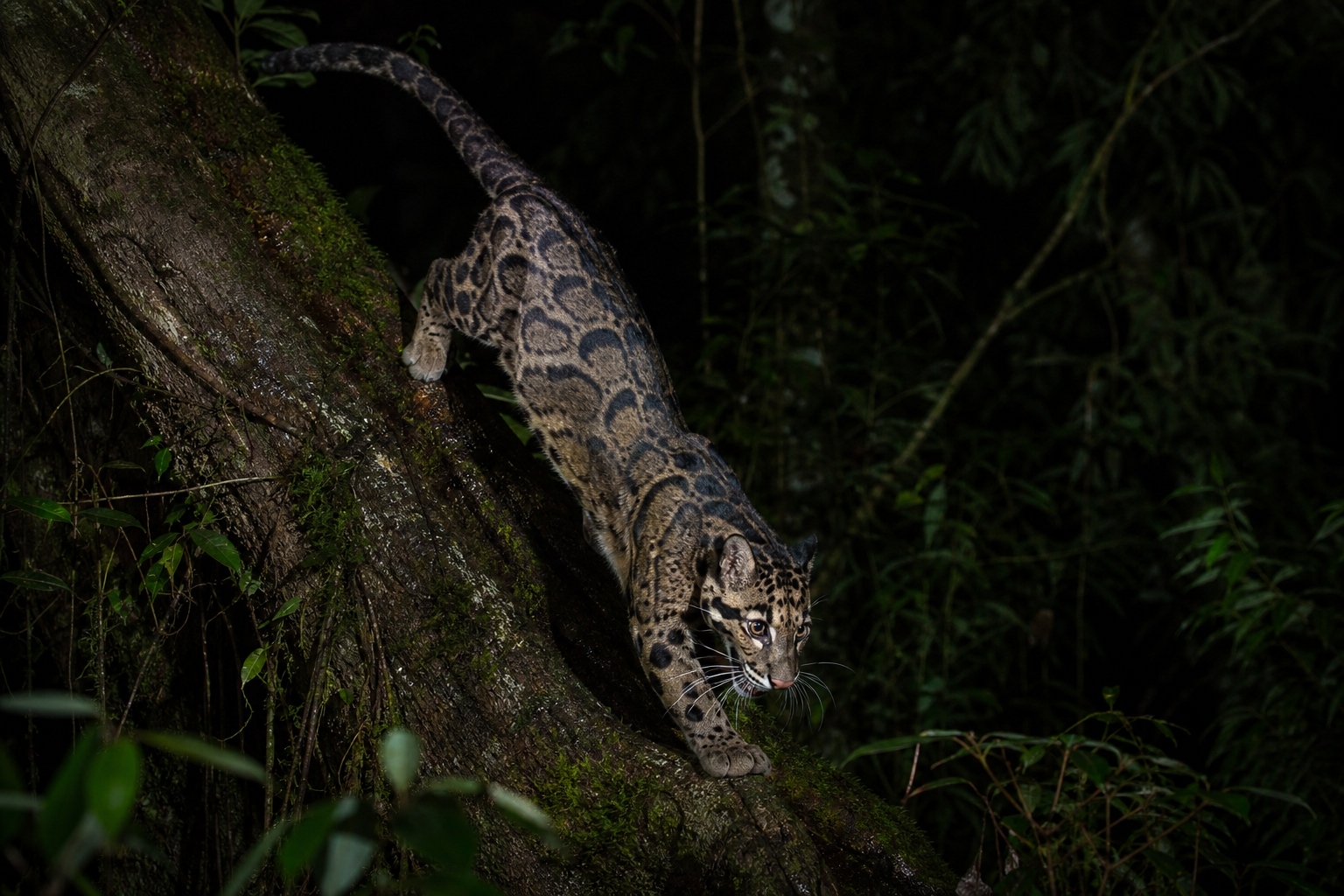
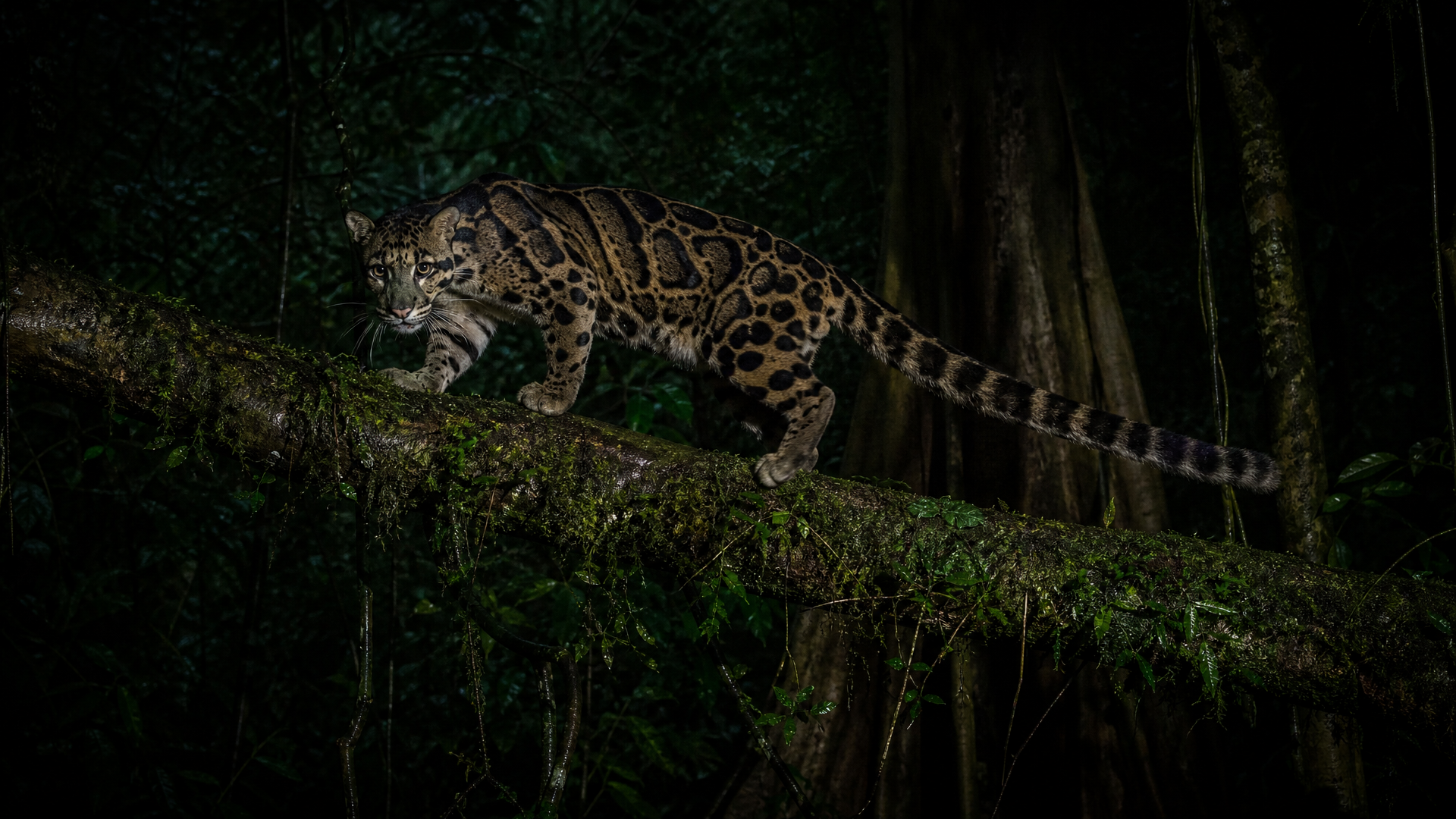
Night settles in the Danum Valley, and the forest turns from green to sound. Water ticks from leaves. A civet moves somewhere below. On a branch above the trail, a shape slides between shadows, rosettes breaking its outline until the cat seems less seen than assembled from darkness.
The Sunda clouded leopard is built for a forest with height. Its body is long, its legs strong and low, its tail heavy with balance. The paws grip bark. The ankles can turn in ways that make descent possible where most cats would hesitate. The canines look too large for the face, but in the living animal they are part of a complete design: grip, climb, wait, drop, vanish. It moves through trees and ground with equal caution, using the forest's layers as cover rather than stage.
Its presence keeps the middle world alert, where monkeys, birds, deer, and smaller mammals meet branches, roots, and night. Forest loss cuts those layers apart, and snares do not care how rare a hunter is. The cat pauses on a limb, tail hanging into black air. Then the pattern moves, and the branch is empty.