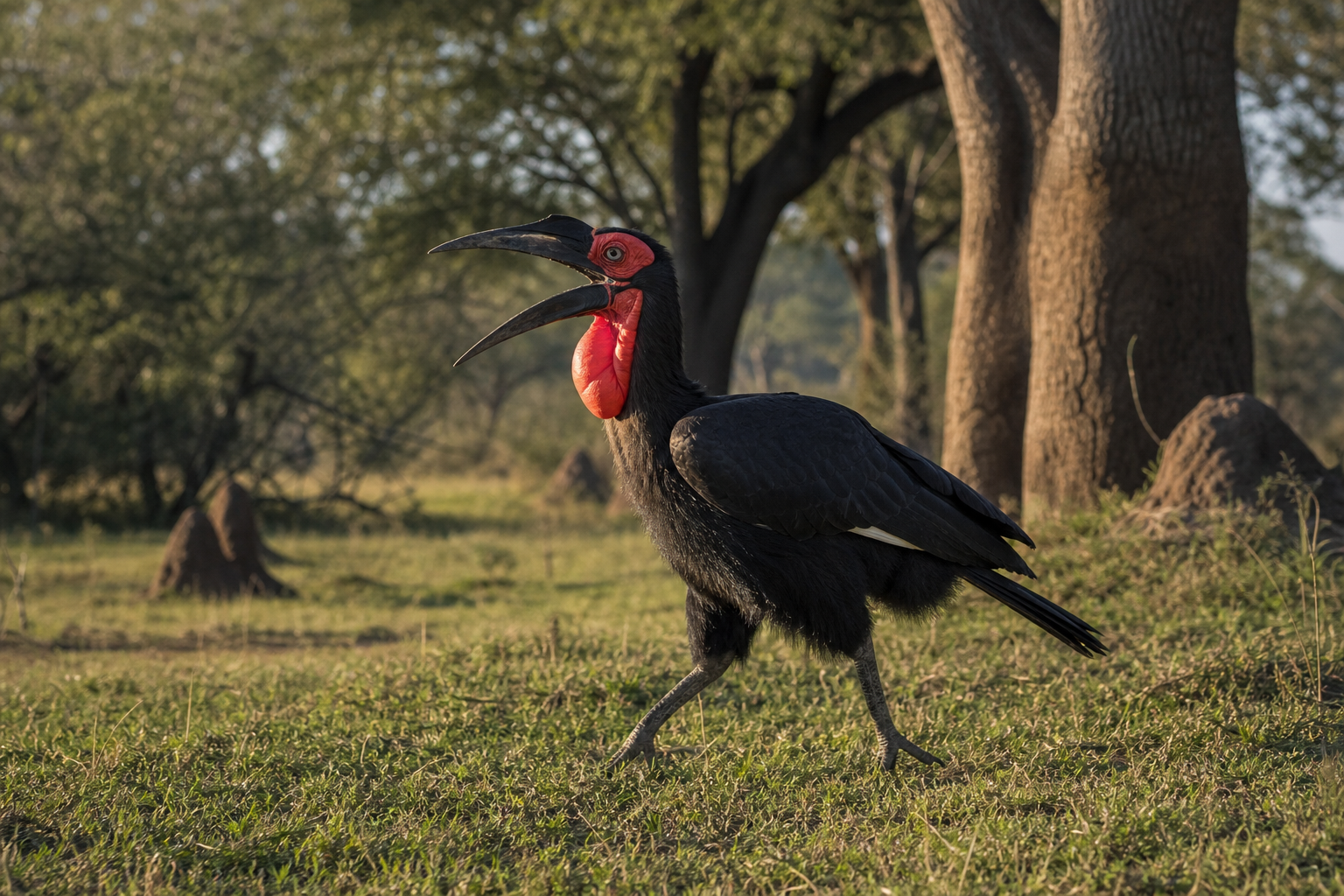
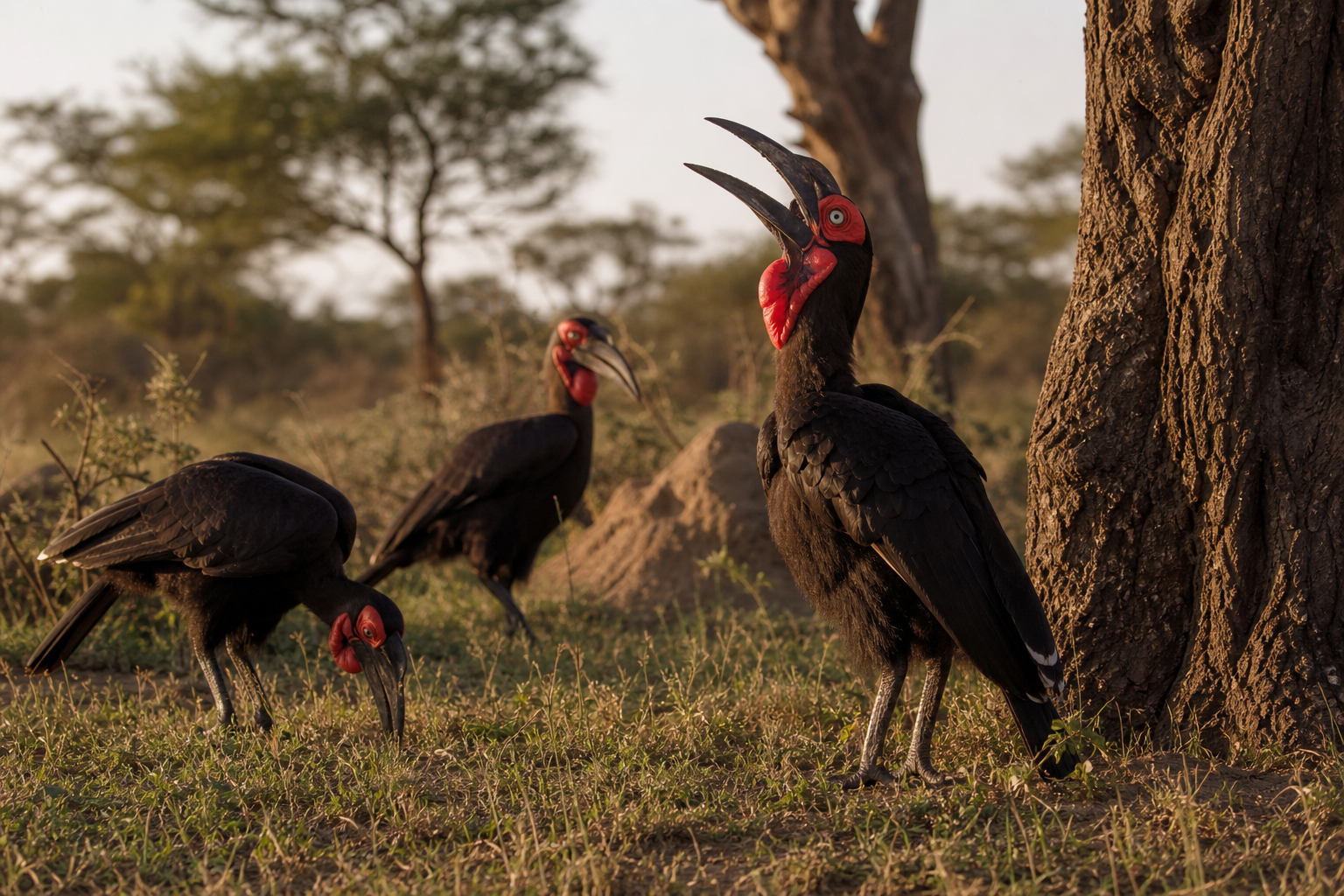
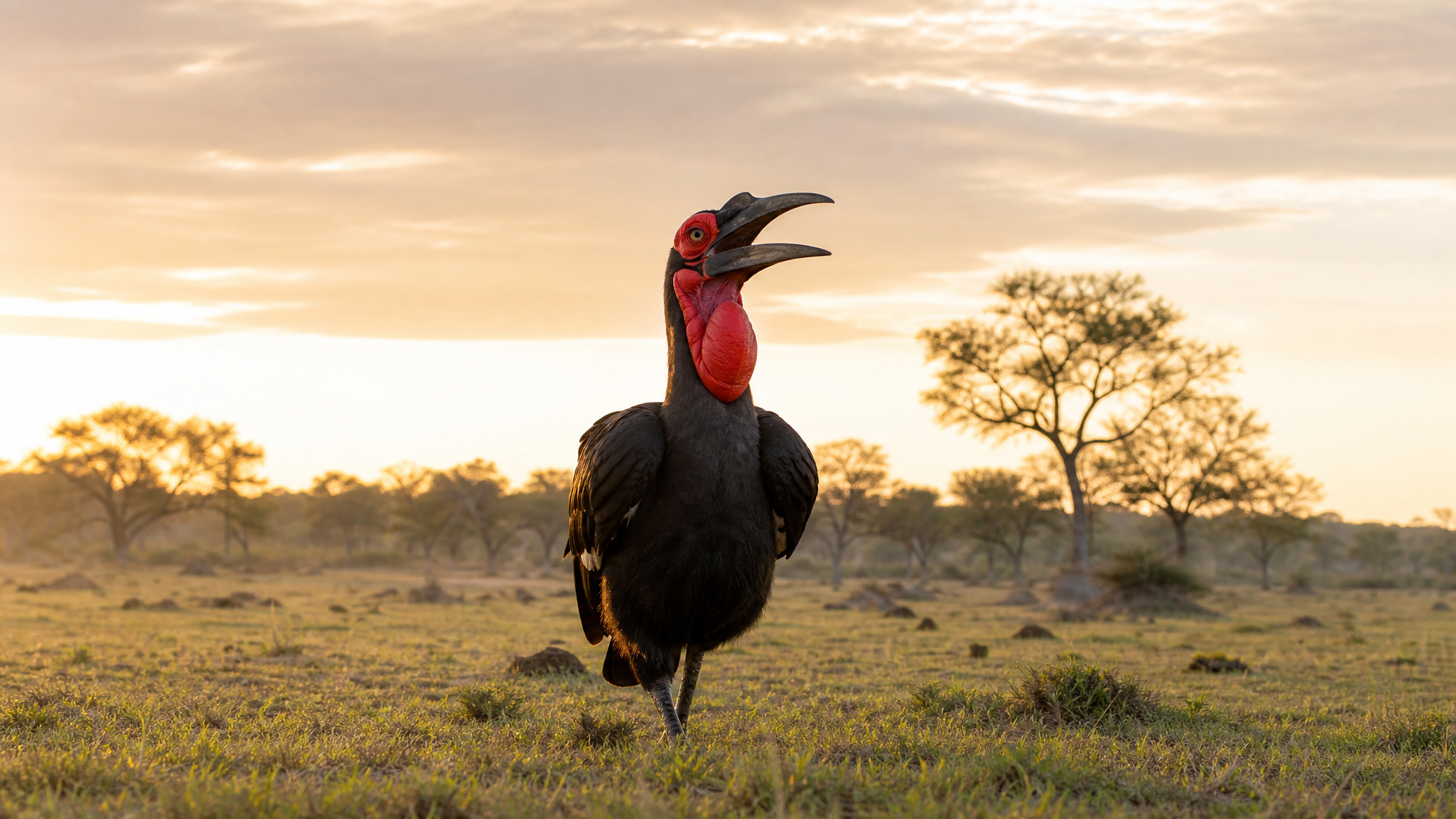
Before the bird appears, the sound arrives. Low notes roll over the savanna, so deep they seem to come from the ground itself. Then the southern ground hornbill steps through the grass, black feathers absorbing the morning, red throat bright as exposed earth.
It is a bird of prey that has brought the hunt down to walking height. The bill works like a tool. The eyes search close ground. Insects, reptiles, small mammals, and anything careless in the grass may become part of the day's slow patrol. Family members move together, separated by a little distance, each bird searching, answering, remembering.
There is gravity in the pace. These birds mature slowly, live long, and raise young with a patience that makes every nest site matter. A hollow tree is not just shelter. It is a future held open for one chick, sometimes after years of waiting.
When old trees fall, when grassland is broken, when poison and power lines enter the route, the deep call thins from country that once knew it. The hornbill walks on, deliberate as a procession. The grass parts, closes, and the sound remains after the bird has passed.