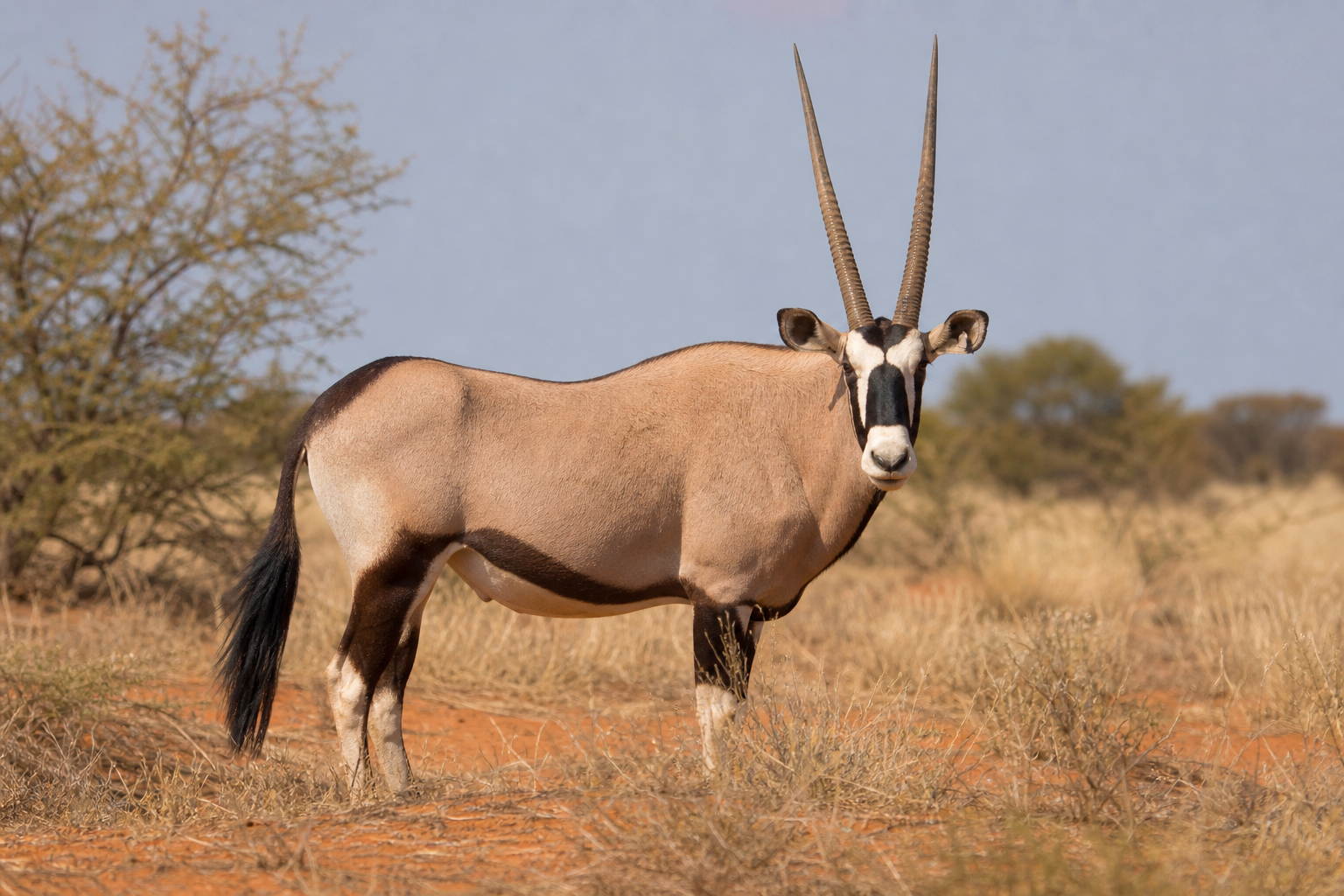
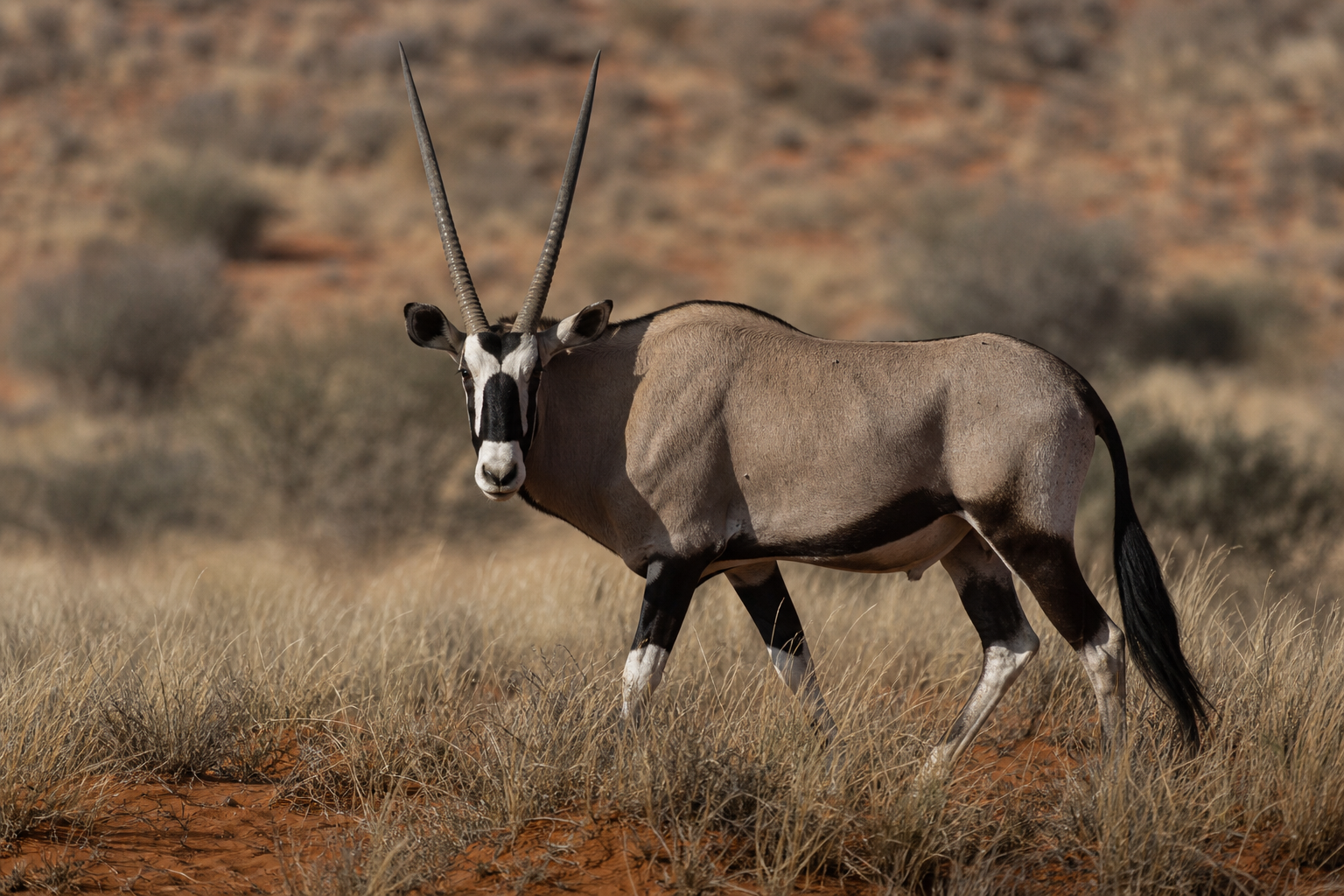
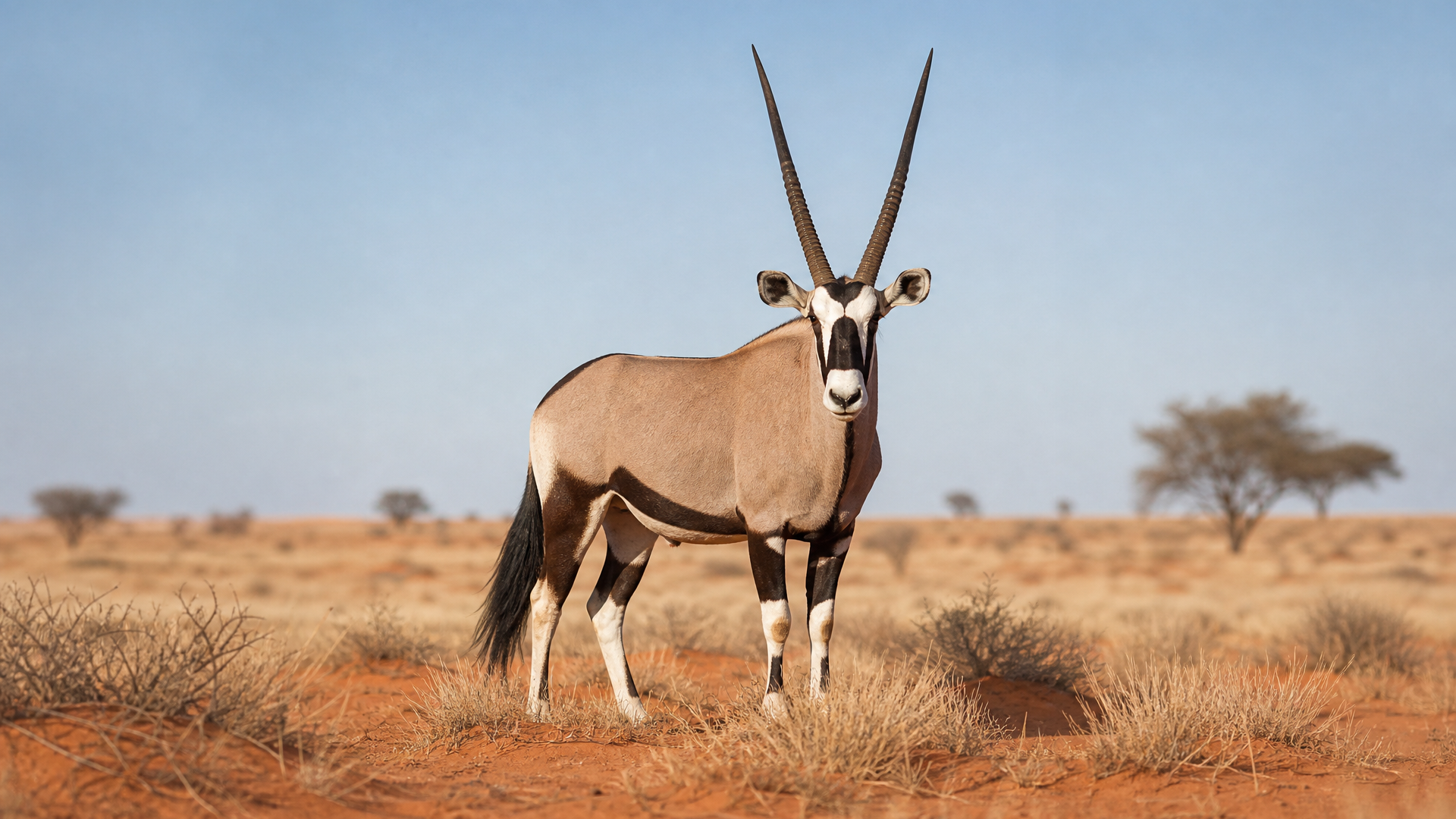
Heat lifts from the Kalahari sand until the horizon seems to loosen. In that shimmer, the gemsbok stands clean and exact, pale body marked in black and white, horns drawn back like paired spears. It looks less like an animal passing through desert than a form the desert has chosen for itself.
Every line of the body speaks of restraint. The stride is measured. The neck is thick. The face markings turn the head into a mask of glare and shadow. Gemsbok feed where the country gives little easily, taking grasses, roots, and moisture hidden below the surface. They can wait out thirst with a discipline that makes water feel like a luxury, not a condition.
Their beauty is not decorative. Horns defend calves from lions, wild dogs, and hyenas. Herds move across dry plains with the caution of animals that know distance can both save and expose them. Calves lie low in pale grass, learning stillness before they learn speed.
For Southern Africa, the gemsbok is the Kalahari made visible: austere, bright, and hard to pity. It turns its head into the heat, and the horns write two dark lines across the sky.