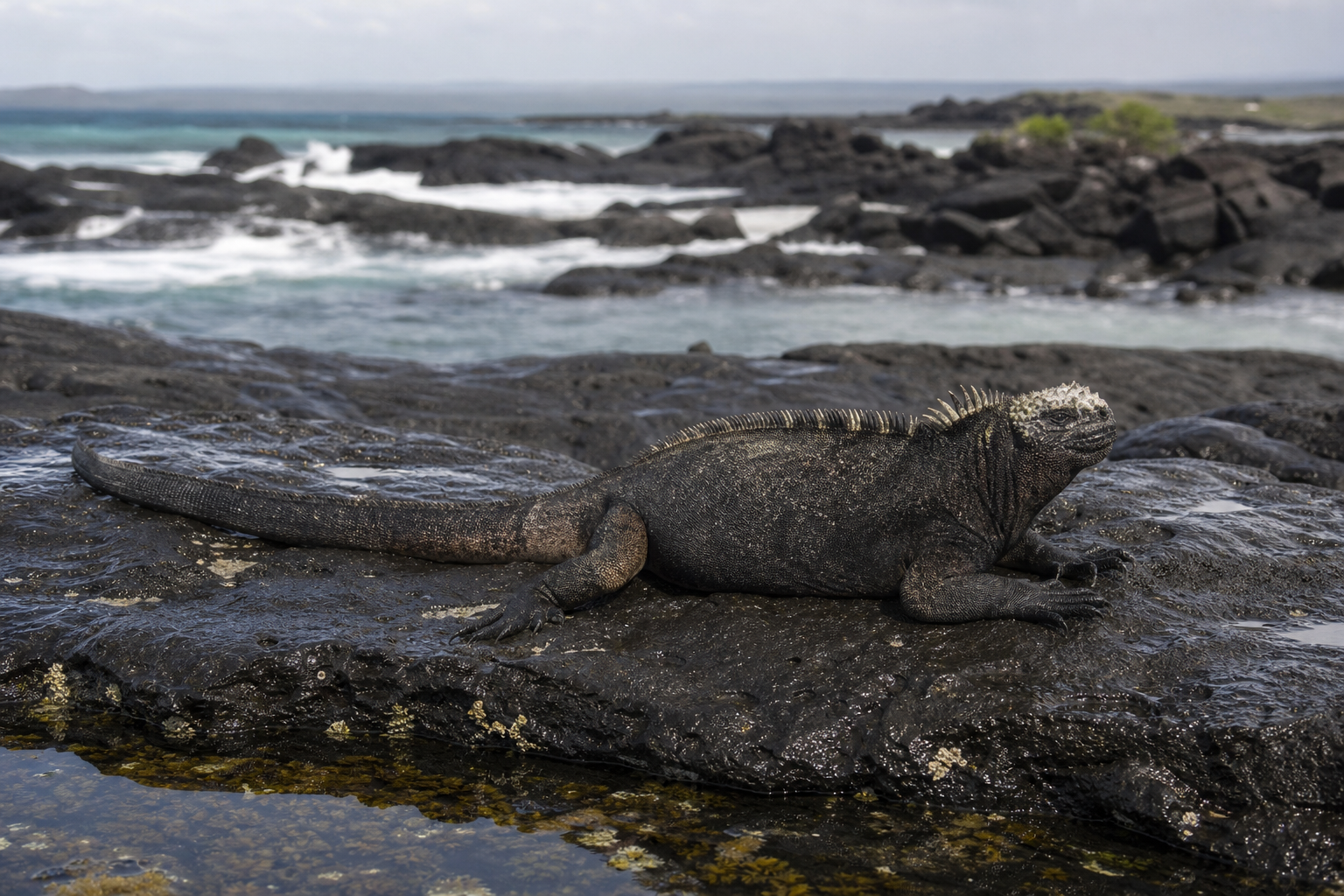
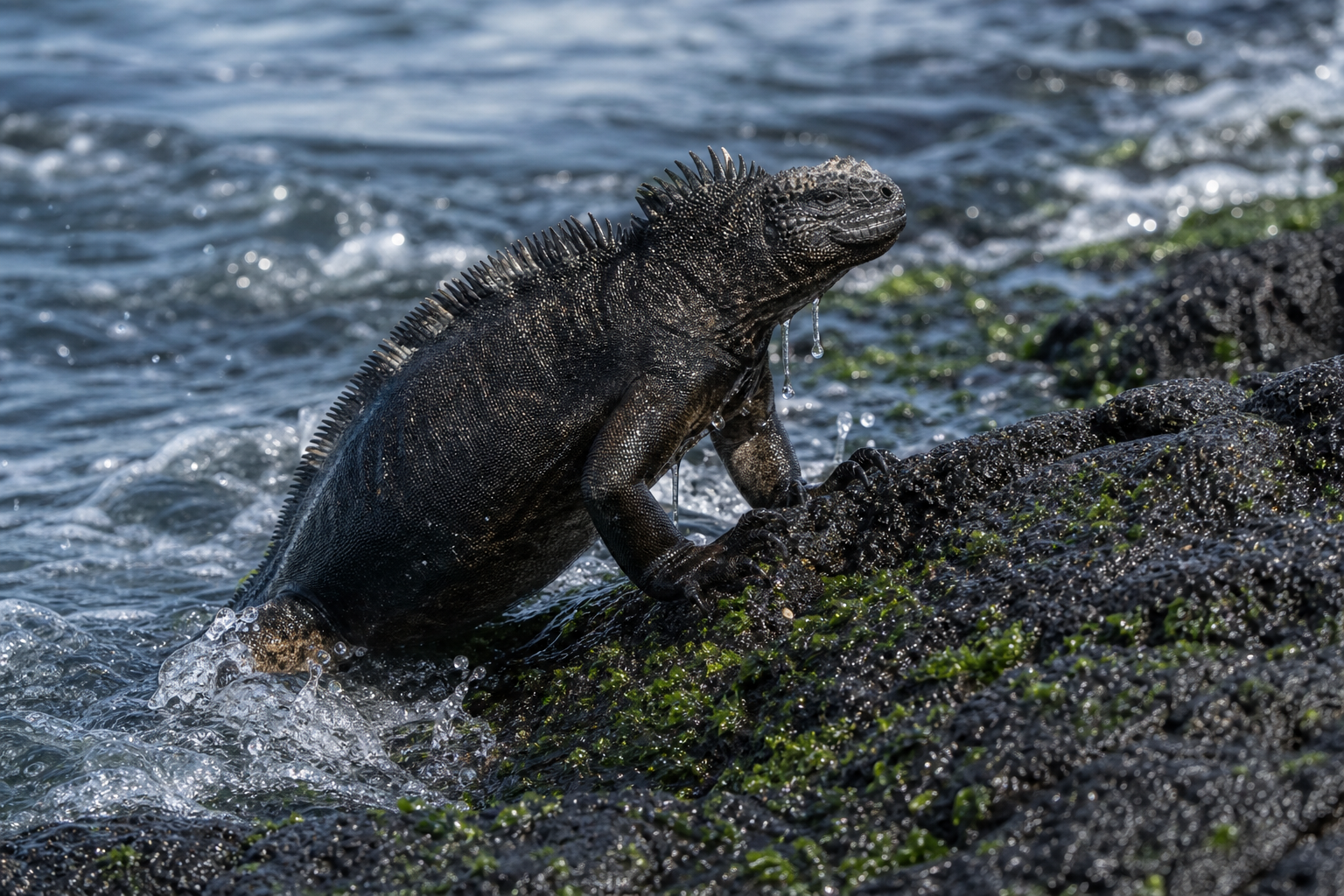
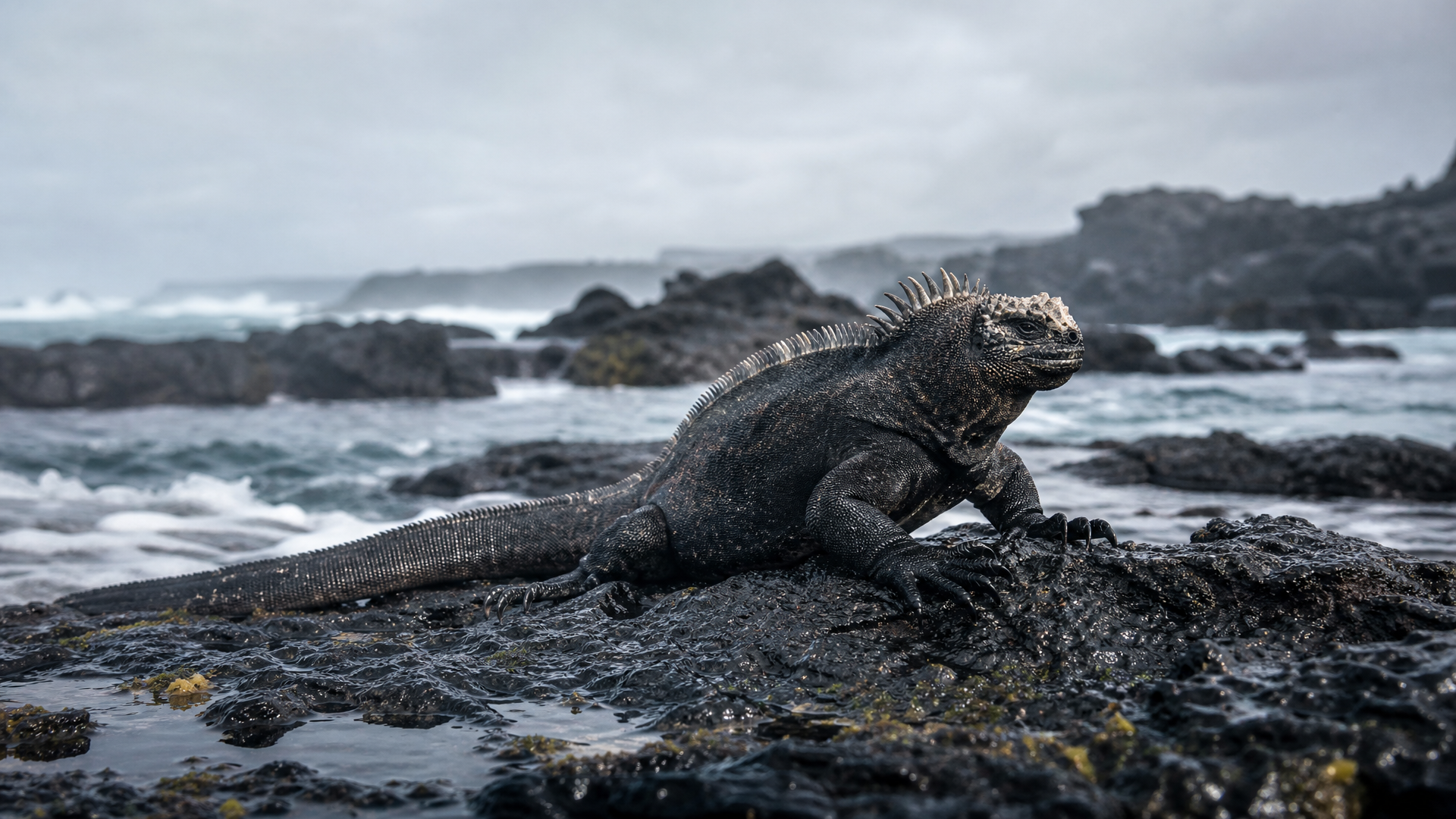
On a black lava shore, the iguanas lie in heaps of salt and sunlight. Their bodies are dark enough to disappear into stone until one lifts its head, sneezes brine from pale nostrils, and shows a crest jagged as the edge of the island itself.
The marine iguana is a lizard asked to make a living from the sea. It warms on rock, then slips into cold water where surge pulls at its limbs and algae clings to submerged ledges. The body that looks heavy on land becomes purposeful below the surface, claws gripping stone while jaws scrape food from the moving green. After a dive, it returns chilled and stiff, dependent on sun to bring motion back into muscle. Males can flush with color in breeding season, but the deeper drama is physiological: heat gained, salt expelled, energy rationed against water that is richer and colder than the land.
For the Galapagos, the marine iguana is adaptation made visible. It ties lava to current, reptile to tide, basking stillness to underwater labor. El Nino warmth, food shortages, invasive predators, and human disturbance can move sharply through its world. On the rocks, a line of bodies faces the sun, waiting for enough heat to enter the day.