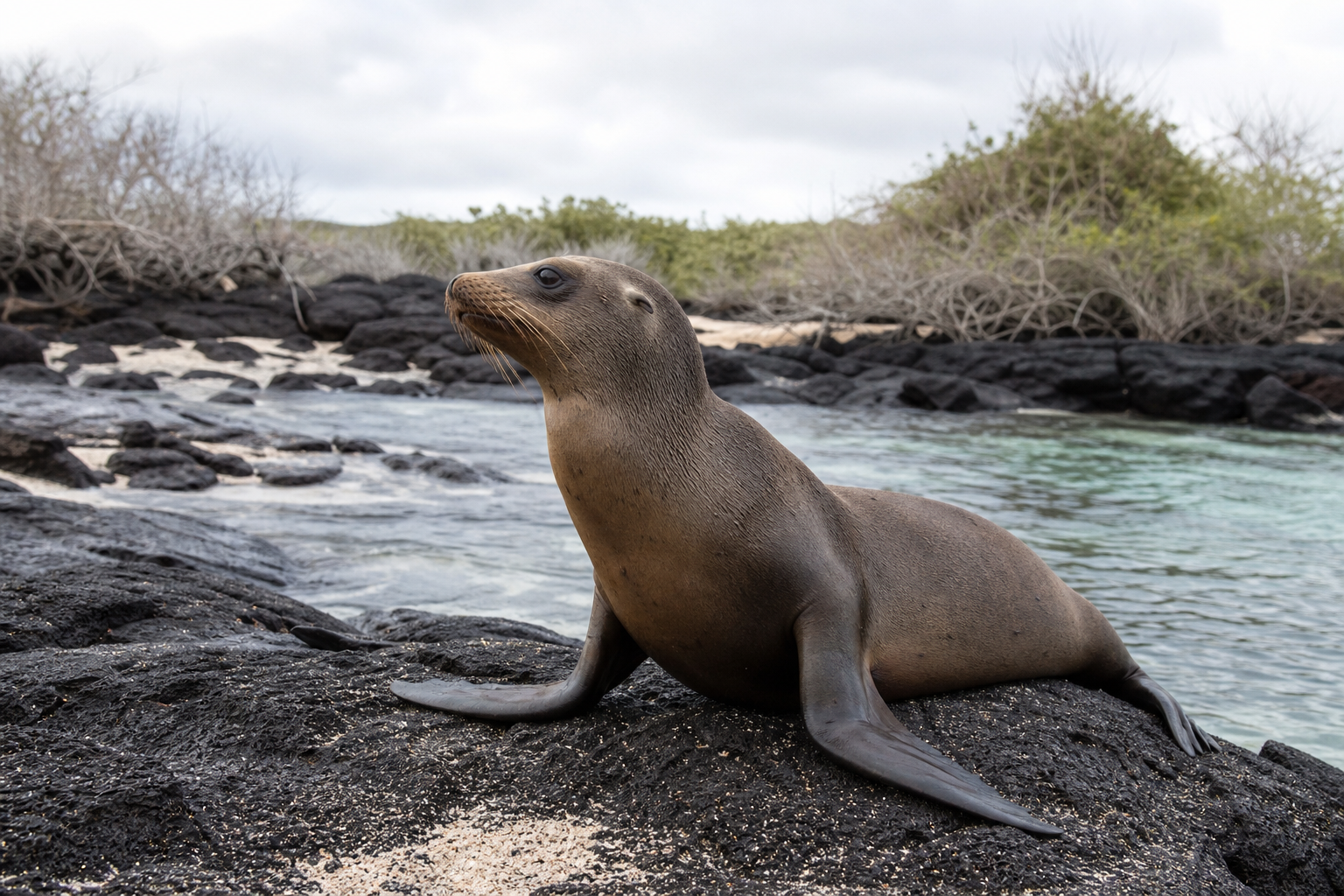
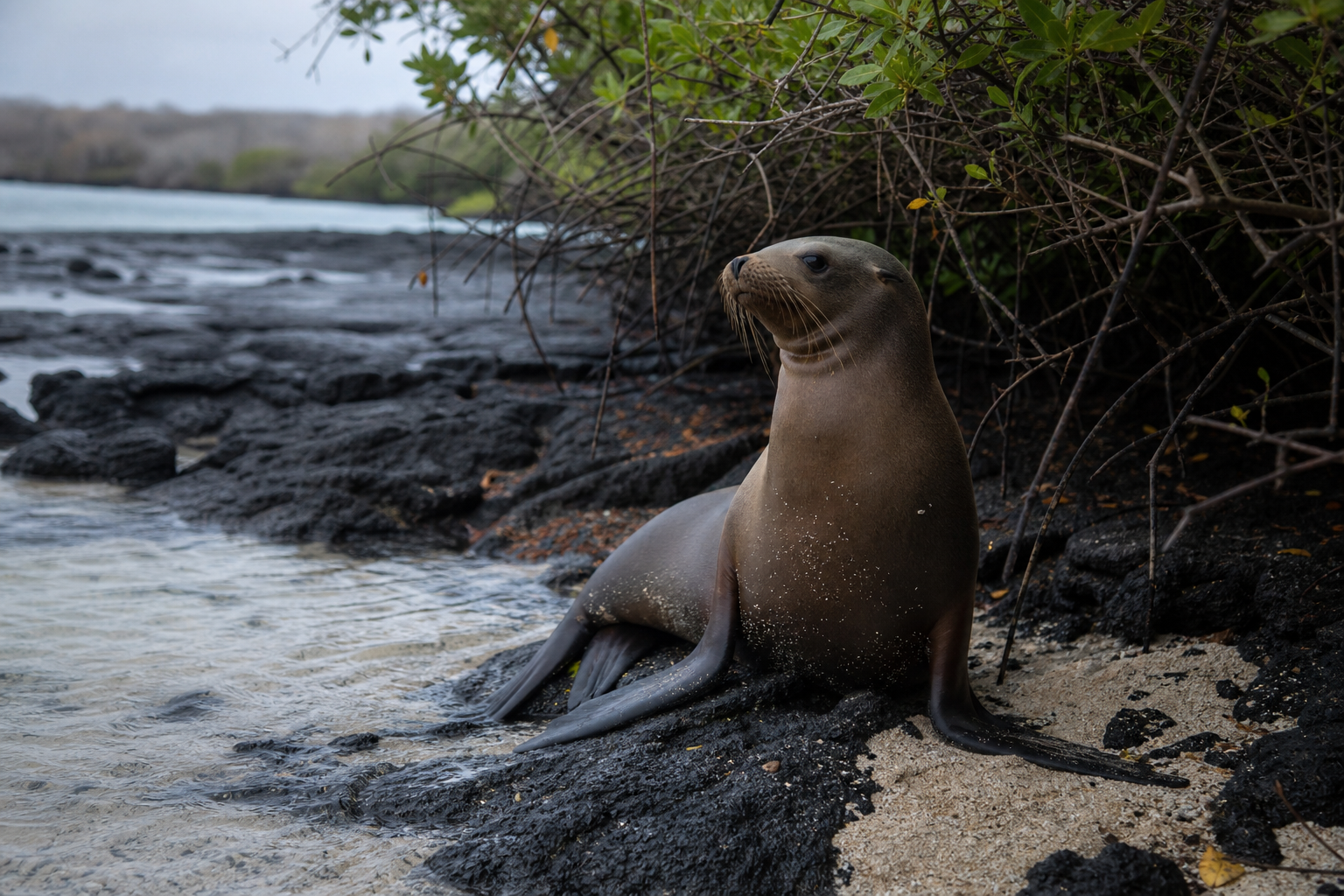
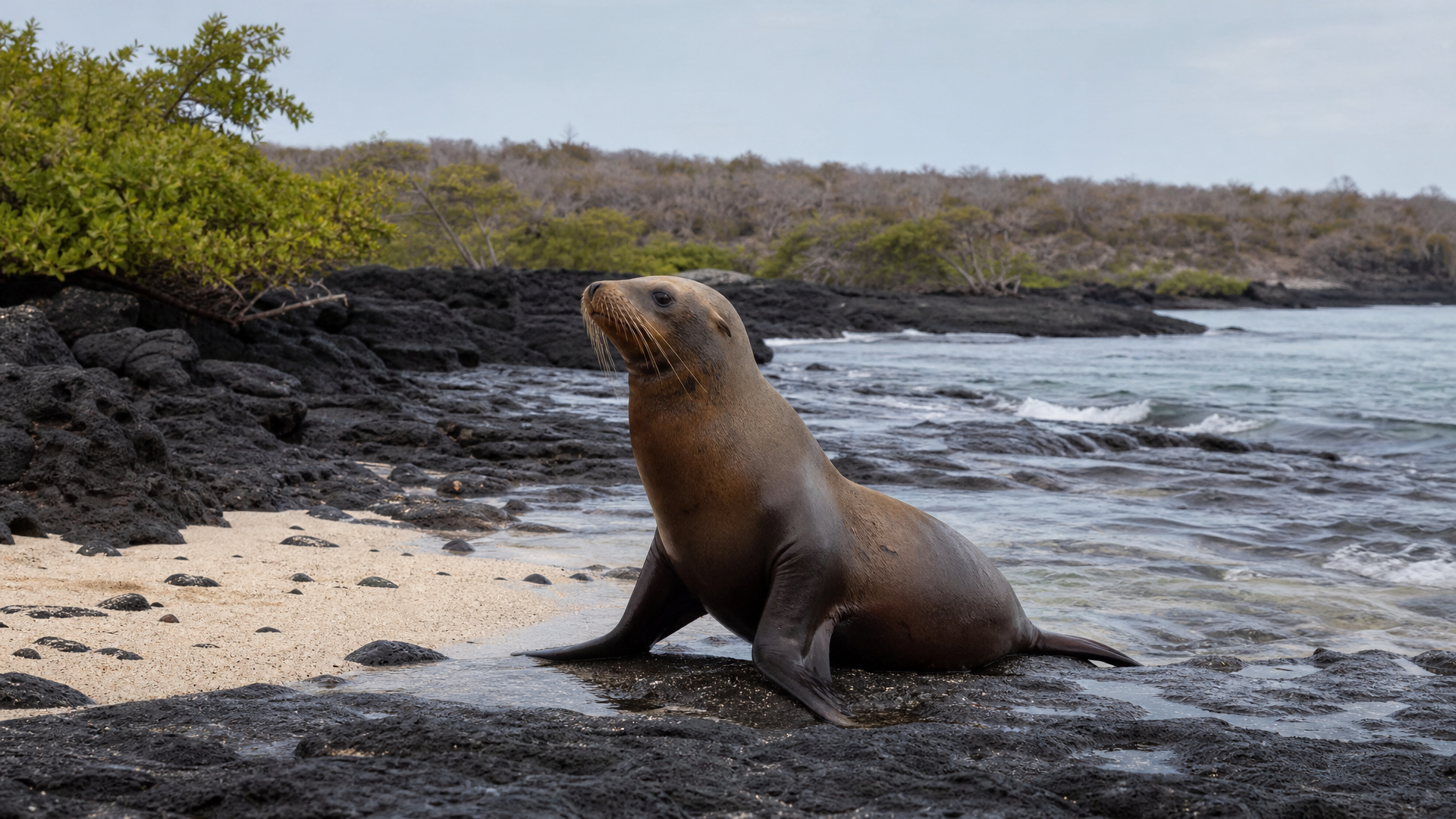
At the edge of a white-sand cove, a pup calls from beneath a boat pulled above the tide. Females move through the shallows with wet backs flashing bronze in the sun, while a bull patrols the surf line, barking into water bright enough to show every turn of his body.
The Galapagos sea lion brings warmth and disorder to volcanic shorelines. On land it sprawls across sand, steps, docks, and shaded rocks with a confidence that can feel almost domestic until the animal returns to the sea. There, play and hunger share the same quick grammar. A youngster twists through bubbles, a female dives after schooling fish, and a bull lifts his chest in the wash, asserting a boundary that waves erase again and again. Mothers and pups find one another through voice and scent in colonies where sun, hunger, and danger keep pressing.
This sea lion makes the islands feel inhabited at the human edge, but its life is tuned to prey, cool currents, and resting beaches. Disease, entanglement, disturbance, and warming events can turn familiar coves suddenly difficult. A pup noses through the shade, calls again, and the answering voice comes back through salt air.