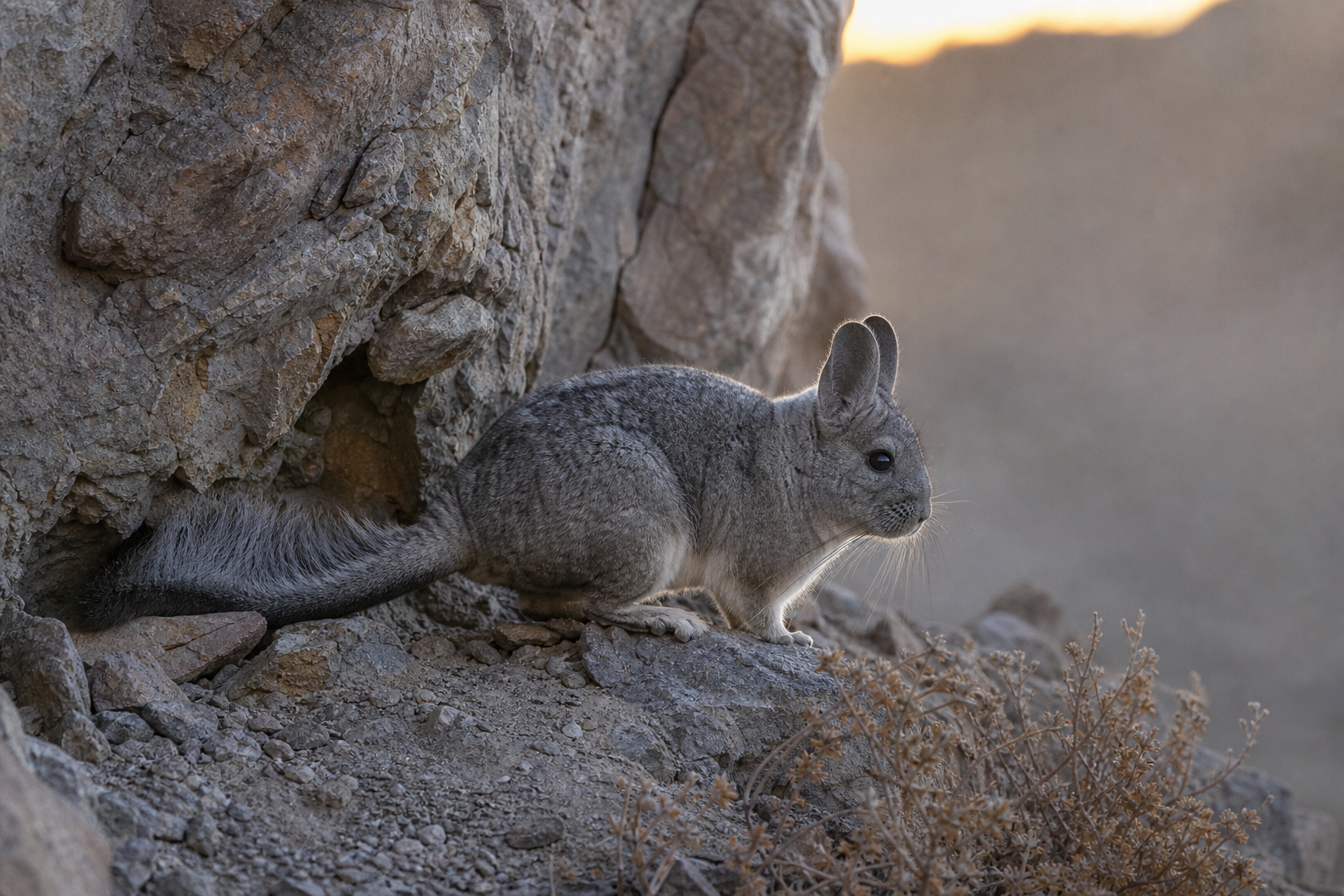
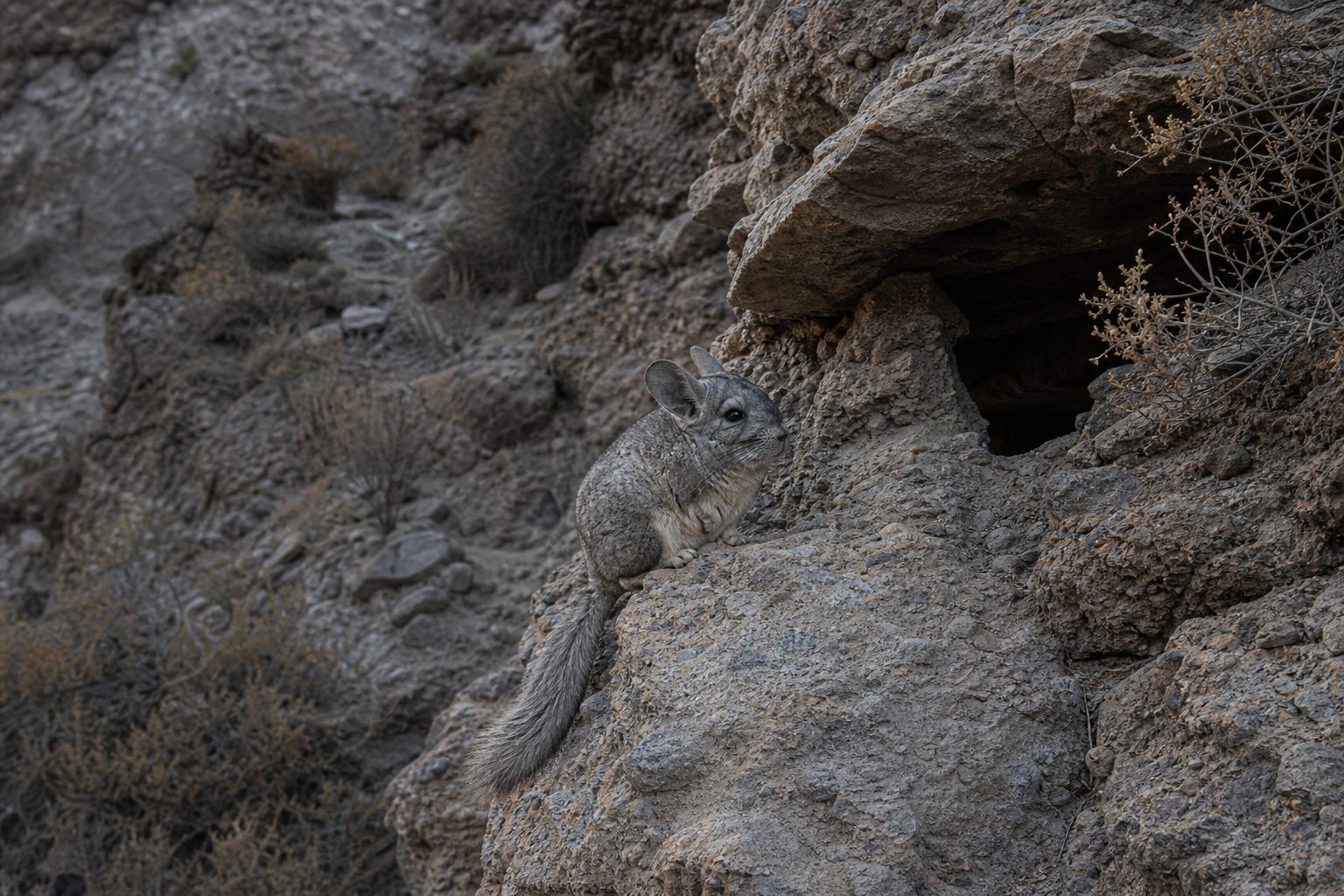
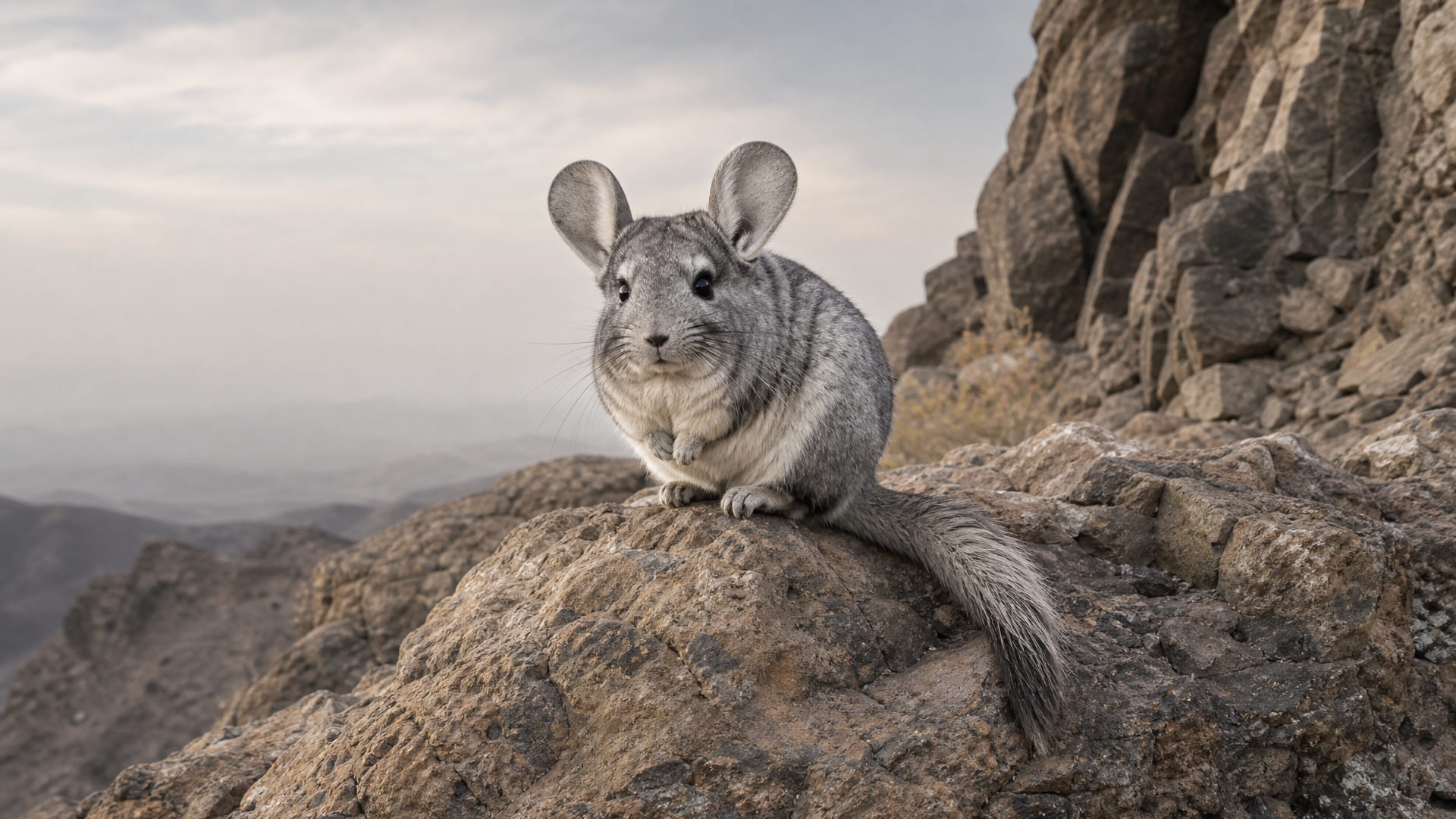
Evening settles over the dry slopes of Auco in northern Chile, and the rocks begin to release the heat they gathered all day. From a crack in the cliff, whiskers appear first, then round ears, then a small body wrapped in fur so dense the dust barely reaches the skin. The chinchilla pauses, listening.
It lives by hesitation and speed. One animal emerges, then another, until the colony is scattered across the stones, nibbling, grooming, and springing between ledges with the abrupt lightness of thrown ash. The long tail flicks for balance. The eyes stay wide. In this harsh country, softness is not weakness; it is engineering against cold nights, abrasive rock, and sudden weather. Chinchillas bathe in dust, rolling their bodies through fine grit to keep the coat clean, then vanish at the hint of a shadow. Their voices are small, urgent notes passed among crevices.
That fur once made them nearly disappear from the wild. Now the remaining colonies hold to fragments of slope where mining, grazing, and disturbance press close. After dark, the cliff looks empty again, but the stones are awake with tiny footfalls, and the desert keeps its softest life hidden in cracks.