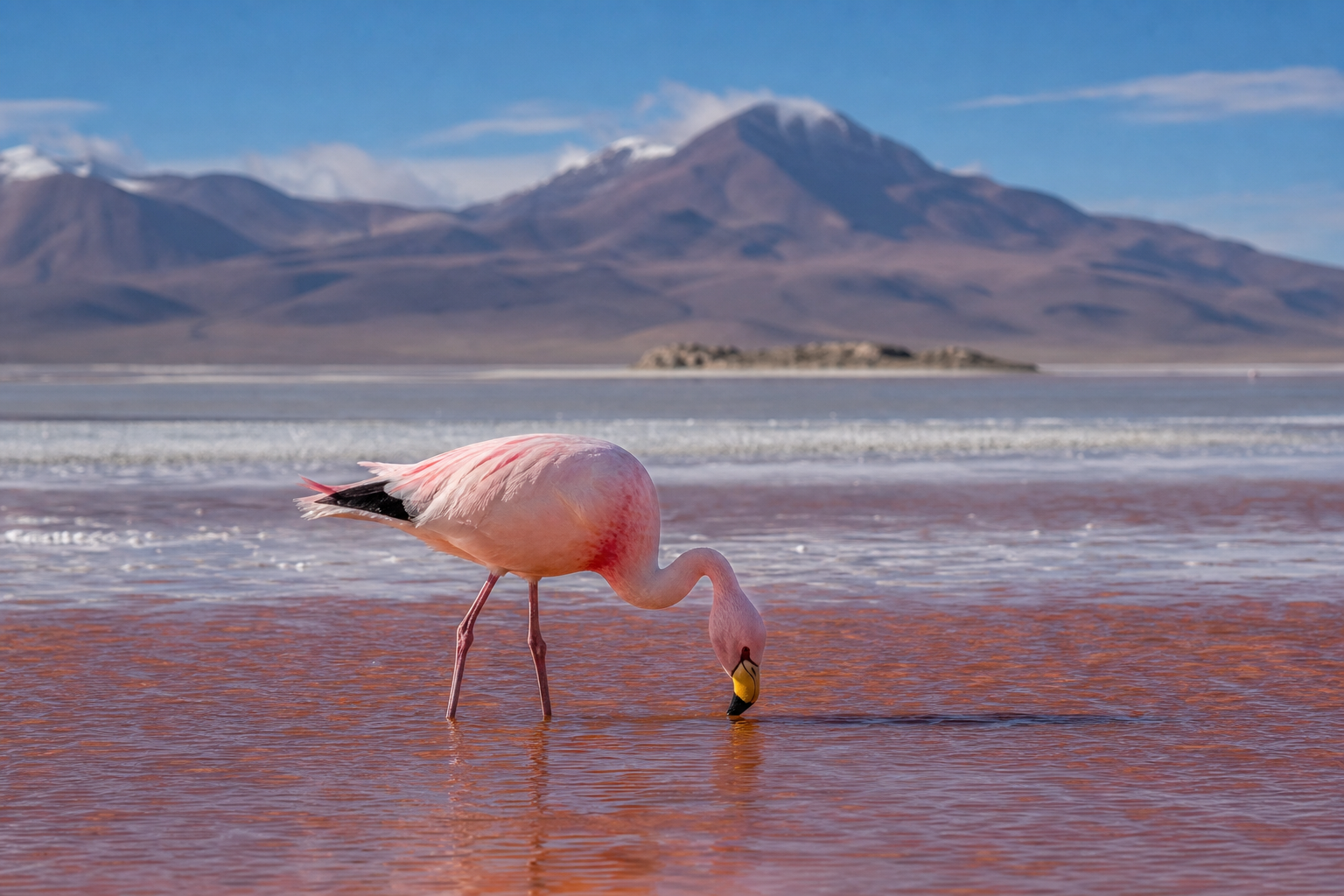
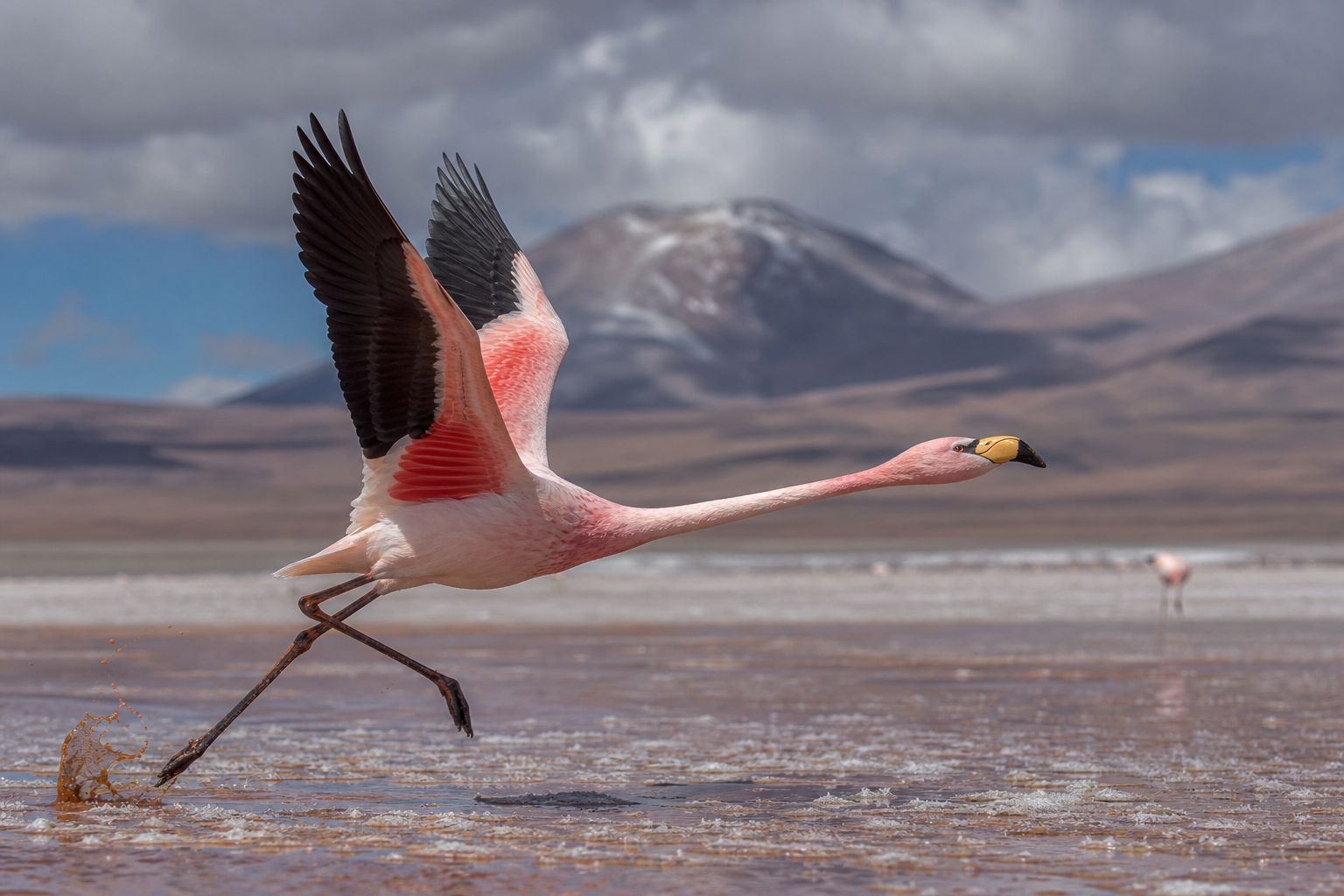
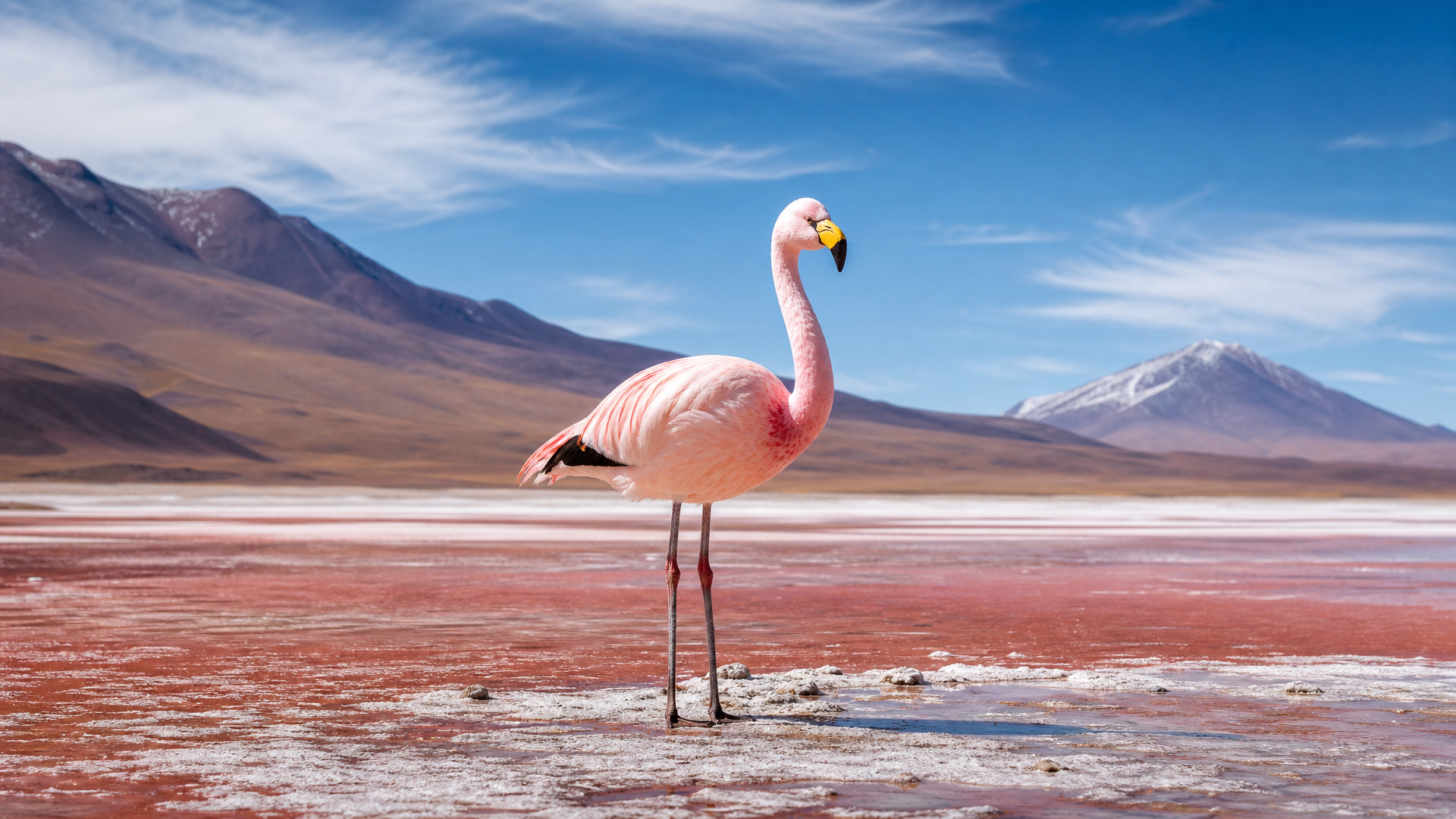
At Laguna Colorada, the water can look like a sheet of rust under the Bolivian sky. Steam lifts from distant vents, salt crusts the shore, and flamingos move through the shallows with their heads upside down, sweeping the water as if reading a text written too small for human eyes.
The Andean flamingo is all balance: long legs in bitter water, a curved bill working with exact rhythm, pale feathers touched with rose against a landscape of mineral reds and volcanic grays. A flock feeds in loose formation, murmuring softly, each bird filtering life from the brine. When they lift, the scene changes at once. Black flight feathers open beneath the pink, wings beat hard in the thin air, and the flock stretches into a wavering line over the altiplano. Their nesting colonies depend on quiet islands and water that arrives in the right season, in the right amount, with the right chemistry.
High lakes can seem eternal because the mountains around them are so old. They are not. Water extraction, lithium fields, and drought alter these basins with a precision as sharp as any beak. In the red shallows, the flamingos keep feeding, stitching the surface with slow steps.