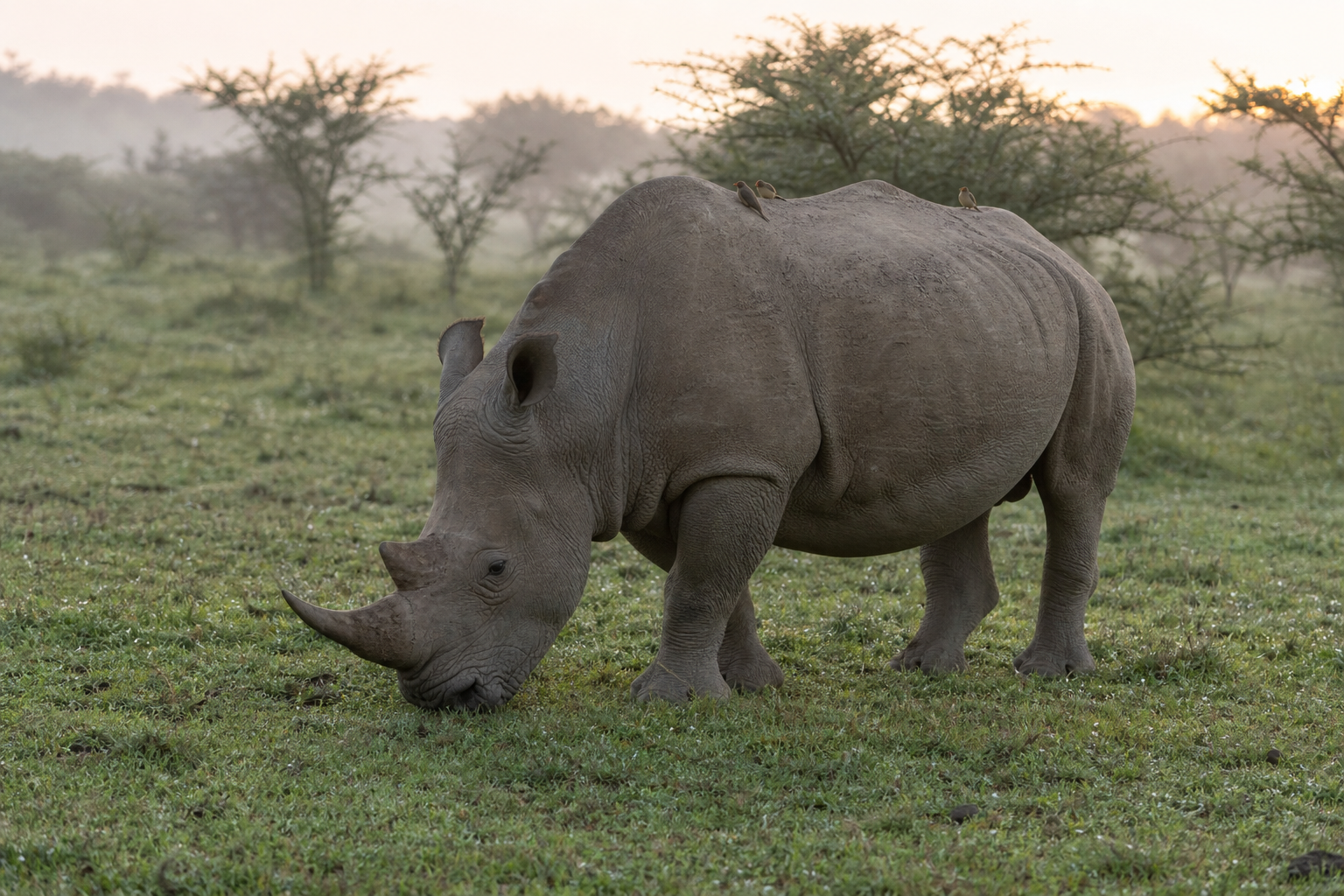
Morning comes low over the Hluhluwe grass, and the rhino is already there, head down, mouth working close to the earth. Dew darkens the stems around its feet. Oxpeckers shift along the gray back. Nothing about the animal seems hurried, yet the whole field arranges itself around that bulk.
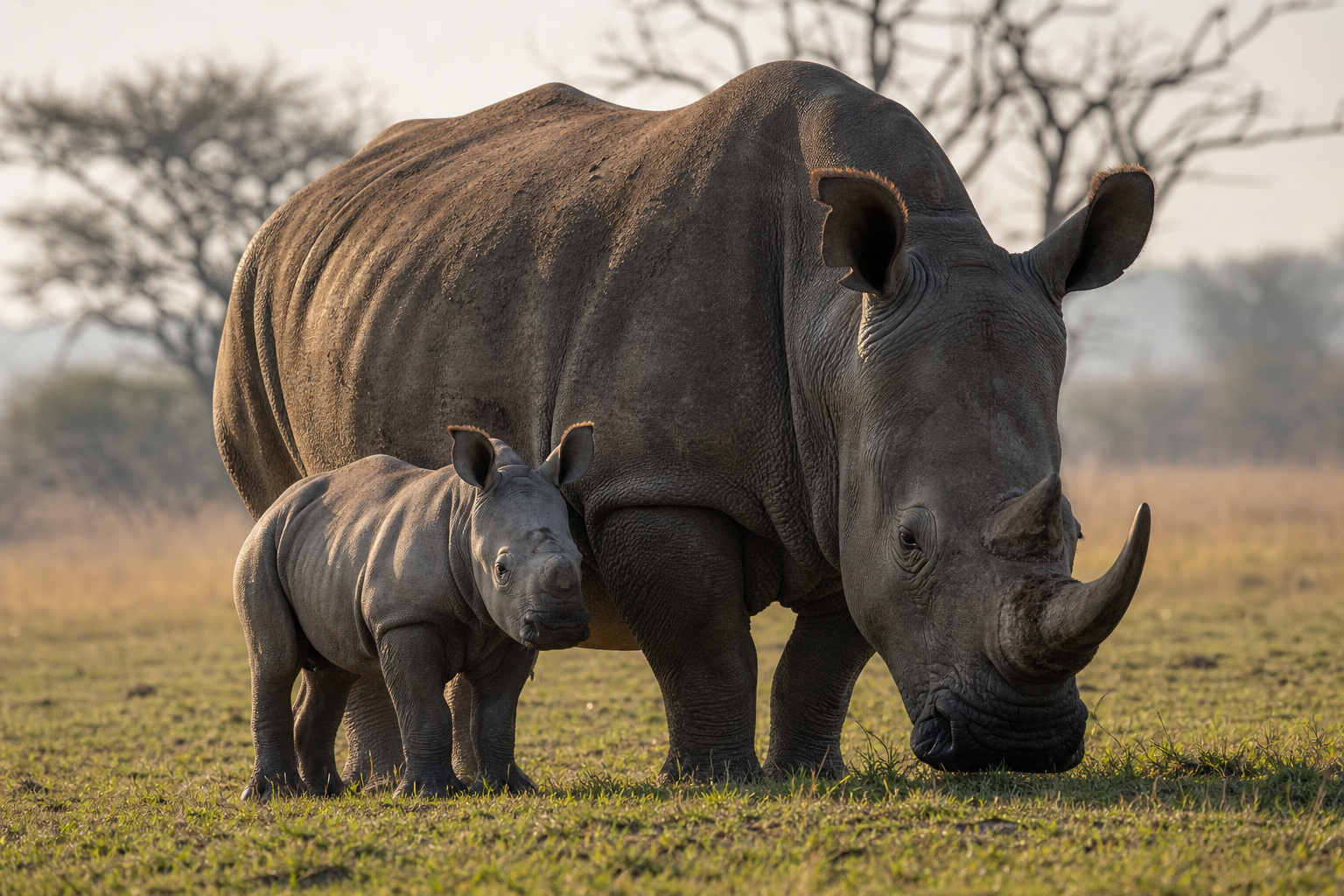
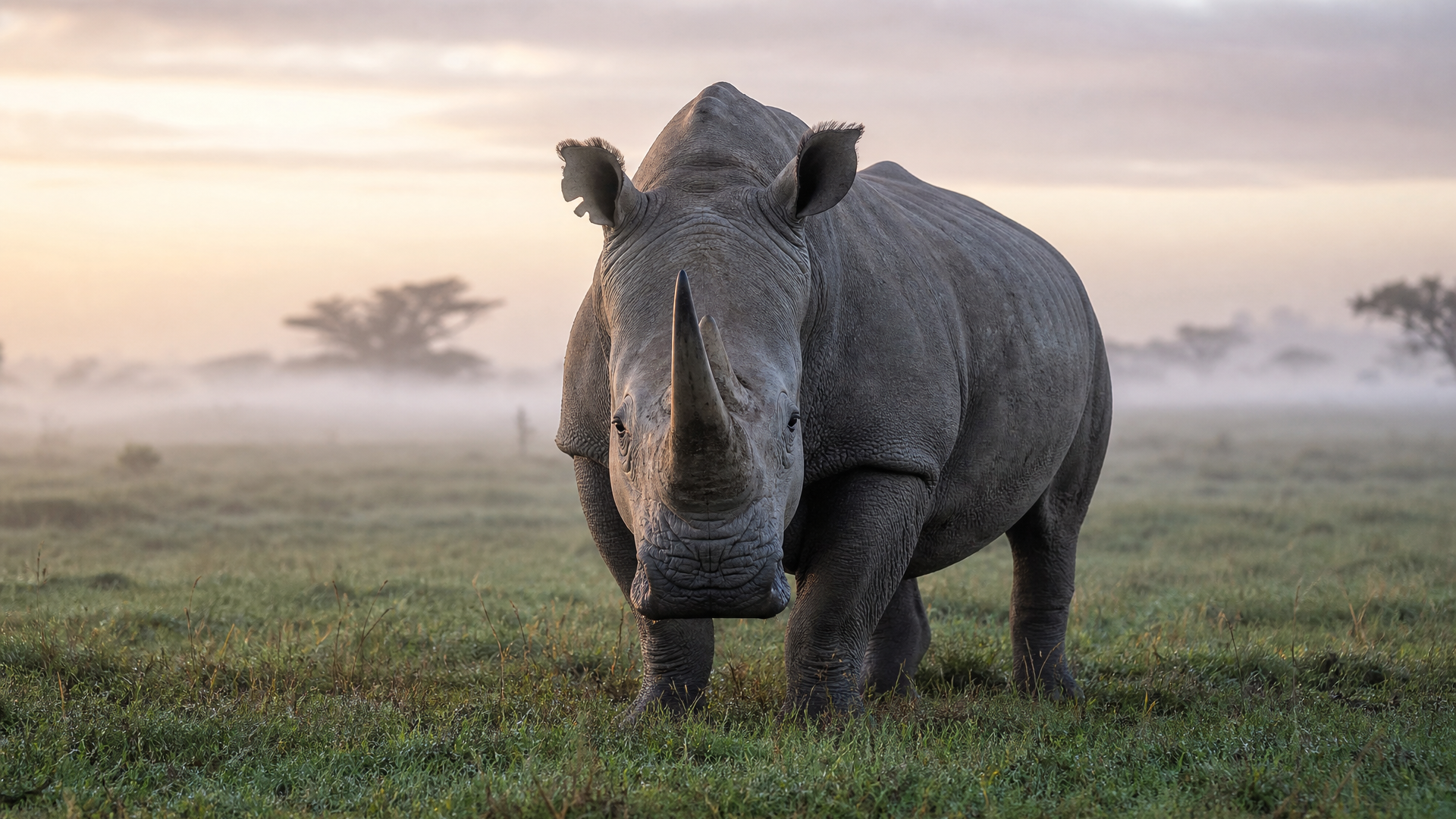
The white rhino lives by lowering its power. Its wide mouth crops grass in steady sweeps, turning open ground into a place of repeated passage. The head is long, the shoulders immense, the horn carried forward like a question no other animal wants answered. Calves walk close to their mothers, small only by comparison, learning the old paths between grazing, shade, water, and dust.
To watch one graze is to feel how ancient a peaceful act can be. There is force here, but it is mostly held in reserve: in the neck, in the square stance, in the sudden lift of a head when scent changes.
Southern Africa holds much of the animal's hard-won recovery, and also much of its danger. A horn that evolved for contests and defense has become a burden under human desire. The rhino lowers its head again. Grass tears softly. For now, survival sounds like feeding.