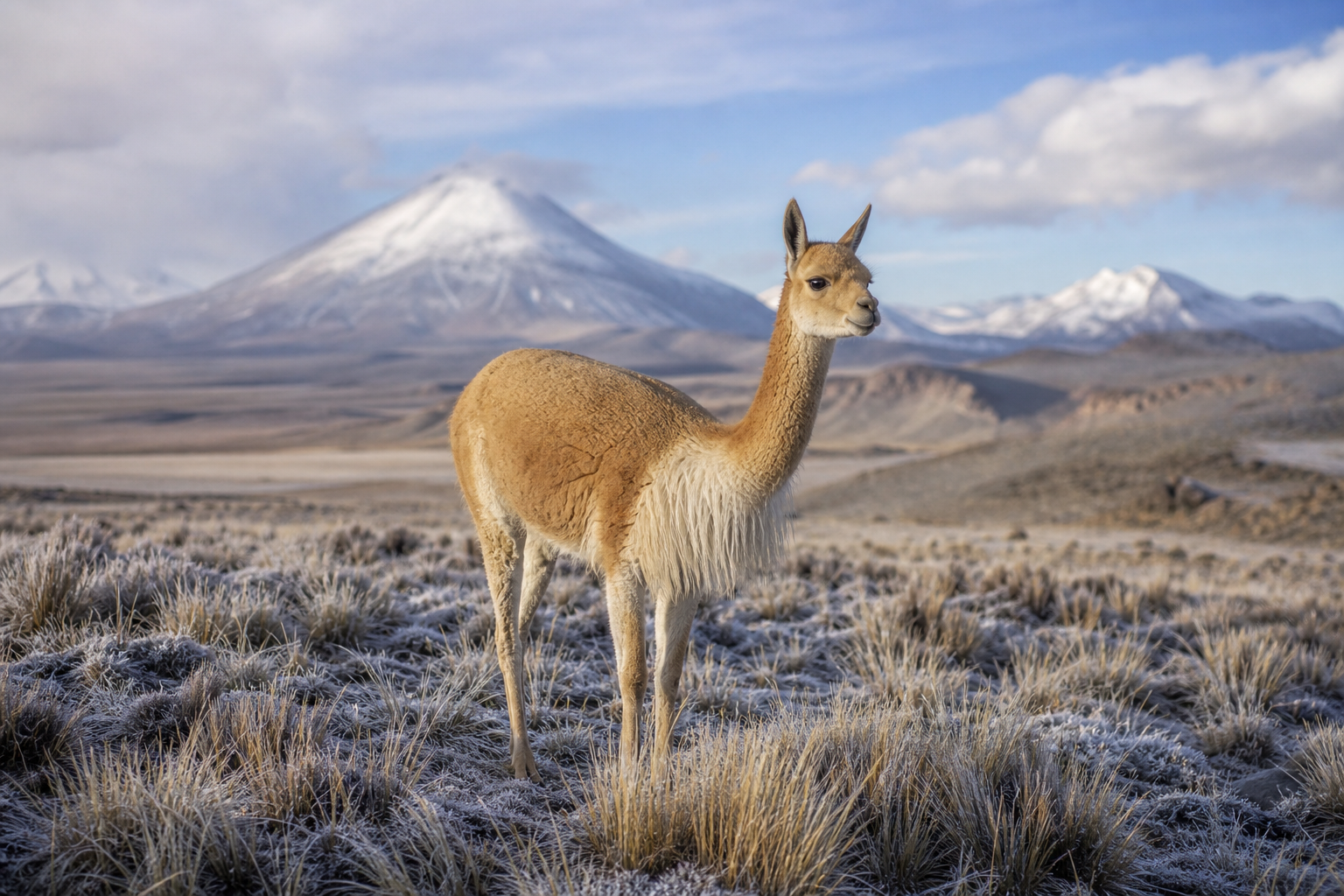
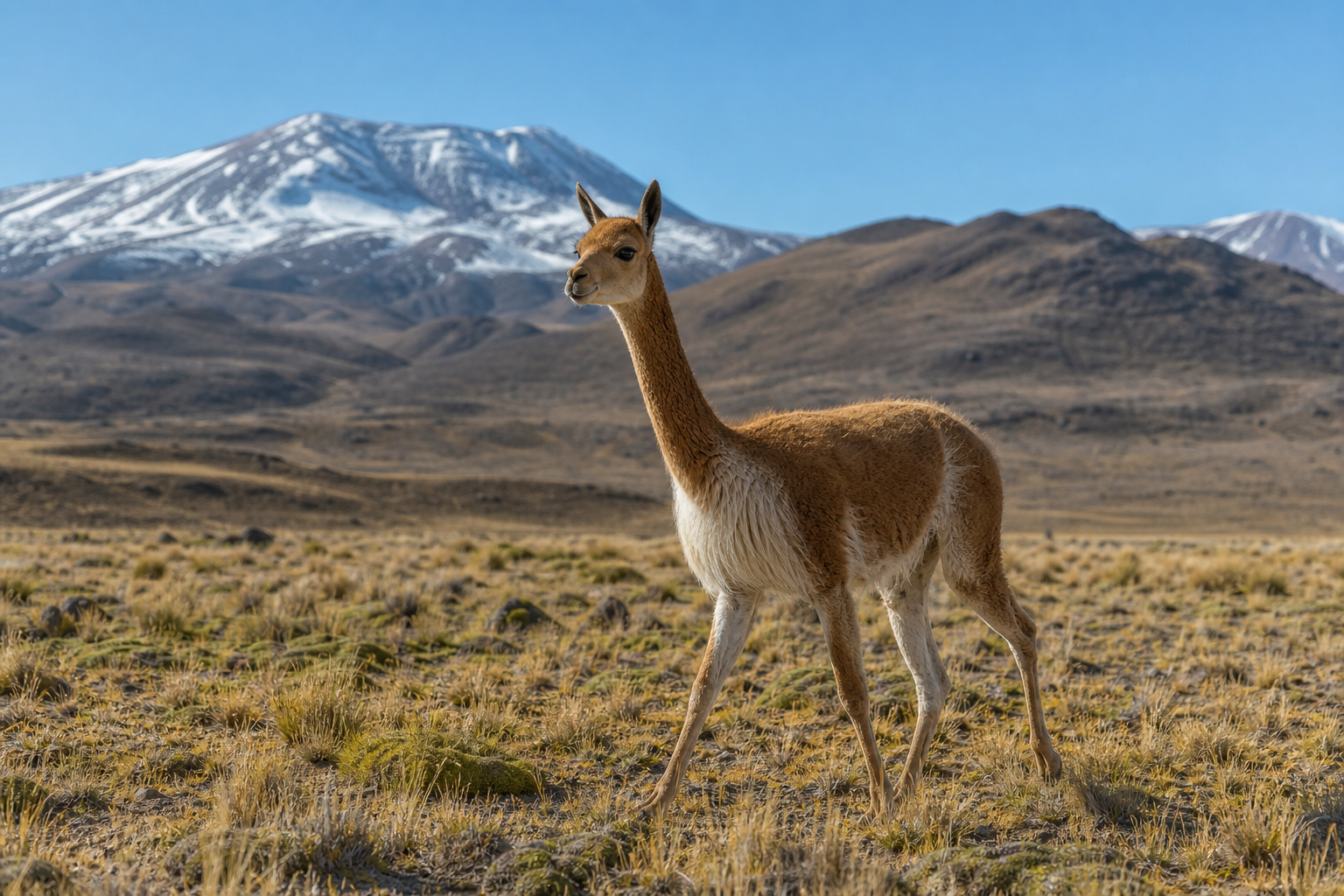
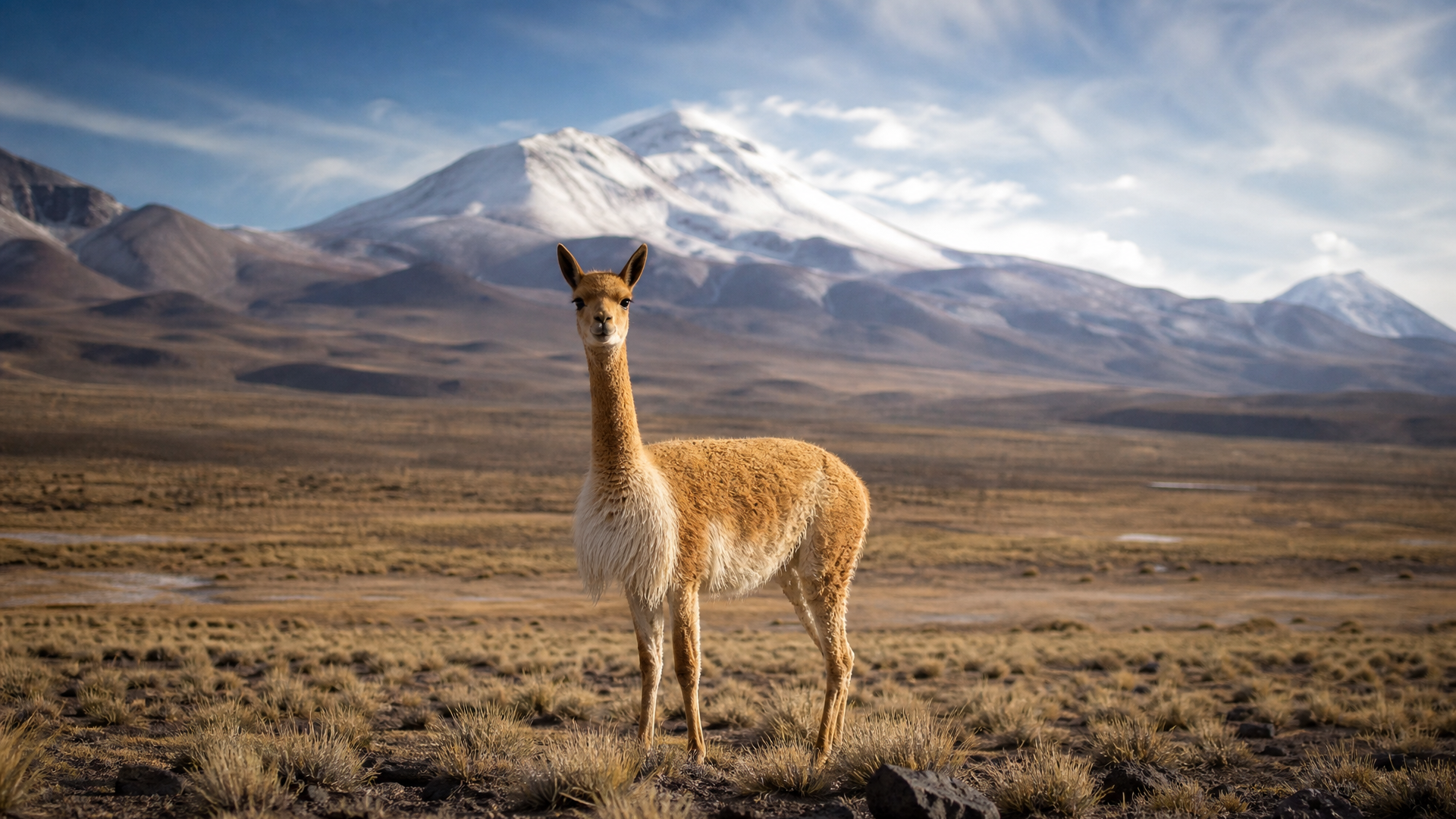
On the open puna of Salinas y Aguada Blanca, the morning is all wind and light. Frost lies in the grass, volcanoes stand blue at the edge of the plain, and a small herd lifts its heads as one. The vicunas do not run at first. They watch, fine-boned and flame-colored, their bodies held between caution and speed.
There is a delicacy to them that the altitude does not soften. They live where the air is thin enough to make walking feel like work, yet they move as if the ground has been made easier for them alone. A male stands apart, giving sharp calls when the herd drifts too far. Females and young graze in close rhythm, stepping between tough grass and bare earth, returning again and again to shared dung piles that mark ownership on a landscape with few walls. When danger settles too near, the herd breaks into motion, not in panic, but in a clean flowing line across the plain.
Their wool once drew empires to these heights, and it still draws human hands. Managed well, the ancient roundups can pass over them like weather; managed badly, pursuit and fences leave their mark. By noon the frost is gone, and the vicunas become small moving sparks against the vast, pale country.