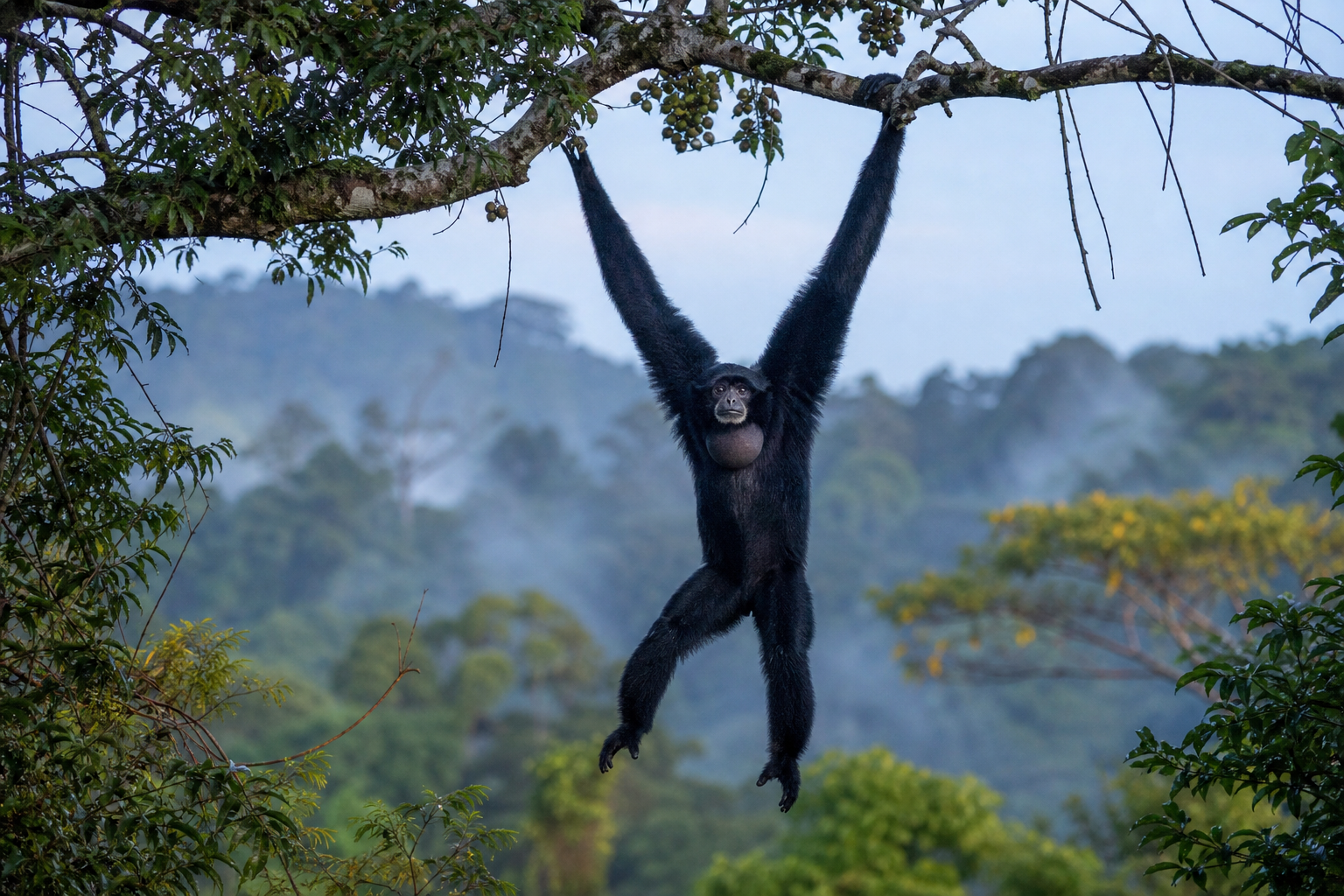
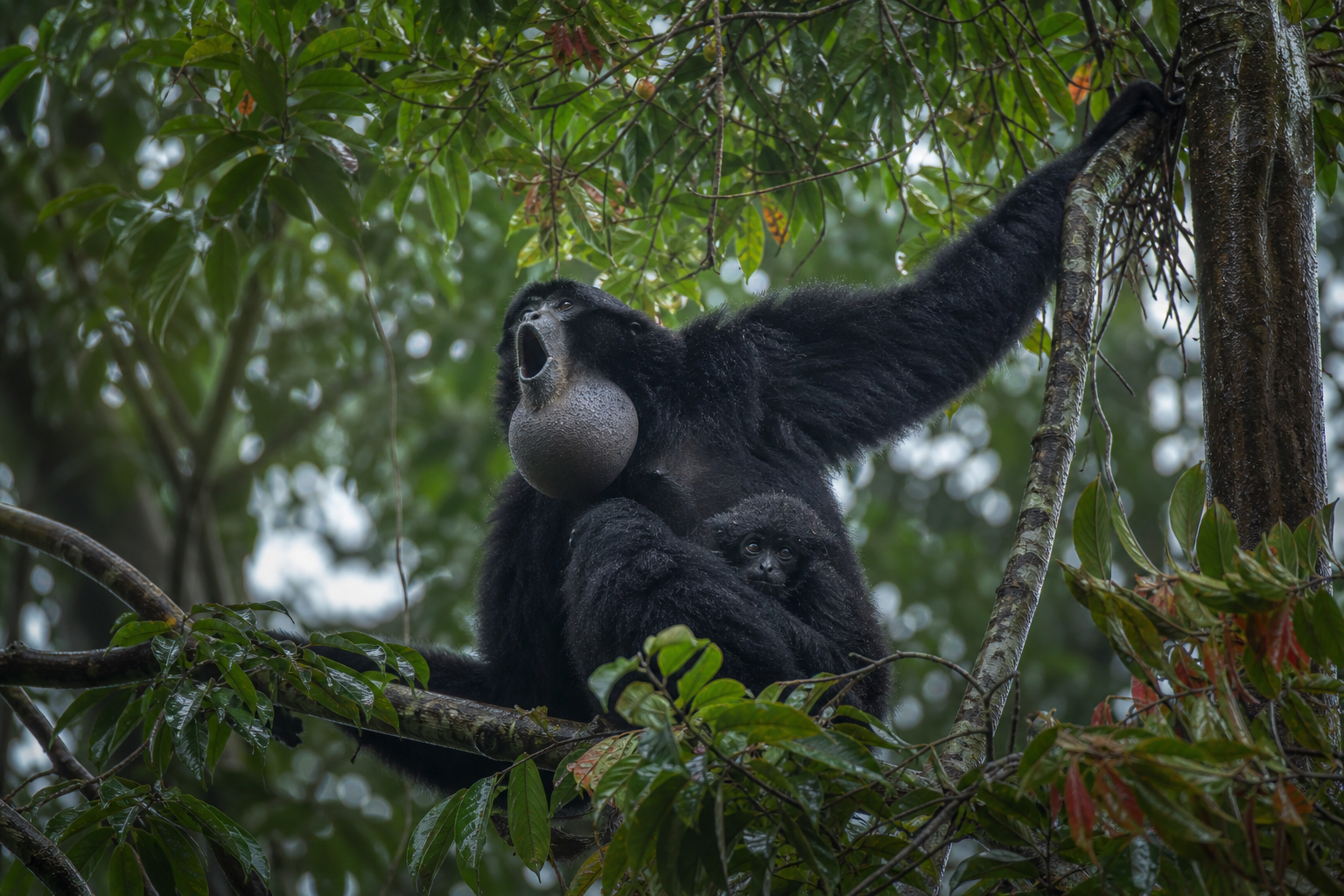
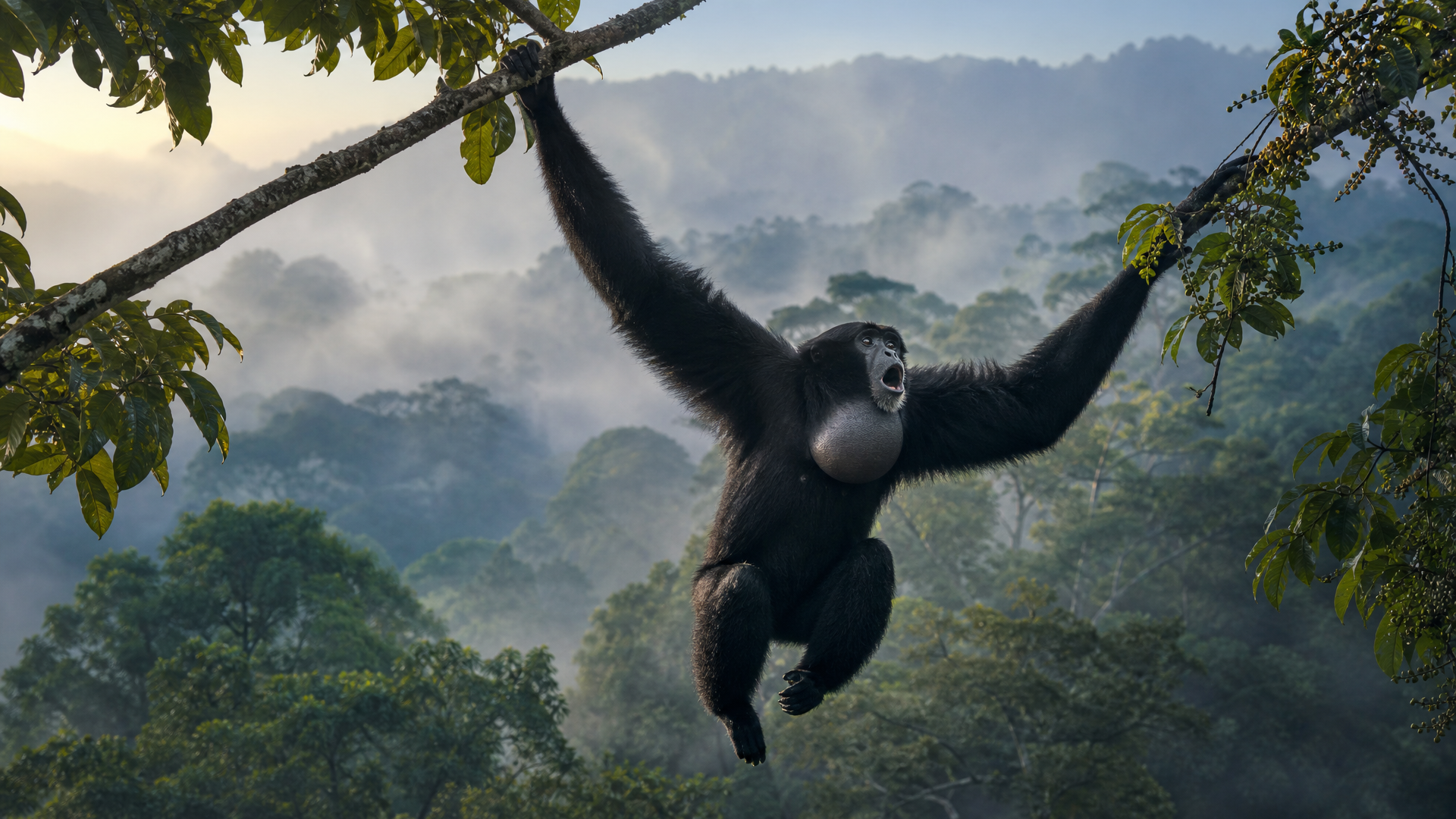
Dawn rises over Sumatra's hills, and the forest is quiet only for a moment. Then a note swells from the canopy, round and resonant, followed by another voice, then another. A black shape swings between branches while its throat sac opens like a dark balloon of sound.
The siamang lives in duet and motion. Long arms carry it under branches in smooth arcs, fingers hooking and releasing with a rhythm that makes distance look simple. Family members call together, not as background noise, but as a declaration of place, bond, and morning possession. The young cling close before learning the canopy's grammar for themselves. When the group travels, bodies follow routes that must remain connected: one branch to the next, one crown to another, no gap wider than courage and reach can answer.
Their calls make hidden forest measurable. They also help fruiting trees send seeds into new ground as the family moves through its day. But the hills are cut by farms, roads, and plantations, and a voice cannot bridge every clearing. The song fades. Leaves settle. For a while, the forest still seems shaped by the sound.