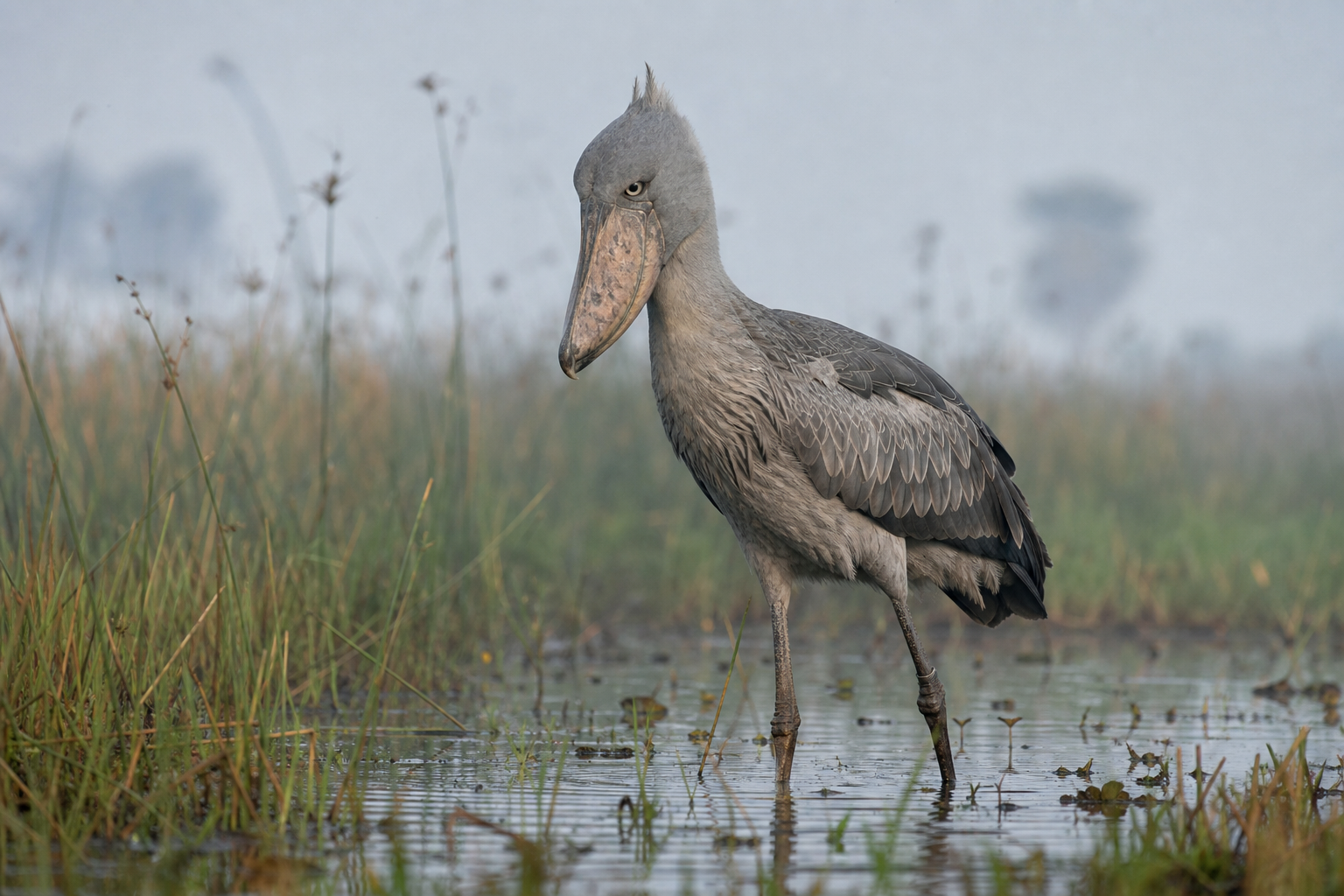
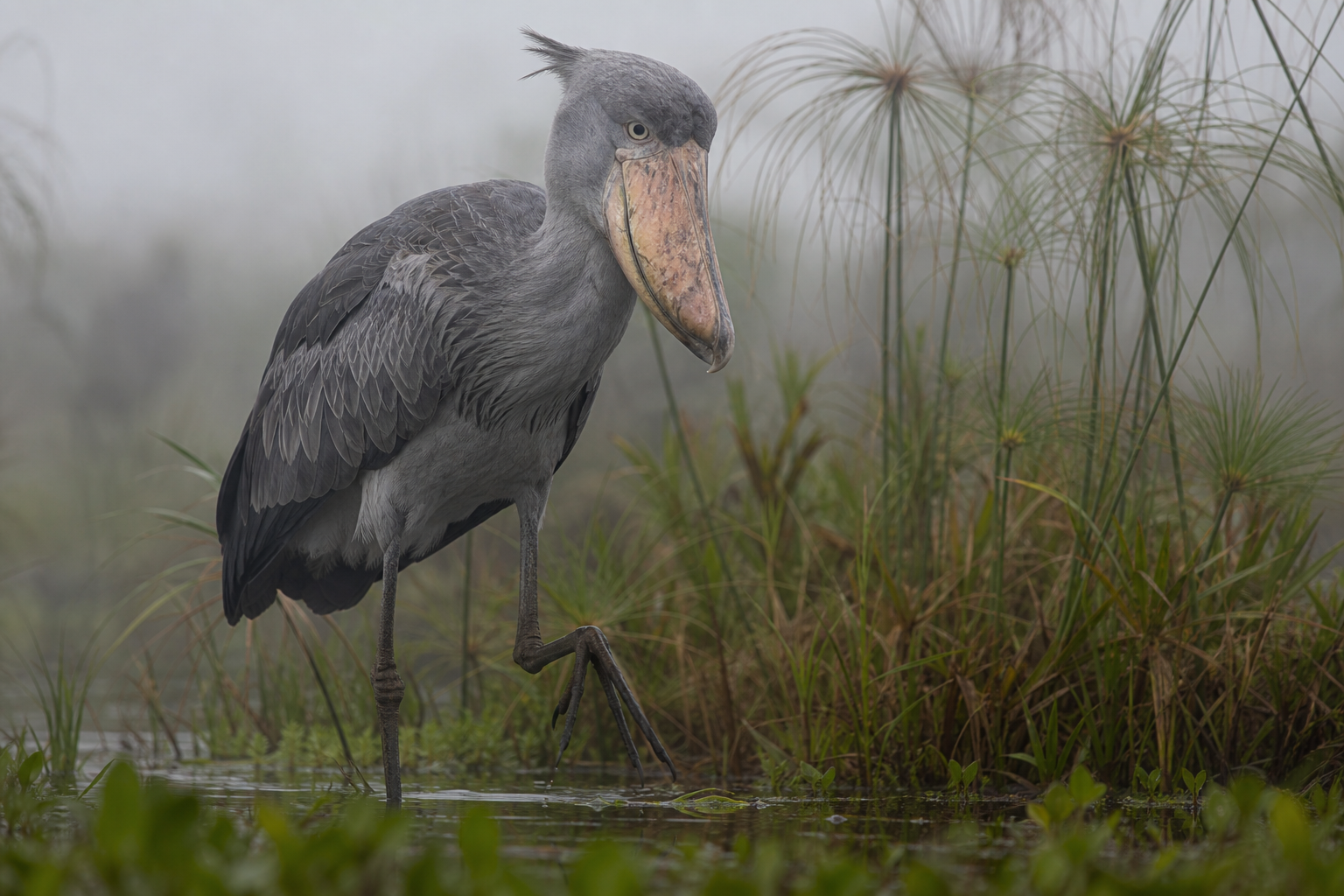
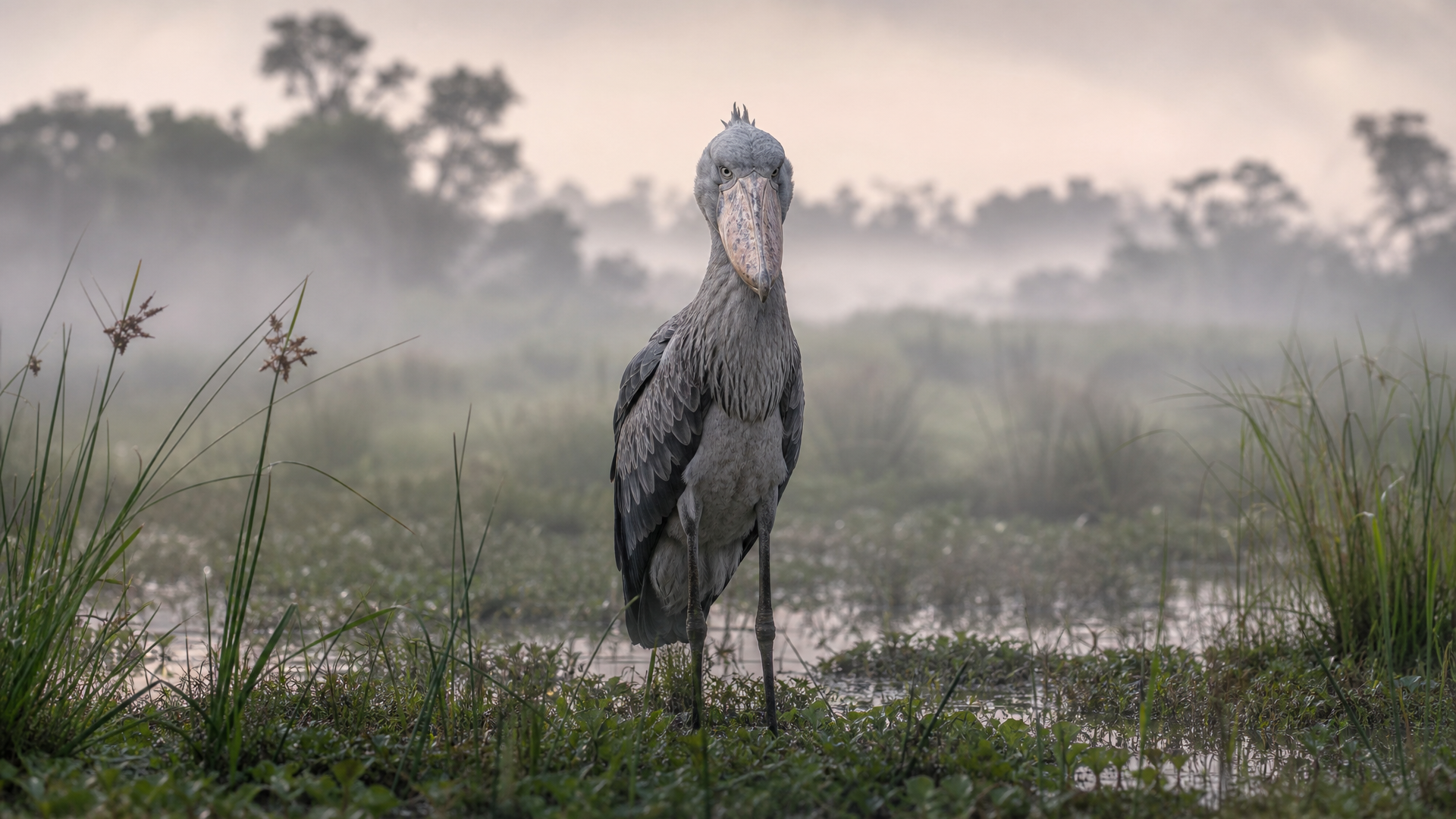
In a papyrus swamp, the bird stands so still that the morning seems to build around it. Mist lifts from the water. Reeds whisper against one another. The shoebill's great bill points downward, heavy and pale, while the eyes remain fixed on a patch of surface that has not yet betrayed what moves below.
The shoebill is patience given a strange and severe shape. It does not rush through the wetland. It waits, balances, adjusts by inches. A lungfish rises too close, a frog stirs, a ripple crosses the wrong shadow, and the head falls with sudden force. Then stillness returns, as if nothing at all has happened. Its height gives it presence, but its power lies in concentration: the ability to make a whole swamp narrow to one opening in the water.
Central Africa needs the shoebill because the Congo Basin is not complete without its great wetlands. Rivers, marshes, floodplains, and papyrus beds carry a different gravity from the closed forest, and this bird stands at their center like an old question. Wetland loss, disturbance, and trade pressure follow it unevenly across its range. The shoebill remains motionless, and the swamp keeps moving around it.