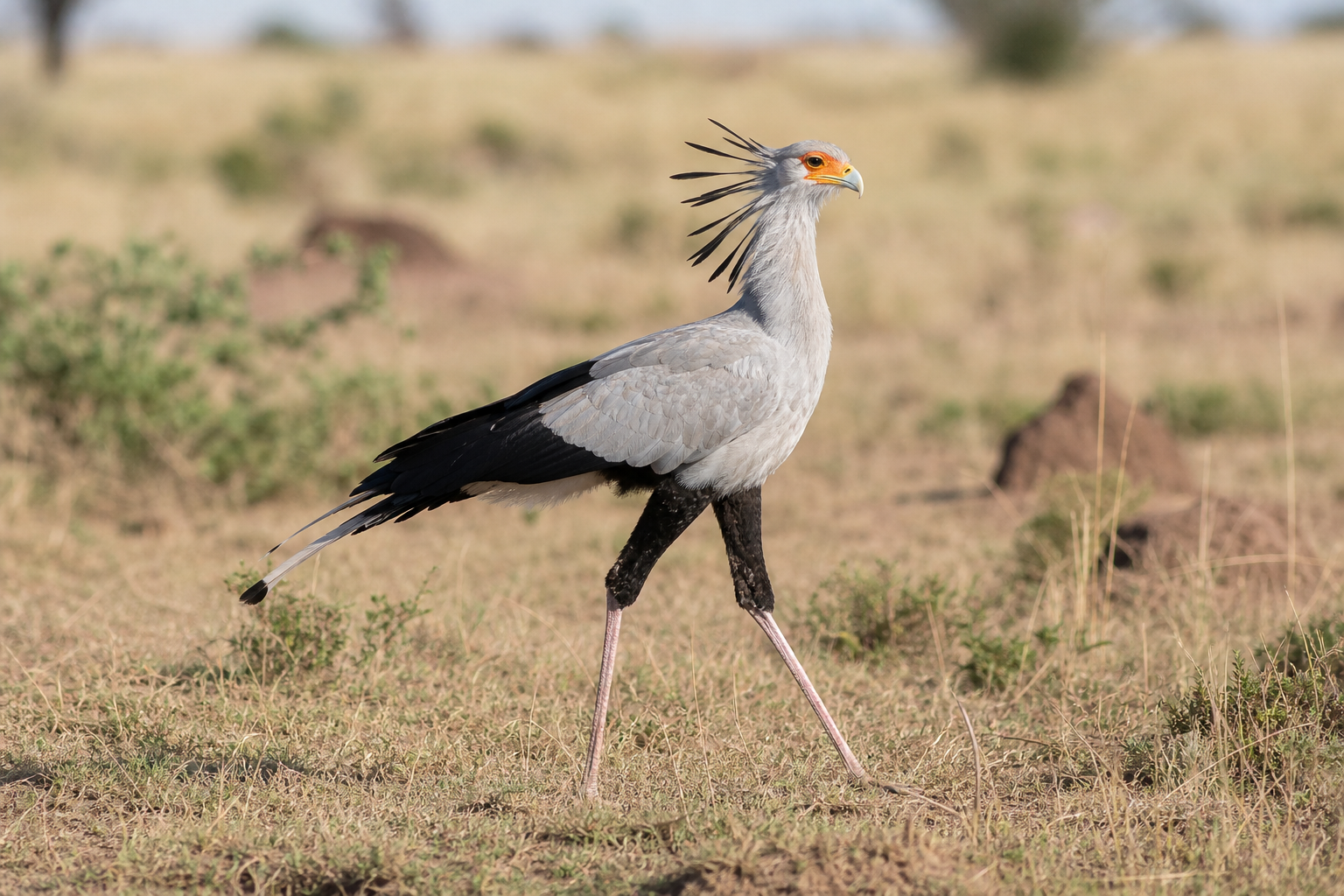
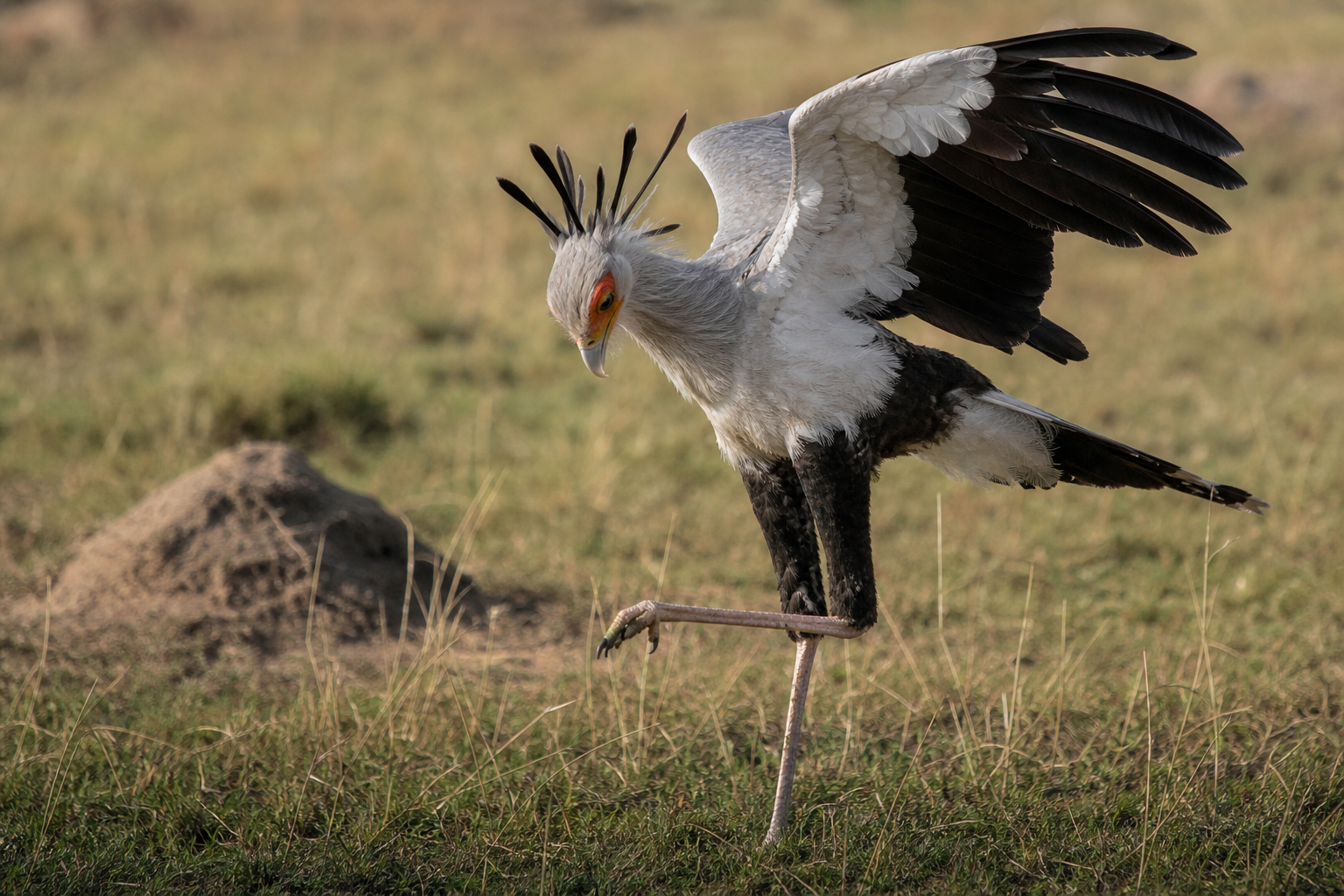
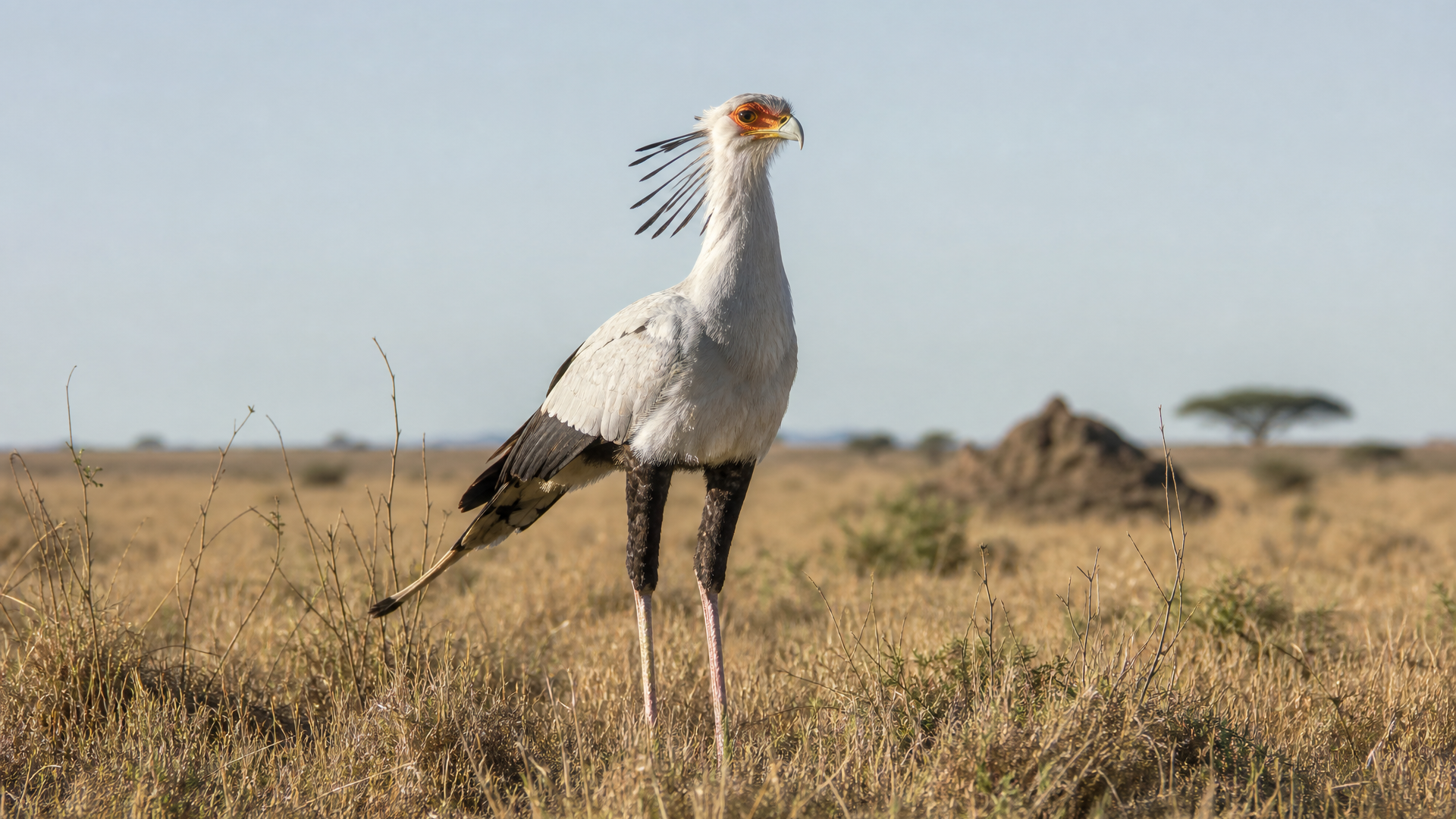
The secretary bird walks as if the open plain belongs underfoot. Long legs lift it above the grass, dark quills trail from the head, and the face carries the severe attention of a raptor. It does not need a branch, a cliff, or a high circle of sky to become a hunter.
Its world is lower and more immediate. The bird strides through grassland and open scrub, head tilting, eyes working, feet ready. A snake moves wrong in the stems. A lizard breaks cover. The secretary bird closes distance on the ground, wings lifting for balance, legs striking with a force that feels startling because the body above them seems so composed.
That is the power of it: a raptor translated into walking. It has the watchfulness of the air and the patience of an animal willing to search one step at a time. When it runs, the motion is both awkward and exact. When it rises into flight, the long legs trail behind like a reminder of where the real work happens.
In a chapter crowded with famous mammals, the secretary bird widens the meaning of East African power. The sky is not the only hunting ground. Somewhere in the dry grass, it lowers its head and begins to walk.