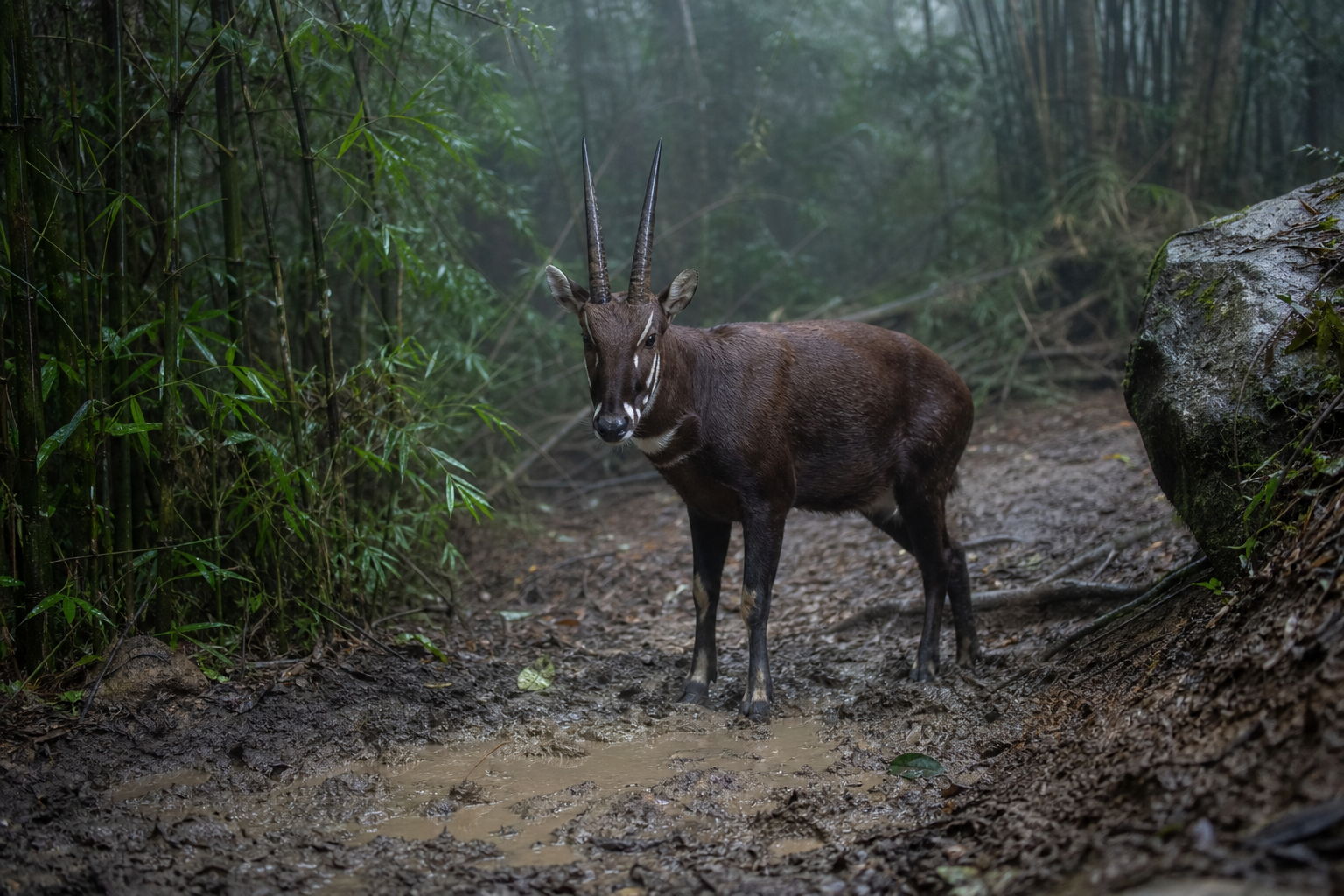
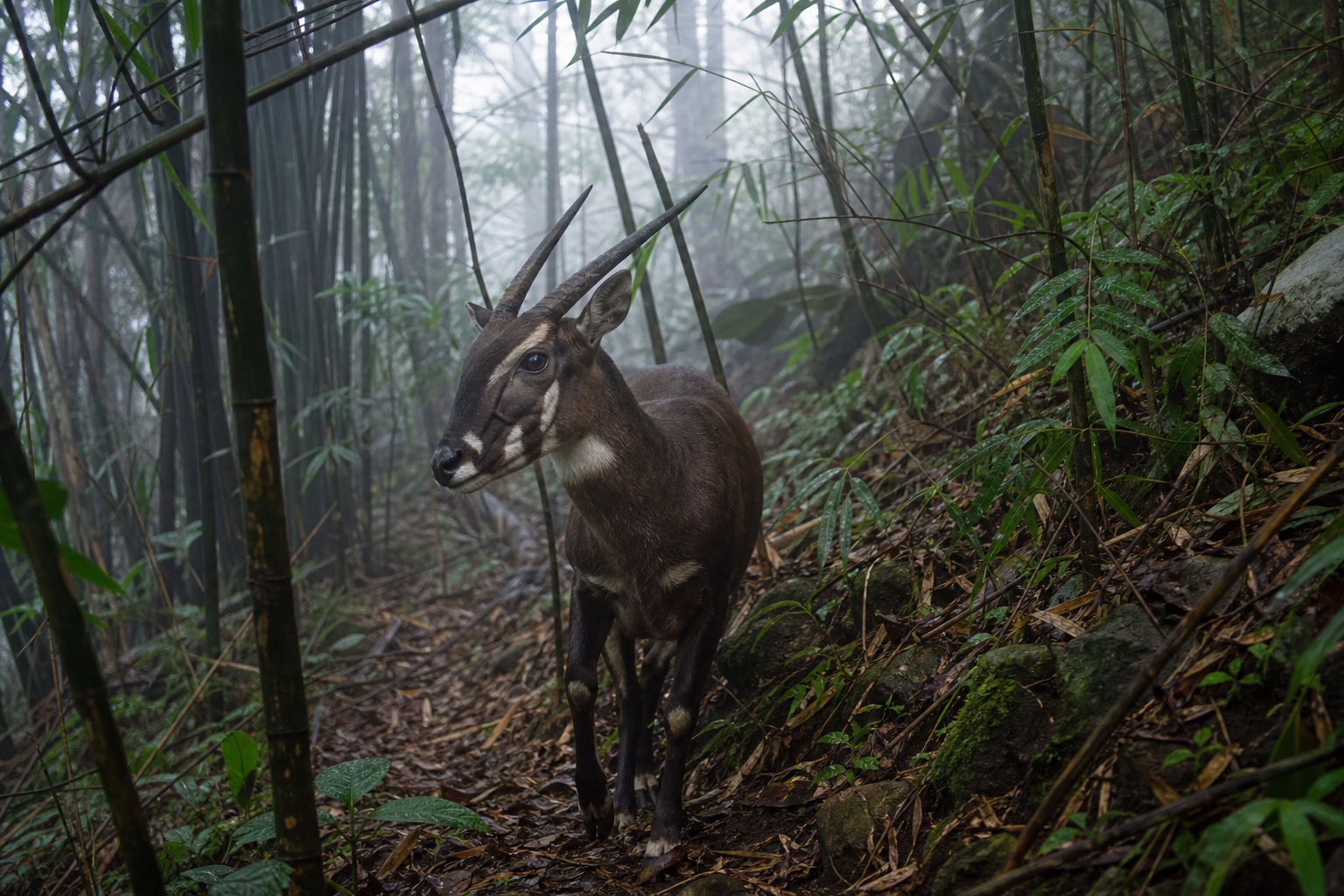
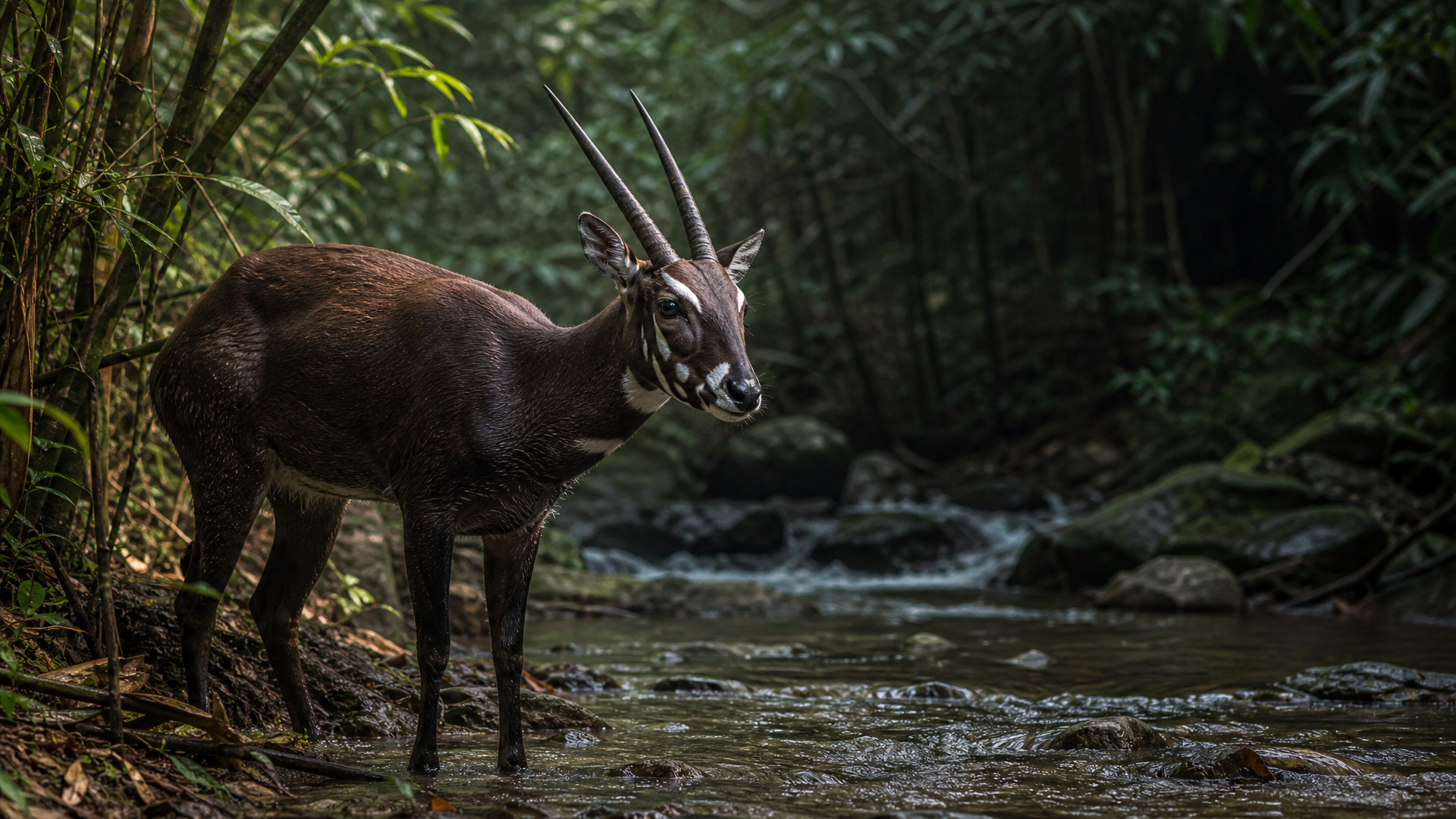
Mist lies in the Annamite Mountains, softening bamboo, wet stone, and narrow trails. A camera waits beside a salt lick. For days there is only rain, leaf fall, the passage of smaller feet. Then a slender face appears in the frame, two dark horns rising cleanly above it, and the forest seems to have revealed a secret by accident.
The saola is difficult to write into certainty. It lives at the edge of human knowledge, not because it is mythical, but because it is shy, rare, and bound to dense country that keeps its own counsel. The body is antelope-like but not an antelope in the simple sense, the markings clean, the horns almost parallel, the presence brief. It browses, moves, listens, and withdraws. Most people will never see one alive. Even researchers often know it through tracks, images, local memory, and the absence left after a snare line has been found.
Its role belongs to a forest community still being understood, but its pressure is plain. Snares set for other animals empty the Annamites without choosing their victims. The image on the camera fades back to black. Somewhere beyond the lens, a living secret keeps walking.