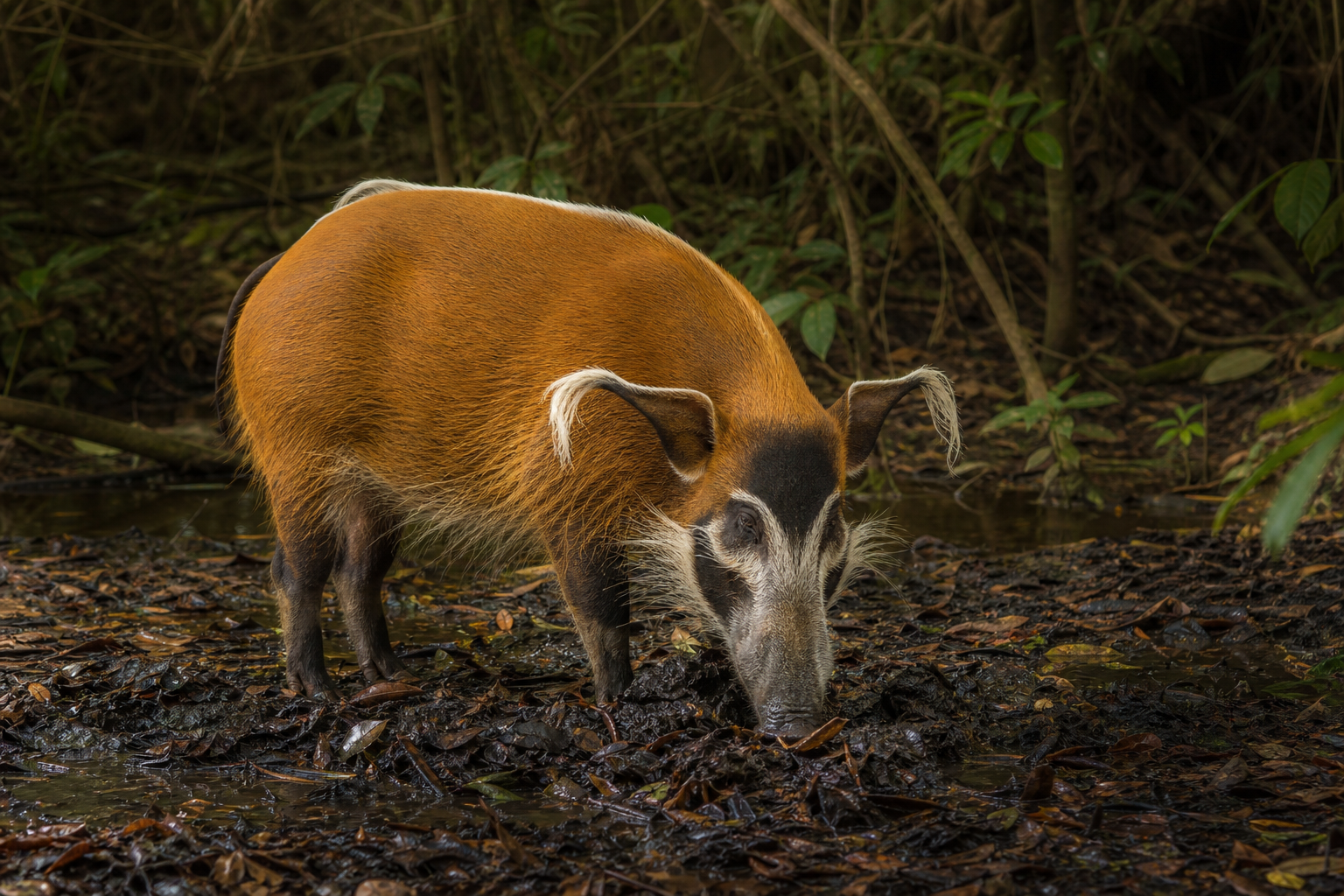
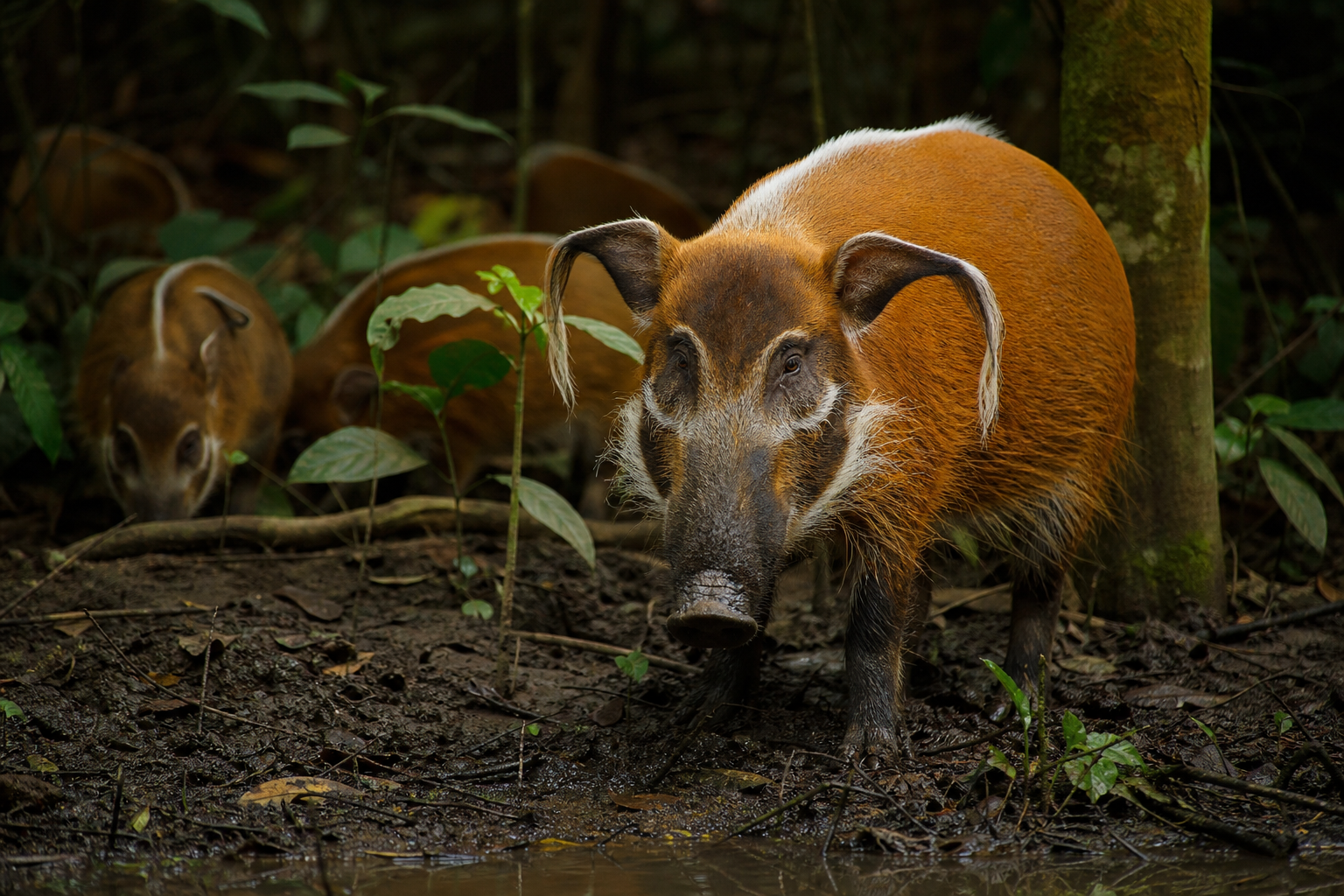
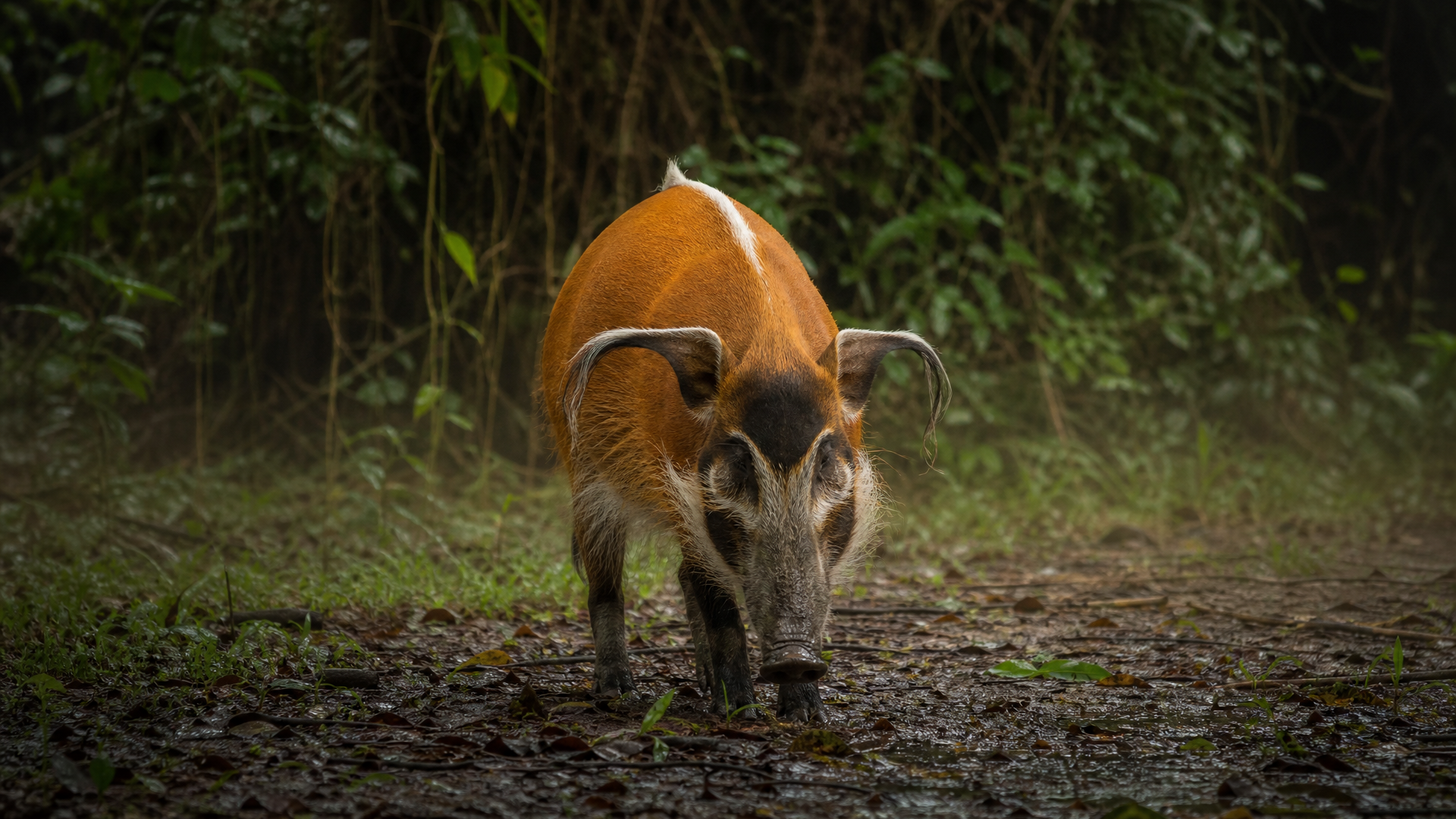
At the edge of a swampy clearing, the leaf litter begins to snort and stir. A red shape pushes through the undergrowth, ears tufted like pale brushes, white facial markings bright in the gloom. Then another appears, and another, and the red river hogs set about the forest floor with the brisk confidence of animals that know exactly where to look.
They are vivid without being delicate. The body is sturdy, the snout busy, the social life close and noisy. A group roots beneath fallen fruit, turns damp soil, noses through old leaves, and grumbles softly as it works. Piglets striped for concealment keep near the adults, vanishing and reappearing among stems. If alarm rises, the whole company can dissolve into cover with startling speed, the red coats swallowed by green and shadow.
In West Africa's forest edges and gallery woods, red river hogs are part of the restless work of decomposition and renewal. They disturb soil, spread seeds, uncover hidden food for others, and clean what the forest drops.
Because they can live near farms and villages, they are often known as raiders and quarry as much as forest animals. That closeness brings conflict, but it also shows how adaptable life at the edge can be. After they pass, the clearing is churned, scented, awake. The forest floor has been read with a snout and rewritten in mud.