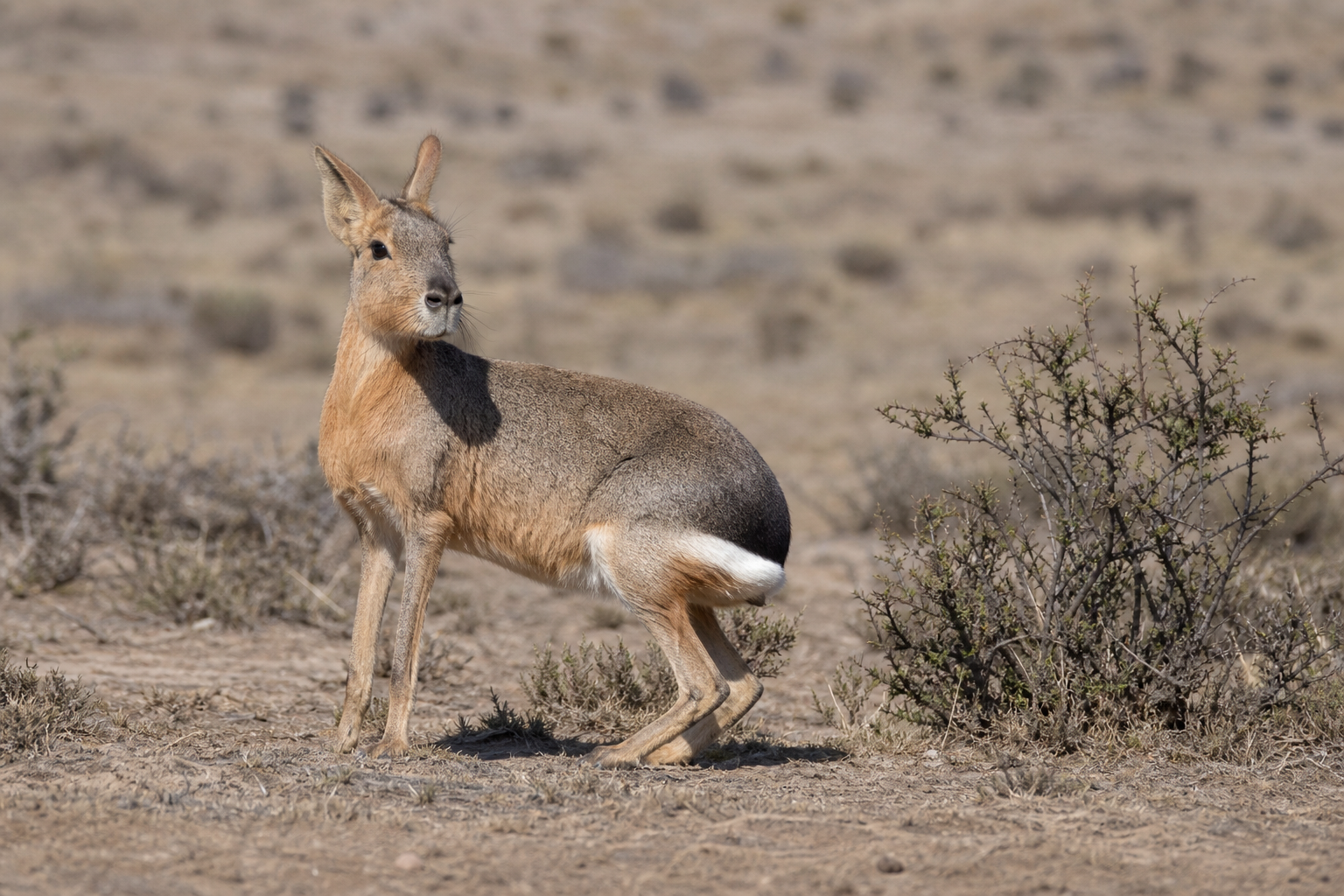
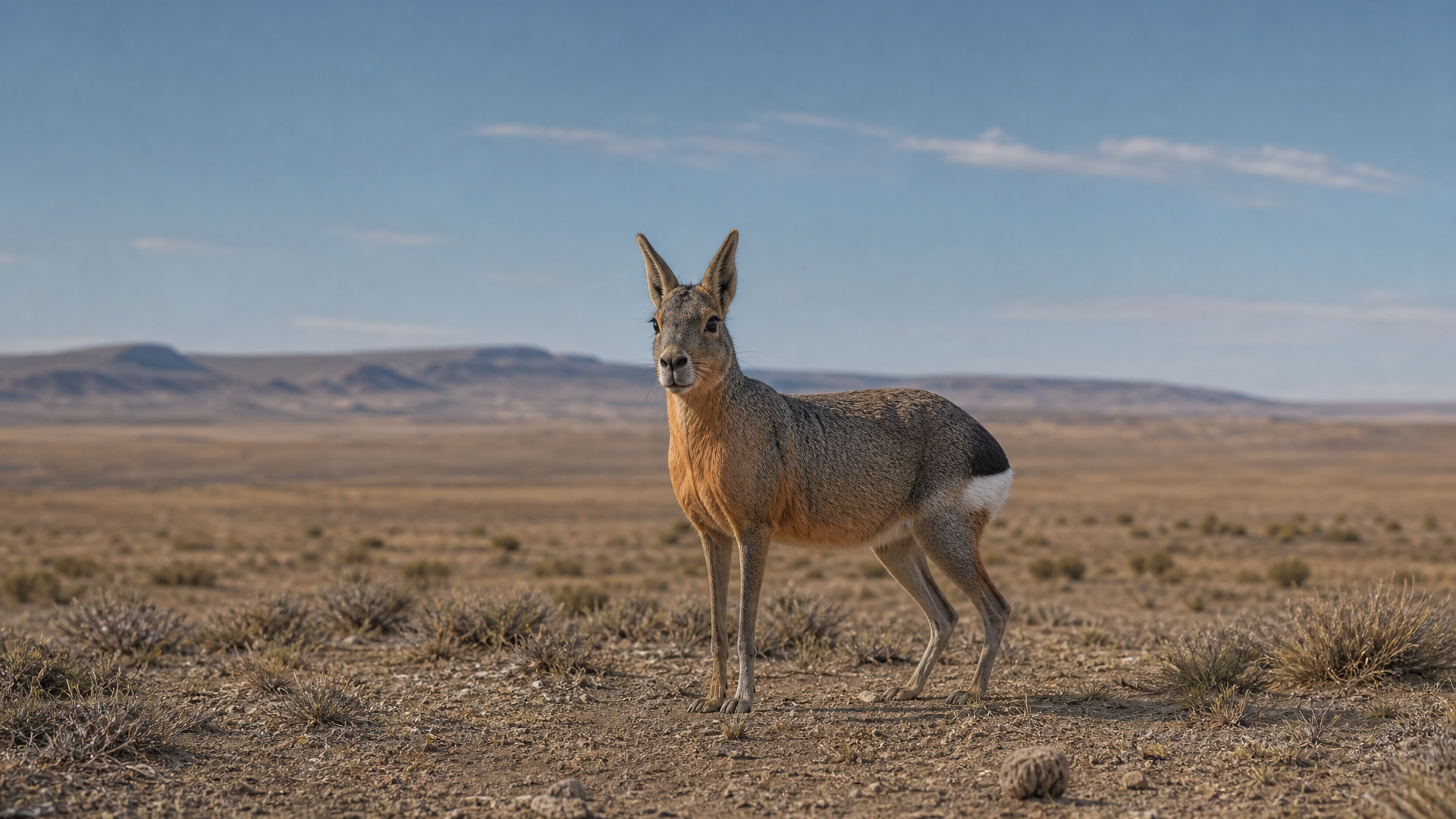
The dry steppe looks empty until the ground shifts into ears. A mara sits upright beside a burrow, long legs folded, dark eyes fixed on the horizon. Dust passes over low shrubs. Somewhere nearby, young animals stay hidden below the surface while the adults hold the open country with stillness.
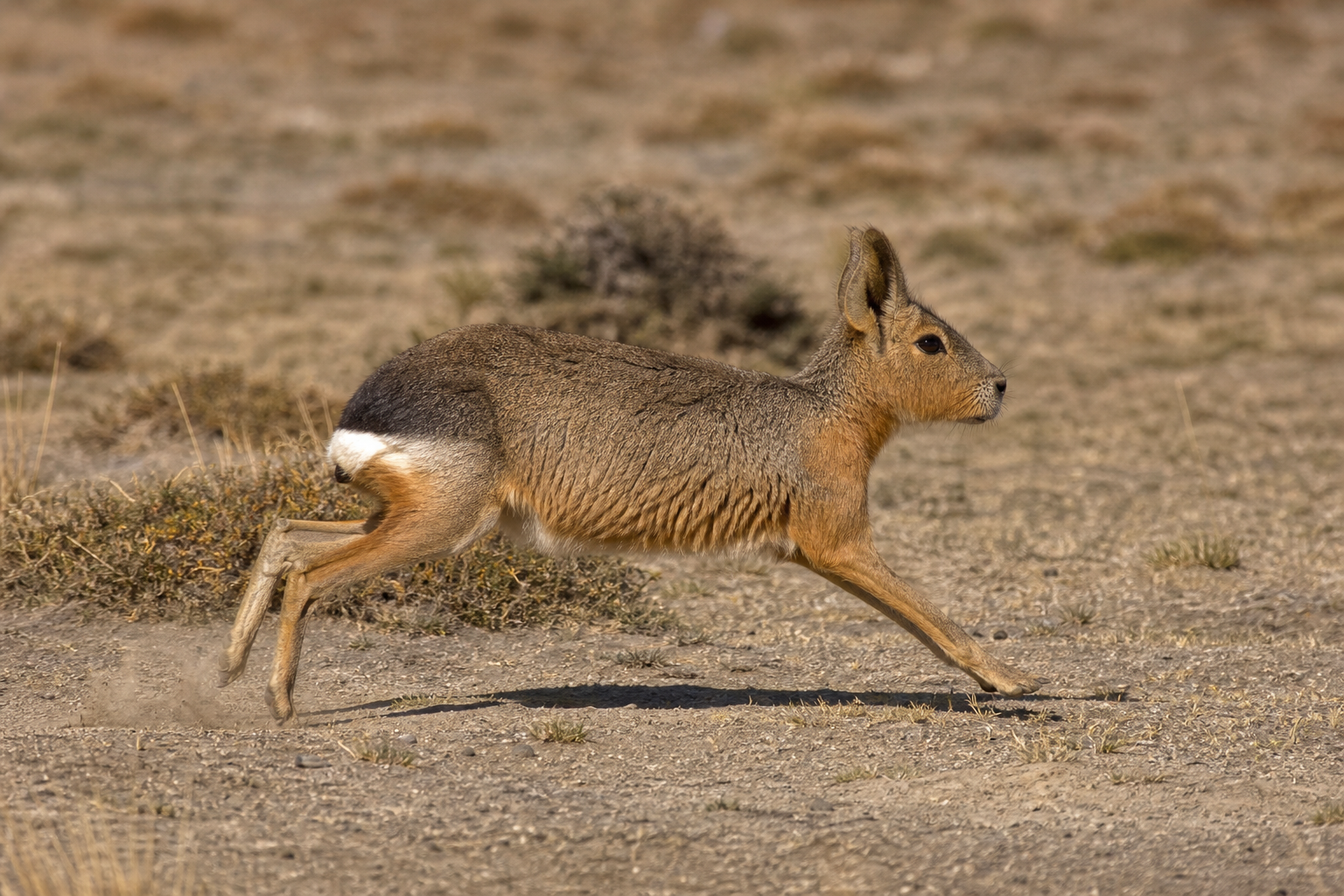
The Patagonian mara seems assembled from familiar parts that refuse to become ordinary. It has the watchful face of a small grazer, the long limbs of a runner, and the social tension of an animal that lives where danger can arrive from any direction. Pairs often remain close, moving through the scrub with a quiet fidelity that gives the open plain a domestic feeling without making it safe. When alarm comes, the body unfolds into speed, bounding over hard ground with a lightness that belies its solid form. Around communal dens, several families may gather, and the steppe fills with a careful traffic of nursing, scent, vigilance, and sudden flight.
The mara gives Patagonia one of its most distinctive land stories because it makes smallness visible in wide space. It browses, digs, feeds predators, and helps animate ground that can seem bare from a distance. Habitat loss, hunting, dogs, and competition with introduced grazers press around its colonies. At the burrow mouth, an adult keeps watch while the wind writes over every track.