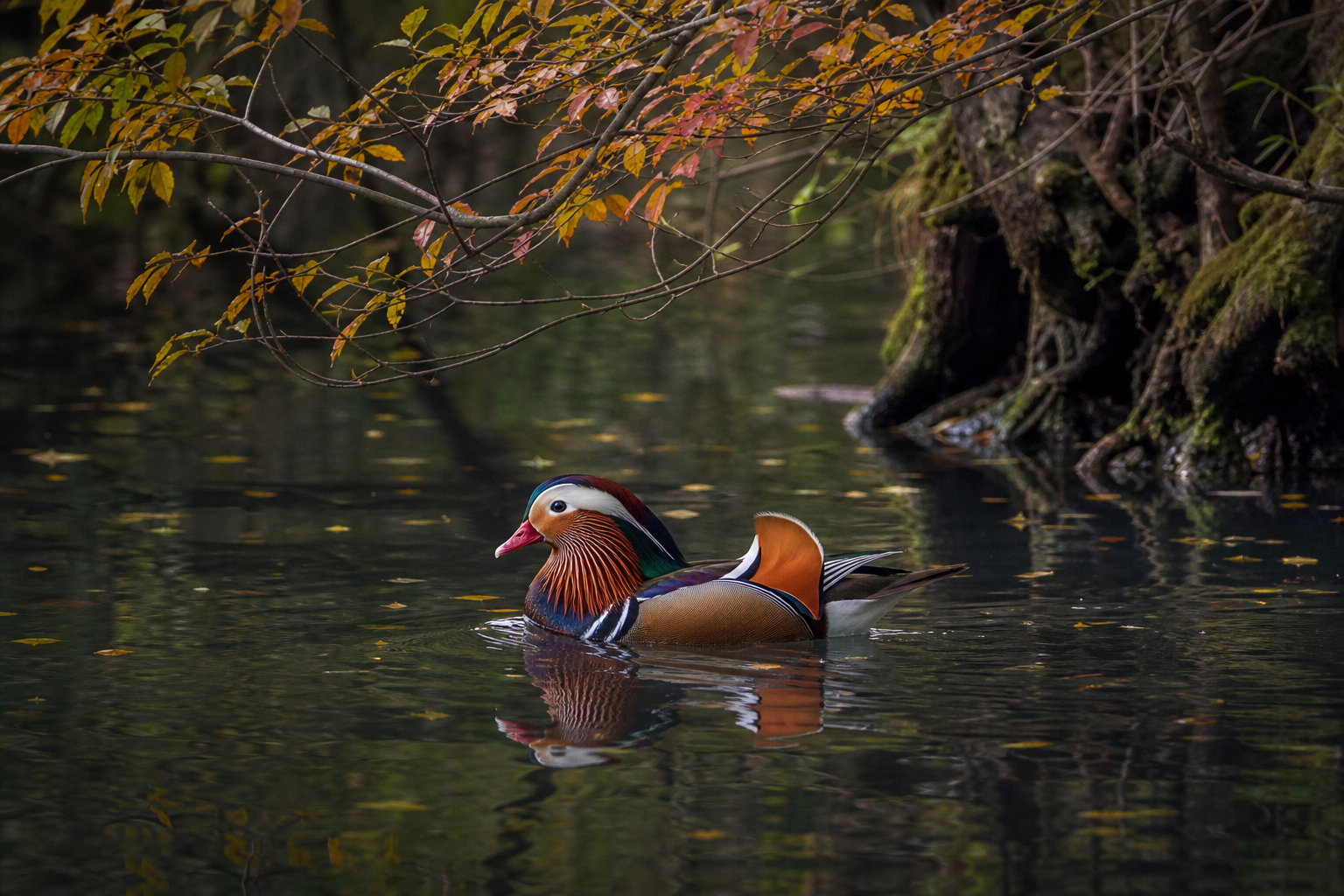
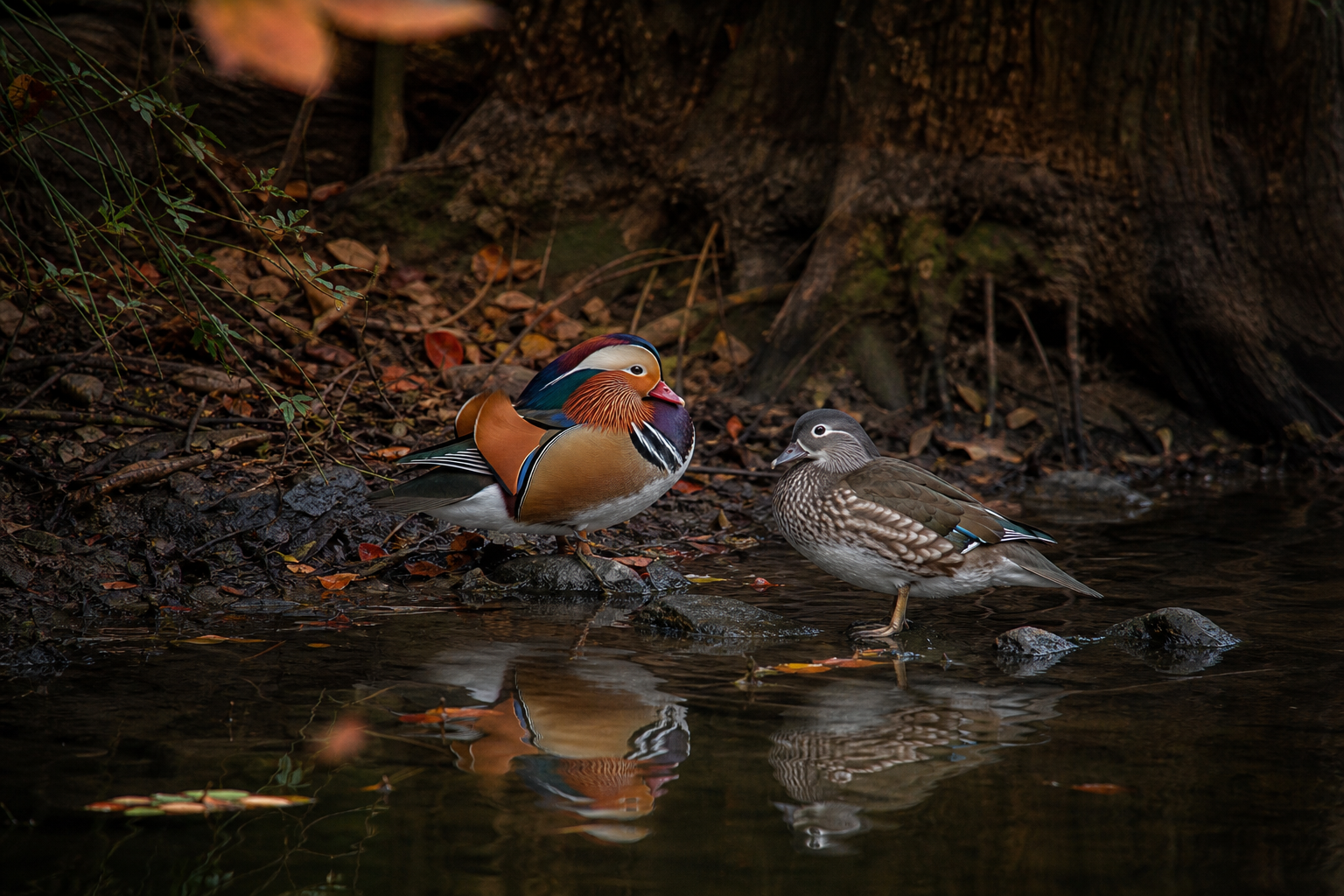
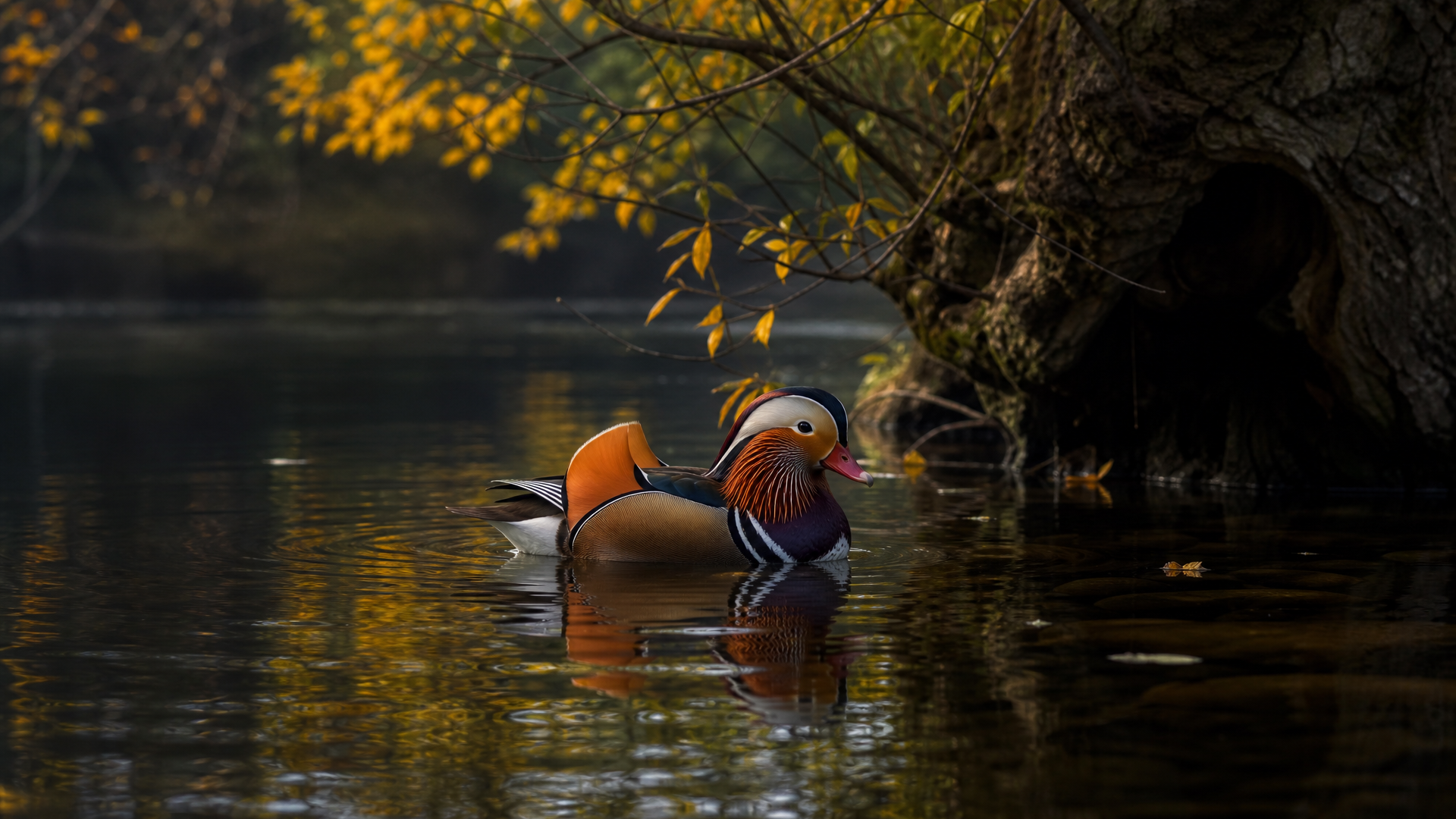
Autumn leaves gather along a quiet pond, red and gold trembling on the surface. From beneath an overhanging branch, a drake glides into view with sails of orange feather raised above his back. Beside him, the water parts around a subtler shape, the female moving through reflection like a secret.
The mandarin duck makes color feel precise rather than loud. The male's breeding plumage is a puzzle of copper, green, white, purple, and chestnut, each piece held in clean order while the bird drifts under wooded banks. The female is quieter, gray-brown with a pale eye ring, and no less necessary to the page. She chooses cavities in old trees, and the young begin life with an act of trust, dropping from the nest toward the ground or water below.
This duck belongs to the meeting of forest and pond. It uses shade, fallen branches, slow water, and the shelter of places too tangled for an open-water bird to feel at ease. In winter, small groups gather where ice leaves a passage.
Old trees are part of its story as surely as water is. When wooded wetlands are cleared or simplified, the bright drake may still appear in parks, but the full life behind the color thins. A ripple opens under the branch, and the pair slips back into shade.