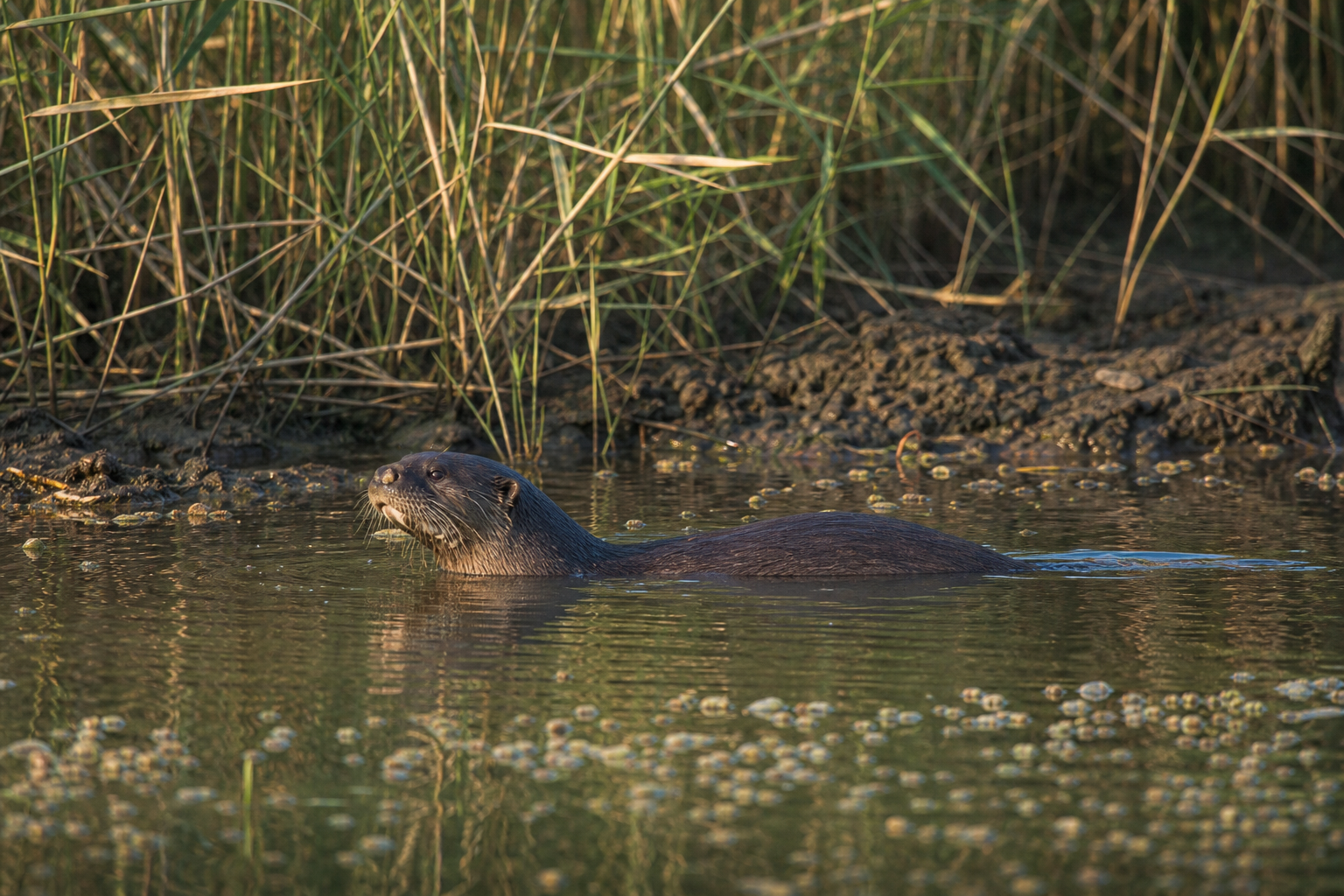
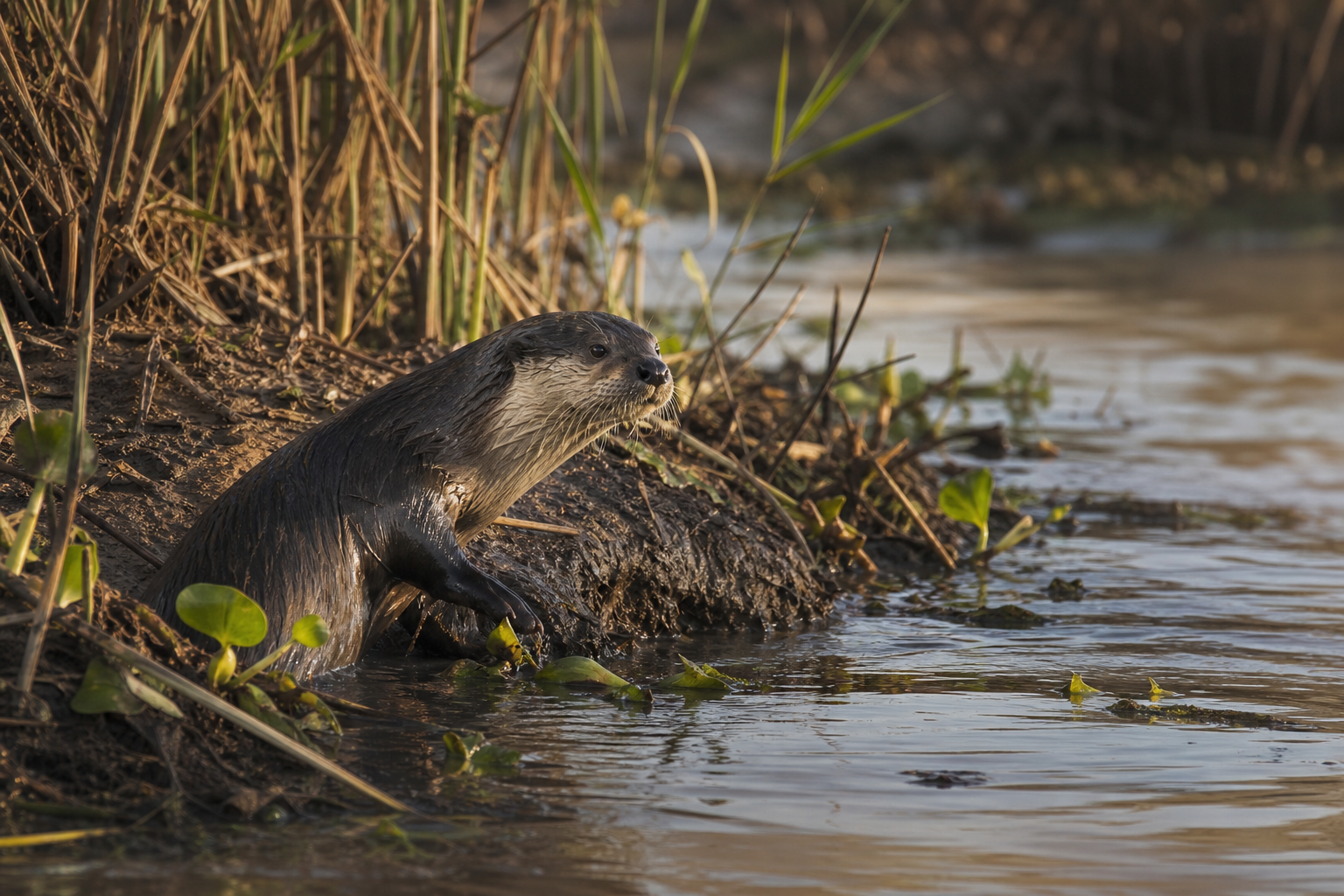
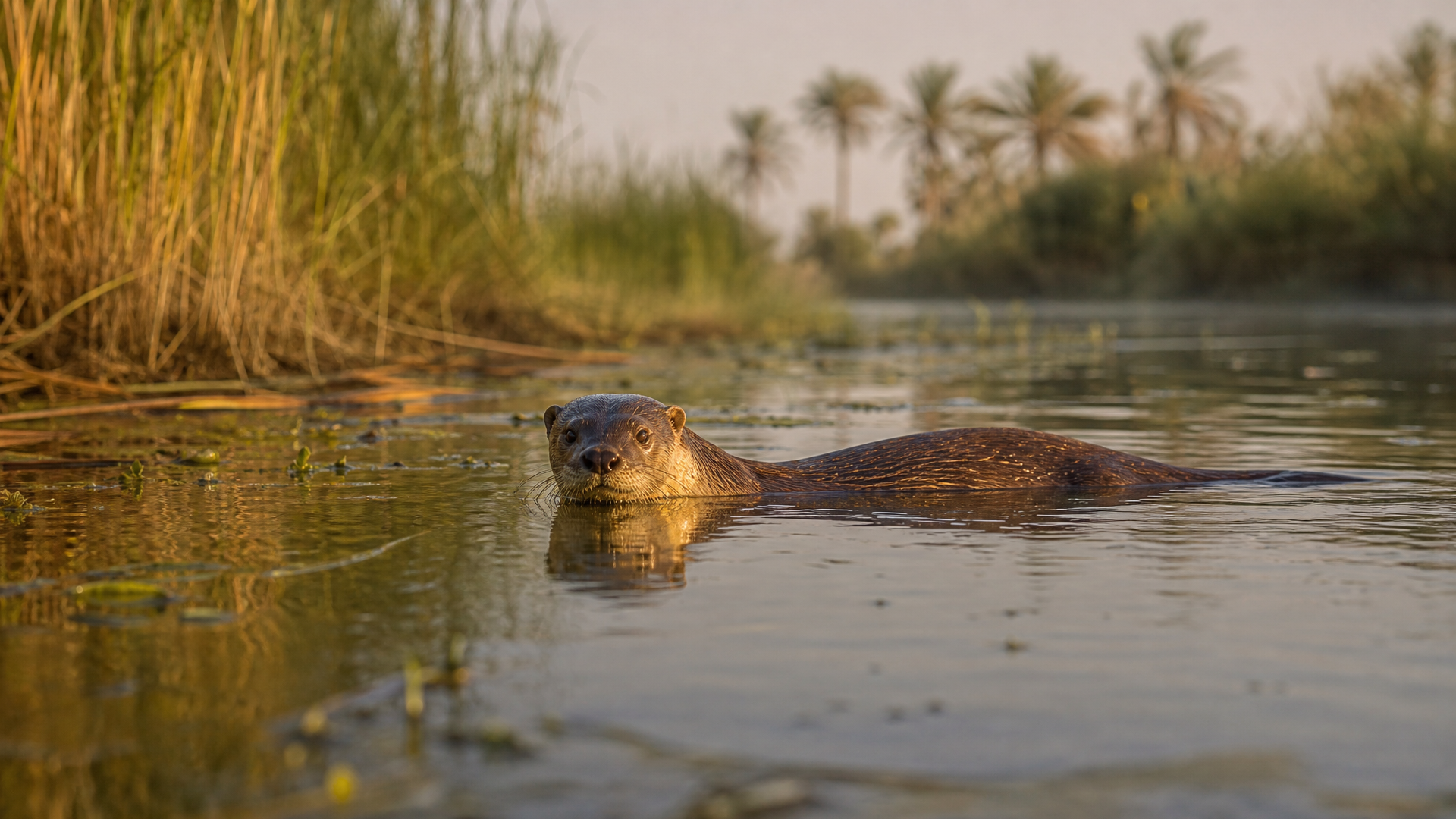
In the Mesopotamian Marshes, dawn spreads across water the color of tea. Reeds knock softly against one another. Then a sleek head breaks the surface, whiskers shining, and a long body rolls under again before the ripples have reached the bank.
The Iraq smooth-coated otter is made for channels that twist through reed, mud, fish, and shadow. Its fur lies close and dark, its tail thick at the base, its paws quick under water. Families may travel together, calling through the marsh in short notes that vanish among birds and reed stems. On land it is alert and low. In water it becomes fluent, turning through submerged roots and narrow openings with the ease of something written into the marsh itself.
This otter carries one of West Asia's most wounded wetlands in its body. Drained marshes, pollution, hunting, conflict, and altered water flows have left its future uncertain and its sightings precious. It is a hunter, a traveler, and a sign that the marsh still holds enough life to answer. The reeds close after it, and the water keeps moving.