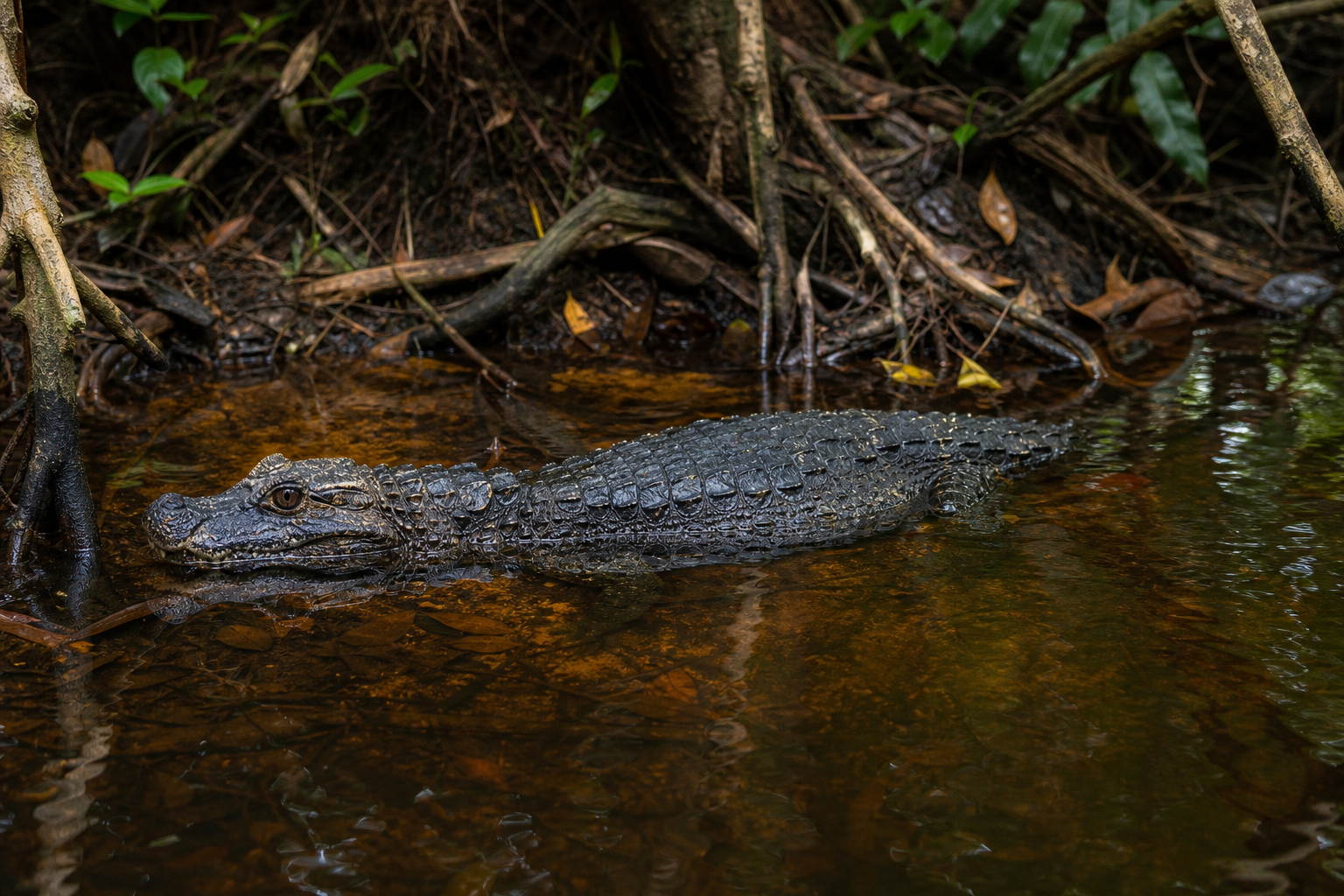
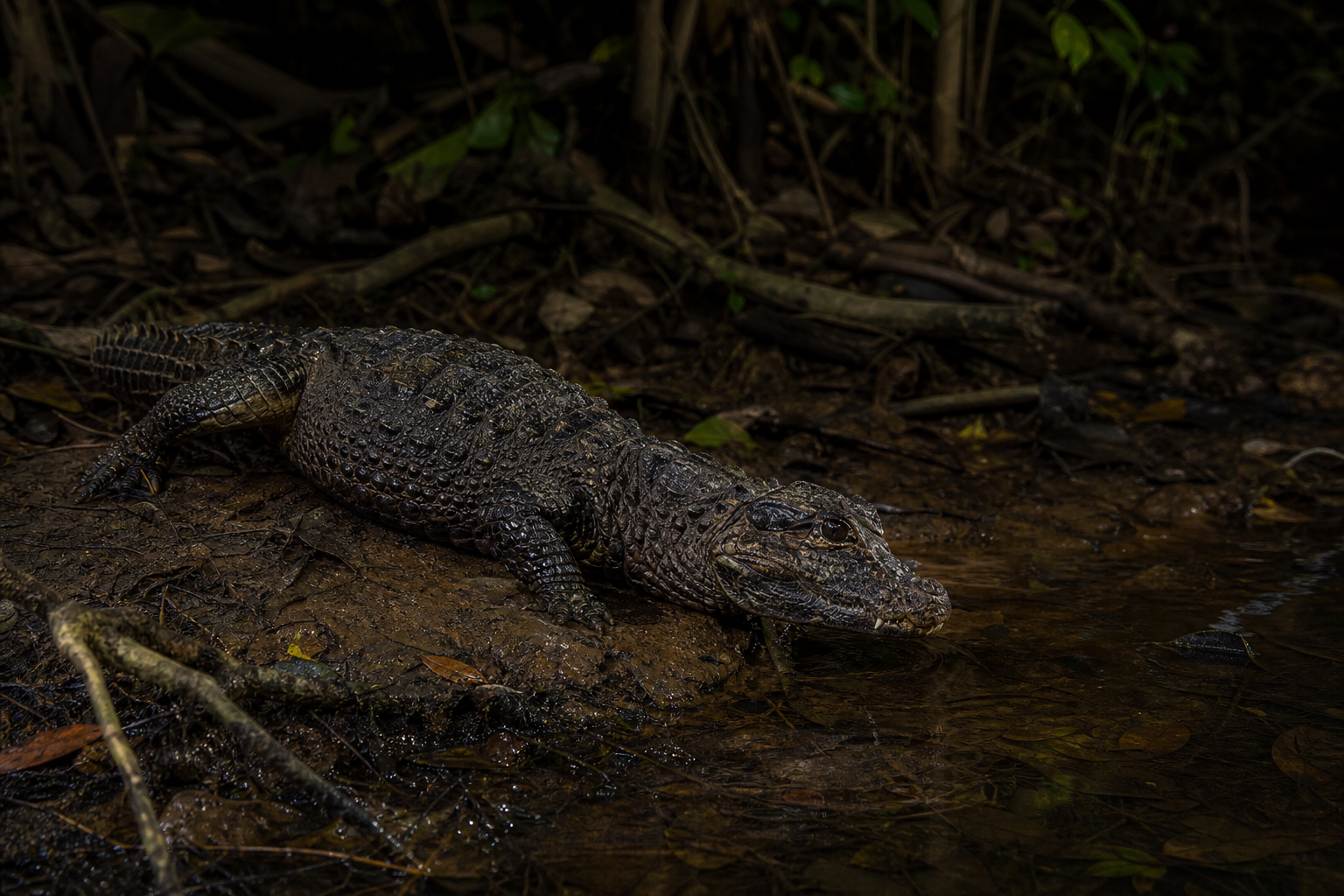
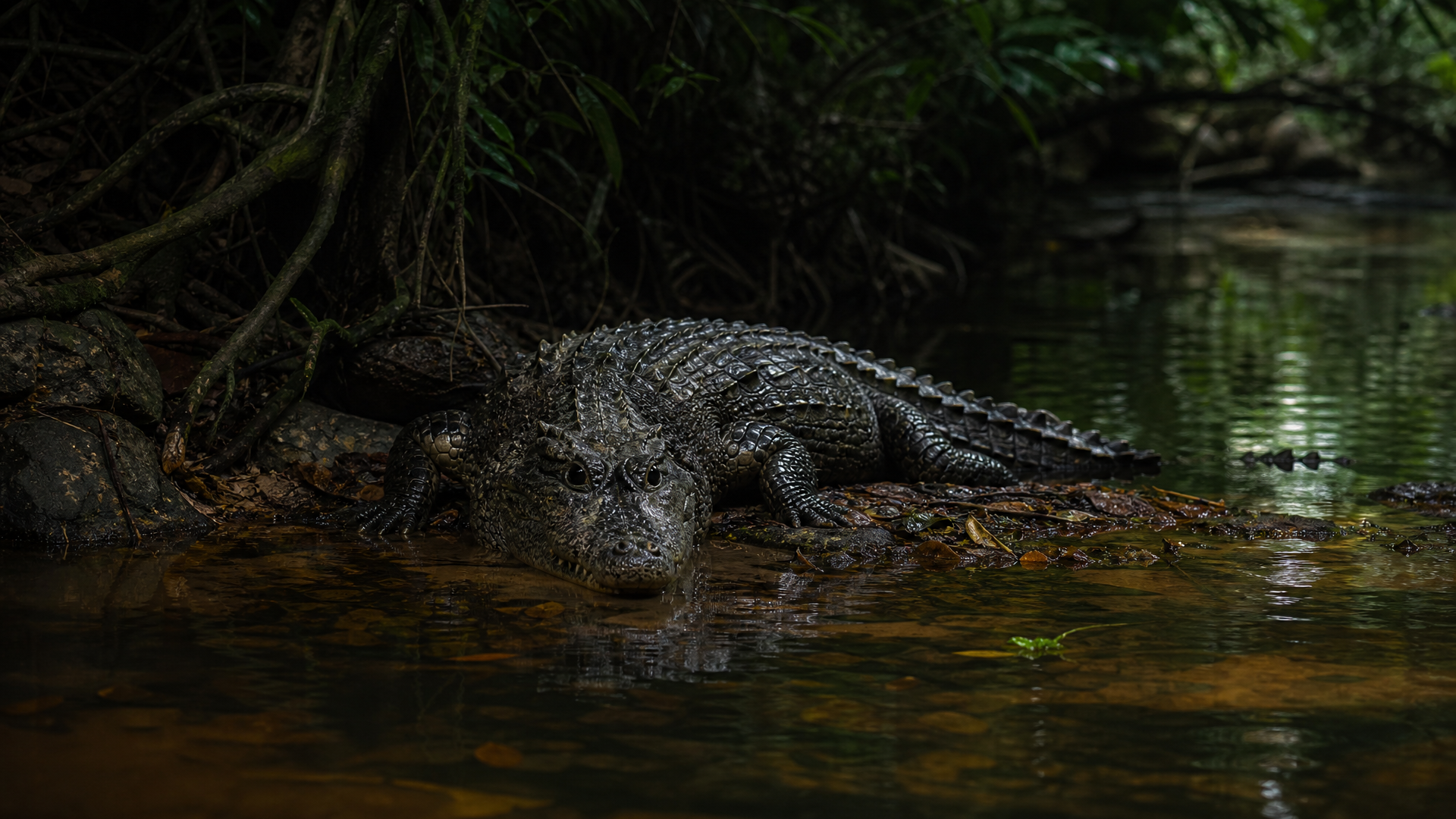
In a forest creek the color of strong tea, a log seems to have eyes. The water barely moves around it. Dragonflies settle on a root, frogs call from the bank, and only when the jaw tilts upward does the shape become animal: a dwarf crocodile waiting beneath the low green ceiling.
Its world is close, humid, and dim. Unlike the great open-river crocodiles, this one belongs to shadowed freshwater, where fallen leaves soften every edge and the banks smell of mud and rot. Its body is compact and heavily armored, made for pushing through submerged roots and narrow channels. At night it becomes more active, sliding from pool to pool, taking the small lives the forest water offers. There is no wasted drama in it. A pause can last a long time. A strike takes less than a breath.
To encounter one at a stream crossing is to meet deep time in miniature. The eyes are level, unreadable, and patient beyond human comfort.
The dwarf crocodile helps keep these small waterways balanced, removing the weak, the unwary, and the abundant from the shaded current. But forest streams are easily changed. Logging opens them to heat and silt; hunting removes the quiet shapes from the banks. When the water closes over a sinking crocodile, the creek looks unchanged. It is not.