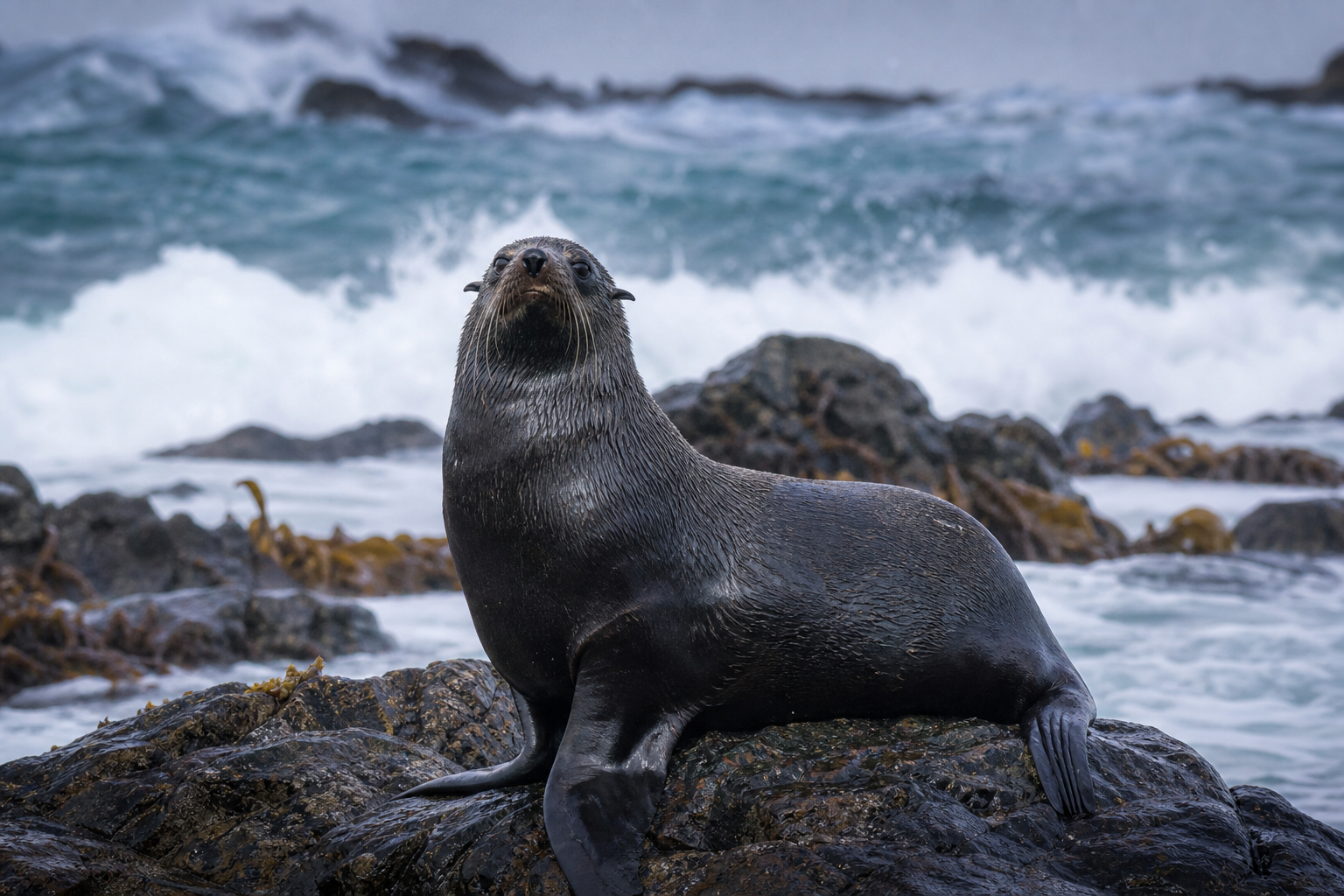
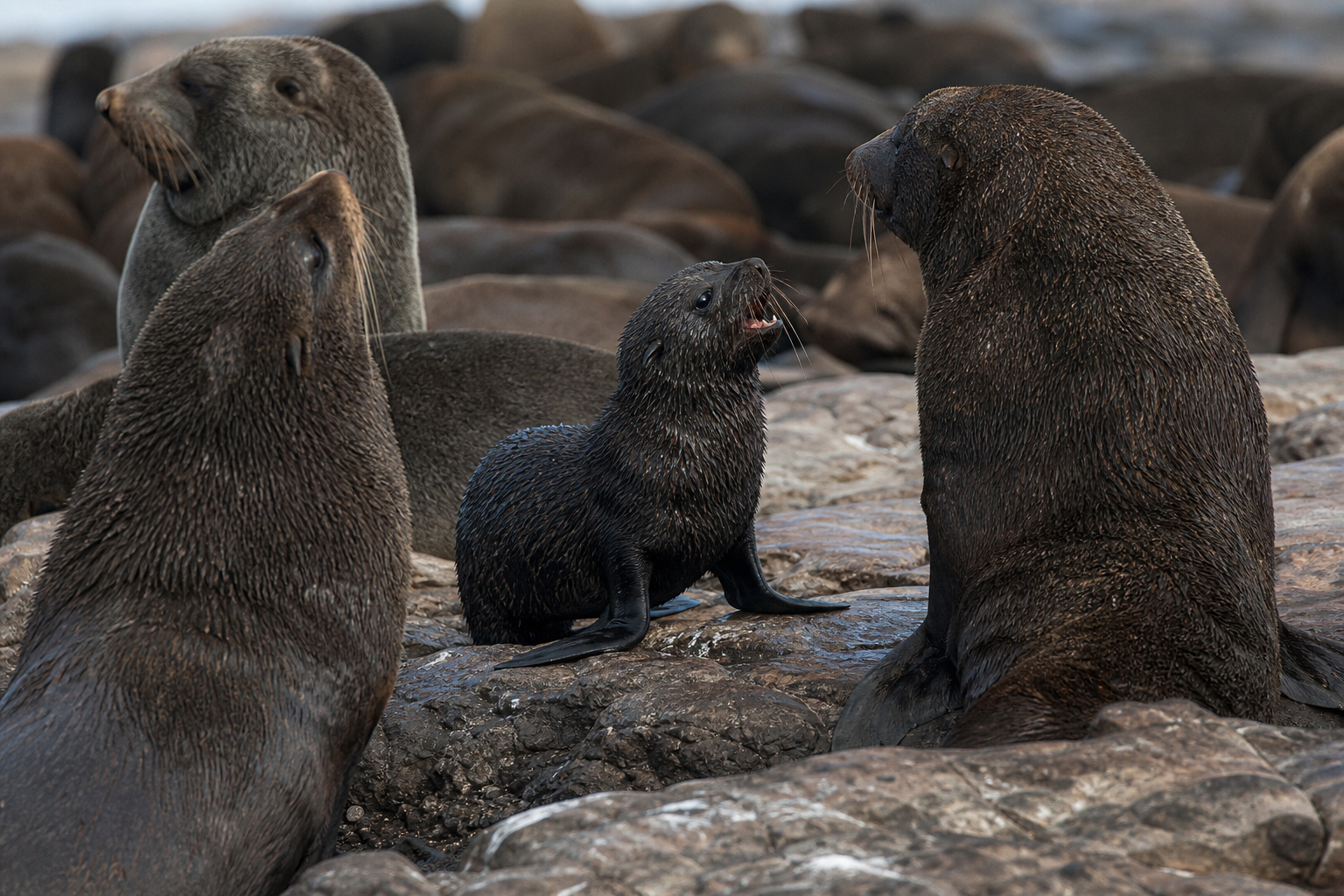
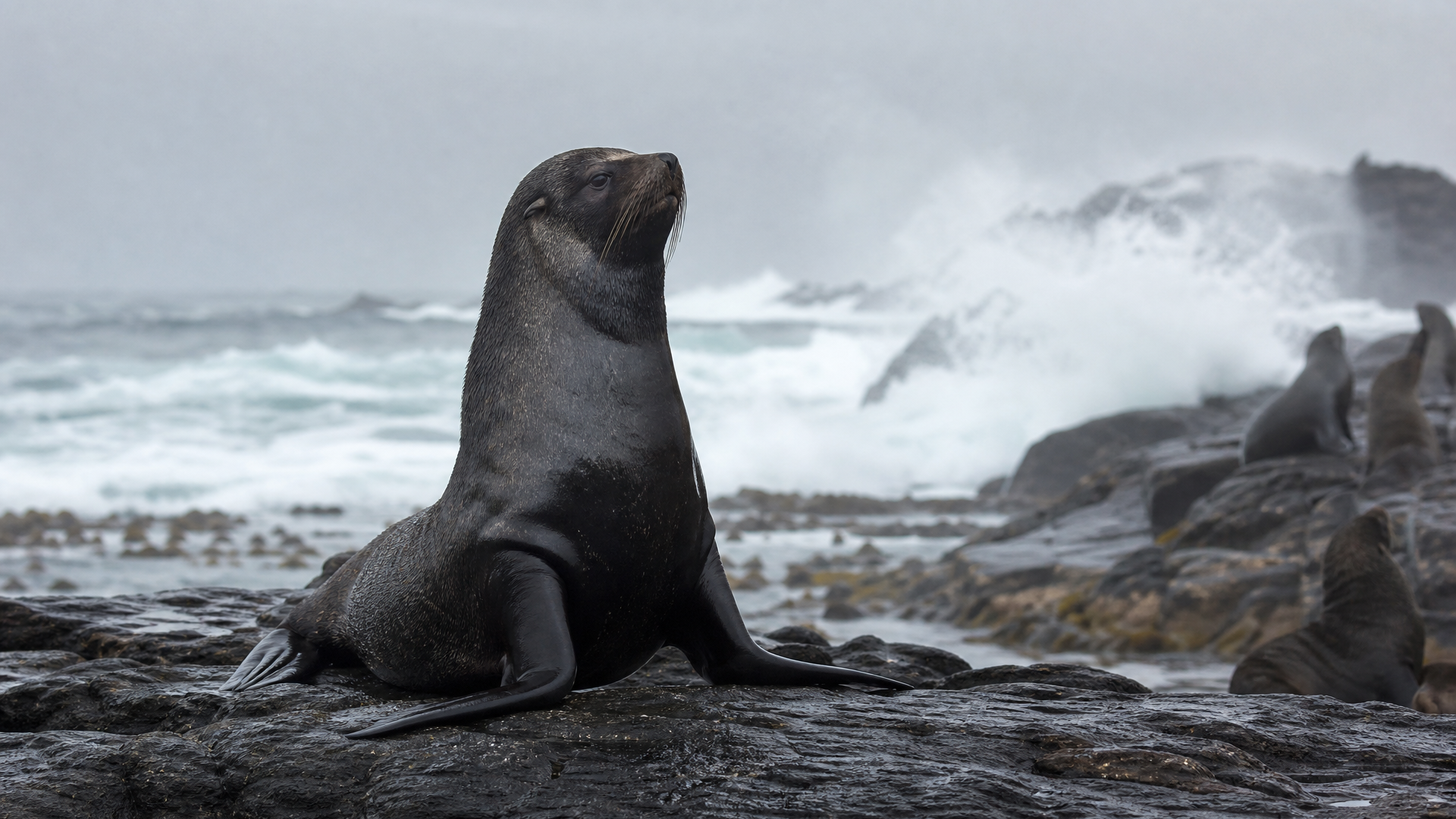
The shore is already shouting. Thousands of bodies crowd the rock, pups calling, bulls growling, females pushing through the press with salt drying on their fur. Beyond them, the Atlantic lifts and folds against the coast, and Cape fur seals move between chaos and water as if both belong to them.
On land they are heavy with noise and smell. Flippers slap stone. Pups nose through bodies for the one voice that matters. Bulls hold space by size, threat, and endurance, their wet coats dark against the pale guano rock. It can look disorderly from a distance, but the colony knows its own rules.
Then a seal enters the sea and the body changes. Weight becomes speed. The same animal that lurched across rock turns cleanly through kelp and surge, hunting fish and squid in water cold enough to sharpen every movement. Young seals play in the shallows, practicing the grammar of escape before sharks, hunger, and distance make it serious.
These colonies feed more than themselves. They draw predators, move nutrients, and make the coast feel alive to its edge. Nets, plastic, overfishing, and warming seas complicate that old exchange. Still the colony calls, and the surf keeps answering in white water.