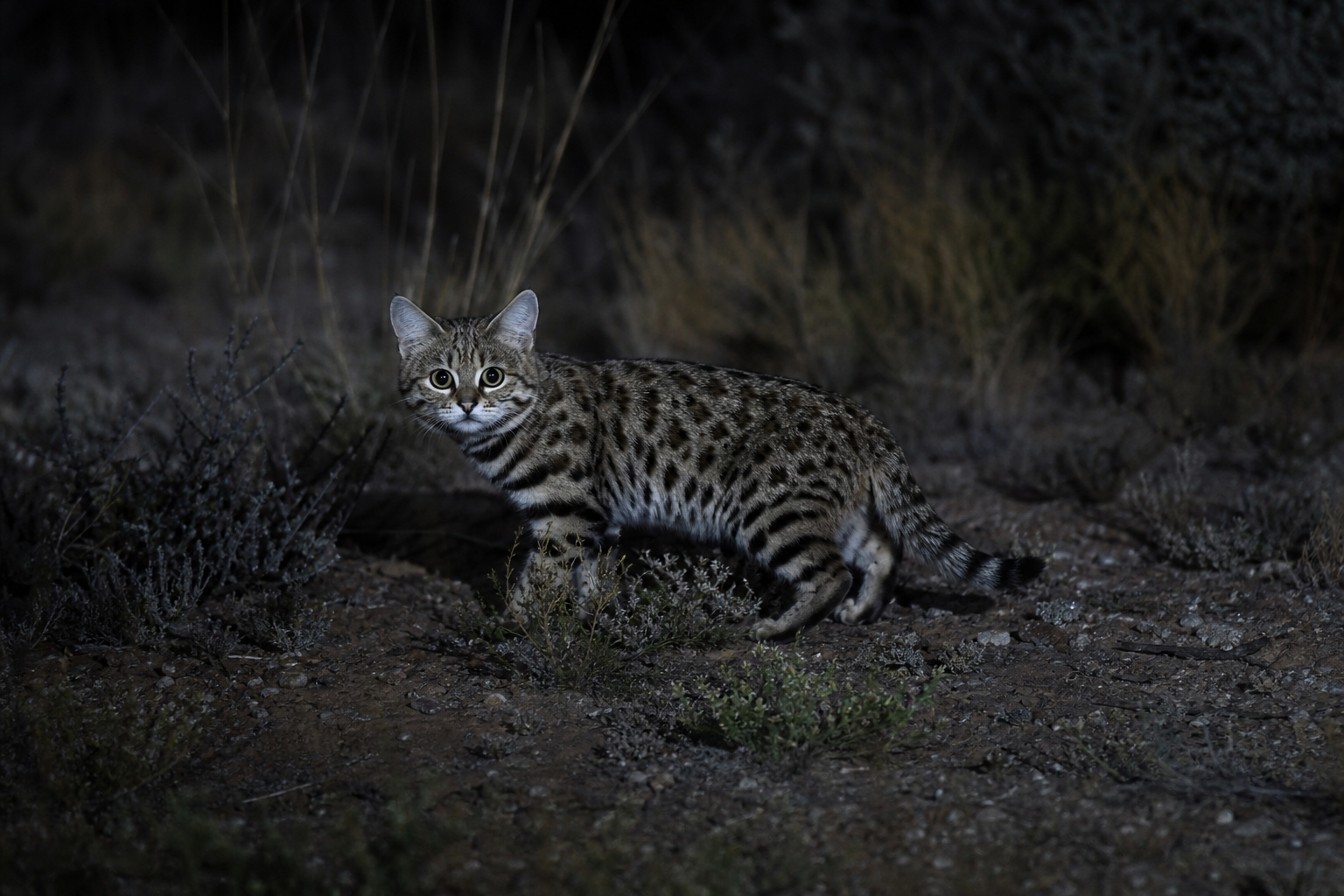
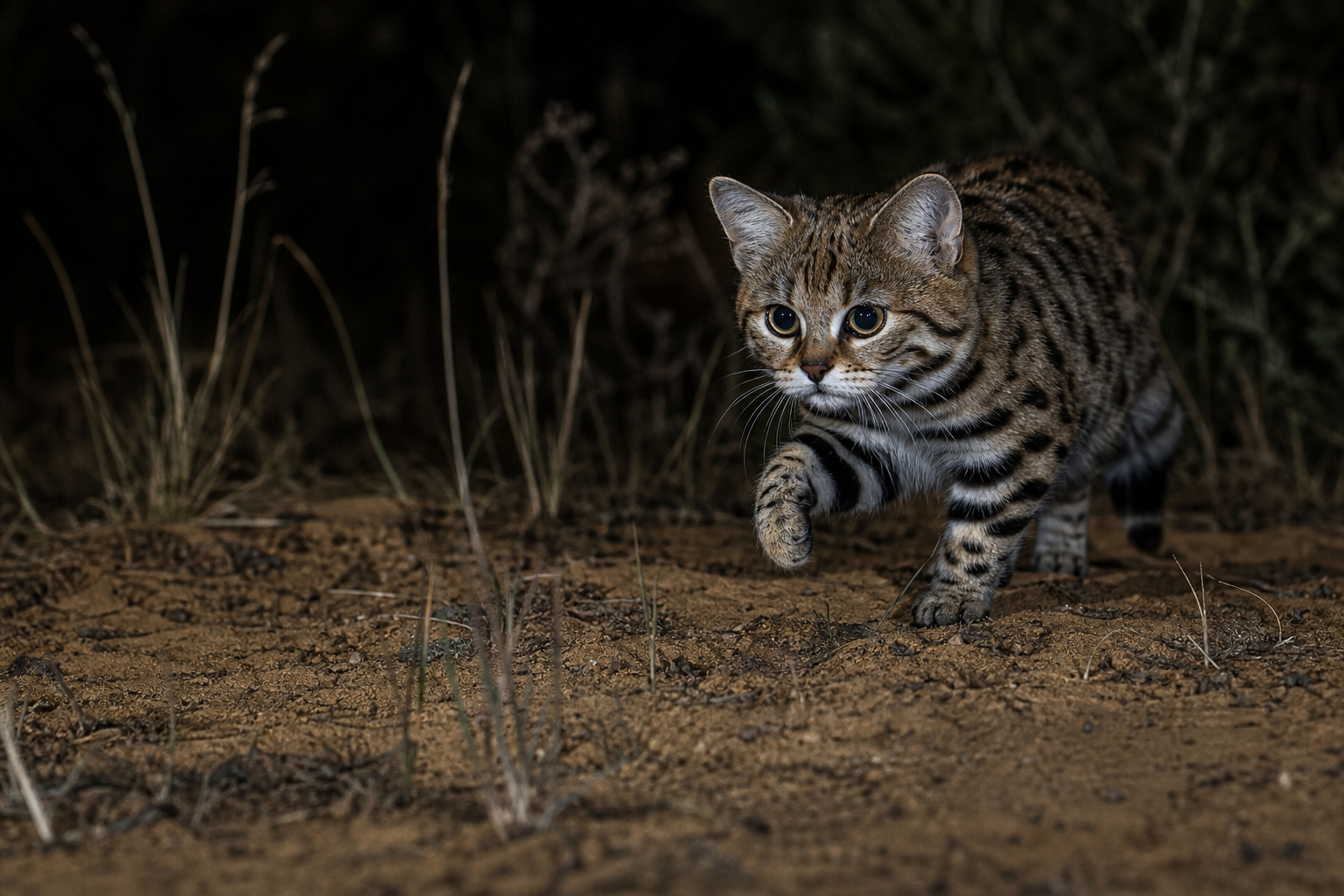
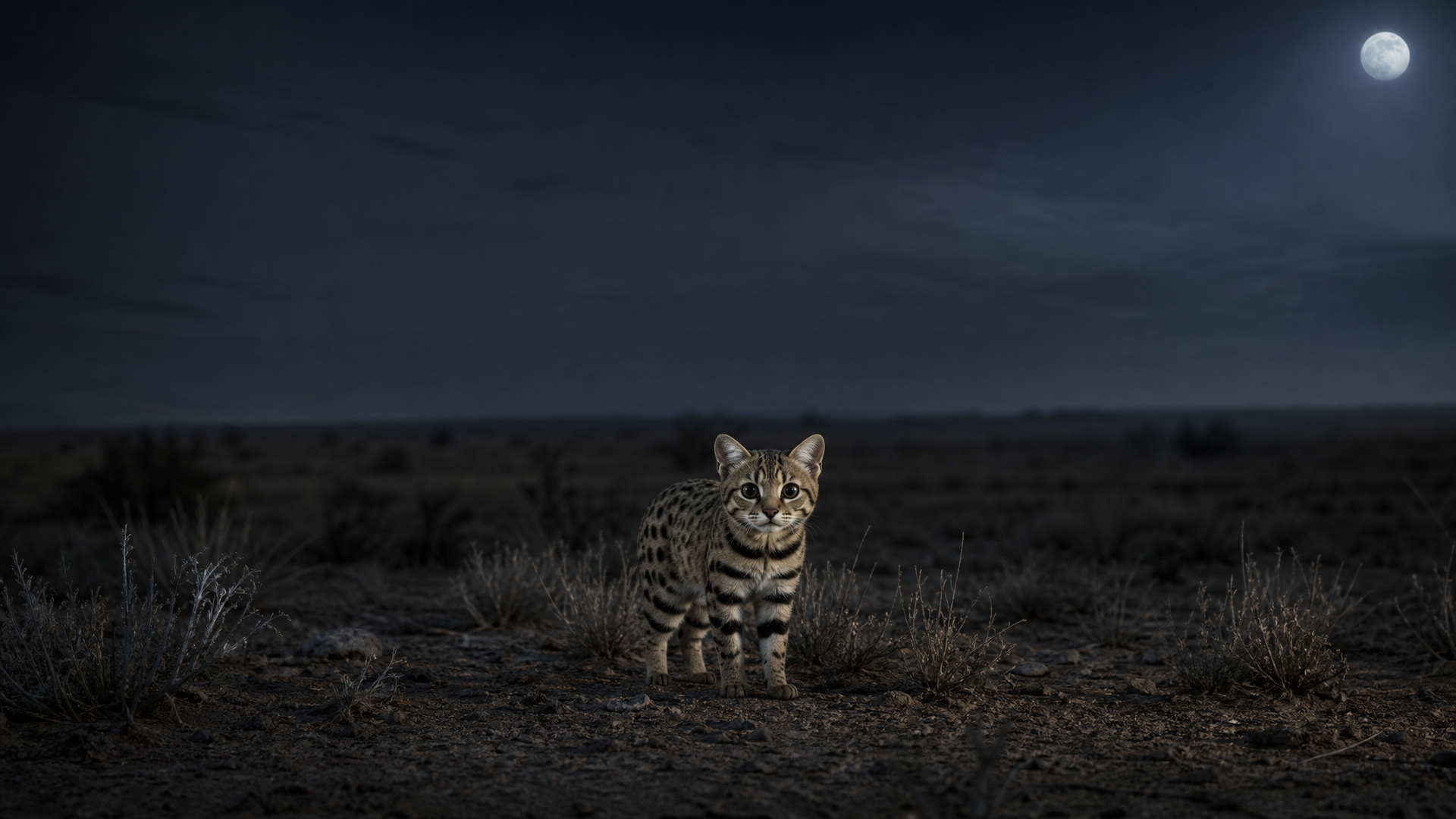
Night has settled over the Karoo, and the small shape moves as if poured from shadow. The black-footed cat is low, spotted, and nearly silent, with eyes large enough to hold the last light from the sky. A mouse shifts under grass. The cat stops breathing in any way the world can hear.
Its size misleads almost everyone except its prey. This is a hunter of relentless attention, quartering the ground, listening, waiting, then striking with a suddenness out of all proportion to the body. It takes rodents, small birds, insects, anything the night offers and the cat can master. When one hunt fails, another begins. The dark is worked thoroughly.
By day it disappears into burrows, termite mounds, or cover left by other animals. By night it seems to own a private version of Southern Africa, one measured in scent trails, faint rustles, and small warm lives moving below grass.
Its range is narrow and patchy, its presence easy to miss even where it survives. Farming, poisons, roads, and changing grasslands can erase such a small hunter quietly. The cat moves on. The night closes behind it without applause.