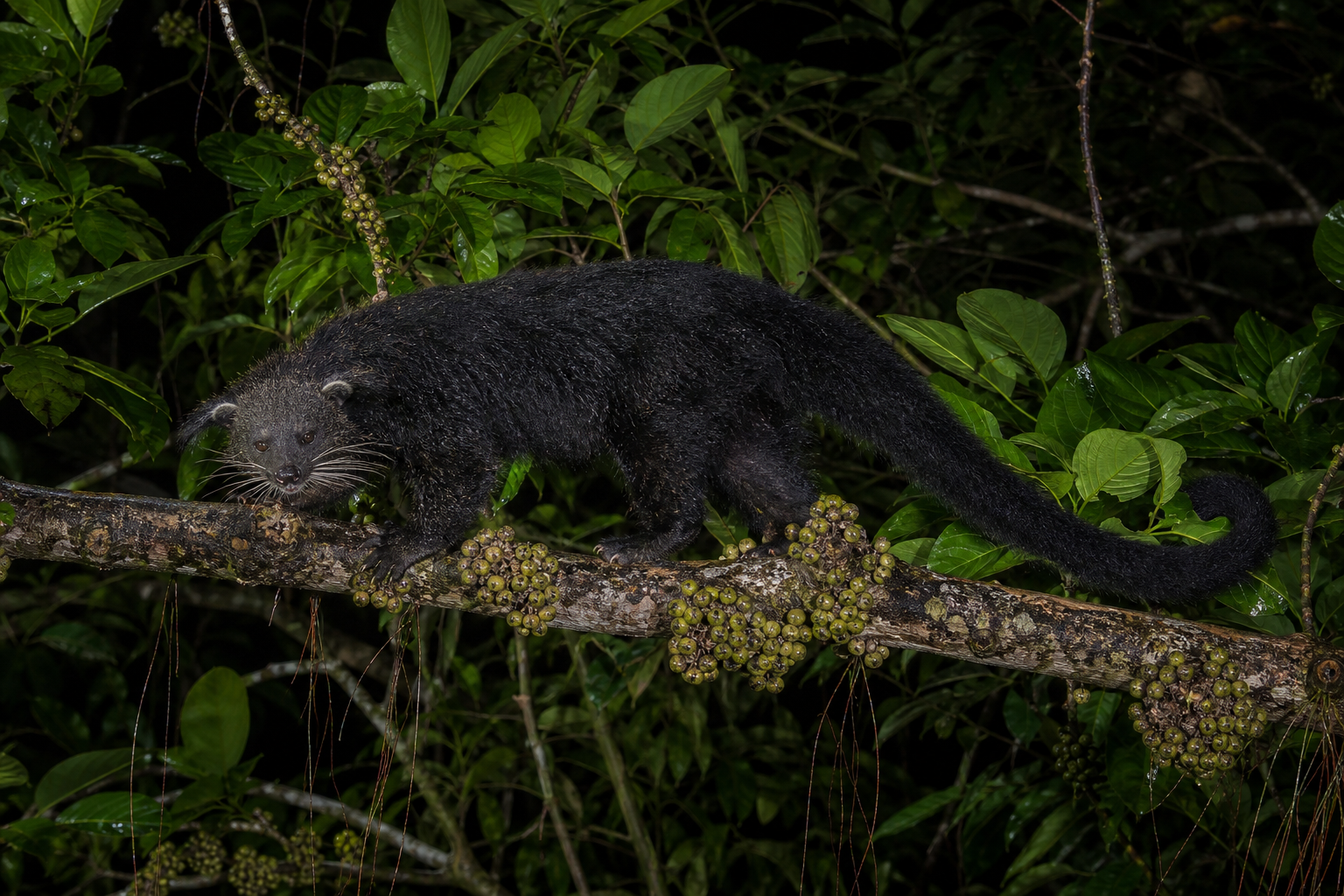
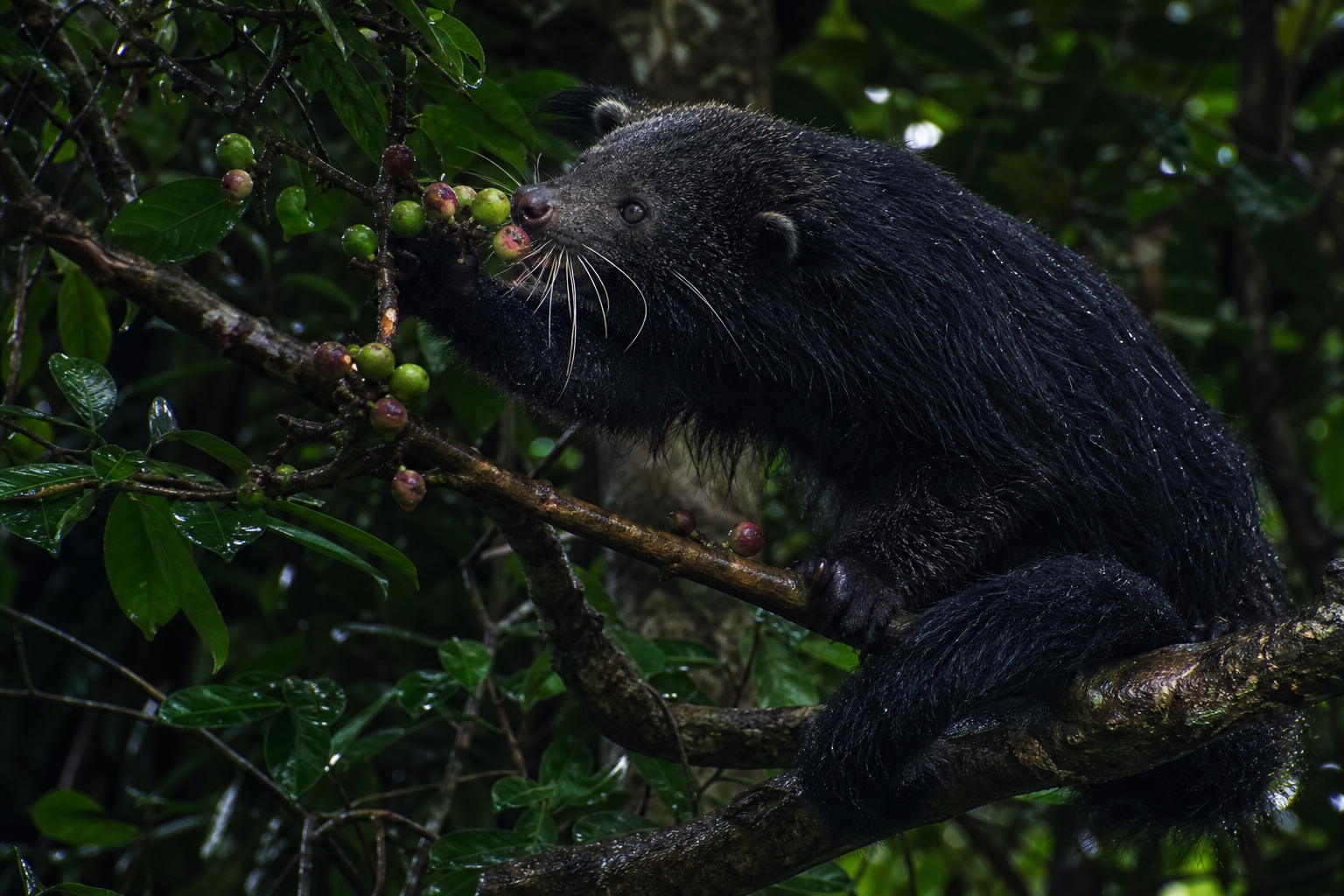
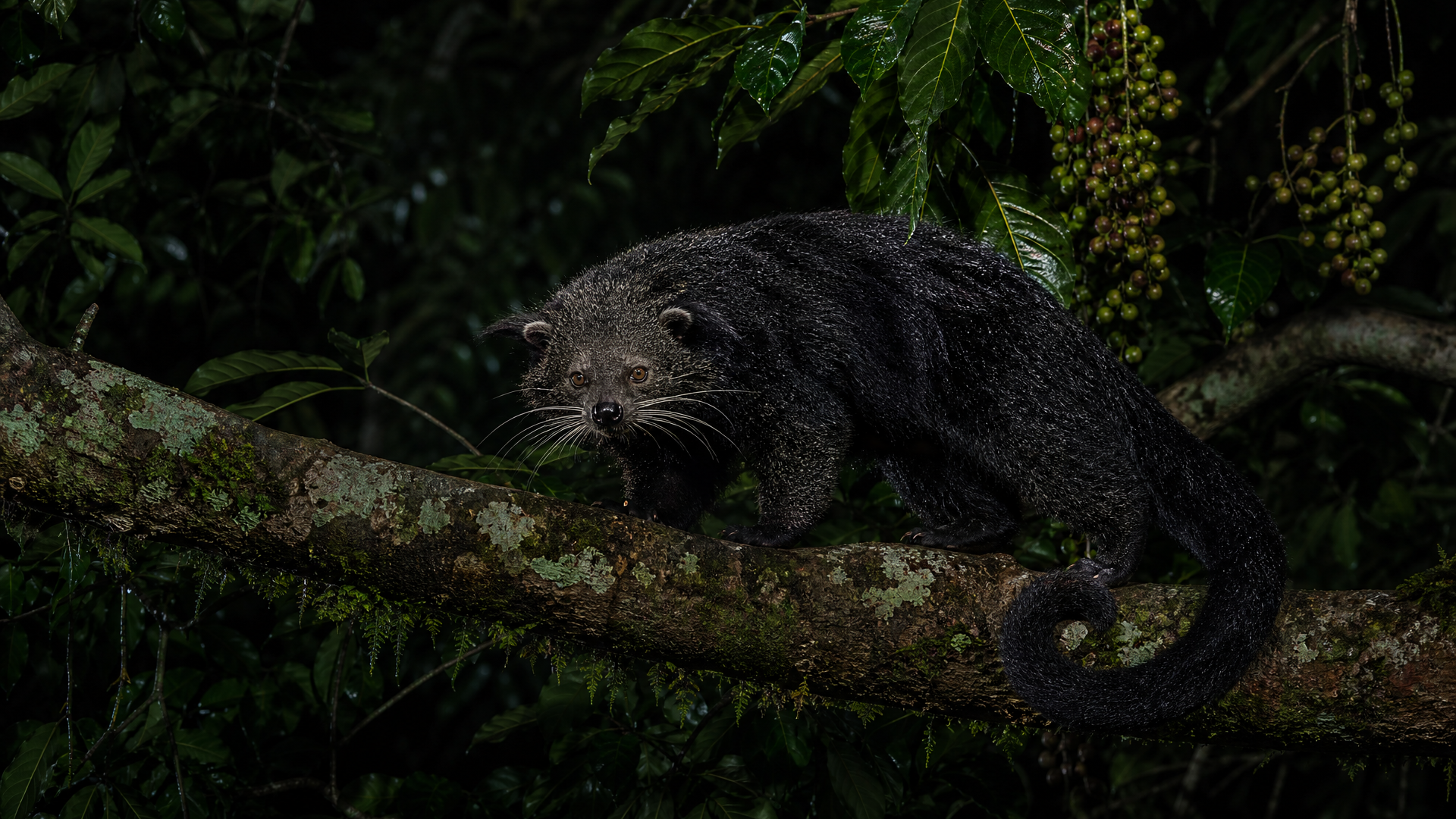
High in a fig tree on Palawan, something black and heavy shifts among the branches. Leaves shake. A pale whiskered face appears, then a long tail curls around the limb as if it has its own memory. The animal pauses, sniffing fruit, damp bark, and the thick night air.
The binturong seems assembled for slow travel through the canopy. Its fur is coarse and dark, its body low and deliberate, its tail prehensile enough to steady weight where a fall would matter. It does not have the speed of a monkey or the sharp outline of a cat. Its gift is patience. It climbs, rests, feeds, turns, and leaves scent behind, a strange sweet smell that can seem out of place until fruiting trees explain it. Seeds pass through this wandering body and begin again in other patches of forest.
That quiet work depends on connected crowns. When forests are cut into islands, a canopy traveler becomes a ground traveler, and the ground is full of roads, dogs, snares, and uncertainty. The binturong moves along the branch, tail tightening once around bark, and the fig tree releases another ripe fruit into the dark.