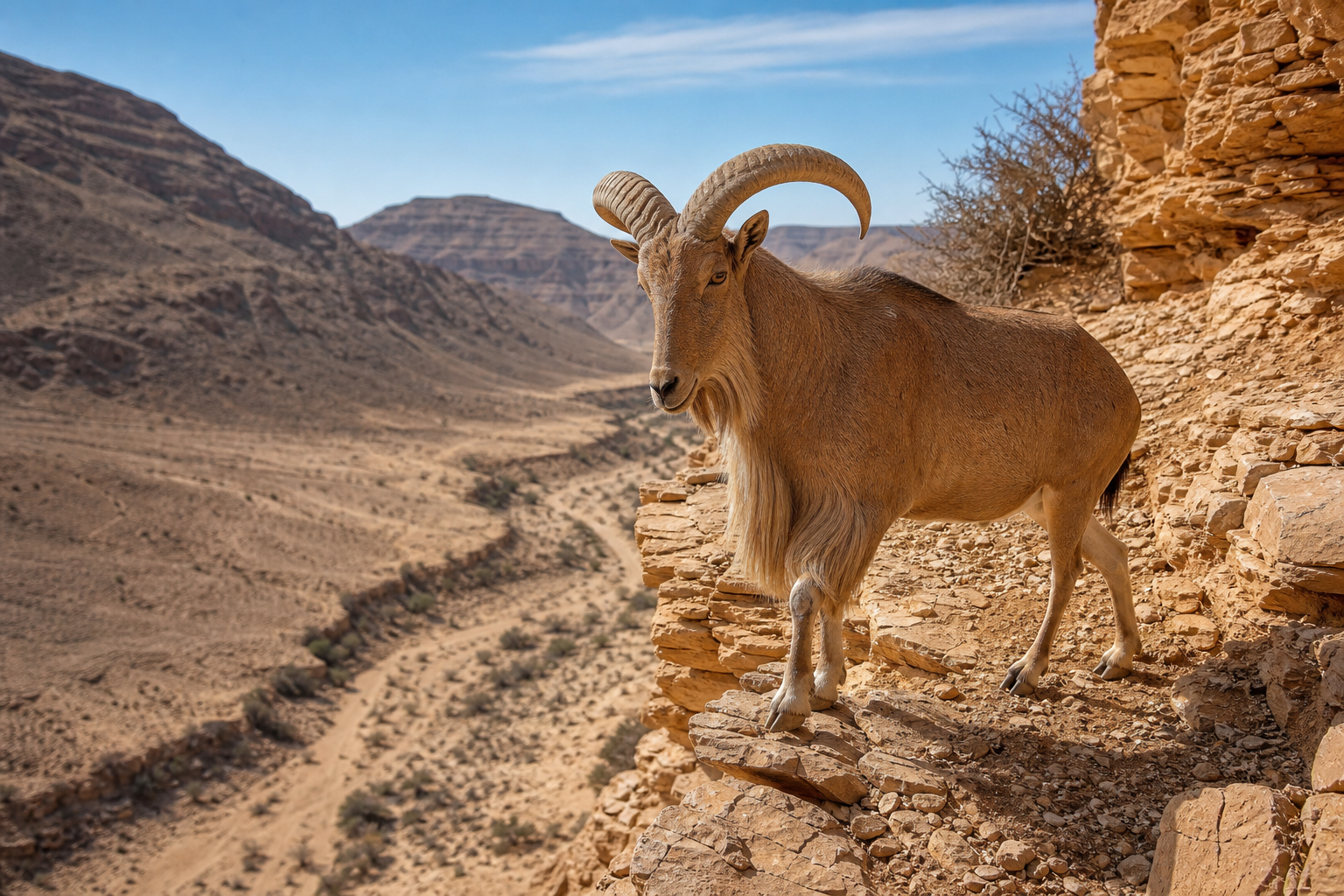
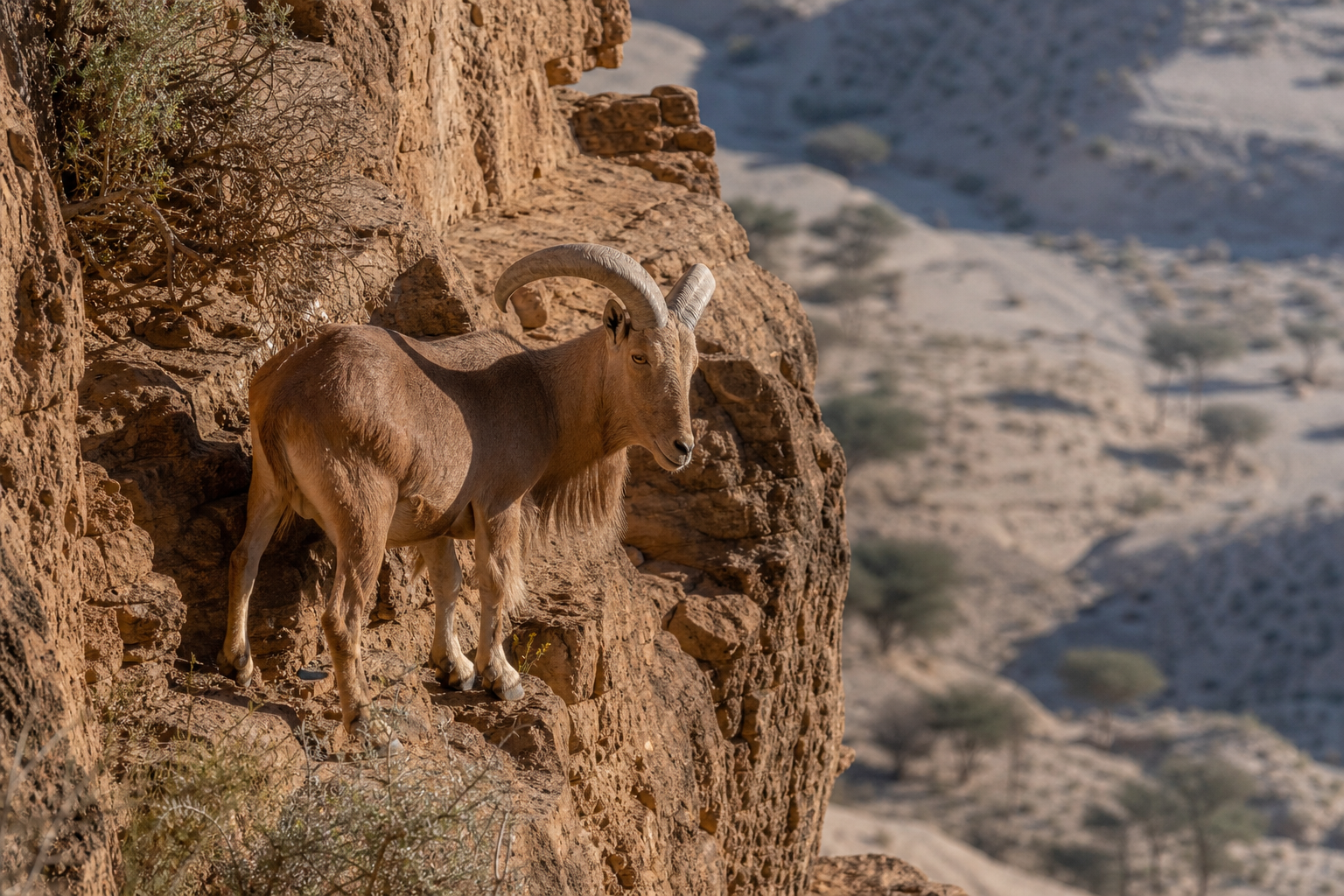
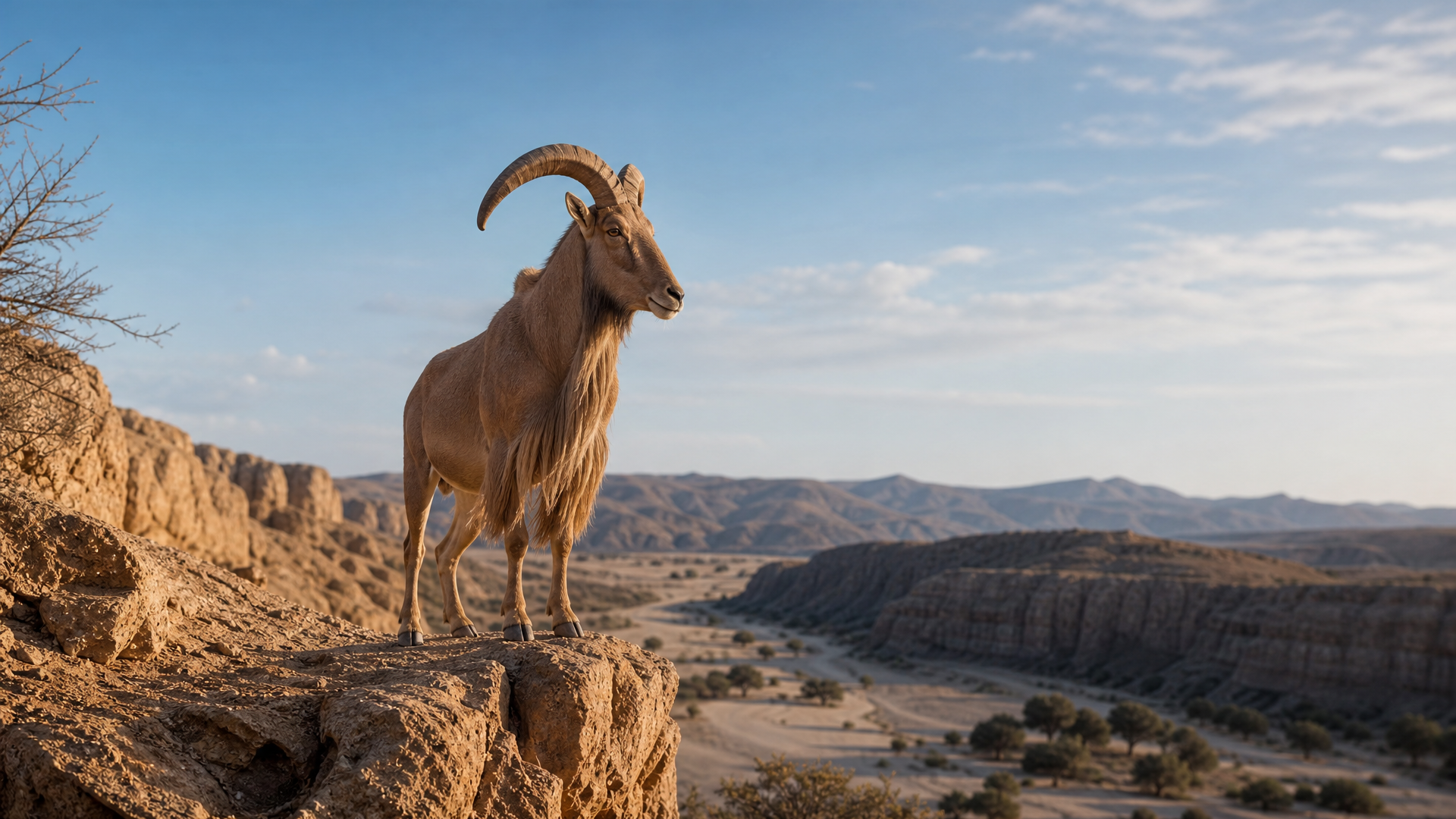
High on a desert escarpment, the rock seems empty until one ledge begins to move. A tawny body steps from the cliff face, sure-footed and calm, with a heavy throat mane stirring in the dry wind. Below it, the wadi floor lies bright and exposed; above it, the mountains hold their silence.
The aoudad belongs to hard country. It does not need the lush abundance of a meadow or the shelter of deep forest. It makes a living on broken slopes, among stone, thorn, and shadow, climbing with the unhurried authority of an animal that trusts every hoof placement. Rams carry their weight forward through the shoulders, horns curving back like weathered handles. Females and young gather where the rock offers escape routes, pausing often to look down into the heat. When danger comes, the group does not scatter blindly. It rises, angles across the cliff, and becomes almost the color of the land.
This is why the aoudad feels so North African: not as a sheep in the soft sense, but as a mountain survivor shaped by the Atlas, the Sahara margins, and the old dry ridges between them. Hunting, competition, and fragmented wild country have thinned its native range, yet on a sun-struck wall of stone, it still carries the cliff in its body.